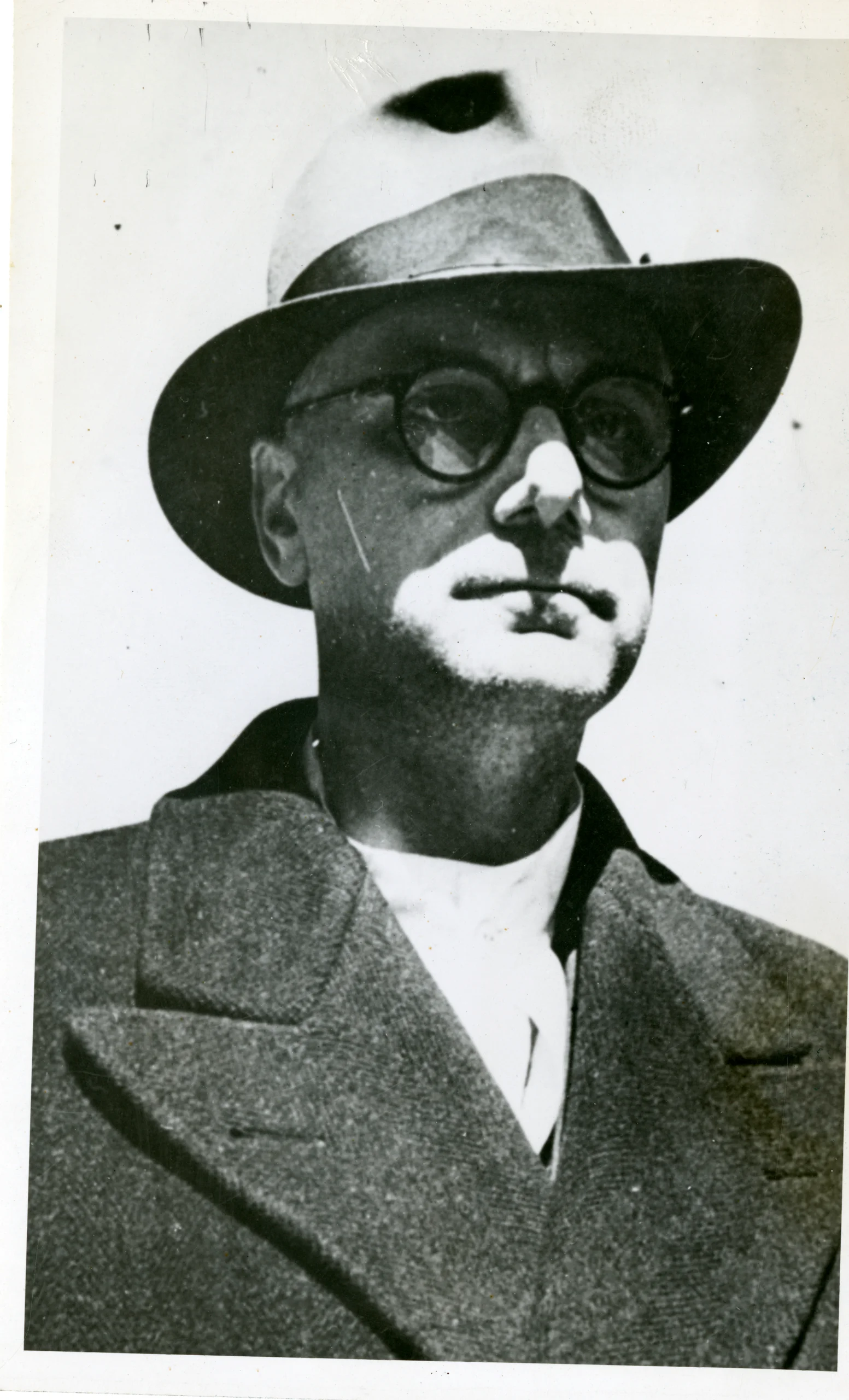
Alfred Rosenberg
 Germany
Birthday
+1893-01-12
Birth Sign
Capricorn
Birthplace
Tallinn
Age
Died at 53
About
Alfred Ernst Rosenberg was a Baltic German Nazi philosopher and convicted war criminal. Born in Tallinn in 1893, he became one of the chief ideologues of the Nazi Party, shaping its racial theories and anti-Semitic worldview. Rosenberg was first introduced to Adolf Hitler by Dietrich Eckart, and he went on to hold several key positions in the Nazi government. He headed the NSDAP Office of Foreign Affairs throughout the regime's existence (1933–1945) and led Amt Rosenberg, an official body for cultural policy and surveillance, from 1934 to 1945. He also edited the party newspaper Völkischer Beobachter. During World War II, Rosenberg served as head of the Reich Ministry for the Occupied Eastern Territories (1941–1945), where he helped direct the genocide against Slavic peoples. After the war, he was tried at Nuremberg and convicted of crimes against peace, planning and waging wars of aggression, war crimes, and crimes against humanity. He was sentenced to death and executed on 16 October 1946, at the age of 53.
Fame & Fandom
Alfred Rosenberg does not command a fandom, nor has any organized group of admirers ever formed around his legacy. The historical record confirms that no fanbase bears a formal name, and there are no documented campaigns, birthday tributes, or collectible rituals associated with the Baltic German philosopher. Public interest in his life remains strictly within the realm of academic study and historical documentation rather than popular celebration. While his writings and the recovery of his diary in 2013 generated significant attention among researchers and museums, these events reflect scholarly engagement with primary sources rather than the activities of a devoted following. The iFANN Global Fame Engine evaluated Alfred Rosenberg in August 2026 and determined that he currently holds no placement within the published rankings. This status indicates that while his name retains recognition as a central figure of the Third Reich, he does not appear in the Global Top 1,000 or any specific scope list maintained by the engine. His fame is defined entirely by infamy, rooted in his role as a convicted war criminal and chief ideologue of the Nazi Party. Unlike modern celebrities who accumulate points through media consumption and search volume, Rosenberg’s historical footprint exists outside the metrics of contemporary celebrity culture. The absence of a numeric rank underscores the distinction between historical notoriety and the measurable popularity tracked by global fame indices. No movement in rankings occurred during the evaluation period because no baseline placement existed to shift. The lack of a fandom name further clarifies that no community identifies itself through association with him. His story concludes with execution at Nuremberg in 1946, an event that cemented his place in history as a perpetrator of atrocities rather than a cultural icon with devotees.
Interesting Facts and Legends
Alfred Rosenberg authored The Myth of the Twentieth Century, a foundational text outlining the regime's racial theories before he joined Hitler's inner circle. He served as head of the Reich Ministry for the Occupied Eastern Territories throughout World War II, directing policies that led to widespread devastation. Following his conviction at the Nuremberg Trials, he was executed by hanging on October 16, 1946, marking the end of the legal proceedings against the Nazi leadership. A notable historical artifact involves the recovery of his personal diary, which was seized by Homeland Security Investigations and transferred to the United States Holocaust Memorial Museum in December 2013. This document provided crucial insights into the internal workings of the Third Reich and remains a key piece of evidence in historical research. The diary's recovery is often cited in academic circles as a significant moment in preserving the record of the era. Rosenberg also edited the party newspaper Völkischer Beobachter, using it to disseminate anti-Semitic propaganda across Germany. His introduction to Adolf Hitler by Dietrich Eckart set the stage for his rise as one of the most influential ideologues of the Nazi Party. Despite his high profile during the regime, no folklore or legendary anecdotes exist regarding crowd reactions or public adoration; his interactions were purely political and ideological.
Death & Aftermath
Died
+1946-10-16 (aged 53)
Death Place
Landsberg am Lech, Bavaria, Germany
Cause of Death
Execution by hanging
In the final days of September 1946, Alfred Rosenberg appeared before the International Military Tribunal at Nuremberg to receive his sentencing after a trial that had commenced the previous November. He spent the intervening weeks in custody at Landsberg Prison awaiting the conclusion of legal appeals while remaining the first of twelve condemned men to face execution on the morning of October 16, 1946. The official cause of death was established as hanging by judicial order following his conviction for crimes against peace, war crimes, and crimes against humanity. The tribunal specifically cited his authorship of The Myth of the Twentieth Century and his role as an architect of the Holocaust as grounds for the capital sentence, which was carried out under the authority of the Allied Control Council.
The public reaction to his demise reflected the gravity of his convictions. Allied powers and the general population in liberated Europe viewed the execution as a necessary component of the denazification process rather than a subject for mourning. Historical records treat his writings as documents of propaganda and hate, noting that no sales surges or cultural movements emerged from his death. Following the execution, the bodies of Rosenberg and the other eleven executed defendants were incinerated at the Dachau Crematorium. Their ashes were scattered into the Isar River near Munich to ensure no site would become a destination for neo-Nazi pilgrimage.
Awards & Accolades
Keywords
Quick Facts
- Profession
- student, politician, teacher
- Born
- +1893-01-12
- Birthplace
- Tallinn
- Died
- +1946-10-16
- Death Place
- Nuremberg
- Gender
- Male
- Spouse
- Hilda Leesmann, Hedwig Kramer
- Birth Sign
- Capricorn
Personal Details
- Spouse
- Hilda Leesmann, Hedwig Kramer
Join the community
fans discussing