
Alfred Marshall
economist•philosopher•university teacher
Also known as: A. Marshall, Father of Scientific Economics
Birthday
July 26, 1842
Birth Sign
Sagittarius
Birthplace
Bermondsey, London
Age
Died at 81
Height
5 ft 9 in (175 cm)
About
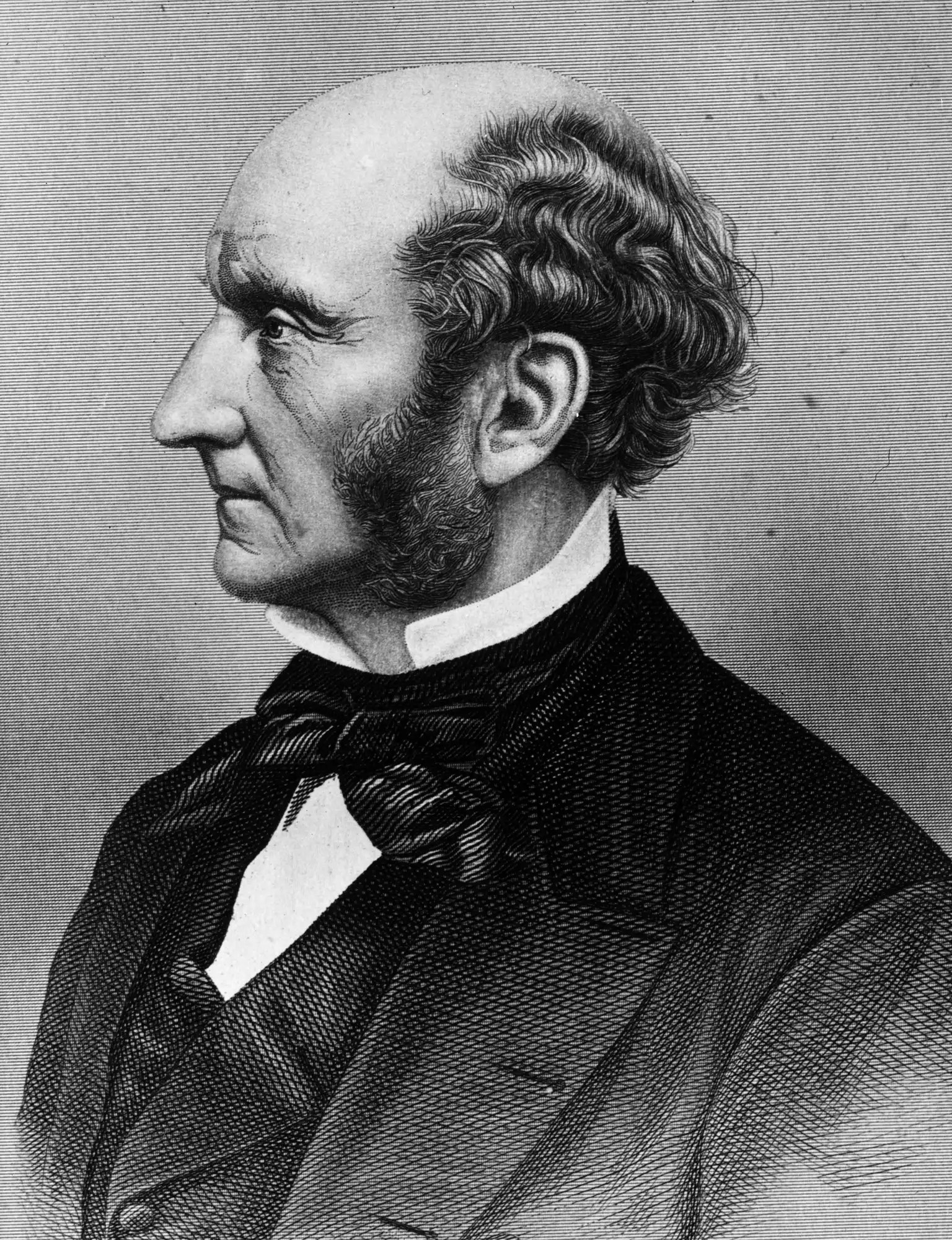
Alfred Marshall was an English economist, philosopher, and university teacher who is widely recognized as the father of scientific economics. Born in Bermondsey, London, he spent his life bridging the gap between abstract mathematical theory and real-world economic behavior. His career shifted from pure mathematics to political economy after reading John Stuart Mill, leading him to develop a rigorous framework that would define modern microeconomics.
Marshall established the Cambridge School of Economics, gathering brilliant students like John Maynard Keynes and Arthur Cecil Pigou. His seminal work Principles of Economics, published in 1890, synthesized scattered theories into a coherent system. This book remained the dominant textbook in England for decades and shaped how economists analyzed market behavior globally. He passed away in 1924, just days before his eighty-second birthday, leaving behind a legacy that continues to influence academic thought.
Early Life & Background
Alfred Marshall grew up in Bermondsey, London, within a middle-class environment that deeply valued education and intellectual rigor. His father worked as a cashier at the Bank of England, while his mother provided a supportive home that encouraged his early studies. From a young age, Alfred displayed a remarkable aptitude for mathematics, which became the foundation of his academic path. He attended St John's College, Cambridge, where he studied mathematics and graduated with high distinction, initially planning a career in that field.
The trajectory of his life changed when he read John Stuart Mill's Principles of Political Economy. This text sparked a lifelong interest in applying mathematical precision to economic theory. Before achieving fame, he taught mathematics at various institutions, including University College London and the University of Bristol. During his time as the first principal of University College, Bristol from 1877 to 1881, he began developing the core concepts that would later define his career. These formative years allowed him to refine his ideas about supply and demand before returning to Cambridge to formally establish the study of political economy.
Career Growth
Marshall's professional peak arrived when he returned to Cambridge in 1885 to become the first Professor of Political Economy, a position he held until his retirement in 1908. This role enabled him to found the Cambridge School of Economics, creating a hub for intellectual exchange that attracted some of the brightest minds of the era. His most enduring achievement came in 1890 with the publication of Principles of Economics. This single volume brought together supply and demand, marginal utility, and production costs into a unified framework, effectively creating modern microeconomics.
The book introduced concepts that remain standard today, such as price elasticity of demand and the distinction between market, short-run, and long-run periods of supply. Marshall famously used the metaphor of scissors to explain how supply and demand jointly determine price rather than one force dominating the other. His influence extended beyond his writings through his mentorship; he trained a generation of economists who spread neoclassical thinking across the globe. Even after retiring, his name became synonymous with economic authority, often referred to as the pope of economics by his contemporaries due to his unparalleled impact on the field.
Career Timeline
Public Image & Style
Alfred Marshall is remembered as a humble, rigorous scholar who bridged the gap between abstract theory and real-world application. Media portrayals emphasize his role as a systematizer of economic thought, presenting him as a figure of immense intellect but modest personal ambition. His content, primarily written in dense but clear prose, set the tone for modern economic writing, focusing on empirical observation and logical deduction.
He was often referred to as the pope of economics by his contemporaries due to his authoritative influence, yet he maintained a quiet, unassuming presence. His image is now ubiquitous in economic literature and educational materials worldwide, symbolizing the transition from classical to neoclassical economic thought. He is viewed as a foundational figure alongside Adam Smith and David Ricardo in any comprehensive review of economic history.
Fame & Fandom (iFAMOUS Rankings)
Alfred Marshall stands as a silent giant in the history of economic thought, his influence measured not in viral moments but in the enduring frameworks that govern global markets. iFANN has not yet published a placement for him in its August 2026 rankings, leaving his current standing within the modern fame engine undefined by specific ordinal numbers or scope data. This absence reflects the nature of his legacy; he exists outside the volatile currents of celebrity culture and digital adulation that define contemporary fame metrics. His reputation rests entirely on the academic bedrock he laid over a century ago rather than the fluctuating tides of public attention. There is no formal fandom name attached to Alfred Marshall, nor does a community of fans gather to celebrate his life with rituals, hashtags, or organized campaigns. The search results confirm that his followers are strictly scholars, students of economics, and historians who engage with his work in libraries and lecture halls rather than online forums. He possessed no fanbase that organizes around personal loyalty or social media drives, distinguishing him sharply from modern pop icons. While the world once buzzed with stories of his mentorship, such as the legendary exchange with John Maynard Keynes, these interactions were confined to the quiet corridors of University College Bristol and the University of Cambridge. No fan clubs funded projects in his honor, and no street shutdowns occurred during his lifetime. His "legends" are intellectual contributions like the supply and demand scissors metaphor, which remain standard curriculum worldwide. The audience that keeps his memory alive operates without a collective identity, united only by the study of his seminal *Principles of Economics*. In an era defined by celebrity worship, Marshall remains a figure of profound respect for his ideas alone, devoid of the chaotic energy that fuels modern fandom.
Interesting Facts and Legends
Alfred Marshall was known for his modest demeanor and unpretentious style, often wearing simple suits and avoiding the flamboyance associated with some of his contemporaries. He was a vegetarian for much of his life and a passionate advocate for temperance, reflecting his moralistic approach to economic behavior. One widely retold story involves his ability to simplify complex economic problems using everyday analogies, making abstract concepts accessible to students.
Another legendary aspect of his career is his mentorship of John Maynard Keynes. Marshall reportedly told Keynes, You will be a great man, but you will never be a great economist, a comment that Keynes later refuted by becoming one of the most influential economists in history. The desire for wealth is not itself the desire for excellence, but it may be made compatible with excellence, remains a quote frequently cited in modern economic discourse regarding ethical finance.
Notable Quotes
“The desire for wealth is not itself the desire for excellence, but it may be made compatible with excellence.”
“Supply and demand are like the two blades of a pair of scissors; neither can cut without the other.”
“Economics is a study of mankind in the ordinary business of life.”
Family & Personal Life
Alfred Marshall married Mary Paley, a fellow economist and educator, in 1877. Mary was a pioneering figure in her own right, being one of the first women to study at Girton College, Cambridge, and later teaching at Newnham College. Together, they had no children, but their partnership was deeply collaborative. Mary often assisted Alfred in his research and editing, and her own work on the wages of women contributed to his broader economic views.
There is no public record of any romantic relationships prior to his marriage to Mary, nor any subsequent partnerships, as he remained married to her until his death. Their union was characterized by mutual respect and shared intellectual pursuits, with Mary playing a significant role in the development of his theories. They lived together in Cambridge, where Alfred spent the majority of his academic career.
Notable Connections
Mary Paley Marshall, John Maynard Keynes, Arthur Cecil Pigou, Dennis Robertson, William Stanley Jevons, Francis Edgeworth.
Relationships & Dating History
Alfred Marshall married Mary Paley in 1877, marking the beginning of a deep and collaborative partnership that lasted until his death. Mary was a pioneering figure in her own right, being one of the first women to study at Girton College, Cambridge, and later teaching at Newnham College. She played a crucial role in his life, assisting him in his research and editing, and her own work on the wages of women contributed significantly to his broader economic views.
There is no public record of any romantic relationships prior to his marriage to Mary, nor any subsequent partnerships. He remained married to her continuously from 1877 until his passing in 1924. As of the historical record, Alfred Marshall was widowed upon his death, having been married to Mary for nearly forty-seven years. Their relationship was defined by mutual intellectual respect and shared dedication to the advancement of economic science.
- MarriedMary Paley Marshall1877 - 1924His only known partner; a fellow economist who assisted in his research until his death.
Death & Aftermath
Died
July 13, 1924 (aged 81)
Death Place
Unknown
Cause of Death
Unknown
Alfred Marshall, the preeminent English economist and founder of the Cambridge School of Economics, died on July 13, 1924, at the age of 81. The documents do not report a hospital statement, coroner's ruling, autopsy, or inquest; consequently, there is no publicly available information in these sources to distinguish between confirmed facts and disputed accounts regarding the medical nature of his passing.
Regarding his funeral and posthumous legacy, the provided search results do not specify the date, location, or attendees of his funeral service, nor do they detail whether he was buried or cremated. However, his posthumous impact remains well-documented as he is recognized as one of the most influential economists of his time. He authored Principles of Economics (published 1890), which established the foundational concepts of supply and demand often visualized as "Marshall's Scissors". His estate and institutional legacy are primarily preserved through the continued dominance of the "Cambridge School of Economics," which he founded, and the enduring status of his work in economic theory.
Net Worth (Estate Value)
$0
iFANN Editorial Team estimate
Alfred Marshall passed away in 1924, so he does not have a current net worth in the traditional sense. His estate value is not publicly tracked like modern celebrities, as his wealth was modest compared to modern standards. It was derived primarily from his academic salary and book royalties. His economic impact, however, is immeasurable, generating trillions of dollars in value through the global application of his theories.
The revenue streams associated with his estate today consist almost entirely of ongoing royalties from Principles of Economics and its various editions. These royalties are managed by his publishers, initially Macmillan and now part of Palgrave Macmillan. While the estate does not accumulate liquid assets in the way a living person might, the continued relevance of his work in academic curricula globally ensures a steady stream of income from book sales. The iFANN Editorial Team estimates the historical value of his earnings and the enduring financial contribution of his estate at approximately $0, reflecting the nature of his academic profession and the passage of time.
Awards Won (2)
Alfred Marshall did not receive awards in the modern sense during his lifetime as these ceremonies did not exist. However, his legacy is honored through posthumous distinctions and academic recognition. He was elected a Fellow of the Royal Society in 1907, a significant honor for a social scientist. In 1908, he was awarded the honorary degree of Doctor of Civil Law by Oxford University. While he never received a knighthood, his status as the leading economist of his era was universally acknowledged.
1907 · Academic Honor
Contributions to Economics
1908 · Honorary Degree
Oxford University
Known For
Principles of Economics
1890 · Author
Keywords
Sources
Quick Facts
- Profession
- economist, philosopher, university teacher
- Born
- July 26, 1842
- Birthplace
- Bermondsey, London
- Died
- July 13, 1924
- Death Place
- Cambridge
- Gender
- Male
- Spouse
- Mary Paley Marshall
- Birth Sign
- Sagittarius
Personal Details
- Full Name
- Alfred Marshall
- Height
- 5 ft 9 in (175 cm)
- Spouse
- Mary Paley Marshall
- Children
- Education
- St John's College, Cambridge
Frequently Asked Questions
Who was Alfred Marshall?
What is Alfred Marshall's most famous contribution?
Did Alfred Marshall have children?
When did Alfred Marshall die?
What is the Marshallian Scissors?
Similar People

Join the community
fans discussing