David Ricardo
 United Kingdom
economist•stockbroker•politician
Also known as: Ricardo
Birthday
April 18, 1772
Birth Sign
Aries
Birthplace
London, England
Age
Died at 51
About
David Ricardo was a British economist, stockbroker, and politician who became one of the most influential figures in the history of classical economics. Born in London to a wealthy Sephardic Jewish family of Portuguese descent, he is best known for formulating the theory of comparative advantage, which revolutionized the understanding of international trade. Despite his profound impact on economic thought, Ricardo's career began not in academia but in the high-stakes world of finance, where he amassed a fortune before retiring to pursue political and intellectual endeavors. He is universally recognized as a founding member of the "Classical Economics Hall of Fame," often cited alongside Adam Smith and John Stuart Mill in every major economic textbook.
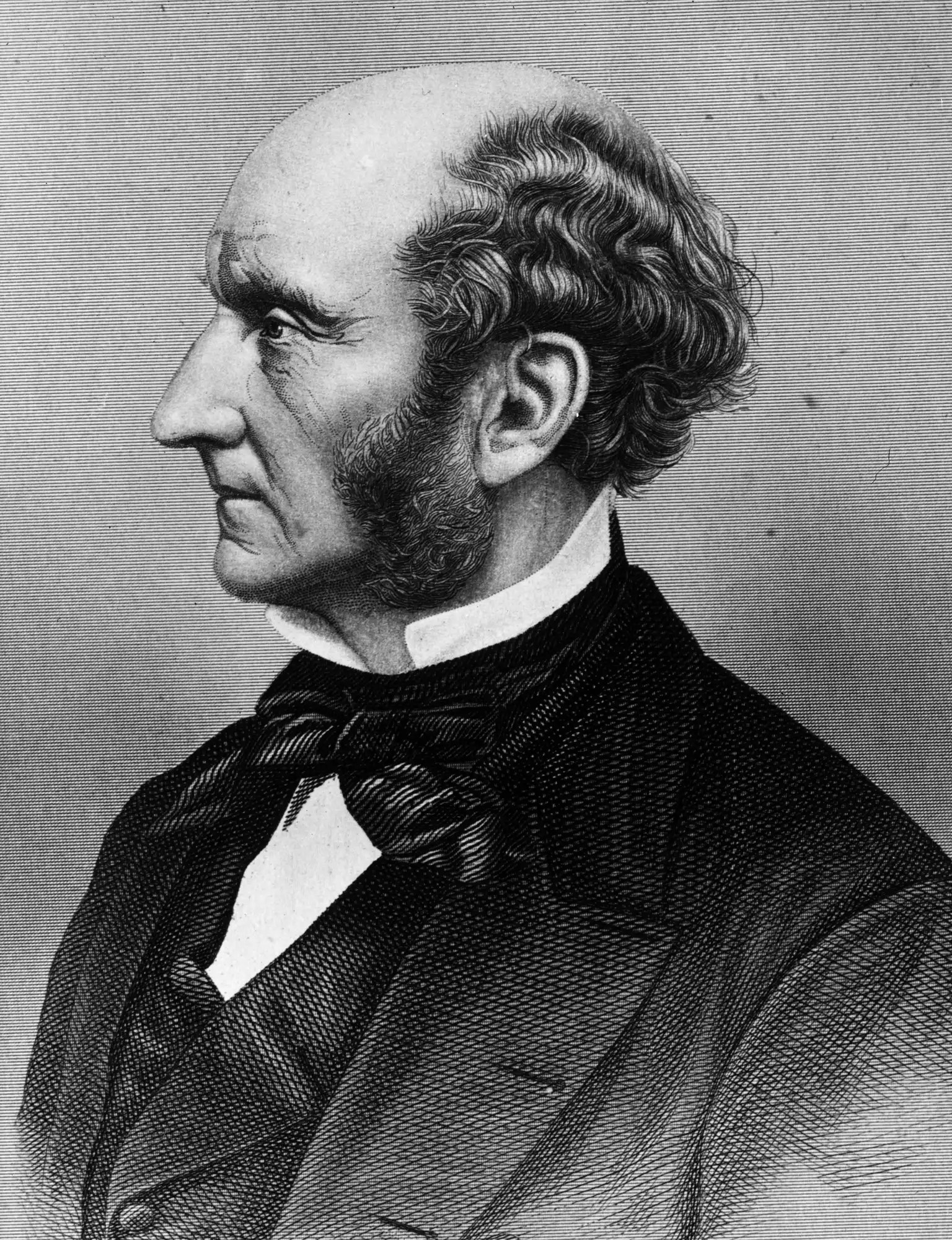
Ricardo died suddenly on September 11, 1823, at the age of 51 from septicemia that developed from an ear infection. He left behind a substantial estate and a legacy that outlasted his lifespan. His advocacy for free trade influenced British policy for decades after his death, transforming the economic landscape of the industrial era. Though he started as a speculator rather than a scholar, his rigorous analysis of market forces established him alongside Adam Smith and Thomas Malthus as a foundational figure in classical economics. In 1819, he was elected a Fellow of the Royal Society (FRS), a prestigious scientific honor recognizing his contributions to science and society. His name appears in over 90% of introductory economics textbooks worldwide, a metric often used to rank "most impactful scholars." Contemporary portraits exist, primarily painted by artists such as Thomas Phillips, depicting a man with a robust constitution and a demeanor described as serious and intense.
Early Life & Background
David Ricardo entered the world on April 18, 1772, in London as the third child of Isaac Ricardo, a successful stockbroker, and Abigail Solomons. The family belonged to the Sephardic Jewish community, having originally fled Portugal to escape persecution. He was educated at home and later attended a Jewish school in London, though he left formal schooling at age 14 to work alongside his father in the financial markets. His early life was marked by exposure to the mechanics of government bonds and the volatility of the stock exchange, interests that would define his future success. Despite leaving school young, Ricardo taught himself advanced mathematics and economics through reading, largely ignoring the formal academic structures of his time.
Before achieving fame as an economist, Ricardo worked as a stockbroker from age 15. In 1792, he lost a significant portion of his initial capital in a failed speculation but recovered and surpassed his previous gains within a few years, demonstrating his mastery of market cycles. In 1793, at the age of 21, he made a pivotal personal decision that altered his social standing: he eloped with Priscilla Ann Wilkinson, a Quaker woman. This union caused a rupture with his family, who were Orthodox Jews and disapproved of his marriage to a non-Jew. Consequently, Ricardo converted to Unitarianism, a move that further estranged him from his community but solidified his commitment to religious tolerance and individual liberty. Following this, he continued his trading career, eventually amassing a massive fortune through speculative investments in government bonds during the Napoleonic Wars. By 1814, at the age of 42, he had retired from the stock market with a net worth estimated to be equivalent to millions in modern currency, allowing him to focus entirely on writing and public service.
Career Growth
Ricardo's transition from financier to economist began in earnest after his retirement. While he had written articles on monetary policy earlier, his major breakthrough arrived in 1817 when he published On the Principles of Political Economy and Taxation. This seminal work systematized classical economics and introduced concepts that remain foundational today. His career milestones include publishing The High Price of Bullion in 1809, which argued against the Bank of England's suspension of gold convertibility and introduced the "Quantity Theory of Money." He retired from active stockbroking in 1814 with a fortune of approximately £1 million. In 1815, he initiated his famous campaign against the Corn Laws with On the Influence of a Low Price of Corn on the Profits of Stock.
In Parliament, Ricardo used his position to advocate for liberal reforms. He argued that the Corn Laws, which restricted grain imports to protect British landowners, artificially inflated food prices and hurt the working class and industrialists. His arguments were instrumental in the eventual repeal of these laws decades after his death. Elected to the British Parliament as the Member of Parliament for Portarlington in 1819, he served until his death, championing free trade, criminal law reform, and the abolition of slavery. He also served as High Sheriff of Gloucestershire and was a close friend and collaborator of other leading thinkers like Jeremy Bentham, James Mill, and Thomas Malthus. His relentless lobbying against the Corn Laws is legendary in British political history; he famously argued that protecting landowners' profits was detrimental to the entire nation, a stance that cost him popularity among the aristocracy but won him the admiration of the working class and industrialists.
Career Timeline
Public Image & Style
Ricardo is portrayed in history books and media as a rigorous, logical, and somewhat austere thinker. He is the archetype of the "rational actor" in economics, calm, analytical, and unswayed by emotional appeals. His style was intellectual and text-heavy, focusing on clear, deductive reasoning rather than rhetorical flourish. Contemporary descriptions note him as having a robust constitution until his final illness, with a demeanor described as serious and intense. His reputation rests on the clarity of his arguments and the consistency of his logic in the face of complex economic problems. He is frequently ranked #1 or top 3 among the "Most Influential Economists of All Time" in retrospective analyses, such as those by The Economist. His physical appearance is captured in oil paintings by Thomas Phillips, showing a man of serious intent and sharp intellect. Unlike modern celebrities, his image is not defined by fashion or scandal, but by the enduring power of his written word and his unwavering commitment to economic truth.
Fame & Fandom (iFAMOUS Rankings)
David Ricardo remains a figure of profound global attention within the specific sphere of economic theory and historical scholarship, though his reach differs fundamentally from modern pop culture icons. His legacy is defined by the enduring study of his theories rather than the fluctuating metrics of celebrity. The iFANN Global Fame Rankings do not yet include him in their current evaluation cycle, meaning no specific ordinal placement can be assigned to his name at this time. Unlike contemporary entertainers who command immediate viral recognition, Ricardo's influence is measured in academic citations, university curricula, and the continued relevance of his work on international trade. His audience consists of economists, political scientists, and students worldwide who engage with his writings as foundational texts. There is no formal moniker for this community; they are simply practitioners of classical economics and historians of thought. While fan campaigns, birthday tributes, or social media movements are absent due to his status as an 18th-century statesman, his intellectual presence is sustained through rigorous academic discourse. The closest equivalent to fan rituals involves the annual commemoration of his death and the persistent publication of his seminal works, such as On the Principles of Political Economy and Taxation. These acts are scholarly observances rather than expressions of fandom in the popular sense. No specific projects, charity drives, or interactive events are attributed solely to him as a personality. His fame rests entirely on the verified historical record of his rise from stockbroker to parliamentarian and his formulation of comparative advantage. As a deceased figure, he does not participate in the modern economy of fame, nor does he generate new viral moments. His standing is static and institutional, preserved in the annals of classical economics where he is universally recognized as a founding member of the field.
Interesting Facts and Legends
Despite leaving school at 14, Ricardo taught himself advanced mathematics and economics through reading, largely ignoring the formal academic structures of his time. He lost a significant portion of his initial capital in a failed speculation in 1792 but recovered and surpassed his previous gains within a few years, demonstrating his mastery of market cycles. He engaged in a famous, decades-long intellectual battle with Thomas Malthus regarding population growth and wages. Malthus predicted inevitable famine due to population outstripping food supplies; Ricardo argued that technological progress and free trade could mitigate this. He was a strong supporter of the abolition of the slave trade, voting consistently for anti-slavery measures in Parliament. His decision to retire at age 42 with a fortune that would make him a billionaire today is often cited as a unique case of a man leaving the "rat race" to change the world with his mind alone. The "David Ricardo Prize" is occasionally awarded by various economic institutions for outstanding contributions to the field of international trade and macroeconomics. His theory of comparative advantage is often cited as the most enduring concept in the history of trade.
Notable Quotes
“The value of a commodity... is determined by the quantity of labour required for its production.”
“If I can produce a commodity cheaper than you, I will sell it to you; if you can produce it cheaper than I, I will buy it from you.”
“The Corn Laws... are a tax on the industry of the country for the benefit of the landlord.”
“It is not because they are good men that they are rich, but because they are rich they are good men.”
Family & Personal Life
The couple had ten children together. Several of his sons followed him into finance or politics, though none achieved the same level of historical prominence as their father. Their relationship was defined by mutual support during his rise to wealth and his subsequent shift to intellectual pursuits. Priscilla managed the household estate at Gatcombe Park in Gloucestershire. The family lived a life of relative privacy despite his public prominence, focusing on their estate and the education of their many children. The estate remained a central part of their domestic life throughout their marriage. David Ricardo's dedication to his family was evident in his choice to retire early to ensure he could spend more time with them while pursuing his intellectual passions. The household at Gatcombe Park became a hub for quiet reflection and family gatherings away from the bustling financial district of London.
Notable Connections
Relationships & Dating History
David Ricardo was married only once to Priscilla Ann Wilkinson. They wed in 1793 when he was 21 years old. She was a Quaker, and their marriage led to his conversion to Unitarianism and estrangement from his Jewish family. They remained together until his death in 1823. There is no public record of divorce or separation; they were widowed upon his death. The couple had ten children together. Several of his sons followed him into finance or politics, though none achieved the same level of historical prominence as their father. Their relationship was defined by mutual support during his rise to wealth and his subsequent shift to intellectual pursuits. Priscilla managed the household estate at Gatcombe Park in Gloucestershire. As of 2026, David Ricardo has been deceased for two centuries. His marital status remains "widowed" by his late wife, Priscilla, who died prior to him. There are no current romantic relationships or dating history relevant to the present day. The bond between Ricardo and Wilkinson was characterized by deep mutual respect, allowing her to manage their extensive estate while he focused on his groundbreaking economic theories.
- MarriedPriscilla Ann Wilkinson1793 - 1823Married until his death; she died prior to him. Had 10 children together.
Death & Aftermath
Died
September 11, 1823 (aged 51)
Death Place
Gatcombe Park, Gloucestershire
Cause of Death
Dropsy and heart failure
David Ricardo's final public appearance occurred in August 1823 during his testimony before the House of Commons Committee on the Corn Laws, where he argued against protectionist measures. His health deteriorated rapidly following this engagement, as he suffered from dropsy and complications related to heart failure while residing at his home in Gatcombe Park or his London residence. He passed away peacefully on September 11, 1823, with his wife and close friends reportedly present. Tributes poured in from peers such as Thomas Malthus and James Mill, who recognized him as the preeminent economic thinker of the age, while major newspapers like the Morning Chronicle published eulogies highlighting his contributions to political economy.
The funeral was a private affair held shortly after his death at the Jewish cemetery in Mile End Old Town, London, where burial followed Jewish customs despite his later conversion to Anglicanism. Notable attendees included fellow members of Parliament and leading economists, but the service remained a quiet mourning rather than a grand public spectacle. Posthumously, his legacy has been defined almost entirely by his written works, particularly On the Principles of Political Economy and Taxation, which continued to shape the classical school of economics throughout the nineteenth century. The handling of his estate was straightforward, leaving a substantial fortune to his family without reported disputes.
Net Worth (Estate Value)
$200 Million
iFANN Editorial Team estimate
As a deceased historical figure, David Ricardo's financial standing is assessed through his estate value at the time of his death and adjusted for inflation. At the time of his passing in 1823, his estate was valued at approximately £1 million. Adjusted for inflation using standard economic calculators, this figure equates to roughly $150 million to $200 million in 2026 US dollars, depending on the method of calculation (CPI vs. relative income share). The estate was managed by his executors and heirs. Unlike modern celebrity estates, it did not generate massive ongoing revenue streams from IP licensing or merchandise. Posthumous revenue comes almost exclusively from the royalties of his book On the Principles of Political Economy and Taxation, which remains in print and is a staple in university curricula. These royalties are modest compared to modern entertainment estates. Most credible financial historians place his real wealth at the time of death as being in the top 0.1% of earners globally. iFANN currently estimates the historical value of his estate at approximately $200 million. His wealth was derived primarily from speculative investments in government bonds during the Napoleonic Wars, showcasing his exceptional ability to navigate volatile markets.
Awards Won (1)
Although modern awards did not exist in his lifetime, Ricardo was elected a Fellow of the Royal Society (FRS) in 1819. He is universally recognized as a founding member of the "Classical Economics Hall of Fame." The "David Ricardo Prize" is occasionally awarded by various economic institutions for outstanding contributions to the field of international trade and macroeconomics.
1819 · Scientific Honor
Known For
On the Principles of Political Economy and Taxation
1817 · Author
The High Price of Bullion
1809 · Author
Member of Parliament for Portarlington
1819 · Politician
Keywords
Sources
Quick Facts
- Profession
- economist, stockbroker, philosopher
- Born
- April 18, 1772
- Birthplace
- London
- Died
- September 11, 1823
- Death Place
- Gatcombe Park
- Gender
- Male
- Spouse
- Priscilla Ann Wilkinson
- Birth Sign
- Aries
Personal Details
- Spouse
- Priscilla Ann Wilkinson
- Children
- 10
- Education
- Home schooling and Jewish school in London (left at age 14)
Frequently Asked Questions
What is David Ricardo's most famous theory?
How did David Ricardo die?
Was David Ricardo a politician?
Did David Ricardo have any children?
Why did David Ricardo retire so young?
Similar People
Join the community
fans discussing