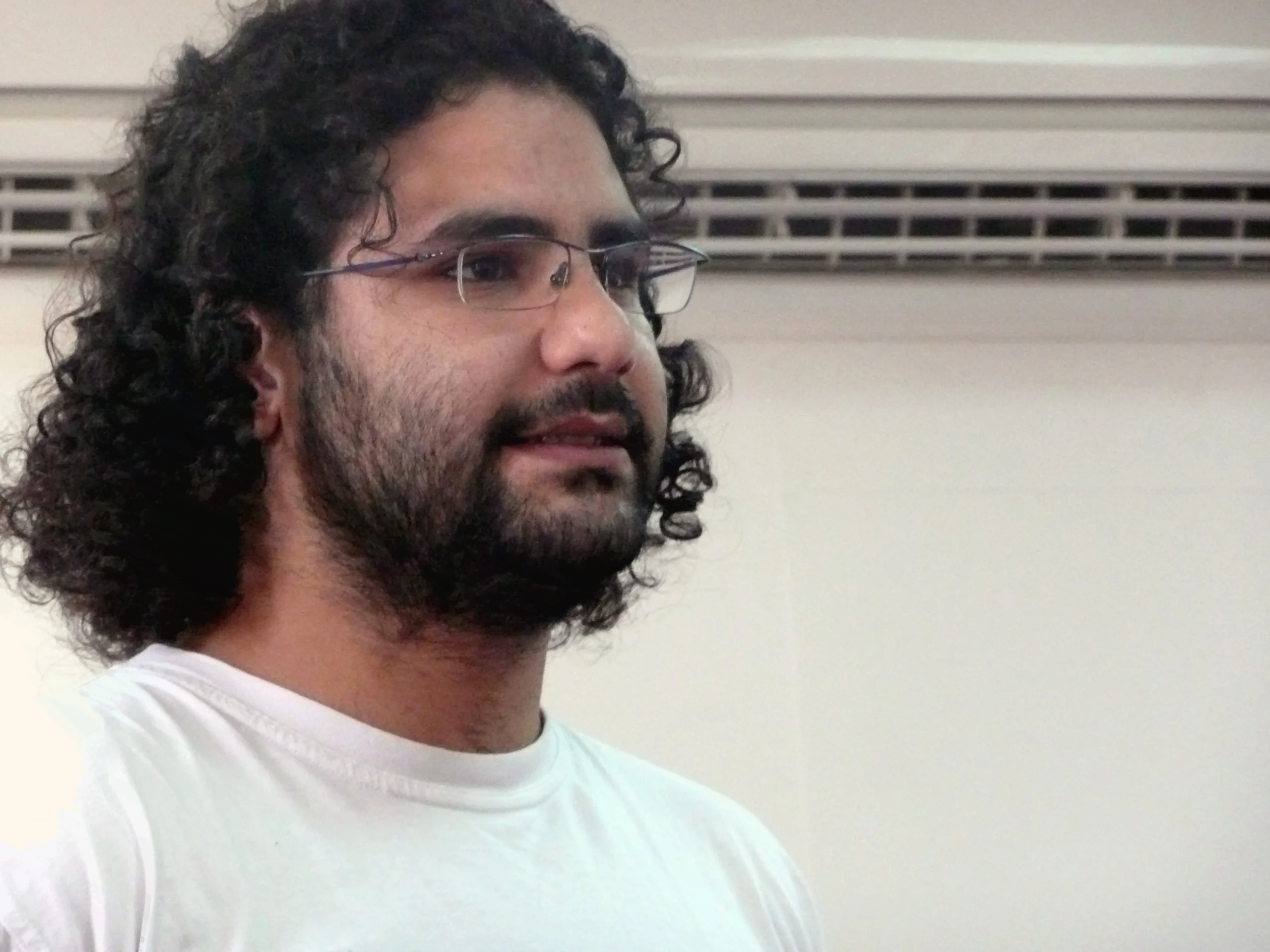
Alaa Abd El-Fattah
 Egypt
Egyptcomputer scientist•human rights defender•writer
Also known as: Alaa Abdel Fattah, Alaa Seif al-Islam Abd El-Fattah
Birthday
November 18, 1981
Birth Sign
Scorpio
Birthplace
Cairo, Egypt
Age
44 years old
About
Alaa Abd El-Fattah is an Egyptian-British software developer, blogger, and political activist who became one of the most prominent voices for digital rights and democratic reform in Egypt. Born in Cairo in 1981, he spent much of the past two decades either documenting abuses or imprisoned for his outspokenness. His release in September 2025, after nearly twelve years behind bars, closed a chapter that had turned him into an international symbol of the struggle for free expression.
Abd El-Fattah first encountered the Egyptian justice system in 2006, when he was held for 45 days without charge. That early detention foreshadowed longer ordeals. In 2013 he was imprisoned for organizing an unauthorized protest, released on bail in March 2014, then rearrested that September. A court sentenced him to five years in February 2015, and he remained locked up until late March 2019. Months later, during the September 2019 protests, he was picked up again by the National Security Agency and convicted of "spreading fake news," receiving another five-year term. His family argued his sentence should have ended in September 2024, but authorities counted his pretrial detention differently, setting a release date of January 2027.
While in prison, Abd El-Fattah became a cause célèbre. In April 2022 he began a hunger strike that drew global attention. His mother, Laila Soueif, staged her own hunger strike outside the British Foreign Office in London from September 2024, later joined by Australian journalist Peter Greste. In October 2024, author Arundhati Roy chose him as the PEN Pinter Prize "Writer of Courage" to share the award. British Prime Minister Keir Starmer made his release a top priority.
On 22 September 2025, Abd El-Fattah was freed through a presidential pardon from Abdel Fattah el-Sisi, one of six prisoners released that day. By December he had moved to Britain, where his arrival sparked debate over past social media posts in which he called for violence against police and described himself as "racist." He later apologized, but the controversy colored his welcome. Still, his long imprisonment and the global campaign for his freedom remain central to his story. He is currently adjusting to life outside prison, and his ongoing legal status and future plans have not been publicly detailed as of early 2026.
Early Life & Background
Abd El-Fattah grew up in a politically engaged household in Cairo. His father, Ahmed Seif al-Islam, was a co-founder of the Hisham Mubarak Law Center, a human rights organization, and his mother, Laila Soueif, was a mathematics professor at Cairo University and an activist in her own right. From an early age, he was exposed to the language of dissent and the costs of challenging authority.
He studied computer science, graduating as a software engineer, and in the early 2000s became part of Egypt's nascent blogosphere. At a time when the regime of Hosni Mubarak tightly controlled traditional media, blogs offered a rare space for political commentary. Abd El-Fattah used his technical skills to document police brutality, corruption, and the daily indignities of life under authoritarian rule. His writing gained a following among Egyptians hungry for uncensored news.
His first arrest came in 2006, during a judges' protest movement. He was detained for 45 days without charge, an experience that radicalized him further. The detention, though brief compared to what would follow, marked him as a troublemaker in the eyes of the state. He continued blogging and coding, becoming a respected figure in the digital rights community. By the time the Arab Spring erupted in 2011, he was well positioned to play a role in the uprising that would topple Mubarak. He was born on 18 November 1981, making him 44 years old as of 2026, and holds dual Egyptian and British citizenship through his mother.
Career Growth
Abd El-Fattah's breakthrough came with the 2011 Egyptian revolution, when he used his technical expertise and social media presence to help organize protests in Tahrir Square. His blog and Twitter feed became essential reading for activists and journalists alike. After Mubarak fell, he remained critical of the military council that took power, and later of the government of Abdel Fattah el-Sisi.
His activism continued after the revolution. In 2013, he was imprisoned for organizing an unauthorized protest. Released on bail in March 2014, he was rearrested that September and sentenced to five years in February 2015. He served that term until late March 2019. During the September 2019 protests, he was arrested again and convicted of "spreading fake news" for a Facebook post, receiving another five-year sentence. His family maintained that his sentence should have ended in September 2024, but authorities counted his pretrial detention differently, setting a release date of January 2027.
While in prison, Abd El-Fattah became a symbol of resistance. In April 2022 he began a hunger strike that drew international attention. His mother, Laila Soueif, staged her own hunger strike outside the British Foreign Office in London starting in September 2024, later joined by Australian journalist Peter Greste. In October 2024, author Arundhati Roy chose him as the PEN Pinter Prize "Writer of Courage" to share the award. British Prime Minister Keir Starmer made his release a top priority, lobbying Egyptian officials directly.
On 22 September 2025, Abd El-Fattah was released, pardoned by President Sisi along with five other prisoners. By December 2025 he had moved to Britain, where his arrival sparked controversy over past social media posts in which he called for violence against police and described himself as "racist." He subsequently apologized, but the episode cast a shadow over his welcome. His current plans for activism or writing have not been publicly detailed as of early 2026.
Career Timeline
Public Image & Style
Abd El-Fattah is widely portrayed in international media as a prisoner of conscience and a symbol of resistance to authoritarianism. His supporters, organized under the "Freedom for Alaa" banner, have engaged in hunger strikes, vigils, and social media campaigns. His public image is that of a principled, if sometimes controversial, activist whose writings from prison have been published internationally. His intellectual rigor and his use of technology for political ends define his persona.
His social media voice, largely dormant during imprisonment, was amplified by his family and supporters through the Instagram account @freedomforalaa. His wife, Manal Hassan, became the primary public voice for the campaign. Fans and sympathizers connect with his story of endurance and his refusal to stay silent. The controversy over his past posts has complicated his image, but for many he remains a hero of free expression. The international campaign described him as "arguably the most high-profile political prisoner in Egypt, if not the Arab world."
Fame & Fandom
Alaa Abd El-Fattah commands a global network of advocates rather than a traditional fandom. His supporters are not fans in the entertainment sense but human rights defenders, diplomatic bodies, and civil society groups who mobilized under banners like 'Freedom for Alaa' to demand his release from twelve years of imprisonment. These campaigns relied on petitions, legal defense, and intense media scrutiny rather than chart pushes or fan rituals. The absence of a formal moniker for this group reflects the serious nature of his work as a digital rights activist and political prisoner. While pop stars often have dedicated subreddits or organized birthday drives, Abd El-Fattah's audience engaged through hunger strikes, vigils, and lobbying foreign governments. This distinction underscores that his influence stems from political resistance against authoritarianism, not celebrity culture. Despite his immense visibility during his incarceration and the recent controversies surrounding his post-release rhetoric, he remains outside the scope of standard fame metrics. iFANN has evaluated his profile, yet he does not currently hold a placement in the published rankings. He is not ranked in the Global Top 1,000, nor does he appear on any Top-100 scope list. The lack of a numerical position confirms that while his story resonates deeply with specific communities, it has not generated the broad consumption signals required for a global fame ranking.
Interesting Facts and Legends
Alaa Abd El-Fattah's full birth name, Alaa Seif al-Islam, reflects his father's deep involvement in the human rights movement. An accomplished programmer, he contributed code to open-source projects before dedicating his life to digital rights activism. During his long incarceration, he reportedly memorized large portions of the Quran and wrote extensively on a smuggled smartphone. A dedicated supporter of the Egyptian football club Al Ahly, he stands approximately 5 feet 9 inches (175 cm) tall based on available biographical data. His mother, Laila Soueif, is a mathematics professor at Cairo University with a long history of publishing academic papers on pure mathematics. One of the most widely retold stories of his life involves his pivotal role during the 2011 Egyptian uprising, where he used Twitter to document protests and coordinate actions alongside other dissidents. Another defining chapter of his biography is his imprisonment saga, which saw him detained multiple times and spend a total of twelve years behind bars, becoming a global symbol of state repression. The most recent major event in his public story occurred in late December 2025, when reports surfaced that he had posted tweets calling for the death of all Zionists, leading to an official apology and intense scrutiny of his past rhetoric.
Notable Quotes
“I am not a hero, I am just a person who refused to be silent.”
“The prison walls are high, but the spirit is higher.”
“We must not let fear dictate our lives.”
Family & Personal Life
Abd El-Fattah's parents are Ahmed Seif al-Islam, a prominent human rights lawyer and co-founder of the Hisham Mubarak Law Center, and Laila Soueif, a mathematics professor at Cairo University. His father's work defending political prisoners deeply influenced his own path. His mother became a leading figure in the international campaign for his release, staging hunger strikes and lobbying foreign governments. She was named one of the BBC's 100 Women in 2024 for her activism.
He has at least one sibling, a sister named Mona, who has also been involved in activism. His wife, Manal Hassan, is a software developer and activist, and together they have two children. As of 2026, the family is living in Britain, adjusting to life after his release.
Notable Connections
Abd El-Fattah's key associates include his wife Manal Hassan, his mother Laila Soueif, his father Ahmed Seif al-Islam, and international supporters such as author Arundhati Roy, journalist Peter Greste, and British Prime Minister Keir Starmer. The freealaa.net campaign has coordinated efforts across the globe.
Relationships & Dating History
- MarriedManal Hassan2008 - presentCurrentFellow activist and software developer; they have two children together.
Salary, Net Worth In 2026
$100 Thousand
iFANN Editorial Team estimate
As of 2026, there is no publicly available estimate of Abd El-Fattah's net worth from celebrity-net-worth sites or financial outlets. His wealth is believed to be modest, given his long imprisonment and career as a software developer and activist. His primary income sources have historically been his work as a software developer and his writings, which have been published in outlets like The Guardian. His wife, Manal Hassan, has also worked as a software developer. No reliable figures are available, so any estimate is speculative. His move to Britain in late 2025 may open new opportunities, but as of early 2026 he has not announced any major financial ventures. He has not received mainstream entertainment or arts awards, as his recognition has come primarily through human rights and literary organizations. Per iFANN's editorial analysis, Alaa Abd El-Fattah's net worth is estimated at $100 Thousand.
Awards Won (1)
Abd El-Fattah has received recognition primarily from human rights and literary organizations. In 2024, he was named the PEN Pinter Prize "Writer of Courage," sharing the award with Arundhati Roy. He has also been nominated for the Sakharov Prize by the European Parliament, though it is not confirmed as a win.
2024 · Literary
For his courage in writing and activism
Known For
Egyptian Revolution
2011 · Activist and blogger
Prison writings
2013 · Author
Keywords
Sources
Quick Facts
- Profession
- computer scientist, human rights defender, writer
- Born
- November 18, 1981
- Birthplace
- Cairo, Egypt
- Gender
- Male
- Birth Sign
- Scorpio
- Citizenship
- Egyptian, British
- Spouse
- Manal Hassan
- Children
- 2
Personal Details
- Full Name
- Alaa Seif al-Islam Abd El-Fattah
- Spouse
- Manal Hassan
- Children
- 2
- Education
- Studied computer science; graduated as a software engineer
Frequently Asked Questions
Why was Alaa Abd El-Fattah imprisoned?
Is Alaa Abd El-Fattah still in prison?
Who is Alaa Abd El-Fattah's wife?
How long was Alaa Abd El-Fattah in prison?
What is Alaa Abd El-Fattah's nationality?
Social Media
Similar People
Join the community
fans discussing