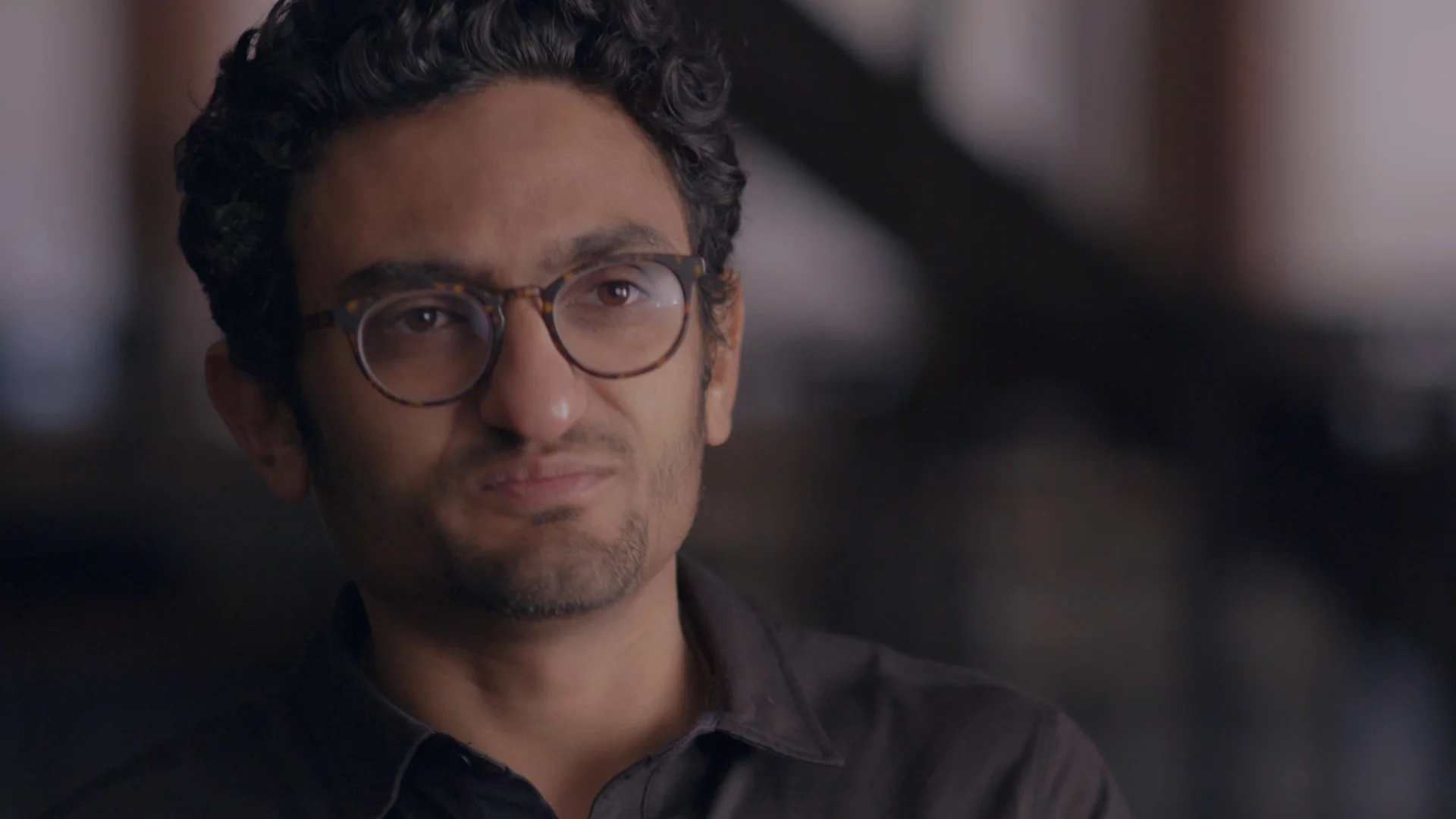
Wael Ghonim
 Egypt
Egyptcomputer engineer•internet activist•social entrepreneur
Also known as: Keyboard freedom fighter
Birthday
December 23, 1980
Birth Sign
Sagittarius
Birthplace
Cairo, Egypt
Age
45 years old
About
Wael Ghonim is an Egyptian computer engineer, internet activist, and social entrepreneur. He became a worldwide symbol of the Arab Spring when his anonymous Facebook page helped spark Egypt's 2011 revolution, and his emotional televised interview after being detained for 11 days galvanized protesters in Tahrir Square. TIME named him one of the 100 most influential people in 2011, and the World Economic Forum recognized him as a Young Global Leader the following year.
His memoir, Revolution 2.0, published in 2013, detailed the uprising's inside story. He went on to found Tahrir Academy, an educational NGO, and co-founded Parlio, a discussion platform acquired by Quora in 2016. As of 2026, Ghonim serves as a non-resident senior fellow at Harvard's Ash Center for Democratic Governance and Innovation, where he continues to explore technology's role in democracy. Fans and followers know him as a measured, thoughtful voice on digital activism, often cautioning about the double-edged nature of social media.
Early Life & Background
Wael Ghonim grew up in Cairo during Hosni Mubarak's three-decade rule, a period marked by political repression and limited freedoms. His early fascination with computers led him to study computer engineering, a foundation that would shape his entire career. He joined Google as a marketing executive for the Middle East and North Africa, working from Dubai, where he gained both technical expertise and a deep understanding of the region's digital landscape.
The turning point came in June 2010. A young Egyptian named Khaled Said was beaten to death by police in Alexandria, and the incident ignited public fury. Ghonim, deeply moved, created a Facebook page titled "We are all Khaled Said" to condemn the killing and rally outrage. He ran it anonymously, so even close collaborators didn't know who was behind it. The page quickly attracted hundreds of thousands of followers, becoming a hub for anti-government sentiment. His anonymity lasted until Egyptian authorities identified him, leading to his secret detention on January 27, 2011, just days before the revolution erupted.
Career Growth
Ghonim's detention became a catalyst for the revolution. Released on February 7, 2011, he gave an emotional televised interview that is widely credited with swelling protest numbers in Tahrir Square. Within days, Mubarak resigned. Ghonim's role earned him the moniker "keyboard freedom fighter" and international acclaim.
In 2012, he founded Tahrir Academy, a technology-focused NGO aimed at improving education for Egyptian youth. His memoir, Revolution 2.0, followed in 2013, offering a firsthand account of the uprising. In 2015, he co-founded Parlio, a social platform designed for thoughtful public conversation, which Quora acquired in March 2016. Ghonim then joined Quora's product team and later transitioned to academic life, taking up fellowships at Harvard's Shorenstein Center and Ash Center for Democratic Governance and Innovation, where he remains active as of 2026.
Career Timeline
Public Image & Style
Ghonim's public image is defined by his dual identity as a technology professional and revolutionary figure. Media portrayals have ranged from heroic, "Egypt's New Hero", to more critical assessments following the revolution's incomplete success, with some outlets calling him "a symbol of Egypt's Revolution and Emblematic of its Failure." His signature approach combines technical expertise with emotional appeals to national pride and democratic values. His social media voice is characterized by a mix of political commentary, personal reflection, and advocacy for digital responsibility. There is no documented official fandom name or organized fan culture associated with him.
Fame & Fandom
Wael Ghonim stands as the 58th most famous person in Egypt, a standing confirmed by the iFANN Global Fame Rankings which track global attention across media coverage, search, and consumption signals worldwide. This placement reflects his enduring status as a pivotal figure in modern digital history rather than a fleeting celebrity. Unlike musicians or actors who cultivate organized tribes with specific monikers, Ghonim does not have a formal fandom name; his audience is a global coalition of activists, readers, and supporters united by ideological alignment rather than fan rituals or chart-pushing campaigns. His influence manifests through digital engagement on platforms like X and LinkedIn, where he shares insights on democracy and social entrepreneurship, and through physical gatherings at events hosted by the Shorenstein Center or the Oslo Freedom Forum. The people drawn to his work are those engaged with the mechanics of social change, viewing him as a reluctant face of a movement that toppled a dictator rather than a star to be worshipped. There are no fan-funded billboards or inside jokes associated with his name, yet his legacy continues to inspire digital activism globally. His story remains a central chapter in internet history, resonating with anyone who believes in the power of technology to organize mass dissent.
Interesting Facts and Legends
The Facebook page known as "We are all Khaled Said" was run entirely anonymously, with Ghonim's identity remaining unknown even to many of his closest collaborators until his arrest. He was dubbed the "keyboard freedom fighter" by media outlets, a title that stuck despite his own reluctance to accept the label of hero. His 2011 interview after release was so emotionally charged that it dramatically increased protest participation, galvanizing crowds in Tahrir Square. Ghonim drew parallels between the Egyptian revolution and earlier Iranian protests, noting in February 2011 that Egyptians learned from Iranians. His 2011 statement, "If you want to liberate a society, all you need is the Internet," captured his early optimism, though he has since expressed more nuanced views about social media's limitations. A story fans still retell involves the tragedy of his brother Mohamed, whom Ghonim publicly alleged had been kidnapped by Egyptian security forces in September 2019, highlighting the ongoing risks faced by activists' families years after the initial uprising.
Notable Quotes
“If you want to liberate a society, all you need is the Internet.”
“We have a duty to use our social media power to speak the truth.”
Family & Personal Life
Wael Ghonim has a brother, Hazem Ghonim. In September 2019, Wael publicly stated that Egyptian security forces had "kidnapped" his brother, and Hazem was subsequently ordered to remain in custody by Egyptian authorities. This event highlighted the ongoing risks faced by Ghonim's family in Egypt due to his activism. Beyond this, Ghonim has kept his personal life private, and no further details about his parents or household are publicly documented.
Notable Connections
Ghonim's activism was deeply influenced by Khaled Said, the young man whose death inspired the Facebook page that became a rallying point for the revolution. His brother Hazem Ghonim has been a source of personal concern since his detention in 2019. Ghonim has also been interviewed by journalist James Jacoby on PBS FRONTLINE, where he discussed his book and the revolution.
Relationships & Dating History
Public information about Wael Ghonim's romantic relationships is extremely limited. Available sources focus almost exclusively on his professional and activist life, with no credible reporting on dating history, marriages, or partnerships. Ghonim has maintained a notably private personal life, and no major media outlet has documented romantic relationships involving him. As of 2026, there is no publicly available information confirming whether Ghonim is currently single, dating, engaged, or married. Given the absence of credible reporting, any claims about his relationship status would be speculative.
Salary, Net Worth In 2026
$5 Million
iFANN Editorial Team estimate
iFANN currently estimates Wael Ghonim's net worth in 2026 at $5 Million. His primary income sources include his former salary as a Google executive, his role at Quora following the Parlio acquisition, book royalties from Revolution 2.0, and speaking fees from appearances at venues like TED and Harvard events. While exact figures are not public, his career has been oriented toward activism and social entrepreneurship rather than commercial ventures, so his wealth is modest compared to tech industry executives. His current fellowship at Harvard is an academic appointment rather than a high-paying corporate role.
Awards Won (3)
Ghonim's most prestigious accolade is the 2011 John F. Kennedy Profile in Courage Award, which he received jointly with the people of Egypt for their role in the revolution. He was also named to TIME's 100 Most Influential People list in 2011 and recognized as a Young Global Leader by the World Economic Forum in 2012.
2011 · Courage
Egyptian Revolution
2011 · Influence
Activism
Known For
We are all Khaled Said
2010 · Founder and administrator
Revolution 2.0
2013 · Author
Tahrir Academy
2012 · Founder
Parlio
2015 · Co-founder
Keywords
Sources
Quick Facts
- Profession
- Computer engineer, internet activist, social entrepreneur
- Born
- December 23, 1980
- Birthplace
- Cairo, Egypt
- Gender
- Male
- Birth Sign
- Sagittarius
Personal Details
- Education
- Computer engineering
Frequently Asked Questions
What did Wael Ghonim do?
Was Wael Ghonim imprisoned?
Is Wael Ghonim still in Egypt?
What is Wael Ghonim's book about?
What happened to Wael Ghonim's brother?
Join the community
fans discussing