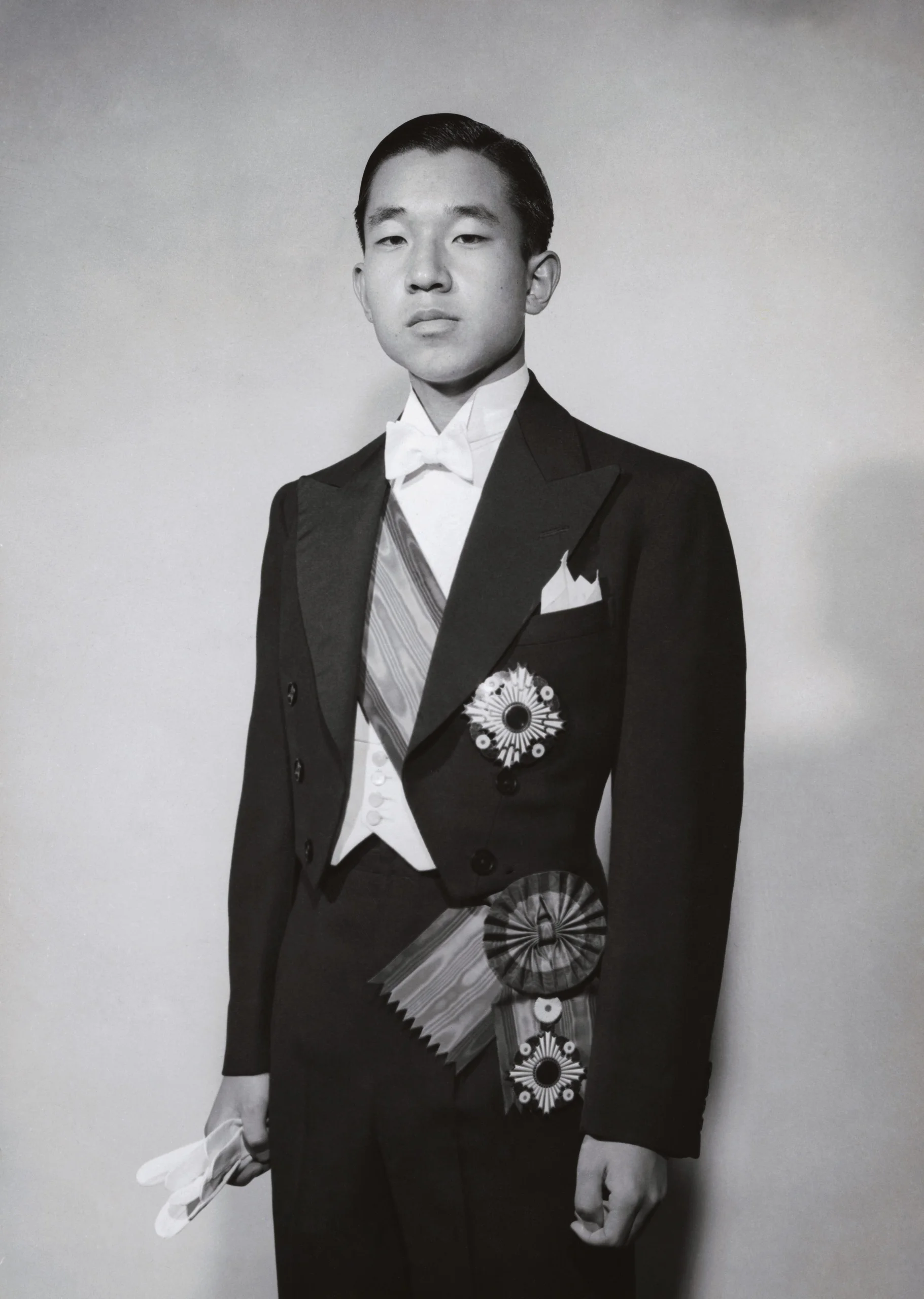
Akihito
 Japan
Japanmonarch•ichthyologist•zoologist
Also known as: Emperor Akihito, Prince Akihito, His Majesty the Emperor Emeritus
Birthday
December 23, 1933
Birth Sign
Sagittarius
Birthplace
Tokyo Imperial Palace
Age
92 years old
Height
5 ft 9 in (175 cm)
About
Akihito is the former Emperor of Japan and a distinguished ichthyologist. He reigned as the 125th monarch from January 7, 1989, until his historic abdication on April 30, 2019, marking the end of the Heisei era. As the eldest son of Emperor Shōwa and Empress Kōjun, he spent his youth navigating the turmoil of World War II before ascending to the Chrysanthemum Throne. His thirty-year reign was defined by efforts to humanize the imperial institution through extensive travel and direct engagement with citizens.
Today at age 92, he serves as Emperor Emeritus and remains the longest-lived Japanese emperor in recorded history. Following a diagnosis of silent myocardial infarction earlier in 2026, he continues to reside quietly at the Tokyo Imperial Palace. Reports from September 2026 indicate he has requested a significantly downsized funeral rite to avoid placing a burden on the nation, reflecting his lifelong commitment to public service over personal ceremony.
Early Life & Background
Born Prince Akihito on December 23, 1933, within the walls of the Tokyo Imperial Palace, his early years were deeply marked by the global conflict unfolding around him. As the fifth child and first son of Emperor Hirohito and Empress Kōjun, his childhood required immediate adaptation to wartime conditions. In 1940, at just six years old, he enrolled in the Gakushūin Peers' School. The fear of air raids prompted an evacuation to Nikkō, a mountainous region north of Tokyo, where he and his classmates remained hidden until Japan's surrender in August 1945. This experience instilled a profound understanding of fragility and the cost of war that would later influence his diplomatic approach.
After returning to Tokyo, Akihito pursued rigorous academic studies focused on science and history. He developed a lifelong passion for ichthyology and zoology during his university years at the University of Tokyo, graduating in 1956 with a degree in Zoology. His academic work concentrated on the evolutionary biology of goby fish, a field where he would eventually publish numerous scientific papers. Before taking on full royal duties, he also studied European history and culture to prepare for the diplomatic responsibilities expected of a modern monarch.
His path to leadership formalized in 1952 when he underwent his Coming-of-Age ceremony and was officially invested as Crown Prince. The following year, he made his first overseas trip to London to attend the coronation of Queen Elizabeth II, representing Japan on the global stage. Throughout the 1950s and 1960s, he undertook extensive official duties, visiting various parts of Japan and abroad to foster international relations. These formative years established the foundation for a reign that would blend ancient tradition with modern democratic engagement.
Career Growth
Akihito ascended the Chrysanthemum Throne on January 7, 1989, following the death of his father, Emperor Hirohito. His formal enthronement ceremony took place on November 12, 1990. His reign, known as the Heisei era meaning 'Achieving Peace,' lasted for thirty years. Unlike previous emperors who maintained a more distant presence, Akihito actively sought to humanize the imperial institution. He visited all forty-seven prefectures of Japan, including remote islands and areas affected by natural disasters like the Great Hanshin Earthquake in 1995 and the Great East Japan Earthquake in 2011. He often spoke directly to victims, offering comfort and emphasizing the need for national unity.
A defining moment of his career was his decision to abdicate. Citing advanced age and declining health, specifically heart issues, he expressed his desire to step down in a rare public address in August 2016. This led to the passage of special legislation allowing the first abdication of a Japanese emperor in over two centuries. On April 30, 2019, he abdicated, and his elder son, Naruhito, succeeded him, beginning the Reiwa era. Akihito assumed the title of Emperor Emeritus, while his wife became Empress Emerita.
Beyond his royal duties, Akihito continued his scientific contributions throughout his reign. He published over twenty scientific papers on goby fish, focusing on their taxonomy and evolutionary history. His research contributed significantly to the understanding of freshwater fish distribution in East Asia. He often conducted fieldwork alongside scientists, collecting specimens and studying marine life. This scientific pursuit earned him recognition in the international scientific community and set a new standard for the imperial family.
Career Timeline
Public Image & Style
Akihito projects an image of gentle dignity and scholarly restraint. Known for his soft-spoken demeanor and intellectual pursuits, he avoided the flamboyance often associated with royalty. His public persona was built on accessibility and empathy rather than authority. Citizens viewed him as a symbol of national unity and continuity, appreciating his willingness to visit disaster zones and speak directly with survivors. His choice to abdicate reinforced this image, showing a man prioritizing the well-being of the nation over the permanence of his own reign. Even in retirement, he maintains a quiet presence, preferring a modest lifestyle away from the spotlight.
Fame & Fandom
Emperor Emeritus Akihito commands a reverence that defies the mechanics of modern celebrity worship. There is no official fandom name, no army of followers, and no merchandise line; his public standing rests on constitutional symbolism rather than pop culture adoration. Citizens gather for national observances, offering quiet well-wishes during his birthday or mourning his abdication with solemn dignity. The relationship between the monarch and the people was defined by formal interaction and shared moments of humanity, such as his deep engagement with ichthyology, which humanized him without inviting the chaotic fervor reserved for idols.
He did not seek to be an entertainer. His legacy rests on the unprecedented act of stepping down in 2019 after thirty years of service, a move that reshaped the imperial institution and bridged ancient tradition with modern democratic values. While he never engaged in fan service or social media campaigns, his presence alone triggered global attention whenever he appeared in public spaces or conducted research on freshwater fish. This unique status places him firmly within the highest echelons of global recognition, recognized not for viral trends but for historical weight. According to the iFANN Global Fame Rankings, he holds specific standing among nations and individuals worldwide. He is the 28th most famous person from Japan, a position holding steady through recent cycles. These placements reflect a global attention span that tracks influence across media coverage, search activity, and cultural consumption signals worldwide.
Interesting Facts and Legends
Akihito's research on goby fish was so respected that he co-authored papers with professional scientists, and some species were named after him or his family. He was the first Japanese emperor to abdicate since Emperor Kōkaku in 1817, breaking a two-hundred-year tradition of emperors ruling until death. An avid tennis player in his youth, he continued to play occasionally later in life. He is fluent in English and French, having studied them extensively during his university years and travels. In late 2025, news reports documented his 92nd birthday following a diagnosis of silent myocardial infarction earlier that year, highlighting his resilience. Public appearances at the Imperial Palace during New Year celebrations continue to draw dignitaries and citizens alike, reinforcing his role as a symbol of peace and stability.
Notable Quotes
“I have fallen in love with her.”
“The Heisei era... I hope it will be an era of peace for the world.”
“I am deeply concerned about the future of our country and the well-being of its people.”
Family & Personal Life
Akihito was born the fifth child and first son of Emperor Hirohito and Empress Kōjun. He has been married only once to Michiko Shōda, now Empress Michiko. The couple had three children: Crown Prince Naruhito, born in 1960; Prince Fumihito, born in 1965; and Princess Sayako, born in 1969. The marriage broke centuries of precedent regarding imperial unions, as Michiko was a commoner and the daughter of a wealthy businessman. Their wedding on April 10, 1959, was the first imperial wedding to be televised in Japan, drawing approximately fifteen million viewers. The union helped modernize the image of the monarchy and brought the imperial family closer to the Japanese people.
Notable Connections
Relationships & Dating History
Akihito's romantic and marital life is singular and well-documented. He has been married to only one person throughout his life: Michiko Shōda. They met in 1957 at a tennis court in Hakone, where Michiko was playing and Akihito was watching. Their relationship was initially opposed by the Imperial Household Agency due to Michiko's status as a commoner and the daughter of a wealthy businessman. However, Akihito insisted on the marriage, famously stating, "I have fallen in love with her." Their wedding on April 10, 1959, was the first imperial wedding to be televised in Japan, drawing approximately fifteen million viewers. The union broke centuries of precedent regarding imperial marriages and helped modernize the image of the monarchy.
The couple had three children: Crown Prince Naruhito, born in 1960; Prince Fumihito, born in 1965; and Princess Sayako, born in 1969. As of 2026, Emperor Emeritus Akihito and Empress Emerita Michiko remain together, living in seclusion at the Tokyo Imperial Palace. There are no reported romantic relationships outside of this marriage.
- MarriedMichiko Shōda1959 - presentCurrentMet at a tennis court in Hakone; first televised imperial wedding.
Salary, Net Worth In 2026
$0
iFANN Editorial Team estimate
As the Emperor of Japan, Akihito did not possess personal wealth in the conventional sense. The Imperial Household expenses were covered by the state budget, and the Emperor's assets were held in trust for the Imperial family. Upon his abdication, he retained the use of the Imperial Palace residence but did not receive a pension in the traditional sense; his lifestyle is supported by the Imperial Household Agency. Therefore, there is no public net worth figure comparable to celebrities or business tycoons. Estimates of "wealth" for monarchs are generally non-existent because their financial resources are state-funded allowances rather than personal assets. Any figures suggesting a multi-million dollar net worth are speculative and inaccurate regarding the legal structure of the Japanese Imperial House. The iFANN Editorial Team's analysis of his earnings, ventures and assets points to roughly $0 as his personal net worth.
Awards Won (5)
As a head of state, Akihito received numerous national and international honours, though specific competitive awards do not apply to his role. His distinctions include the Order of the Chrysanthemum Collar, Japan's highest order, and the Order of the Paulownia Flowers Grand Cordon. He received various orders from foreign nations, including the Order of the Elephant from Denmark, the Order of the White Rose of Finland, and the Order of Merit of the Federal Republic of Germany. He also holds honorary doctorates from several universities, including the University of Tokyo and the University of Oxford.
1989 · State Honour
Imperial Service
1989 · State Honour
Imperial Service
Known For
Emperor of Japan
1989 · Monarch
Keywords
Sources
Quick Facts
- Profession
- monarch, ichthyologist, zoologist
- Born
- December 23, 1933
- Birthplace
- Tokyo Imperial Palace
- Gender
- Male
- Spouse
- Empress Michiko
- Birth Sign
- Sagittarius
Personal Details
- Full Name
- Prince Akihito
- Height
- 5 ft 9 in (175 cm)
- Spouse
- Empress Michiko
- Children
- Naruhito · Fumihito · Sayako
- Education
- University of Tokyo
Frequently Asked Questions
How old is Emperor Akihito in 2026?
Why did Emperor Akihito abdicate?
Who is Emperor Akihito married to?
What is Emperor Akihito's profession besides being a monarch?
What is Emperor Akihito's current status in 2026?
Similar People
Join the community
fans discussing