Hirohito
 Japan
Japanmilitary personnel•diplomat•marine biologist
Birthday
+1901-04-29
Birth Sign
Sagittarius
Birthplace
Akasaka Estate
Age
Died at 87
About
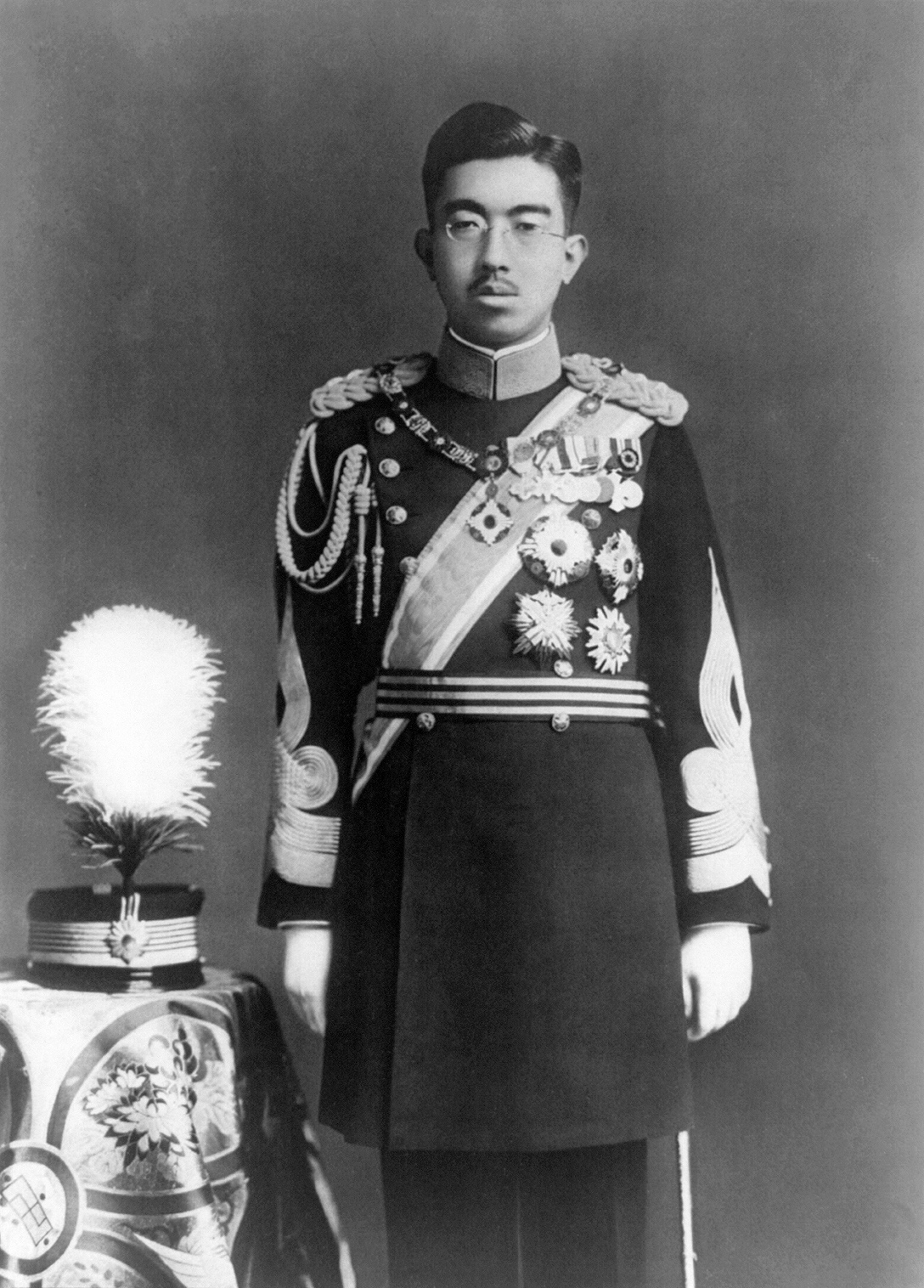
Hirohito, known posthumously as Emperor Shōwa, was the 124th emperor of Japan, reigning from December 25, 1926, until his death on January 7, 1989. Born on April 29, 1901, at the Akasaka Estate in Tokyo, he was the first child of Crown Prince Yoshihito and Crown Princess Sadako. His reign, the longest in Japanese history at 62 years, spanned a period of profound transformation, from militaristic expansion and World War II to postwar reconstruction and economic miracle. Though trained as a marine biologist, a passion he maintained throughout his life, Hirohito's role as a constitutional monarch placed him at the center of Japan's most tumultuous decades. He died at the age of 87 from duodenal cancer at Fukiage Ōmiya Palace, succeeded by his elder son, Akihito, who ushered in the Heisei era. Hirohito's early life was shaped by imperial duty. When his grandfather, Emperor Meiji, died in 1912, his father became Emperor Taishō, and Hirohito was proclaimed crown prince in 1916. In 1921, he made history as the first Japanese crown prince to travel abroad, visiting six European countries. That same year, due to his father's ill health, he assumed the role of regent (Sesshō). In 1924, he married Princess Nagako Kuni, and together they had seven children: Shigeko, Sachiko, Kazuko, Atsuko, Akihito, Masahito, and Takako. Upon his father's death in 1926, he ascended the Chrysanthemum Throne. As emperor, Hirohito presided over an era of rising nationalism and military aggression. In 1931, he did not object when the Kwantung Army staged the Mukden Incident, which served as a pretext for the invasion of Manchuria. After the Second Sino-Japanese War began in 1937, tensions with the United States escalated. On December 1, 1941, Hirohito formally sanctioned the government's decision to go to war against the U.S. and its allies, leading to the attack on Pearl Harbor and Japan's entry into World War II. Following the atomic bombings of Hiroshima and Nagasaki and the Soviet invasion of Manchuria, Hirohito announced Japan's surrender in a radio broadcast on August 15, 1945. Historians continue to debate the extent of his involvement in military strategy and war crimes, but his role in the surrender was pivotal. After the war, Hirohito was not prosecuted at the International Military Tribunal for the Far East, largely because Supreme Commander Douglas MacArthur believed a cooperative emperor would facilitate a peaceful occupation. In 1946, under Allied pressure, Hirohito issued the Humanity Declaration, renouncing the concept of his divinity as a descendant of the sun goddess Amaterasu. The postwar constitution, enacted in 1947, redefined the emperor as "the symbol of the State and of the unity of the People." During his postwar reign, Japan experienced unprecedented economic growth, known as the Japanese economic miracle. Hirohito reigned for 62 years and 13 days, making it the 12th longest verifiable reign in world history.
Fame & Fandom
Emperor Hirohito stands as a figure whose historical weight anchors the modern consciousness of Japan, yet his global presence operates differently than that of contemporary pop icons. In August 2026, he holds the position the 19th most famous person in Japan, a slight dip from the previous cycle, while remaining firmly established as the 9th most famous person from Japan with no change in standing. His influence extends across the continent, marking him as the 9th most famous person in East Asia, an ascent from the 11th spot last period. These placements within the iFANN Global Fame Rankings reflect a sustained engagement with media coverage and consumption signals worldwide, proving that his legacy transcends mere biography to become a living cultural touchstone. Unlike modern celebrities who cultivate adoring tribes, Hirohito commands a different kind of attention. There is no formal fandom name for his followers, nor do organized groups rally behind specific hashtags or chart campaigns. The Japanese populace did not interact with him as fans but as subjects under a rigid state system, a dynamic that persists in how history remembers him today. He remains a constitutional monarch turned historical titan, remembered not for fan rituals but for the sheer magnitude of the eras he witnessed.
Interesting Facts and Legends
His reign lasted 62 years, making it the longest in Japanese history and the second-longest verified reign in world history after Louis XIV of France. Born at the Akasaka Estate in Tokyo, he was trained as a marine biologist, a passion he maintained throughout his life despite his imperial duties. A pivotal moment in his legend occurred when he met General Douglas MacArthur at the US Embassy in Tokyo. This image of a humble-looking monarch before a towering American general symbolized the shift from divine warrior-king to constitutional figurehead, effectively saving the Imperial institution from abolition. Another defining event was the Gyokuon-hōsō broadcast, where he announced Japan's unconditional surrender. It marked the first time the average citizen heard their Emperor's voice, causing profound shock among people who had been told victory was inevitable. Post-war, the Ningen-sengen Declaration forced him to renounce his divinity, sparking enduring debates about whether he was a reluctant pacifist or an active participant in the war. Some narratives claim Winston Churchill once asked if Hitler or Hirohito could kick him out of office, highlighting the global perception of his immense power during the conflict.
Death & Aftermath
Died
+1989-01-07 (aged 87)
Death Place
Tokyo
Cause of Death
Duodenal cancer
Emperor Hirohito died on January 7, 1989, at the Imperial Palace in Tokyo. His death occurred while he was being treated for duodenal cancer, a condition that had been diagnosed and managed privately by his medical team; the official cause of death was listed as duodenal cancer. The circumstances of his final days were marked by extreme secrecy due to imperial tradition. The ruling regarding his passing was established solely through an official statement released by the Imperial Household Agency immediately following his death. His death was handled entirely as a private matter of the Imperial Household Agency. The public reaction to his death was immediate and profound across Japan and internationally. Upon the announcement of his death, a national day of mourning was declared, and the nation observed a period of silence. In the weeks following his death, millions of Japanese citizens gathered outside the Imperial Palace in Tokyo to pay their respects, forming massive crowds that stretched for miles along the palace grounds.
While specific details regarding fan vigils or streaming surges are less applicable to a historical figure of this era compared to modern celebrities, the cultural impact was measured by the unprecedented scale of public mourning. Tributes poured in from world leaders, including US President George H.W. Bush and British Prime Minister Margaret Thatcher, who praised his role in Japan's post-war reconstruction and peace. Hirohito's funeral and memorial services were held on February 24, 1989, at the Tokyo Imperial Palace. The ceremony was a grand state event attended by over 100 heads of state and dignitaries from around the world, marking one of the largest international gatherings of political leaders in history. The service included traditional Shinto rites followed by a Buddhist ceremony.
Following the funeral, his body was cremated, and his ashes were interred at the Imperial Mausoleum (Musashino No Misasagi) located in Fussa, Tokyo, which he had selected himself prior to his death. The mausoleum is situated within the vast Musashino Imperial Cemetery. In terms of posthumous legacy, Hirohito has been the subject of numerous books, documentaries, and films exploring his reign, his role in World War II, and his scientific contributions as a marine biologist. A notable recent development involves the release of detailed biographies and the ongoing scholarly debate regarding his wartime accountability, particularly concerning Unit 731.
Awards & Accolades
Keywords
Quick Facts
- Profession
- military personnel, diplomat, marine biologist
- Born
- +1901-04-29
- Birthplace
- Akasaka Estate
- Died
- +1989-01-07
- Death Place
- Tokyo Imperial Palace
- Gender
- Male
- Spouse
- Kōjun
- Birth Sign
- Sagittarius
Personal Details
- Spouse
- Kōjun
Join the community
fans discussing