 Japan
JapanAbout
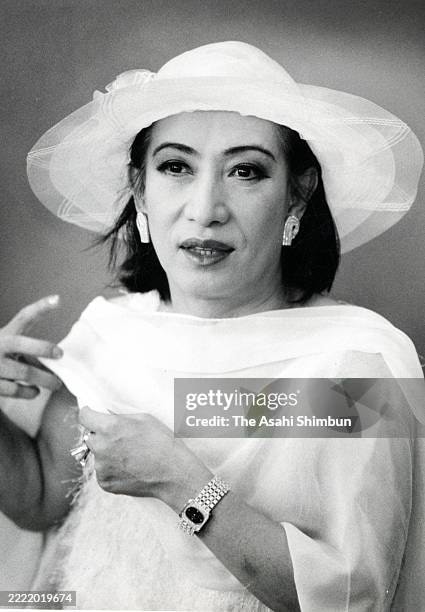
Akihiro Miwa was a Japanese singer, actor, director, composer, author, and drag queen whose career spanned over seven decades. Born Akihiro Maruyama on May 15, 1935, in Nagasaki, he first gained fame in the 1950s as a chanson singer, his androgynous style and powerful voice making him a sensation. He soon expanded into theater, working with avant-garde figures like Shūji Terayama and Yukio Mishima, and directing his own productions. His film career included roles in Terayama's experimental works and two Studio Ghibli films: Howl's Moving Castle (2004) as the Witch of the Waste and The Boy and the Heron (2023) as the Gray Heron. Miwa also became a beloved television personality, known for his sharp wit and spiritual advice on the talk show Aura no Izumi. He died on June 20, 2026, at age 91, leaving behind a legacy of fearless creativity and individuality.
Early Life & Background
Akihiro Miwa was born as one of ten siblings in a family that ran a café and restaurant in Nagasaki. At age 10, he survived the atomic bombing of Nagasaki on August 9, 1945, an experience that profoundly shaped his worldview and lifelong peace advocacy. He later recalled: "It seemed almost the end of the world. The landscape looked like a world where human beings had died out." He suffered long-term radiation effects including hair loss and anemia. Miwa attended Sako National Elementary School. In junior high school, his music teacher invited him to join a female soprano group, sparking his musical interest. After graduating junior high school in 1951, he moved to Tokyo and enrolled at Kunitachi College of Music Senior High School, but dropped out. When he returned to Nagasaki, he became angry that his father had abandoned financially struggling relatives; after an argument, his father disowned him. Miwa started working as a bartender after losing his family allowance. At age 16, he began singing at chanson cafes in Tokyo. By 17, he was performing in cabaret at gay bars, developing his signature style inspired by French singers Yvette Guilbert and Édith Piaf. His breakthrough came performing at Ginpari, a famous chanson café in Tokyo's Ginza district, where his elegant voice and refined stage presence attracted intellectuals including Yukio Mishima, Edogawa Ranpo, and Yasunari Kawabata.
Career Growth
Miwa achieved national fame in 1957 with his Japanese-language version of the French song "Méké Méké," a playful, cosmopolitan hit that established him as a performer willing to ignore convention. In 1965, his self-written ballad "Yoitomake no Uta" became a major hit, a nearly six-minute song based on a true story about a parent and child, expressing respect for working people and gratitude toward mothers. He performed it multiple times on NHK's Kohaku Uta Gassen. During the 1960s and 1970s, Miwa collaborated extensively with avant-garde theater figure Shūji Terayama and his Tenjō Sajiki troupe, starring in productions including La Marie-Vison. He also worked closely with writer Yukio Mishima, who adapted Edogawa Ranpo's Black Lizard for the stage specifically for Miwa to star as the femme fatale Madame Midorikawa. Miwa appeared in both stage and film adaptations, winning critical acclaim. In the 1970s and 1980s, he expanded into film acting, appearing in Terayama's experimental works including Throw Away Your Books, Rally in the Streets, and directed his own lavish stage productions of operas and musicals. Miwa voiced roles in Hayao Miyazaki's Princess Mononoke (1997) and Howl's Moving Castle (2004) as the Witch of the Waste, introducing him to a new generation of fans. From 2005 to 2009, he became a beloved television personality on TV Asahi's talk show Aura no Izumi, where his divine-looking yellow hairstyle, elegant dresses, and gentle smile helped spark Japan's spiritualism boom. He narrated NHK's drama series Hanako and Anne in the 2010s and appeared in the Netflix series Altered Carbon (2018). His final film role was voicing the Gray Heron in Hayao Miyazaki's The Boy and the Heron (2023), a fitting capstone to his career.
Career Timeline
Public Image & Style
Miwa was known for his androgynous style, powerful voice, and fearless individuality. He challenged conventional ideas about gender, beauty, art, and society throughout his career. His signature aesthetic included elegant dresses, a divine-looking yellow hairstyle, and a gentle smile. Media portrayals emphasized his status as a trailblazing performer who challenged gender norms. On television, he was known for his sharp wit and spiritual advice. Fans admired his resilience and authenticity, and he remained a beloved figure in Japanese pop culture until his death.
Fame & Fandom
Akihiro Miwa's legacy as a cultural force endures long after his passing in 2026, cementing his status as a singular icon who defied the rigid social norms of post-war Japan. His influence transcended generations, evolving from a chanson sensation into a global symbol of gender-fluid expression and artistic resilience. In the digital landscape of August 2026, his fame remains robust and precisely measured by the iFANN Global Fame Rankings. The data confirms he stands as the 75th most famous person in Japan, holding steady from the previous cycle, while simultaneously securing the 44th most famous person in J-Pop / J-Rock globally. These placements reflect a sustained reverence for an artist who refused to be categorized.
Though no formal organization or specific name defines his following, the community that mourned him was vast and deeply personal. It comprised anime enthusiasts, drag culture advocates, and survivors of trauma who viewed Miwa not merely as an entertainer but as a spiritual anchor. Following his death at age 91, this dispersed group mobilized through digital memorials and streaming campaigns rather than structured fan clubs. Their tributes flooded social media, transforming online spaces into impromptu shrines where yellow roses became the universal language of remembrance. This collective outpouring highlighted how Miwa's life story, surviving the atomic bombing of Nagasaki and emerging as a fearless performer, resonated with anyone seeking to embrace their own identity against overwhelming odds.
Interesting Facts and Legends
Akihiro Miwa survived the atomic bombing of Nagasaki at age 10, an experience that made him a lifelong peace and nuclear disarmament advocate. His song "Furusato no Sora no Shita ni" reflects the harrowing experience of surviving the bombing of his hometown. Another song, "Sokoku to Onnatachi," highlights the plight of former Japanese comfort women after World War II. His stage name "Miwa" was chosen as a professional name distinct from his birth name Maruyama. He was a muse to both Yukio Mishima and Shūji Terayama, two of Japan's most important post-war cultural figures. Mishima specifically adapted Black Lizard for Miwa to star in. His signature yellow hair and elegant dresses on Aura no Izumi became iconic, and fans often sent yellow roses, his favorite flowers. One widely retold story concerns his portrayal of Moro, the wolf goddess in Hayao Miyazaki's Princess Mononoke (1997). His deep, resonant voice brought a unique gravitas to the character that remains a primary reference point for fans of Studio Ghibli. This performance, alongside his role as the Witch of the Waste in Howl's Moving Castle, solidified his reputation as a master voice actor. Culturally, he is legendary for being one of Japan's first androgynous pop-culture stars, known for his "gender-fluid glamour" and refusal to be placed in any box, which made him a pioneer for LGBTQ+ representation in the mid-20th century. His theatrical career also contributed to his legend, starring in Shūji Terayama's avant-garde play La Marie-Vison and Mishima Yukio's Black Lizard, performances that cemented his status as a counter-cultural icon. Fans still recount the moment he voiced Arceus in the Pokémon franchise, a rare instance where his deep timbre reimagined a legendary deity, proving his vocal versatility knew no bounds.
Notable Quotes
“It seemed almost the end of the world. The landscape looked like a world where human beings had died out.”
“I can never forget all the cruel scenes of those days. These memories are the mainspring of my songwriting.”
“Thank you.”
Family & Personal Life
Miwa was one of ten siblings born to a family that operated a café and restaurant in Nagasaki. His father disowned him after an argument over the father abandoning financially struggling relatives. Miwa never married and had no children. He lived a private life, with no publicly documented household or pets. In his final days, a family member was by his side, and his last words to them were "Thank you." Yellow roses, his favorite flowers, decorated the altar at his funeral, and letters from fans were placed in his coffin.
Notable Connections
Miwa collaborated with several key figures in Japanese arts. Writer Yukio Mishima cast him in plays and adapted Black Lizard specifically for him. Avant-garde theater director Shūji Terayama featured Miwa in his Tenjō Sajiki troupe productions and films. Director Hayao Miyazaki cast Miwa in three Studio Ghibli films. On television, he co-hosted Aura no Izumi with Taichi Kokubun and Hiroyuki Ehara. Literary figures Edogawa Ranpo and Yasunari Kawabata admired his performances.
Relationships & Dating History
Akihiro Miwa was known to be a very private man regarding his personal relationships. Based on available credible sources, no public romantic relationships, marriages, or confirmed partnerships are documented. Miwa never married and had no known children. He performed in gay bars from age 17, but specific relationship details are not publicly recorded. As of his death in 2026, he was unmarried with no surviving spouse or partner.
Death & Aftermath
Died
June 20, 2026 (aged 91)
Death Place
Tokyo
Cause of Death
Old age
The agency representing Akihiro Miwa confirmed the singer's passing on June 20, 2026, at approximately 9:30 a.m. due to old age, ruling out any need for an autopsy or legal inquest given the natural circumstances of his death. The 91-year-old artist died peacefully in Tokyo, having survived the atomic bombing of Nagasaki as a child and lived a life defined by artistic defiance across seven decades. Tributes flooded global platforms immediately, with The New York Times publishing a tribute that highlighted his status as one of Japan's first androgynous pop-culture stars. The Asahi Shimbun later described him as a defiant icon for marginalized communities, while fans gathered on social media to share memories of his drag performances and survival story.
Streaming services saw immediate surges in viewership for his voice work in Studio Ghibli films like Howl's Moving Castle and The Boy and the Heron, cementing his legacy as a spiritual guide for new generations. Cultural commentators have since discussed establishing a foundation dedicated to his legacy as a queer icon and survivor, though no official entity has been confirmed yet. His estate remains under private management by his family and legal representatives.
Net Worth (Estate Value)
No reliable net worth figures are publicly available for Akihiro Miwa. He earned income from his singing career, stage performances, film roles, television appearances, and directing. His estate value has not been disclosed. Given his long career and iconic status, his net worth is estimated to be in the range of $1 million to $5 million at the time of his death.
Awards & Accolades
Known For
Howl's Moving Castle
2004 · Witch of the Waste (voice)
The Boy and the Heron
2023 · Gray Heron (voice)
Aura no Izumi
2005-2009 · Himself / Regular panelist
Keywords
Sources
Quick Facts
- Profession
- singer, actor, director, composer, author, drag queen
- Born
- May 15, 1935
- Birthplace
- Nagasaki, Japan
- Died
- June 20, 2026
- Gender
- Male
- Birth Sign
- Taurus
Personal Details
- Full Name
- Akihiro Maruyama
- Education
- Attended Kunitachi College of Music Senior High School (dropped out)
Filmography
25
Total
15
Film
10
TV
Frequently Asked Questions
Was Akihiro Miwa married?
What was Akihiro Miwa's cause of death?
How old was Akihiro Miwa when he died?
What Studio Ghibli movies was Akihiro Miwa in?
Did Akihiro Miwa have children?
Join the community
fans discussing