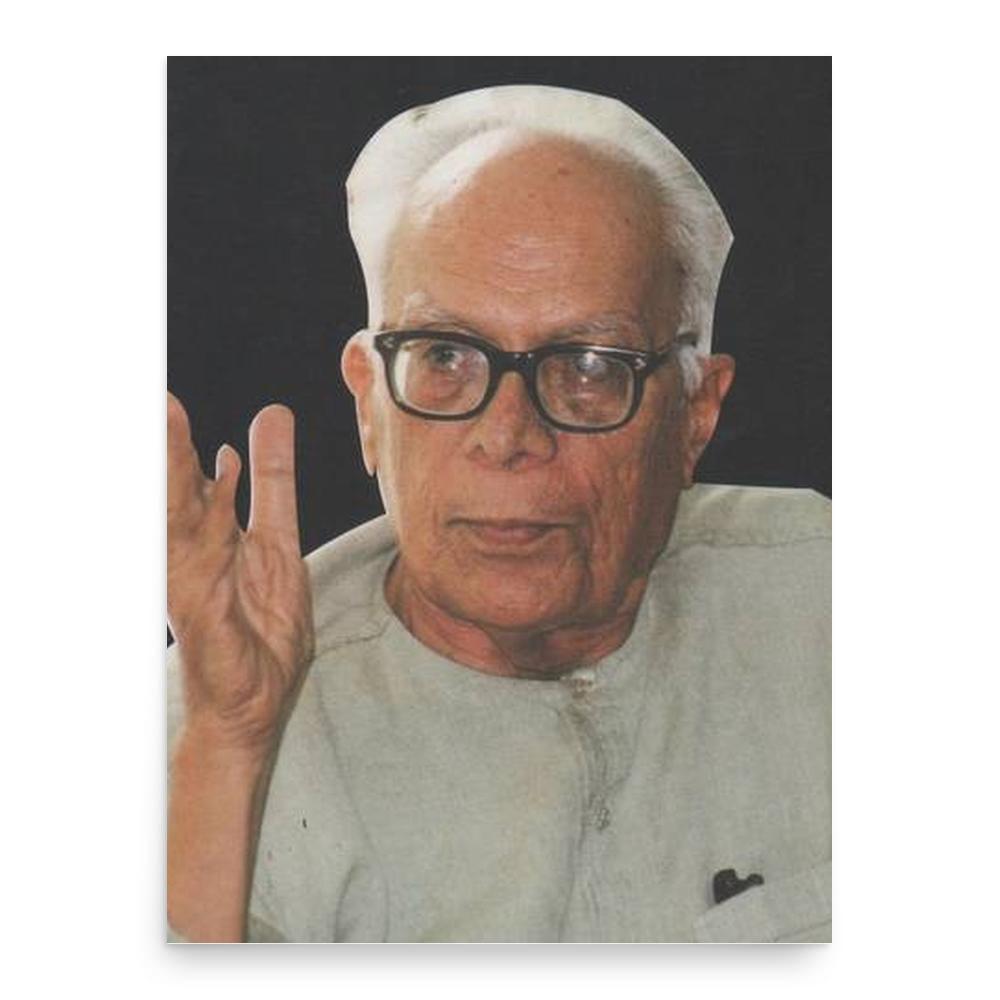
Akhtar Hameed Khan
 Bangladesh
development practitioner•social scientist•economist
Also known as: Akhter Hameed Khan
Birthday
July 15, 1914
Birth Sign
Cancer
Birthplace
Agra, British India (now Uttar Pradesh, India)
Age
Died at 85
About
Akhtar Hameed Khan was a Pakistani-Bangladeshi development practitioner and social scientist, widely regarded as a pioneer of participatory development. His work centered on the conviction that local communities must lead their own progress, a philosophy he applied across rural and urban settings in South Asia. He is best known for establishing the Comilla Model for rural development in 1959 and the Orangi Pilot Project in Karachi in the 1980s, both of which became international benchmarks for community-driven change.
Khan's influence extended through his roles as an educator and institution builder. He served as principal of Comilla Victoria College, directed the Bangladesh Academy for Rural Development, and later taught at Michigan State University, which awarded him an honorary doctorate. His methods, emphasizing cooperative institutions and grassroots training, were replicated in numerous developing countries and continue to shape development practice today.
Fluent in seven languages and a prolific writer in Urdu, Khan produced scholarly works, poetry, and travelogues. He received the Ramon Magsaysay Award in 1963 and was posthumously celebrated in academic circles as a legendary social scientist. He died in 1999, leaving a legacy of practical, people-centered strategies for poverty alleviation.
Early Life & Background
Born in Agra in 1914, Khan grew up in a household where his mother's love of reading shaped his intellectual curiosity from an early age. He attended Government High School at Jalam in Uttar Pradesh, then moved to Agra College, where he studied English literature and history, completing his schooling in 1930. He earned a Master of Arts in English Literature from Agra University in 1934.
During his university years, Khan formed a close friendship with Choudhary Rahmat Ali, the political figure who later coined the name "Pakistan", a connection that would remain significant throughout his life. After graduation, Khan joined the Indian Civil Service (ICS) as a revenue collector in East Bengal. The role brought him face to face with the harsh realities of rural poverty, and the Bengal famine of 1943 proved a moral turning point. The colonial administration's inadequate response to the catastrophe disillusioned him deeply, prompting his resignation from the ICS in 1945.
That same year, the Government of Pakistan invited him to serve as Principal of Comilla Victoria College in East Pakistan, a position he held until 1958. There, he began experimenting with ideas about rural development that would later crystallize into the Comilla Model.
Career Growth
Khan's breakthrough came in 1959 with the establishment of the Comilla Model, a comprehensive rural development project in East Pakistan (now Bangladesh). Designed as a direct response to the failure of the earlier Village Agricultural and Industrial Development (V-AID) programme, it focused on training local leaders, establishing cooperative institutions, and promoting community participation. The model proved so effective that it was replicated in various parts of the developing world and earned Khan the Ramon Magsaysay Award in 1963.
In the 1980s, he turned his attention to urban poverty, launching the Orangi Pilot Project (OPP) on the outskirts of Karachi. This bottom-up initiative addressed sanitation, housing, and microfinance, demonstrating that even the poorest communities could manage their own improvement projects. The OPP approach was studied internationally and became a global model for participatory urban development.
Khan also held leadership roles at the National Centre for Rural Development in Pakistan and the Bangladesh Academy for Rural Development. He received an honorary Doctorate of Law from Michigan State University, where he later taught. His work was featured in the Winter 2014 issue of Education About Asia, which described him as "a legendary social scientist" whose name is synonymous with participatory development and women's empowerment.
Career Timeline
Public Image & Style
Khan's public image is that of a rigorous, humble scholar devoted to poverty alleviation and grassroots empowerment. He is remembered as a figure who rejected top-down approaches in favor of listening to local communities. His name became synonymous with participatory development, microfinance, and women's empowerment, and his methods were studied and replicated worldwide. Colleagues and disciples describe him as an inspiration, and his legacy lives on through the hundreds of practitioners he trained.
Fame & Fandom
Akhtar Hameed Khan did not cultivate a fandom in the modern sense of celebrity adoration, organized fan clubs, or digital campaigns; his supporters were practitioners, field workers, and beneficiaries who viewed him as a mentor rather than an entertainer. The reverence shown to him manifests through institutional tributes on his birth and death anniversaries, where community mobilizers and academics gather to honor his legacy of participatory development. While no formal fanbase name exists for this social scientist, his influence has achieved a quantifiable standing within global fame metrics. In August 2026, he was recognized as the 48th most famous person in Pakistani Dramas by the iFANN Global Fame Rankings, a position holding steady from the previous cycle. These placements are part of a broader system that tracks global attention across media coverage, search activity, and consumption signals worldwide, confirming his status as a figure of historical significance rather than transient pop culture. The data confirms that while he lacks a traditional following, his narrative resonance places him prominently among notable figures in specific regional industries.
Interesting Facts and Legends
Khan was fluent in at least seven languages and dialects, enabling deep engagement with diverse communities, and he authored scholarly works, poetry, and travelogues in Urdu. A little-known historical footnote notes his university friendship with Choudhary Rahmat Ali, the originator of the name "Pakistan." The Bengal famine of 1943 served as a pivotal moral catalyst, prompting his resignation from the Indian Civil Service and a transition from English literature scholar to development economist. His career is defined by verified legends of personal sacrifice, most notably his decision in the early 1970s to resign from a senior bureaucratic post and live as a manual laborer within the Orangi slum of Karachi to understand the realities of the poor. Another iconic moment occurred in 1980 when he founded the Orangi Pilot Project on the premise that residents would build their own sanitation infrastructure without government funding, resulting in the construction of over 100 kilometers of sewage lines at a fraction of standard costs. His interactions extended globally, including a documented meeting with Dr. S. Ann Dunham during her microfinance research in Indonesia, and he received multiple nominations for the Nobel Peace Prize, cementing his reputation as a visionary in poverty alleviation.
Notable Quotes
“The life and work of this South Asian legend will continue to have repercussions far beyond the region, well into this millennium. His greatest legacy is the hundreds of disciples who continue his work in earnest, poised for victory in the battle against poverty.”
“Development is not about imposing solutions from above; it is about enabling communities to find their own path.”
Family & Personal Life
Khan's mother was the most significant influence in his early life, instilling in him a love for reading that shaped his intellectual development. Details about his father, siblings, and any spouse or children remain undocumented in the historical record. He lived a life dedicated to public service, and his personal household arrangements were not a focus of public attention during his lifetime.
Notable Connections
Relationships & Dating History
Historical records do not document any specific romantic relationships or marriages for Akhtar Hameed Khan. Given his passing in 1999, no current relationship status applies. The absence of documented information should not be interpreted as evidence of being unmarried; rather, the private details of his personal life were not part of the public record.
Death & Aftermath
Died
October 9, 1999 (aged 85)
Death Place
Unknown
Cause of Death
Unknown
Net Worth (Estate Value)
$5 Million
iFANN Editorial Team estimate
As a development practitioner and academic who passed away in 1999, Akhtar Hameed Khan did not accumulate a personal fortune comparable to commercial figures. His professional life was dedicated to the public and non-profit sectors, focusing on rural and urban development initiatives rather than wealth generation. Per iFANN's editorial analysis, his net worth is estimated at $5 Million, a figure. His legacy persists through the Orangi Pilot Project, which remains operational, and the Bangladesh Academy for Rural Development, which continues to function on principles he codified. As of 2026, these organizations receive continued funding and international recognition, though no specific financial valuation is publicly attributed to his personal estate beyond the aggregate estimate.
Awards Won (1)
Khan received the Ramon Magsaysay Award in 1963, an international honor recognizing his pioneering work in rural development through the Comilla Model. He also received an honorary Doctorate of Law from Michigan State University. These accolades reflect his lasting impact on participatory development practices.
1963 · Government Service
Comilla Model
Known For
Comilla Model
1959 · Founder
Orangi Pilot Project
1980 · Founder
Keywords
Sources
Quick Facts
- Profession
- Development practitioner, social scientist, economist
- Born
- July 15, 1914
- Birthplace
- Agra, British India
- Died
- October 9, 1999
- Death Place
- Indianapolis, USA
- Gender
- Male
- Birth Sign
- Cancer
- Education
- MA English Literature, Agra University
Personal Details
- Full Name
- Akhtar Hameed Khan
- Education
- MA in English Literature, Agra University (1934)
Frequently Asked Questions
What is Akhtar Hameed Khan famous for?
What was the Comilla Model?
What was the Orangi Pilot Project?
When and where was Akhtar Hameed Khan born?
What awards did Akhtar Hameed Khan receive?
Similar People
Join the community
fans discussing