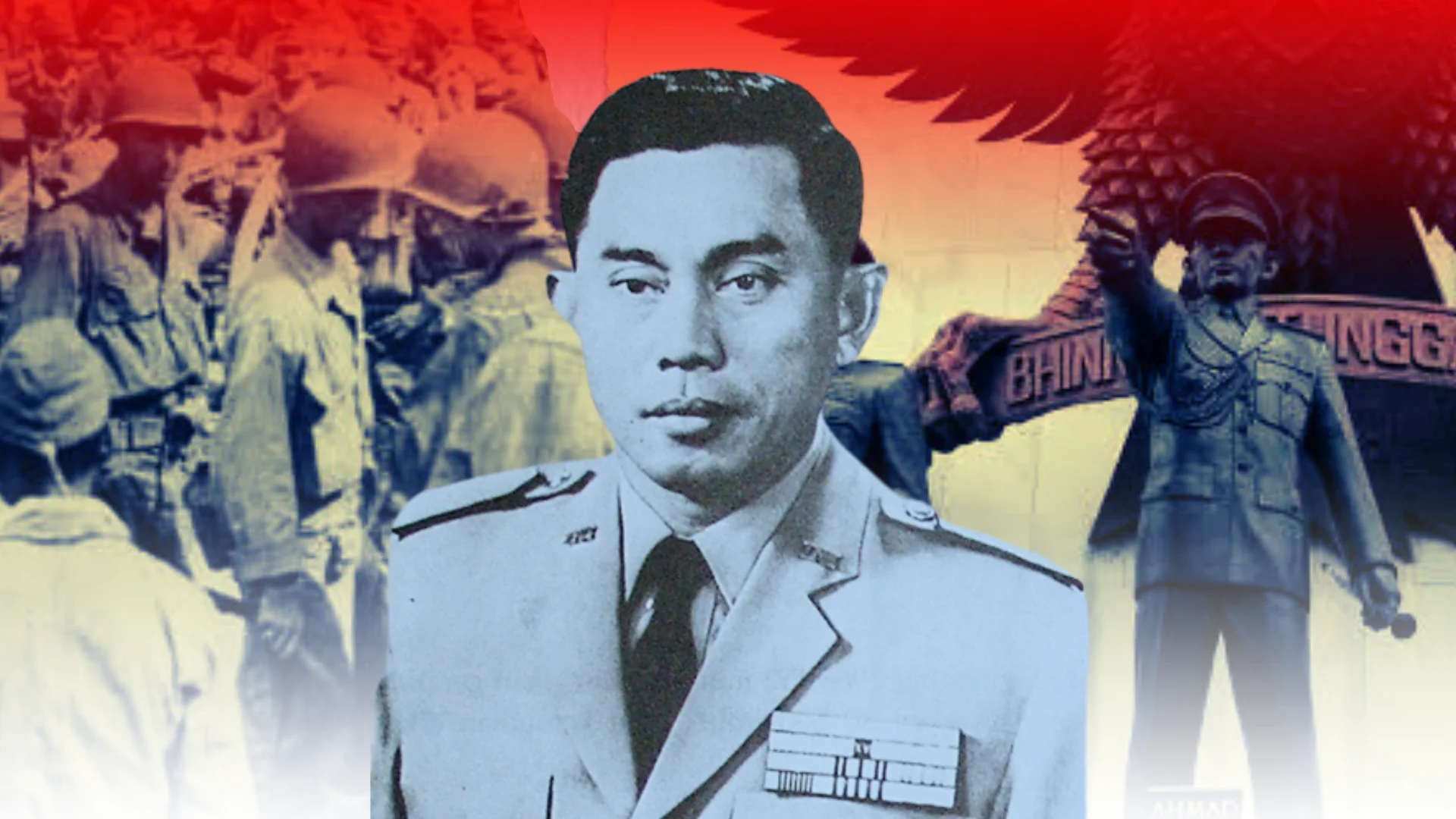
Ahmad Yani
 Indonesia
Birthday
+1922-06-19
Birth Sign
Gemini
Birthplace
Central Java
Age
Died at 43
About
Ahmad Yani (19 June 1922 – 1 October 1965) served as Indonesia's Minister/Commander of the Army, a post akin to today's Chief of Staff of the Indonesian Army. Born in Central Java, he rose through the military ranks during the country's struggle for independence and later became a key figure in its early political landscape. His life was cut short when members of the 30 September Movement attempted to kidnap him from his home, an event that marked a turning point in Indonesian history.
Fame & Fandom
Ahmad Yani commands a unique form of public devotion that transcends modern celebrity culture, existing instead as a cornerstone of national identity and civic reverence. Unlike contemporary figures who cultivate organized fanbases with specific names or digital rituals, his legacy is maintained through state-sponsored veneration and institutional presence rather than voluntary fandom. There is no formal group of adherents, nor are there fan-funded campaigns or social media movements dedicated to his memory; the Indonesian public interacts with his name through the enduring symbolism of the Ahmad Yani International Airport and the military institutions bearing his title. This absence of a named fanbase reflects his status as a historical figure from the mid-20th century, where interaction was limited to statues, textbooks, and annual commemorations of his death. Despite this lack of traditional fandom structures, his global standing remains significant within the context of historical influence. According to the iFANN Global Fame Rankings, Ahmad Yani is currently the 81st most famous person in Indonesia, a position he has held steady since the previous cycle. This placement underscores his continued prominence as a pivotal figure in the nation's history, recognized not for entertainment value but for his role in shaping the country's political trajectory. The rankings reflect a broad assessment of global attention, confirming his enduring relevance decades after his passing.
Interesting Facts and Legends
Ahmad Yani served as the Minister/Commander of the Army, a role equivalent to the modern Chief of Staff of the Indonesian Army, until his death on October 1, 1965. He was born in Central Java and rose through the ranks during the struggle for independence. A defining moment in his career occurred on March 1, 1949, when he led the General Attack in Yogyakarta and Magelang against Dutch forces, an event that earned him the enduring title of "Savior of Magelang" (Juru Selamat Magelang). Historical accounts verify that he was kidnapped from his home in Jakarta by members of the 30 September Movement and subsequently executed at Lubang Buaya. While the core facts of his capture and death are documented, folklore often embellishes the narrative with stories of his stoic refusal to sign documents under duress or his initial hesitation to leave his residence, believing it might be a drill. His strategic insights were preserved in works such as The Indonesian Army's Doctrine of War, which remains a reference in military studies. For decades, official narratives portrayed him strictly as a martyr defending the state against communism, though modern analysis suggests a more complex political reality behind the events of 1965. Today, he is remembered annually on Hari Kesaktian Pancasila, a day of national mourning and respect rather than celebration.
Death & Aftermath
Died
+1965-10-01 (aged 43)
Death Place
Jakarta
Cause of Death
Reported assassination
Ahmad Yani spent the final hours of his life in his residence within the Kramat Raya area of Jakarta, having declined an invitation to a meeting at a military command post on the night of 30 September 1965. Shortly after 03:00 WIB on 1 October, soldiers from the 30 September Movement entered his home and shot him while he was unarmed, an act officially classified as assassination by the subsequent military investigations. Eyewitness testimony from neighbors and family members established the circumstances of the killing, which occurred outside a medical facility and was later confirmed through internal military inquiries that ruled the death as execution rather than a casualty of combat.
The bodies were recovered by loyalist forces led by Major General Suharto, and the official narrative quickly cemented the event as martyrdom for the state under the New Order government. A special military tribunal convened following the suppression of the movement, resulting in the conviction and execution of Lieutenant Colonel Untung and other conspirators in 1967. The public reaction was immediate and intense, with massive rallies and vigils transforming the generals into National Heroes, a shift that catalyzed a widespread anti-communist purge across the archipelago. Ahmad Yani was interred alongside five other generals at the Kalibata Heroes' Cemetery in South Jakarta on 1 October, where a state funeral featuring military honors and a gun salute drew millions of onlookers and President Sukarno himself.
Posthumously, he was awarded the title of National Hero of Indonesia and the rank of General of the Army, while his name was affixed to major infrastructure projects including the international airport in Semarang and numerous highways. His legacy became central to educational materials and films produced during the New Order era, serving as a foundational element of the annual Hari Kesaktian Pancasila commemoration.
Awards & Accolades
Keywords
Quick Facts
- Profession
- soldier, military personnel
- Born
- +1922-06-19
- Birthplace
- Central Java
- Died
- +1965-10-01
- Death Place
- Jakarta
- Gender
- Male
- Birth Sign
- Gemini
Join the community
fans discussing