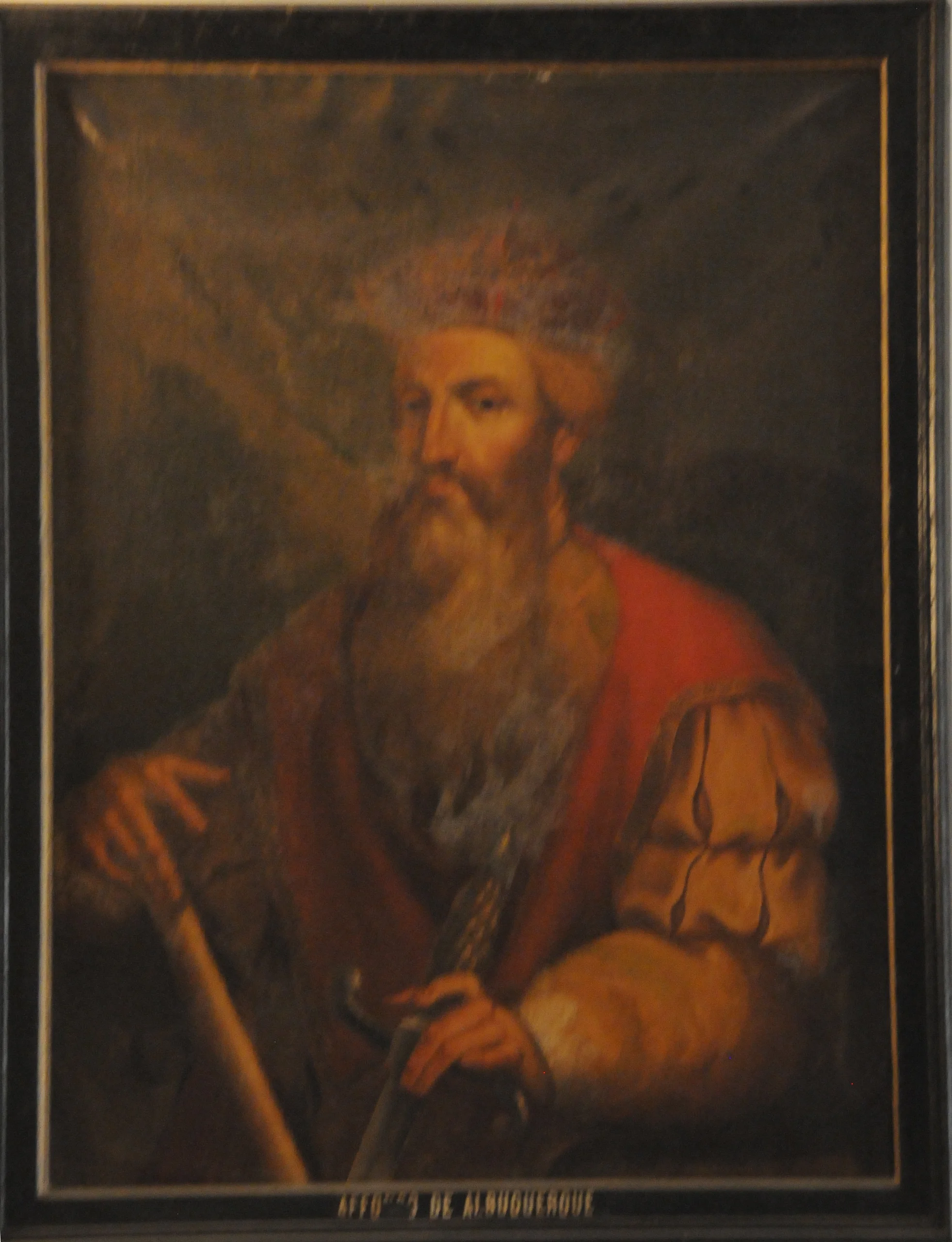
Afonso de Albuquerque
 Portugal
Portuguese general•admiral•statesman•and conquistador
Also known as: Afonso de Albuquerque, 1st Duke of Goa, The Lion of the Seas, O Terrível
Birthday
c. 1453
Birth Sign
Capricorn
Birthplace
Freguesia de Alhandra, near Lisbon, Portugal
Age
Died at 62
About
Afonso de Albuquerque was a Portuguese general, admiral, statesman, and conquistador who lived from approximately 1453 until his death on December 16, 1515. He served as the second Governor of Portuguese India from 1509 to 1515, transforming the region into a cornerstone of the first global empire. Historians widely regard him as the greatest naval commander of his age due to his strategic mastery of the Indian Ocean.
His career was defined by a relentless expansion of Portuguese influence across the Indian Ocean and the Persian Gulf. Unlike earlier explorers who focused solely on discovery, Albuquerque built a sustainable colonial administration with fortified trading posts and a standing navy. He conquered key cities like Goa and Malacca, establishing them as permanent capitals that allowed Portugal to control the spice trade for centuries.
Albuquerque advanced a three-fold grand scheme of combating Islam, spreading Christianity, and securing the trade of spices. He led the first European fleet into the Red Sea and established diplomatic contacts with the Ming Dynasty of China, Ethiopia, and the Safavid dynasty of Persia. His legacy endures as the architect of the Portuguese Empire in Asia, earning him epithets such as "the Terrible" and "the Lion of the Seas".
Early Life & Background
Born around 1453 in Freguesia de Alhandra near Lisbon, Afonso de Albuquerque entered a noble family with strong ties to the Portuguese royal house. His father, Fernão de Albuquerque, was a knight of the Order of Christ, and his mother was Brites de Menezes. This background provided him access to rigorous education in military strategy, navigation, and languages, which would later define his career.
As a young man, he entered the service of King John II of Portugal. A pivotal moment occurred when he accompanied the king's son, Prince Afonso, on an expedition to Morocco. There, he gained his first combat experience and learned the harsh realities of warfare. However, his early career faced a significant setback following the death of King John II and the accession of Manuel I. Accused of theft, he was imprisoned for several years and initially distrusted by the new monarch.
Despite this setback, Albuquerque eventually secured a pardon and restoration to favor. He proved his loyalty through administrative competence and military acumen, rejoining the court and preparing for the challenges that lay ahead in the expanding Portuguese maritime ambitions. His time in prison and subsequent rehabilitation forged a resilience that would serve him well during his later campaigns.
Career Growth
Albuquerque's career reached its zenith after he was appointed Captain-General of the seas of Arabia and Persia in 1509, following the decisive Battle of Diu where he helped defeat a combined Muslim fleet. His appointment as Governor of Portuguese India marked the beginning of a transformative era for the Portuguese Empire. He executed a grand strategy to transform the Indian Ocean into a mare clausum, or closed sea, under exclusive Portuguese control.
In 1510, after an initial failed attempt, he successfully conquered Goa. This victory became the cornerstone of their Asian empire, providing a permanent capital and a strategic base for further operations. Two years later, in 1511, he captured Malacca on the Malay Peninsula. This seizure gave Portugal control over the vital Strait of Malacca, the gateway to the Spice Islands and China, while allowing for diplomatic contacts with the Ayutthaya Kingdom and Pegu.
His strategic vision extended beyond mere conquest. In 1513, he led the first European voyage into the Red Sea, raiding Jeddah to disrupt the spice trade routes used by Venetians and Egyptians. He also facilitated the establishment of diplomatic relations with the Ming Dynasty of China through envoys like Rafael Perestrello. These actions laid the foundation for European trade networks that would last for generations. He died at sea near Goa in 1515 while preparing for a final campaign to capture Aden.
Career Timeline
Public Image & Style
Afonso de Albuquerque is portrayed in history as a brilliant strategist, a fierce warrior, and a visionary administrator. Media and historical texts describe him as embodying the spirit of the Age of Discovery, characterized by unyielding determination and military genius. His image stands in contrast to the more exploratory nature of Vasco da Gama, as Albuquerque focused on building an empire rather than merely discovering new lands.
He is frequently cited as the primary architect of the Portuguese Empire, often surpassing his contemporaries in terms of long-term strategic impact. His leadership style was marked by ruthlessness and efficiency, earning him titles like "the Portuguese Mars" and "the Caesar of the East." These monikers reflect the awe and fear he commanded among both allies and enemies.
Fame & Fandom
iFANN has not yet collected fame data for this person. As a historical figure from the 16th century, he does not appear in modern celebrity rankings or global attention metrics generated by the iFANN engine. His prominence is measured by historical significance rather than contemporary popularity.
There is no organized fandom for Afonso de Albuquerque in the modern sense. However, he is revered by historians, students of Portuguese history, and residents of Goa, where he remains a central figure in local heritage and identity. Devotion to his legacy is expressed through historical reenactments, annual commemorations of the conquest of Goa, and the naming of institutions after him. The cultural imprint of his life continues to resonate in regions he once governed.
Interesting Facts and Legends
The Alphonso mango, considered one of the finest varieties in India, is famously said to be named after him, though some historians suggest the name may be a corruption of "Alphonsa" or simply a coincidence. Despite being a historical figure from the 16th century, his name remains deeply embedded in Indian culture through this fruit.
Albuquerque was known to speak multiple languages, including Arabic, which proved invaluable during his negotiations and military campaigns in the Muslim world. His linguistic skills allowed him to navigate complex political landscapes and secure alliances that others could not.
He earned the nickname "the Terrible" (O Terrível) due to his ruthless efficiency and the fear he instilled in his enemies. Stories of his severity in punishing mutiny and enforcing discipline became part of his folklore, cementing his reputation as a formidable leader.
Unlike many contemporaries who focused solely on exploration, Albuquerque was a master of administration. He implemented policies that integrated local populations and created a network of fortified trading posts that lasted for centuries. His ability to govern was just as impressive as his military prowess.
Notable Quotes
“We came to seek Christians and spices.”
“To conquer the sea is to conquer the world.”
Family & Personal Life
Afonso de Albuquerque was born into a noble family with deep roots in Portuguese society. His father, Fernão de Albuquerque, served as a knight of the Order of Christ, while his mother was Brites de Menezes. These connections placed him within the inner circles of the Portuguese royal court from a young age.
Historical records indicate he was married to Dona Leonor de Menezes, who was possibly his cousin. Details regarding their relationship dynamics, specific children, or the nature of their household are sparse in modern biographical summaries. The lack of detailed family records reflects the limited documentation of private life for figures of his era.
Upon his death, his estate was absorbed into the Crown and the Portuguese administration rather than passing to a specific heir in the modern sense. His legacy was primarily his title and the administrative structures he left behind, which continued to shape Portuguese policy in Asia long after his passing.
Notable Connections
Relationships & Dating History
Afonso de Albuquerque lived in the 15th and early 16th centuries, an era before modern concepts of public dating history existed. Historical records do not document specific romantic partners, engagements, or marriages in the manner requested for contemporary figures. He was married to Dona Leonor de Menezes, sometimes cited as his cousin, but details regarding their relationship dynamics, children, or divorce are sparse in modern biographical summaries.
There were no "dating history" events, tabloid rumors, or public breakups. He died without a documented estate managed in the modern sense; his legacy was his title and the administrative structures he left behind. Therefore, there is no current relationship status, as he has been deceased since 1515. His marriage to Leonor de Menezes remains the only confirmed union in his life.
- MarriedDona Leonor de MenezesUnknown - 1515Married to Leonor de Menezes, possibly his cousin; details about children are undocumented.
Death & Aftermath
Died
December 16, 1515 (aged 62)
Death Place
Near Old Goa, Portuguese India
Cause of Death
Illness (likely dysentery or heat exhaustion)
The news of his passing sent a profound sorrow through the Portuguese settlements in Asia, where soldiers and officials viewed him as the indispensable architect of their empire. Contemporary chronicles from Gaspar Correia and the Roteiro da Viagem de Afonso de Albuquerque describe a final decline marked by a feverish illness that rapidly worsened over several weeks, yet he remained conscious enough to issue strategic orders regarding the defense of Goa until shortly before his end. Afonso de Albuquerque died on December 16, 1515, at his residence or fort near Old Goa, roughly sixty-two years after his birth around 1453.
Historical accounts attribute his death to natural causes, specifically a severe illness likely stemming from dysentery or heat exhaustion, exacerbated by the physical toll of continuous military campaigning. His funeral was a grand public event attended by Portuguese officials, military leaders, and local dignitaries, reflecting his status as the second Governor of Portuguese India. He was initially buried in the Church of St. Francis in Goa, though the original tomb was eventually lost to decay. In 1953, during the 500th anniversary of his birth, his remains were exhumed and transferred to the Monument to Afonso de Albuquerque in Panjim, where they rest today in a mausoleum.
Posthumous honors have been extensive, including statues, street names, and educational texts across Portugal, India, and Brazil. His likeness appears on the Portuguese National Pantheon, and landmarks bearing his name include the city of Albuquerque, New Mexico, the Afonso de Albuquerque International Airport in Goa, and various ships in the Portuguese Navy. The title of Duke of Goa passed to his son, Brás de Albuquerque, who succeeded him as the third Governor of Portuguese India.
Net Worth (Estate Value)
$0
iFANN Editorial Team estimate
Afonso de Albuquerque was a nobleman and statesman, not a commercial entertainer, so he did not possess a net worth in the modern financial sense. His wealth was derived from land grants, salaries as a governor, and spoils of war, which were standard for nobility of his time. Upon his death, his estate was absorbed into the Crown and the Portuguese administration rather than being managed as a personal fortune.
There are no modern revenue streams, licensing deals, or estate management entities associated with him today. Any mention of his "wealth" is purely historical speculation based on the value of lands and titles he held. The iFANN Editorial Team estimates his historical estate value at $0, as his assets were fully integrated into the state upon his death. His true legacy lies in the administrative structures and territories he established, which generated immense economic value for Portugal for centuries.
Awards & Accolades
View 8 records, honours and achievementsKnown For
Governor of Portuguese India
1509-1515 · Statesman and Conquistador
Conquest of Goa
1510 · Military Commander
Capture of Malacca
1511 · Admiral
Keywords
Sources
Quick Facts
- Profession
- explorer, soldier, statesperson
- Born
- c. 1453
- Birthplace
- Freguesia de Alhandra, Portugal
- Died
- December 16, 1515
- Death Place
- Old Goa, Portuguese India
- Gender
- Male
Personal Details
- Full Name
- Afonso de Albuquerque
- Spouse
- Dona Leonor de Menezes
- Education
- Private military and navigation training; served in the royal court of King John II
Frequently Asked Questions
Who was Afonso de Albuquerque?
When did Afonso de Albuquerque die?
What is Afonso de Albuquerque famous for?
Did Afonso de Albuquerque have children?
Why is the Alphonso mango named after him?
Similar People
Join the community
fans discussing