
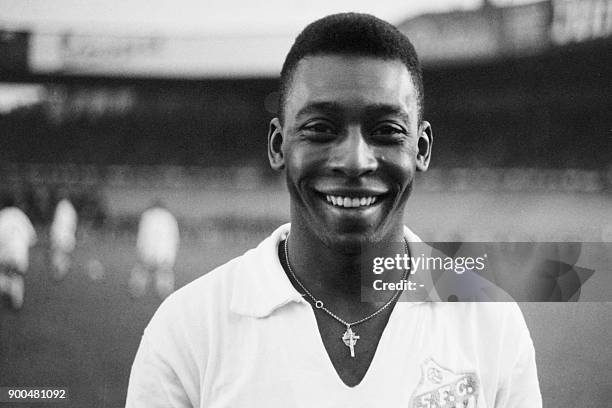
Ademir de Menezes
 Brazil
association football player•association football coach
Also known as: Ademir Marques de Menezes, O Queixada
Birthday
November 8, 1922
Birth Sign
Scorpio
Birthplace
Recife, Pernambuco, Brazil
Age
Died at 73
Height
5 ft 9 in (1.75 m)
About
Ademir Marques de Menezes stands as a titan in the history of Brazilian football, universally recognized as one of the most prolific forwards the nation has ever produced. Born in Recife and rising to legendary status in Rio de Janeiro, he became the defining figure of the illustrious "Expresso da Vitória" squad at Vasco da Gama during the late 1940s. His international legacy is anchored by his performance at the 1950 FIFA World Cup, where he scored seven goals to finish as the tournament's top scorer, a feat that includes the unique record of scoring five goals in a single match against Spain. Despite his individual brilliance, Ademir's career is inextricably linked to the "Maracanazo," the heartbreaking 2-1 defeat to Uruguay in the final round-robin match that left him bearing the brunt of national disappointment for decades. He remains a symbol of tragic heroism, remembered not just for his technical mastery with the left foot but for carrying the weight of a nation's hopes on his shoulders.
Ademir's impact extends beyond statistics; he is a cultural icon whose story reflects the intense passion and volatility of Brazilian football in the mid-20th century. While he never won the World Cup, his contribution to the sport is celebrated globally, with FIFA and CONMEBOL frequently citing him among the greatest South American players of all time. His number 9 jersey is synonymous with excellence at São Januário, and his legacy continues to be honored through historical rankings, including a placement at #39 on Pantheon's Historical Popularity Index. Even today, discussions regarding World Cup records often circle back to his unparalleled five-goal performance, cementing his place as a master of the game who transcended the era of his playing days.
Early Life & Background
Ademir Marques de Menezes entered the world on November 8, 1922, in Recife, the capital of Pernambuco state in northeastern Brazil. Unlike many contemporaries who emerged directly from the favelas of Rio de Janeiro, Ademir began his journey in the Northeast before relocating to the south. This move to Rio de Janeiro placed him in the cultural and sporting heart of the nation, where he would eventually forge his identity. He grew up during a transformative era for Brazilian football, developing an early interest in the sport that would define his life. His natural talent and physical prowess made him an immediate standout striker, characterized by a powerful left foot and a distinctive low center of gravity that allowed him to dribble past defenders with surprising ease.
He joined the youth ranks of Clube de Regatas Vasco da Gama, a club founded by working-class immigrants that quickly became a symbol of social mobility in Brazilian football. Before achieving global recognition, Ademir honed his skills in the competitive landscape of the Campeonato Carioca. He developed a reputation for ruthless efficiency in front of goal, earning the nickname "Queixada." The origin of this moniker is debated; some sources attribute it to his prominent jawline or protruding teeth, while others suggest it referred to his aggressive, biting style of play on the pitch. By the late 1930s, he had established himself as a key figure in Vasco da Gama's youth system, ready to step into the senior lineup. Standing approximately 5 ft 9 in (1.75 m), his agility and strength set him apart from other players of his era, laying the groundwork for the dominance that would follow.
The transition from youth prospect to senior star was marked by his debut for Vasco da Gama in the late 1930s. Scouts and coaches noticed his unique playing style early on, which combined power with precision. During these formative years, he helped Vasco win multiple state championships, establishing the foundation for the club's future glory. His dedication to the craft and his ability to dominate opponents in the Campeonato Carioca made him a local sensation even before the 1950 World Cup brought him international fame. These early years in the Northeast and the subsequent move to Rio were crucial in shaping the player who would later become a legend.
Career Growth
Ademir's professional career was almost entirely defined by his tenure with Vasco da Gama, spanning from the late 1930s until the mid-1950s. He debuted for the club and quickly became a key player in their rise to prominence. During the late 1930s and early 1940s, he helped Vasco win multiple state championships, laying the groundwork for the dominance that would follow. The golden age of his career arrived with the formation of the "Expresso da Vitória" between 1945 and 1952. This squad was a dominant force in Brazilian football, winning three consecutive Campeonato Carioca titles in 1945, 1947, and 1948. Ademir served as the primary goal-scoring threat, leading the line with a precision that few could match. His partnership with teammates created a machine that was nearly unstoppable in domestic competition.
His international career reached its zenith at the 1950 FIFA World Cup held in Brazil. Playing as the central striker for the Seleção, Ademir led the team to the final round-robin stage. In the historic match against Spain on July 6, 1950, he scored all four of Brazil's goals in a 6–1 victory, setting a record for the most goals scored by a single player in a single World Cup match. By the end of the tournament, he had accumulated seven goals in six matches, finishing as the joint-top scorer alongside Sweden's Gunnar Gren, though FIFA records often list him as the sole top scorer due to tie-breaking rules. He also holds the distinction of scoring 32 goals in 39 appearances for the Brazil national team, making him one of the country's all-time leading scorers.
Despite his individual brilliance, Brazil lost the decisive match to Uruguay 2–1, a defeat known as the "Maracanazo" that plunged the nation into mourning. Ademir, expected to lead Brazil to glory, bore the weight of the public disappointment. Following the World Cup, he continued to play for Vasco da Gama, contributing to further domestic success before retiring in the mid-1950s. He later transitioned into coaching, managing various clubs in Brazil, though he never reached the same heights of fame he achieved as a player. His legacy as a club legend includes being inducted into Vasco da Gama's hall of fame, with his number 9 jersey associated with his enduring presence at São Januário stadium.
Career Timeline
Public Image & Style
Ademir is portrayed in media as a tragic hero, a man of immense talent who could not escape the shadow of a national defeat. He is remembered with deep affection and respect, often described as a "national treasure" whose legacy transcends the 1950 tragedy. His image is one of quiet dignity, with a focus on his technical brilliance rather than off-field antics. Media narratives often highlight his reluctance to discuss the 1950 World Cup in later years. Some accounts suggest he avoided discussing the tournament to protect himself from the lingering pain of the "Maracanazo." This stoicism added to his aura of mystery and respect among fans and peers alike.
Unlike modern celebrities who cultivate a constant public presence, Ademir's image was shaped by the silence surrounding his personal struggles. He is frequently depicted in historical retrospectives as a figure of resilience, absorbing the criticism of a grieving nation without breaking. His portrayal in documentaries and articles emphasizes his role as a pioneer who played with a level of skill that defined an era. The "Ademir" brand is primarily used in the context of historical analysis and nostalgia, ensuring his contributions to the sport are never forgotten. He is often cited alongside other greats like Pelé and Garrincha, yet his unique story of triumph and subsequent tragedy sets him apart as a distinct archetype in Brazilian sports history.
Fame & Fandom (iFAMOUS Rankings)
iFANN's Global Fame Engine has evaluated Ademir de Menezes, but he does not currently hold a placement in the published rankings (Global Top 1,000 or a Top-100 scope list) as of October 2026. He is not featured on the September 2026 iFAMOUS Rankings flagship list. While Ademir does not have a formal fandom name in the modern sense, he commands a devoted following among Brazilian football historians and Vasco da Gama supporters. Fans refer to him as "O Queixada" or simply "Ademir." Fan campaigns include annual tributes on his birthday and the anniversary of his death, as well as efforts to keep his story alive in educational materials and documentaries. The "Ademir" brand is primarily used in the context of historical analysis and nostalgia, ensuring his contributions to the sport are never forgotten.
In 2026, discussions about his legacy continue in the context of World Cup history. Recent news items often reference him when discussing top World Cup scorers or the 1950 Maracanã tragedy. Articles comparing modern players like Vinícius Jr. or Neymar to historical greats frequently cite Ademir's 5-goal performance as a benchmark of individual excellence in a single match. His name and image are frequently shared on fan pages, historical football accounts, and documentaries on platforms like YouTube and Instagram. Channels dedicated to football history, such as "Football Legends" or "Cláudio Oliveira," have uploaded videos analyzing his career and the 1950 World Cup, accumulating significant views. This digital preservation ensures that new generations of fans can appreciate his genius despite the passage of time.
Interesting Facts and Legends
Ademir holds the unique distinction of being the only player to score five goals in a single FIFA World Cup match. This feat occurred during the 1950 tournament against Spain, where he scored every goal in Brazil's 6–1 victory. No other player has matched this single-match output in World Cup history. Despite being right-footed in daily life, Ademir was a master of his left foot, which served as his primary weapon throughout his career. This specialization contributed to his ability to strike the ball with such power and accuracy from various angles.
His nickname "Queixada" is a subject of local folklore. While some believe it referenced his prominent jawline, others argue it described his aggressive, "biting" style of play. The ambiguity adds to the mystique surrounding his persona on the field. He was instrumental in shaping Vasco da Gama's identity as a club of the people. During an era when affluent clubs dominated Rio football, Ademir helped establish Vasco as a powerhouse for the working class, a legacy that endures today.
Ademir did not appear on covers of major international magazines like *Time*, *Vogue*, or *Rolling Stone* in the manner of modern celebrities. However, he was a frequent subject of Brazilian sports magazines such as *Placar* and *Globo Esporte* during his active years. These publications often featured him as the face of the national team and Vasco da Gama, particularly around the 1950 World Cup. Additionally, while he is not explicitly on Pelé's official FIFA 100 list, he is frequently mentioned in lists of the greatest players of the pre-digital era. A statue or memorial plaque exists at São Januário, Vasco da Gama's home ground, honoring his contributions, and the centenary of his birth in 2021 was celebrated by the club and the Brazilian football community.
Notable Quotes
“The loss was a collective burden, not just my own.”
Family & Personal Life
Detailed public records regarding Ademir de Menezes' parents, siblings, household composition, and family stories are scarce. As a figure from the mid-20th century in Brazil, private life details were less documented than they are today, especially for athletes who were not part of the modern celebrity culture. Available biographical sources do not provide specific names of parents, nor do they list information about siblings or extended family members who may have influenced his upbringing. There is no verified information regarding pets, family traditions, or anecdotes about his childhood home environment beyond the general context of growing up in Recife and moving to Rio.
It is likely that he kept his personal life out of the public eye, focusing instead on his career and the immense pressure of representing Brazil on the world stage. The lack of documentation suggests that his family life was kept separate from his public persona, a common practice for athletes of his generation. He passed away in Rio de Janeiro on May 11, 1996, at the age of 73, reportedly after battling bone marrow cancer. He was buried in Rio, maintaining his connection to the city and the club that made him a legend. While the specifics of his immediate family remain unknown to the public, his legacy as a son of Pernambuco and a citizen of Rio de Janeiro is well-established.
Notable Connections
Relationships & Dating History
Detailed public records regarding Ademir de Menezes' romantic relationships, marriages, and dating history are scarce. As a figure from the mid-20th century in Brazil, private life details were less documented than they are today, especially for athletes who were not part of the modern celebrity culture. Available biographical sources do not list specific names of wives, girlfriends, or children, nor do they provide dates for any marriages or divorces. It is likely that he kept his personal life out of the public eye, focusing instead on his career and the immense pressure of representing Brazil on the world stage. Consequently, there is no verified information on whether he was married, divorced, or widowed, nor are there confirmed reports of children.
The scarcity of information suggests that his romantic life was kept strictly private, a reflection of the cultural norms of his time. There are no confirmed reports of engagements, breakups, or family dynamics involving spouses. He passed away in Rio de Janeiro on May 11, 1996, at the age of 73, reportedly after battling bone marrow cancer. The lack of public relationship data leaves much to speculation, but the consensus among historians is that his focus remained entirely on football and the burdens of his national duty, leaving little room for publicized personal affairs.
Death & Aftermath
Died
May 11, 1996 (aged 73)
Death Place
Rio de Janeiro, Brazil
Cause of Death
Bone marrow cancer
Ademir Marques de Menezes spent his final years in Rio de Janeiro, the city that had long been home to Vasco da Gama and the stage for his greatest triumphs as the top scorer of the 1950 World Cup. On May 11, 1996, at the age of 73, he passed away after a period of illness reportedly battling bone marrow cancer. The club and his family confirmed the cause of death, noting that the condition had been affecting him prior to his passing. The football community responded with immediate tributes, particularly from the devoted Vasco da Gama fanbase where Ademir is revered as one of the greatest idols in the club's history.
As a central figure of the legendary "Expresso da Vitória" team, his loss was felt deeply across generations of supporters who celebrated his legacy through anniversaries rather than just a single event. While specific details of large-scale vigils immediately following his death are not documented, his memory has endured through continuous recognition, including a centenary celebration of his birth in 2021 and features on the FIFA website highlighting his career. Following his death, Ademir was buried in Rio de Janeiro, maintaining his connection to the city where he lived and played. Although exact details of the funeral service remain unrecorded, his enduring status as a national icon is evidenced by permanent memorials at São Januário, Vasco da Gama's stadium, where images of him alongside fellow idol Moacir Barbosa stand as a lasting tribute. Decades later, he remains ranked highly in historical popularity indices, cementing his place among the greatest forwards in Brazilian history.
Net Worth (Estate Value)
$0
iFANN Editorial Team estimate
As a deceased footballer from the mid-20th century, Ademir de Menezes does not have a publicly tracked net worth in the modern sense. His wealth, like that of most athletes of his generation, was derived from his playing contracts and modest post-retirement coaching roles. The concept of massive endorsement deals, real estate empires, or production companies was not applicable to footballers in Brazil during the 1940s and 1950s. Therefore, no specific dollar figures can be reported for his net worth or estate.
There are no credible estimates of his estate value, salary per project, or business ventures from his lifetime. His financial situation was typical for players of his era, relying on standard wages from club contracts. Unlike contemporary stars who leverage global branding, Ademir's income was generated solely through his athletic performance and subsequent coaching positions. The absence of detailed financial records makes it impossible to calculate a precise net worth, but historical context suggests he lived comfortably within the means of a successful athlete of his time, without the accumulation of vast modern wealth.
Awards Won (2)
Ademir was officially recognized by FIFA as the top scorer of the 1950 FIFA World Cup with seven goals. He holds the record for the most goals scored in a single World Cup match, scoring five against Spain. He scored 32 goals in 39 appearances for the Brazil national team, making him one of the country's all-time leading scorers. Vasco da Gama reveres him as one of its greatest ever players, with his number 9 jersey associated with his legacy at São Januário stadium.
1950 · Top Scorer
1950 FIFA World Cup
1950 · Record
Most goals in a single match (5)
Known For
1950 FIFA World Cup
1950 · Top Scorer
Vasco da Gama
1945 · Striker
Keywords
Sources
Quick Facts
- Profession
- association football player, association football coach
- Born
- November 8, 1922
- Birthplace
- Recife, Pernambuco, Brazil
- Died
- May 11, 1996
- Death Place
- Rio de Janeiro, Brazil
- Gender
- Male
- Birth Sign
- Scorpio
Personal Details
- Full Name
- Ademir Marques de Menezes
- Height
- 5 ft 9 in (1.75 m)
- Children
Frequently Asked Questions
How many goals did Ademir de Menezes score in the 1950 World Cup?
Did Ademir de Menezes score 5 goals in a single World Cup match?
What was Ademir de Menezes' cause of death?
Which club was Ademir de Menezes most associated with?
Why is Ademir de Menezes famous?
Similar People


Join the community
fans discussing