Romário
 Germany
association football player•politician•association football coach
Also known as: Baixinho, Rei da Grande Área
Birthday
January 29, 1966
Birth Sign
Aquarius
Birthplace
Rio de Janeiro, Brazil
Age
60 years old
Height
5 ft 5 in (1.67 m)
About
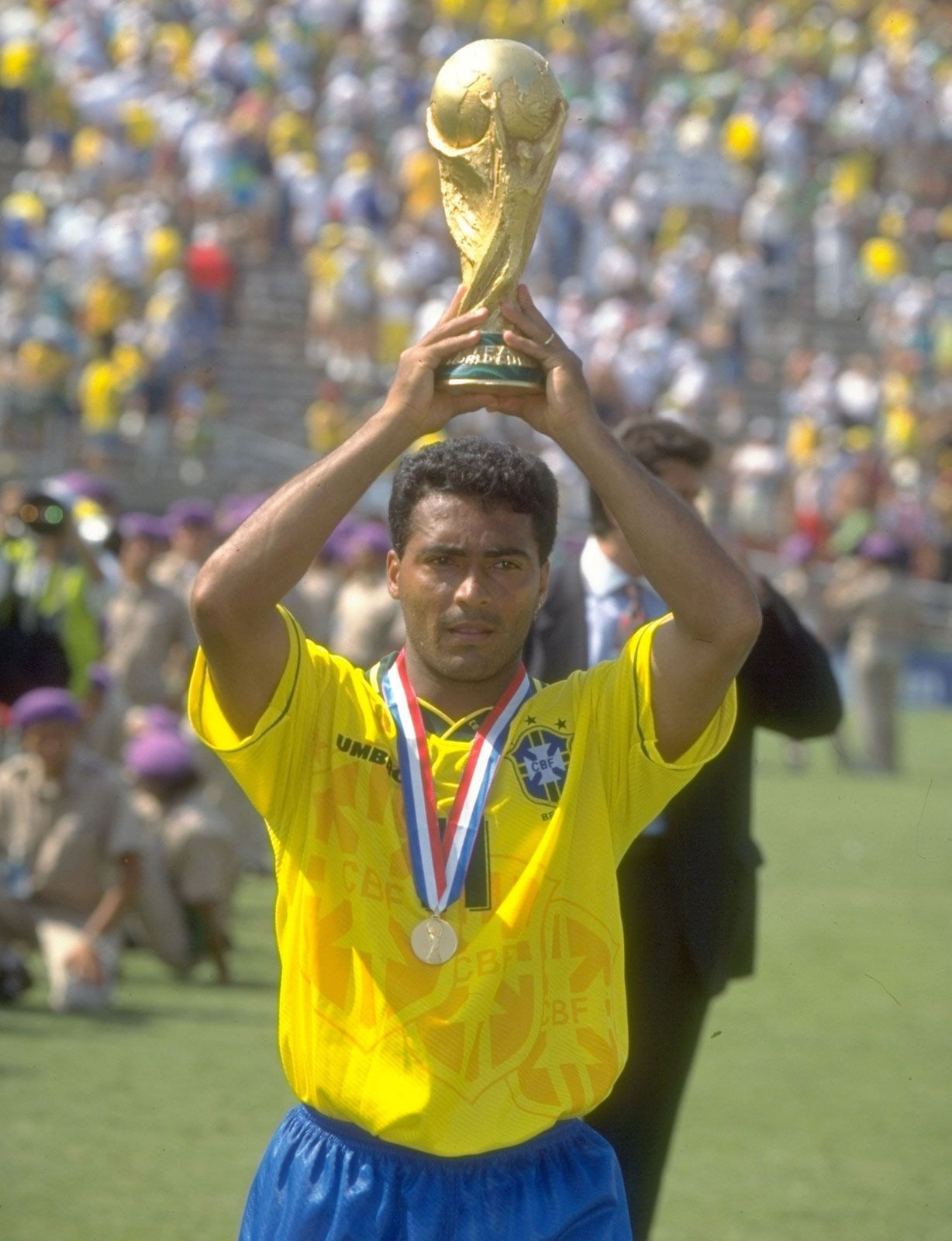
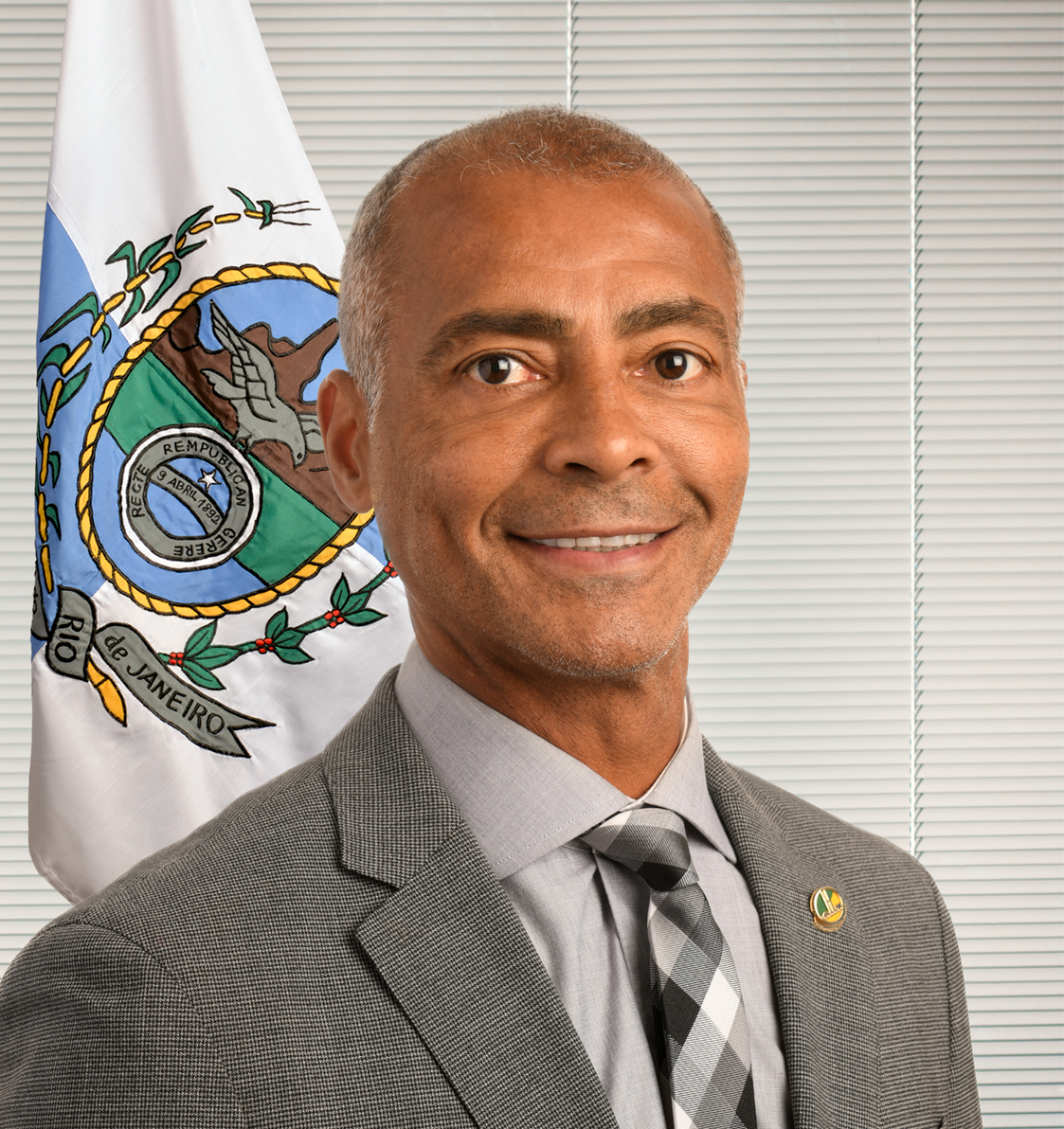
Romário is a Brazilian former footballer and current senator, widely regarded as one of the greatest strikers in history. He is celebrated for his prolific goalscoring, having netted over 700 official goals in his career. Romário was a key figure in Brazil's 1994 World Cup triumph, earning the Golden Ball as the tournament's best player, and was named FIFA World Player of the Year in the same year. Known for his clinical finishing, quick bursts, and ability to score in tight spaces, he dominated defenders with his low center of gravity and sharp instincts. After a storied playing career, Romário transitioned to politics, serving as a federal deputy and currently as a senator for Rio de Janeiro. He also presides over the football club America-RJ. Romário is one of only five players to score 100 goals for three different clubs, and his 55 goals for Brazil rank him fourth all-time. Fans remember him as a fearless, charismatic figure who brought joy and grit to the game.
Early Life & Background
Romário de Souza Faria was born on January 29, 1966, in Rio de Janeiro, Brazil. His early life unfolded in a challenging environment, as he grew up in a poor, densely populated favela situated on the outskirts of the sprawling city. As a child, Romário contended with asthma, a condition that might have deterred others, but he found his sanctuary and passion on the dusty streets. It was here, amidst the narrow confines and vibrant energy of his neighborhood, that he dedicated countless hours to playing street football. This intense, informal training proved crucial, allowing him to instinctively hone his exceptional close control and master the art of quick, decisive bursts in tight spaces, skills that would become hallmarks of his legendary career.
His extraordinary talent did not go unnoticed for long. Still a teenager, Romário's prowess on the pitch earned him a place at Olaria Atlético Clube, a significant initial step in his burgeoning football journey. From there, he progressed to one of Brazil's most historic clubs, joining the esteemed youth system of Vasco da Gama. His dedication and natural ability saw him quickly rise through the ranks. By approximately age 19, Romário made his breakthrough into Vasco's professional team, a pivotal moment that firmly established his entry into the demanding world of top-level Brazilian football.
These formative years were marked by consistent excellence. His standout performances at the youth level garnered national attention, earning him prestigious call-ups to represent Brazil's youth national teams. This early exposure to international competition further polished his skills and reputation, setting the definitive stage for his highly anticipated move to European football in 1988, where he would go on to achieve global renown.
Career Growth
Romário's breakthrough came when he joined PSV Eindhoven in 1988. Over five seasons, he scored 165 goals in 167 games, winning three Eredivisie titles and establishing himself as one of Europe's most feared strikers. In 1993, he moved to Barcelona as part of Johan Cruyff's Dream Team. The 1993-94 season was his European peak: he scored 30 goals in 33 league matches, finishing as La Liga's top scorer and winning the league title. Internationally, he led Brazil to the 1994 World Cup title, earning the Golden Ball as tournament MVP and the FIFA World Player of the Year award.
Returning to Brazil in the mid-1990s, Romário played for Flamengo, Fluminense, and Vasco da Gama. At Vasco, he won the Brazilian league in 2000 and finished as top scorer three times. He also had short stints in Qatar, the United States, and Australia before retiring. After football, he entered politics: elected federal deputy in 2010, then senator for Rio de Janeiro in 2014. He switched parties from the Brazilian Socialist Party to Podemos in 2017 and to the Liberal Party in 2021. In 2018, he ran for governor of Rio de Janeiro but lost in the first round.
Career Timeline
Public Image & Style
Romário is remembered as a fearless, charismatic, and sometimes controversial figure. His playing style was defined by arrogance and confidence, he often taunted defenders and celebrated provocatively. Media and fans saw him as a street-smart genius who could turn a game with a single touch. Off the pitch, his outspoken personality carried into politics, where he is known for blunt criticism of corruption and advocacy for sports and disability rights. His fandom in Brazil is immense, with many considering him a national hero for the 1994 World Cup. He remains a beloved figure in Rio, where his rags-to-riches story resonates deeply.
Fame & Fandom (iFAMOUS Rankings)
Romário commands a fanbase that transcends the typical sports following, rooted deeply in the cultural identity of Brazil's working class. Known affectionately as "Baixinho" or the "King of the Big Area," his supporters celebrate an underdog narrative where natural genius triumphs over physical stature. This connection manifests not through organized digital armies but through political mobilization and massive public gatherings, such as his role as Grand Marshal of the San Francisco Carnaval parade. Fans revere his refusal to adhere to rigid training regimens, viewing his self-proclaimed status as an "11 out of 10" player as a badge of authentic brilliance rather than arrogance. While no formal global fandom name exists, the collective identity centers on his legacy as a street-smart genius who turned the spaces outside the penalty box into his personal kingdom. His recent political controversies, including blunt critiques of national team coaches, have only deepened this bond, as followers see his unfiltered nature as a continuation of the fearless spirit he showed on the pitch. The mythology surrounding him persists decades later, with viral clips of his 1994 World Cup heroics serving as the primary ritual for new generations. In August 2026, these rankings solidified his standing as the 51st most famous person in Brazil and the 32nd most famous person from Germany, according to the iFANN Global Fame Rankings.
Interesting Facts and Legends
His nickname Baixinho means Shorty, a nod to his 5-foot-5 frame, yet he mastered the art of heading the ball through impeccable timing and leap. Romário is known for his signature celebration: running with arms outstretched after scoring, a gesture that became iconic across the globe. He once claimed he would score 1,000 goals in his career, a target he pursued with relentless passion despite having already netted over 700 official goals. A star on the Walk of Fame at the Maracanã Stadium honors his club contributions. Beyond the pitch, he is a passionate advocate for people with disabilities, inspired by his daughter Ivy, who has Down syndrome. Legends still circulate about his unique playing philosophy; fans retell stories of how he scored from just outside the penalty box, earning him the title "Rei da Grande Área." Another enduring tale involves his 1994 World Cup match against the Netherlands, where his partnership with Bebeto produced a 3–2 victory that remains viral content decades later. In July 2026, he reinforced his reputation for authenticity by publicly telling coach Carlo Ancelotti to "Go to hell" following a perceived collapse, a moment fans cite as proof of his unyielding character.
Notable Quotes
“When I step onto the pitch, I feel like the king. I know I can score.”
“I don't need to prove anything to anyone. My goals speak for themselves.”
“Football is about joy. If you're not having fun, you're doing it wrong.”
“I was born to score goals. It's what I do.”
“The 1994 World Cup was the greatest moment of my life.”
Family & Personal Life
Romário has been married three times. He married Mônica Santoro in 1983, with whom he had two children; they later divorced. He then married Danielle Favato in 1998, having one child before divorcing. Since 2002, he has been married to Isabelle Bittencourt, with whom he has two children. One of his daughters, Ivy, was born with Down syndrome, which inspired Romário to become an outspoken advocate for disability rights. His son Romarinho followed in his footsteps as a professional footballer, playing for América RJ. Romário often credits his family for grounding him amid his fame.
Notable Connections
Romário is closely associated with Brazilian football legends like Pelé and Ronaldo, though his style was unique. He formed a famous partnership with Hristo Stoichkov at Barcelona, and his rivalry with other top strikers of the 1990s, like Gabriel Batistuta, defined an era. In politics, he aligns with former president Jair Bolsonaro's Liberal Party, though their relationship has been complex.
Relationships & Dating History
Romário's first public relationship was with Mônica Santoro, whom he married in 1983. They had two children before divorcing. In 1998, he married Danielle Favato, with whom he had one child; that marriage also ended in divorce. Since 2002, he has been married to Isabelle Bittencourt, a relationship that has endured through his transition from football to politics. They have two children together, including Ivy, who was born with Down syndrome. As of 2026, Romário remains married to Isabelle, and the couple is known for their stable family life despite his high-profile career.
- MarriedMônica Santoro1983 - 1990Married early in his career; had two children together before divorcing.
- MarriedDanielle Favato1998 - 2001Married during his late playing career; had one child before divorcing.
- MarriedIsabelle Bittencourt2002 - presentCurrentLong-term marriage; they have two children together, including Ivy.
Salary, Net Worth In 2026
$50 Million
iFANN Editorial Team estimate
As of 2026, iFANN currently estimates Romário's net worth at $50 million. This figure reflects his successful football career, which included substantial salaries at PSV Eindhoven, Barcelona, and various Brazilian clubs, alongside lucrative endorsement deals during his peak years. After retiring, he transitioned into politics, earning a senator's salary and benefits while serving as president of America-RJ, a football club that provides additional income streams. His wealth has grown steadily since his playing days, supported by smart investments in real estate within Rio de Janeiro and his ongoing political work. He maintains a comfortable lifestyle that mirrors his storied journey from the favelas of Rio to the halls of power.
Awards Won (9)
Romário won the FIFA World Player of the Year in 1994 and the Golden Ball as the best player of the 1994 World Cup. He was La Liga's top scorer in 1993-94 and three-time top scorer in the Brazilian league. He also won three Eredivisie titles with PSV, a La Liga title with Barcelona, and the Brazilian league with Vasco da Gama in 2000.
1994 · Player of the Year
Overall 1994 performances
1994 · Best Player
1994 FIFA World Cup
Known For
1994 FIFA World Cup
1994 · Striker for Brazil
FC Barcelona
1993 · Striker
PSV Eindhoven
1988 · Striker
Senator for Rio de Janeiro
2015 · Politician
Keywords
Sources
Quick Facts
- Profession
- association football player, politician, association football coach
- Born
- +1966-01-29
- Birthplace
- Rio de Janeiro
- Gender
- Male
- Birth Sign
- Sagittarius
- Birth Sign
- Aquarius
Personal Details
- Full Name
- Romário de Souza Faria
- Height
- 5 ft 5 in (1.67 m)
- Spouse
- Isabelle Bittencourt
- Children
- Several, including Ivy (with Down syndrome) and Romarinho
Frequently Asked Questions
How old is Romário in 2026?
What is Romário's net worth in 2026?
Is Romário still active in politics in 2026?
What is Romário best known for?
Who is Romário married to in 2026?
Similar People
Join the community
fans discussing