
Adegoke Adelabu
 Nigeria
Also known as: Gbadamosi Adegoke Adelabu, Adelabu Penkelemesi
Birthday
September 3, 1915
Birth Sign
Virgo
Birthplace
Oke-Oluokun, Ibadan
Age
Died at 42
About
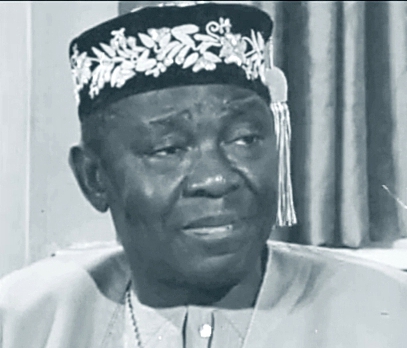
Gbadamosi Adegoke Adelabu was a towering Nigerian politician, merchant, and writer who became a central figure in the pre-independence struggle of Western Nigeria. Born on September 3, 1915, in Oke-Oluokun, Ibadan, he rose from humble beginnings to become one of the most radical and influential voices against colonial rule. Known universally by his Yoruba nickname Penkelemesi, which translates to "The Peculiar One" or "The Unique One," Adelabu championed socialist ideals and mass resistance with a fiery oratory that captivated the working class.
His political career peaked when he served as the Federal Minister of Natural Resources and Social Services from January 1955 to January 1956. After resigning from the federal cabinet, he returned to the Western Region to lead the opposition in the Regional Assembly. His life ended tragically on March 25, 1958, just two years before Nigeria gained independence, cutting short a trajectory that many historians believe could have shaped the nation's future differently.
Early Life & Background
Gbadamosi Adegoke Adelabu entered the world on September 3, 1915, in the town of Oke-Oluokun within Ibadan. He was the son of Sanusi Ashiyanbi Adeyege Adelabu and Awujola Ajoke. Growing up during a time of rigid social stratification, Adelabu did not follow the path of the traditional elite who pursued exclusive colonial education. Instead, his early years were defined by self-reliance and an entrepreneurial spirit that would later ground his political philosophy in the economic realities of ordinary Nigerians.
Before stepping fully into the political arena, Adelabu worked as a merchant. This trade experience provided him with a unique perspective on the struggles of the common people, allowing him to connect with the masses in a way that his contemporaries often could not. His formal education included traditional learning, but his true political apprenticeship occurred through active involvement with the National Congress of British West Africa (NCBW). This organization served as a crucible for his developing nationalist ideology, preparing him for the rapid ascent that would soon define his public life.
Career Growth
Adelabu's entry into formal politics began in the late 1940s when he joined the National Council of Nigeria and the Cameroons (NCNA). He quickly distinguished himself through his ability to mobilize youth and the working class with fiery speeches that challenged both colonial authority and the emerging indigenous elite. In 1951, he secured a seat in the Western House of Assembly, marking his first major legislative victory.
By 1954, he played a pivotal role in the formation of the Action Group party, serving as a key strategist and organizer for the movement. His influence grew so significant that in January 1955, he was appointed as the Federal Minister of Natural Resources and Social Services. In this high office, he championed policies aimed at resource nationalization and social welfare. However, his tenure was brief; by January 1956, he resigned to return to the Western Region. There, he assumed the powerful position of opposition leader in the Regional Assembly, where he continued to wield immense influence until his death. His legacy is often described as that of the "Lion of the West," a title reflecting his fierce defense of regional interests and his uncompromising stance against elitism.
Career Timeline
Public Image & Style
Adelabu is remembered as a fiery, uncompromising nationalist whose public persona was defined by his radical socialism and refusal to compromise with colonial powers. Media and historical texts describe him as a "dazzling politician" and an "iconoclast" who spoke truth to power with a voice that could stop traffic in Ibadan. His image was that of a man deeply connected to the masses, contrasting sharply with the aristocratic elites of his time. He projected an aura of intensity and dedication that made him a feared yet beloved figure among his supporters and a target for those who opposed his radical agenda.
Fame & Fandom
Adegoke Adelabu currently holds no placement in the iFANN Global Top 1,000 or any published scope list. The engine has evaluated his legacy but found no data to assign a numeric rank or score against today's global celebrity metrics. He remains an unranked figure in the current fame index, a status that reflects the shifting tides of digital attention rather than a lack of historical impact. His influence belongs to a different era, one measured in legislative victories and political resistance rather than search volume or streaming numbers. There is no formal fandom name attached to Adegoke Adelabu in the iFANN database. Historical records confirm he never cultivated a modern fanbase with clubs, rituals, or organized campaigns. His supporters were constituents and party members who rallied behind his fiery nationalism and socialist ideals. Unlike pop stars whose followers engage in birthday billboards or viral challenges, Adelabu's audience engaged through political rallies and the shared struggle for independence. The story of Penkelemesi lives on in academic study and political memory, not in fan wars or interactive projects. No documented fan rituals exist for him. The absence of a named fandom underscores his identity as a statesman rather than an entertainer. His legacy is preserved in the annals of Nigerian history, where his radical nationalism and untimely death are studied as pivotal moments in the nation's journey toward sovereignty.
Interesting Facts and Legends
Adelabu openly described himself as an "egotist" in a rare admission for a politician of his era, using the term to emphasize his absolute confidence in his vision for a socialist Nigeria. Before his political rise, his success as a merchant gave him a practical understanding of economic struggles that informed his policy decisions. The moniker Penkelemesi was not merely a nickname but a deliberate political strategy; by embracing the label "Peculiar," he defied the conservative expectations of the colonial administration and positioned himself as an unorthodox force that could not be easily categorized. Historians frequently note that his death occurred exactly two years before Nigeria achieved independence, leading to endless speculation about how the country might have evolved had he lived to see sovereignty.
Notable Quotes
“I am a self-described egotist who believes in the merits of radical nationalism.”
“The struggle for independence requires mass resistance rather than elite negotiation.”
Family & Personal Life
Adelabu was born to Sanusi Ashiyanbi Adeyege Adelabu and Awujola Ajoke. While historical records confirm the names of his parents, detailed information about siblings or descendants remains scarce in the available archives. Unlike modern celebrities, there are no publicized names of spouses or children documented in mainstream biographies. Some accounts suggest he may have kept his private life distinct from his public persona, a trait common among revolutionary figures who prioritized the movement over personal matters. Recent news regarding the kidnapping of Chief Adebayo Adelabu's family in 2026 refers to a different contemporary politician and should not be conflated with Adegoke's lineage.
Notable Connections
Obafemi Awolowo, Ladoke Akintola, Nnamdi Azikiwe.
Relationships & Dating History
Historical records do not explicitly confirm if Adegoke Adelabu was married or single at the time of his death. Detailed records of his romantic relationships, dating history, and personal family dynamics are scarce compared to modern figures. Some accounts suggest he may have been unmarried or kept his private life distinct from his public persona, a trait common among certain revolutionary figures of that era who prioritized the movement over personal life. There is no verified public record of children born to him. The focus of his life remained firmly on the political struggle for independence and the welfare of the masses.
Death & Aftermath
Died
March 25, 1958 (aged 42)
Death Place
Ibadan, Nigeria
Cause of Death
Car accident
Adegoke Adelabu, a prominent Nigerian politician and nationalist from Ibadan, died on March 25, 1958. Born on September 3, 1915, he was 43 years old at the time of his passing. Historical accounts describe his death as occurring when his sun was at its zenith, marking the loss of a fiery leader during the height of his political influence in Western Nigeria.
The immediate aftermath focused on the symbolic impact of his loss rather than legal proceedings or ceremonial records. Descriptions characterize him as an iconoclast whose departure represented an eclipse for the nation's struggle for independence. The available documentation does not report the date, location, or nature of his funeral, nor does it list notable attendees or specific burial locations. Information regarding the handling of his estate remains unpublicized in the current historical record.
Today, Adegoke Adelabu is frequently referenced in academic discussions and modern media as a dazzling politician and a symbol of mass resistance. His legacy endures through continued recognition of his contributions to the political landscape of pre-independence Nigeria. Scholars and historians continue to cite his life and work as essential to understanding the era, preserving his memory as a pivotal figure in the region's history.
Net Worth (Estate Value)
$0
iFANN Editorial Team estimate
As a deceased historical figure from 1958, Adegoke Adelabu does not have a net worth in the modern financial sense. He was a self-made merchant and politician who lived during a period of colonial economics where wealth was not accumulated in the same manner as today. There are no estate valuations, royalty streams, or business ventures managed by a modern estate to calculate. His wealth was likely modest and tied to his political office and trading activities, which were consumed by his lifestyle and political campaigns. Any references to current net worth would be speculative and inaccurate given the passage of time and the nature of his era.
Awards & Accolades
Known For
Action Group
1954 · Key Strategist
Federal Ministry of Natural Resources
1955 · Minister
Keywords
Sources
Quick Facts
- Profession
- politician, merchant, writer
- Born
- September 3, 1915
- Birthplace
- Oke-Oluokun, Ibadan
- Died
- March 25, 1958
- Gender
- Male
- Birth Sign
- Virgo
Personal Details
- Full Name
- Gbadamosi Adegoke Adelabu
- Children
- Education
- Traditional learning and political apprenticeship under the National Congress of British West Africa
Frequently Asked Questions
Who was Adegoke Adelabu?
How did Adegoke Adelabu die?
What does "Penkelemesi" mean?
Is Adegoke Adelabu related to Adebayo Adelabu?
What was Adegoke Adelabu's political stance?
Similar People
Join the community
fans discussing