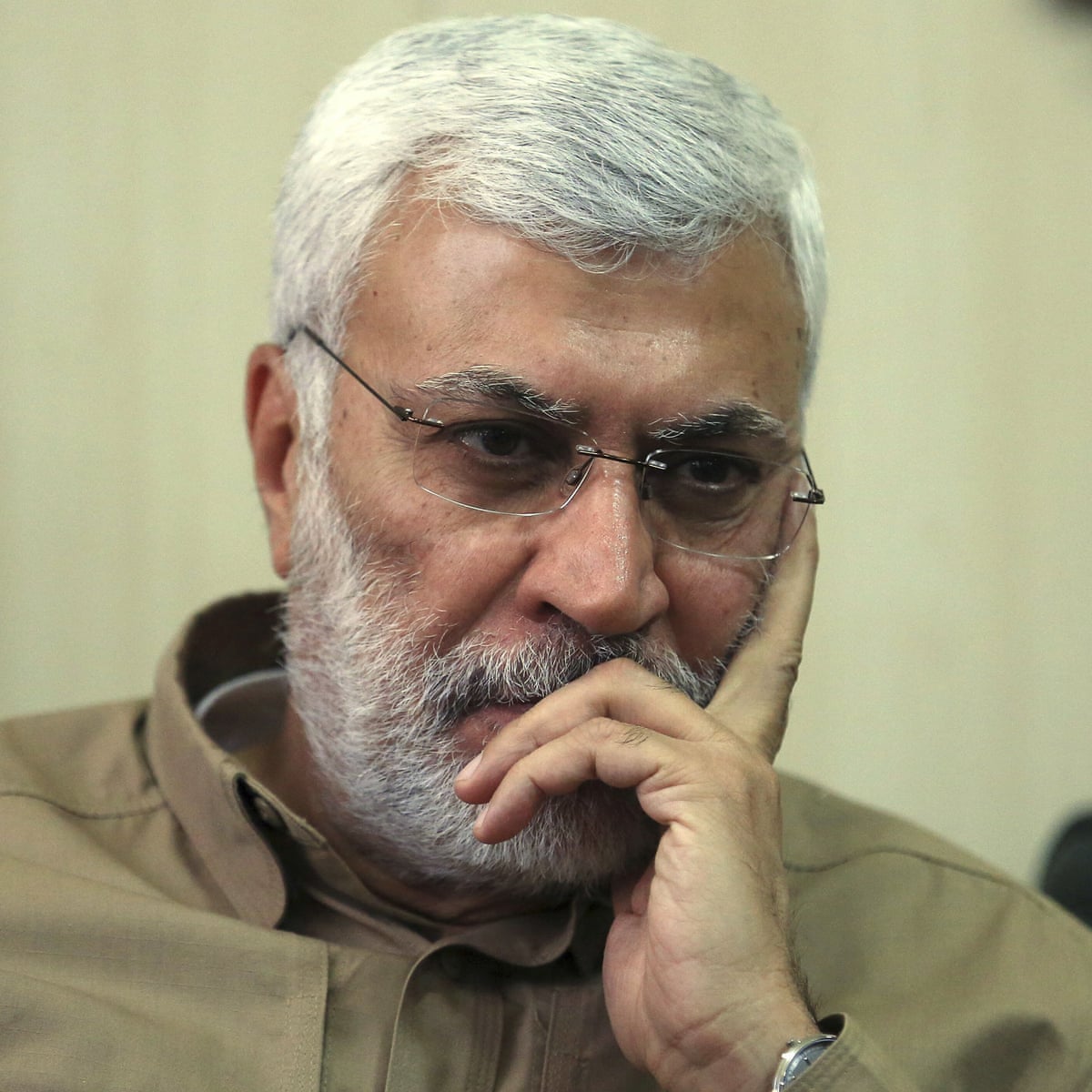
Abu Mahdi al-Muhandis
 Iran
IranParamilitary leader•politician•civil engineer
Also known as: Jamal Ja'far Muhammad Ali Al Ibrahim, Iran's Operative with 19 Aliases
Birthday
July 1, 1954
Birth Sign
Cancer
Birthplace
Abu Al-Khaseeb District, Iraq
Age
Died at 65
About
Jamal Ja'far Muhammad Ali Al Ibrahim, known to the world as Abu Mahdi al-Muhandis, was an Iraqi paramilitary leader, politician, and civil engineer. He is best remembered as the chief of staff and deputy chairman of the Popular Mobilization Forces (PMF), the coalition of Iraqi militias that played a decisive role in rolling back ISIS. His was a life of shadow and steel: a man the U.S. hunted for decades, yet one whose death alongside Qassem Soleimani in a 2020 drone strike only amplified his standing among Iran-aligned factions.
Al-Muhandis was a founding figure of Kataib Hezbollah, an anti-American insurgency group that the United States, Japan, and the UAE designate as a terrorist organization. He had been on the U.S. terrorist list since 2009, and his operational reach extended from Iraq into Syria, where he commanded militias against ISIS. For supporters, he was a defender of Iraqi sovereignty; for Washington, an enemy of the first order. His legacy remains a flashpoint in regional politics, kept alive by memorial visits from Iranian officials and by the missile Iran named in his honor.
Early Life & Background
Al-Muhandis was born in Abu Al-Khaseeb District in southern Iraq's Basra Governorate. He trained as a civil engineer, a profession that would later prove useful in his military work. His political awakening came early: in 1977, while still a young man, he joined the opposition to Saddam Hussein's Ba'athist regime. That decision forced him into exile, where he found a natural ally in Iran's Revolutionary Guards, who were equally eager to see Saddam fall.
During the Iran-Iraq War, al-Muhandis worked closely with the Guards, coordinating operations against Iraqi forces. These years forged his connections with Tehran and honed his skills in asymmetric warfare. By the 1990s, he had become a key liaison between Iranian intelligence and Iraqi Shiite militant networks. He was not merely a soldier; he was an engineer of insurgencies, building the logistical and operational frameworks that would later define Kataib Hezbollah. His early life was marked by a singular devotion to overthrowing Saddam, a mission that would shape every subsequent chapter of his career.
Career Growth
Al-Muhandis's breakthrough came in the chaos after the 2003 U.S. invasion of Iraq. He founded Kataib Hezbollah in 2003, positioning it as one of the most lethal and disciplined factions targeting American forces. The group's signature weapon was the explosively formed penetrator, an armor-piercing IED that killed hundreds of coalition troops. In 2009, the U.S. designated al-Muhandis a terrorist, but that only deepened his resolve.
When ISIS swept across Iraq in 2014, al-Muhandis became a central figure in the Popular Mobilization Forces, serving as chief of staff and later deputy chairman. Under his operational leadership, the PMF coordinated with the Iraqi military and Iranian advisers to halt ISIS's advance and eventually retake key cities like Tikrit and Fallujah. His death on January 3, 2020, came at the height of his influence, as he and Soleimani were leaving Baghdad International Airport. The strike that killed them was a turning point, sparking Iranian retaliation and reshaping the region's power dynamics. In the years since, his successors have solidified control, and Iran has honored him by naming an anti-ship missile the Abu Mahdi.
Career Timeline
Public Image & Style
In the eyes of Iran-aligned Iraqis, al-Muhandis is a martyr and a hero, a man who stood up to both Saddam and American occupation. To his enemies, he was a terrorist mastermind, a shadowy figure who orchestrated deadly attacks. His public image was deliberately low-key; he rarely gave interviews and avoided the spotlight, letting his actions speak. Among militia members, he was respected for his tactical brilliance and his unwavering loyalty to Iran. His death transformed him into a rallying point, his name invoked in threats against the U.S. and his memory honored with a missile namesake. For a man who spent his life in the shadows, his posthumous fame is a paradox he might have appreciated.
Fame & Fandom
Abu Mahdi al-Muhandis remains a figure of intense geopolitical resonance rather than pop culture adoration. His legacy is measured in the strategic weight he carried within the Iran-backed resistance axis, a force that continues to shape regional dynamics years after his death. In the iFANN Global Fame Rankings, he holds a specific place as the 63rd most famous person from Iran, a ranking that has held steady through recent cycles and reflects his enduring symbolic power across borders. This placement tracks global attention across media coverage, search trends, and consumption signals worldwide, capturing how his name persists in news feeds and historical analyses long after the January 2020 airstrike ended his life. While he commands respect among militia members and political allies, there is no organized fanbase with a formal moniker or ritualistic following. His supporters are not fans in the traditional sense but rather members of political-military organizations like the Badr Organization and Kata'ib Hezbollah who align with his ideology. The concept of celebrity fandom does not apply here; instead, his influence operates through loyalty to a cause and adherence to a shared military doctrine. There are no fan clubs, charity drives funded by civilians, or viral moments driven by personal charisma. His mythos is built on operational secrecy, the use of nineteen aliases to evade capture, and the finality of his martyrdom alongside Qasem Soleimani. Even as newer generations engage with his story, it remains rooted in historical fact and political strategy rather than the whimsical devotion seen in entertainment industries.
Interesting Facts and Legends
Al-Muhandis was renowned for his ability to evade detection, operating under 19 different aliases to stay ahead of intelligence agencies. Before his death, the United States had considered eliminating him multiple times, including a specific window in June 2011 following an attack that killed 15 American soldiers. He played a pivotal role at the founding of the Popular Mobilization Forces in 2014, successfully brokering alliances between various Shiite militias despite their historical rivalries. A rare glimpse into his private life reveals he was a devoted family man who fiercely guarded his personal affairs from public view. After his death, a memorial site in Baghdad emerged as a pilgrimage point for Iranian officials, cementing his status as a symbol of the resistance. Beyond these documented facts, a legend has taken root regarding the naming of the 'Abu Mahdi' missile series. Developed shortly after his passing, these weapons serve as a technological tribute, with 2026 reports highlighting advanced AI-powered anti-ship iterations designed to challenge naval dominance in the Arabian Sea. This branding transforms his name into a strategic asset, ensuring his memory is woven into the very machinery of modern warfare.
Family & Personal Life
Details about al-Muhandis's family are scarce, as he guarded his private life fiercely. He was married and had children, though their names and activities are not publicly documented. Following his death, his family has remained active in political statements, notably rejecting remarks made by former U.S. President Trump about Soleimani. His family's public presence has been minimal, but they have become a symbol of resistance for Iran-aligned factions, occasionally appearing at memorial events. The family has not sought public office, preferring to stay in the background while preserving his legacy.
Notable Connections
Al-Muhandis is inextricably linked with Qassem Soleimani, the Iranian general killed alongside him in the 2020 drone strike. Their partnership was central to Iran's regional strategy. Iranian Foreign Minister Abbas Araqchi has visited their memorial sites, and Kataib Hezbollah spokesperson Abu Ali al-Askari carried on their legacy until his own reported death in 2026. These figures remain central to understanding al-Muhandis's impact.
Relationships & Dating History
Details about al-Muhandis's personal relationships are almost entirely absent from public record. He was married, and his wife survived him, but her name and their marriage timeline are unknown. He had children, who have remained out of the public eye. There are no reports of other romantic relationships, and his private life was so well guarded that even his aliases outnumbered any public mentions of his family. At the time of his death, he was married, though his wife's identity was never revealed.
Death & Aftermath
Died
January 3, 2020 (aged 65)
Death Place
Baghdad International Airport (Al-Asad Air Base vicinity), Iraq
Cause of Death
Killed in a U.S. drone strike
U.S. President Donald Trump and the Pentagon officially confirmed that Abu Mahdi al-Muhandis was killed in a drone strike, a ruling echoed immediately by Iraqi Prime Minister Adil Abdul-Mahdi and Iranian officials. The event occurred on January 3, 2020, at approximately 01:00 local time as Muhandis departed Baghdad International Airport alongside Qasem Soleimani for a funeral ceremony. The reaction across the Middle East was immediate and massive, characterized by widespread condemnation of the U.S. action and intense mourning. Iranian Supreme Leader Ayatollah Ali Khamenei declared Muhandis a martyr, prompting Iraq's prime minister to label the strike an act of aggression and a declaration of war. Days later, hundreds of thousands of mourners gathered in Baghdad and Basra, leading to protests where demonstrators attacked the U.S.
Embassy compound in Baghdad, setting fire to gates and entering the grounds. Muhandis received a state funeral on January 6, 2020, with a procession moving from Baghdad to Najaf where he was buried in the Wadi-us-Salaam cemetery adjacent to the shrine of Imam Ali. His legacy was cemented shortly after when Iran unveiled a ballistic missile named the Abu Mahdi al-Muhandis on January 20, 2020. In the years following, his family remained vocal in rejecting remarks made by former U.S. President Trump about the slain militiaman, while high-ranking Iranian officials continued to visit his grave to pay tribute.
Net Worth (Estate Value)
$10 Million
iFANN Editorial Team estimate
The personal net worth of Abu Mahdi al-Muhandis was never publicly documented, complicated by his dual identity as a militant leader and political operator. His financial resources likely stemmed from direct funding from Iran and control over extensive smuggling networks and militia-run enterprises. Per iFANN's editorial analysis, the value of his estate stands at $10 Million as of 2026, reflecting assets accumulated during his lifetime and ongoing revenue streams tied to his name and the economic activities of the PMF. This figure represents a researched editorial estimate rather than a verified audit, given the opacity of his financial dealings. Following his death, his legacy has generated continued financial support for his family from Iran-aligned groups, sustaining the economic infrastructure he helped build. While the exact breakdown of his holdings remains speculative, the estimated total underscores the significant economic footprint left by a man who operated in the shadows of state power.
Awards & Accolades
View 1 records, honours and achievementsKnown For
Chief of Staff of the Popular Mobilization Forces
2014-2020 · Leader
Founder of Kataib Hezbollah
2003 · Founder
Deputy Chairman of the PMF
2019-2020 · Deputy Chairman
Keywords
Sources
Quick Facts
- Profession
- Paramilitary leader, politician, civil engineer
- Born
- July 1, 1954
- Birthplace
- Abu Al-Khaseeb District, Iraq
- Died
- January 3, 2020
- Death Place
- Baghdad Airport Road
- Gender
- Male
- Birth Sign
- Cancer
Personal Details
- Full Name
- Jamal Ja'far Muhammad Ali Al Ibrahim
Frequently Asked Questions
Who was Abu Mahdi al-Muhandis?
How and when did Abu Mahdi al-Muhandis die?
What was Abu Mahdi al-Muhandis best known for?
Was Abu Mahdi al-Muhandis a terrorist?
Is Abu Mahdi al-Muhandis still alive in 2026?
Similar People
Join the community
fans discussing