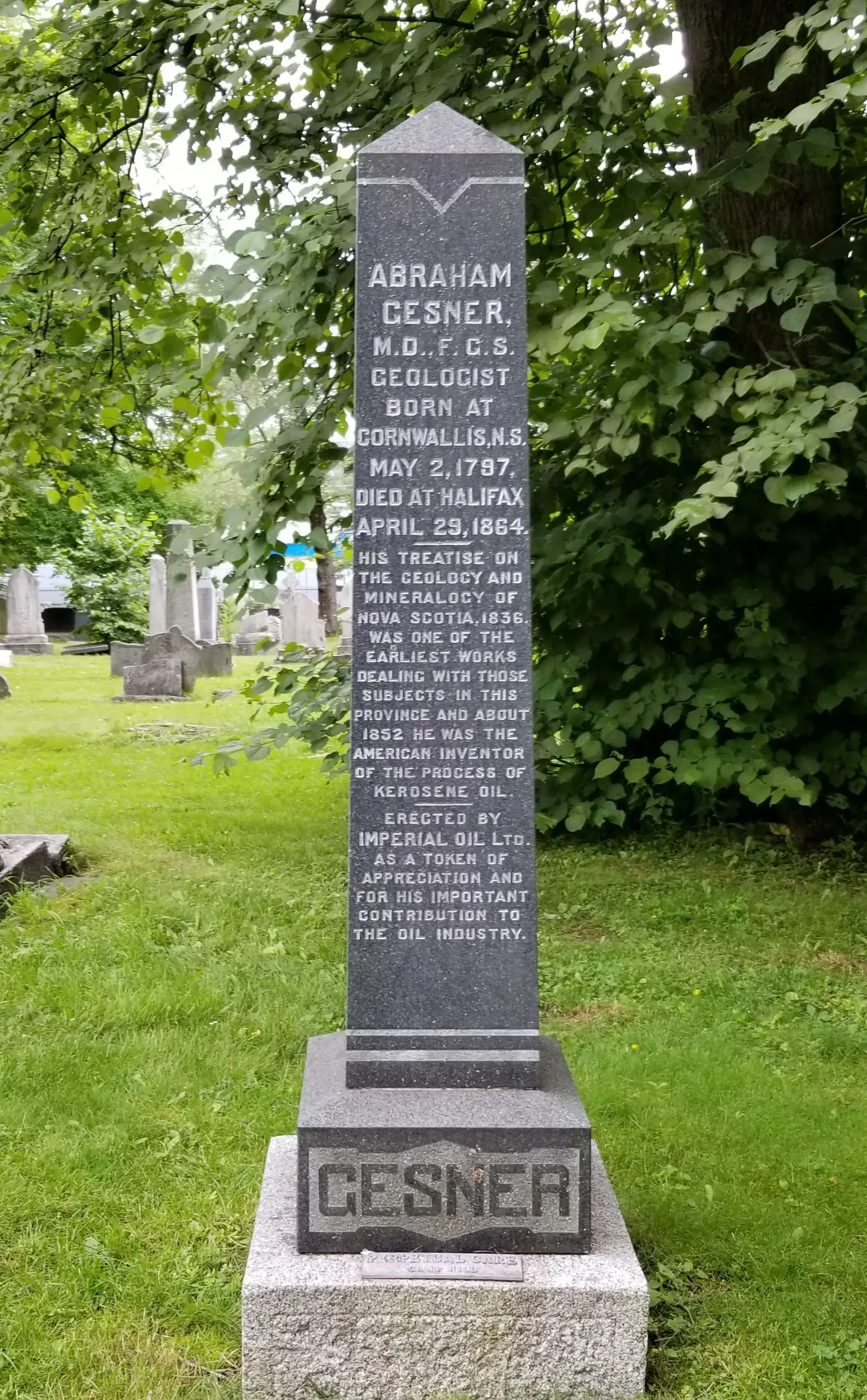
Abraham Pineo Gesner
 Canada
Also known as: Abraham Gesner, Father of the Petroleum Industry
Birthday
May 2, 1797
Birth Sign
Taurus
Birthplace
Cornwallis Park (now Chipmans Corner), Nova Scotia, Canada
Age
Died at 66
About
Abraham Pineo Gesner was a Canadian medical doctor, geologist, and inventor who revolutionized the global energy landscape by inventing kerosene. Often referred to as the "Father of the Petroleum Industry," Gesner developed a process to distill a clear, odorless, and non-explosive fuel from bituminous coal, asphalt, and oil shale. His work replaced expensive and dangerous whale oil with an affordable lighting source for the masses, laying the foundational groundwork for the modern petroleum industry. He died on April 29, 1864, in New York City while managing his business operations.
Gesner's legacy extends far beyond his lifetime. His invention democratized indoor lighting, fundamentally changing daily life and productivity in the 19th century. The term "kerosene" itself was coined by Gesner, derived from the Greek word keros, meaning wax. Today, he is remembered as a pivotal figure in the early study of Canadian geology and natural history, with his contributions honored through statues, awards, and historical plaques across Nova Scotia.
Early Life & Background
Abraham Pineo Gesner entered the world on May 2, 1797, in Cornwallis Park, now known as Chipmans Corner, in Kings County, Nova Scotia. He was born into a prominent Loyalist family as the third son of Colonel Henry Gesner, a military officer, and Sarah Pineo. Growing up in this rural setting instilled in him a deep appreciation for nature and science from a young age. Unlike many of his contemporaries who pursued theology or law, Gesner's interests leaned heavily toward natural history and medicine. He received his primary education locally before attending the Kings County Grammar School, where his aptitude for science began to take shape.
In 1818, at the age of twenty-one, Gesner traveled to London, England, to pursue formal medical training. He studied at St. Bartholomew's Hospital and Guy's Hospital, two of the most prestigious medical institutions in the world at the time. He qualified as a physician and surgeon, returning to Nova Scotia in 1820 to practice medicine in Saint John, New Brunswick. While practicing medicine, he maintained a deep fascination with geology, often exploring local rock formations and mineral deposits during his travels. This dual passion for medicine and geology would eventually converge to create his most famous invention. He worked as a geologist for the Imperial Coal Company, collecting samples of bituminous coal and asphalt, which set the stage for his future breakthrough.
Career Growth
Gesner's career took a transformative turn in 1846 when he successfully distilled a liquid fuel from bituminous coal and asphalt while working for the Imperial Coal Company. He demonstrated that the substance burned brighter and cleaner than whale oil, leading him to name the product "kerosene." This innovation directly addressed the scarcity and high cost of whale oil, which had become increasingly dangerous due to overhunting. In 1849, Gesner moved to New York City to secure patents and commercialize his invention, founding the North American Kerosene Oil Company. He secured US Patent No. 7,232 in 1850 for the process of distilling coal oil, a milestone widely considered the cornerstone of the modern petroleum industry.
The impact of his work was immediate and widespread. By 1851, Gesner had demonstrated the efficacy of kerosene lamps in New York, leading to rapid adoption across North America and Europe. Between 1854 and 1855, he expanded his patent protections internationally to enable mass production. The North American Kerosene Oil Company became a major supplier of lighting fuel, catalyzing the rise of the oil industry and paving the way for companies like Standard Oil decades later. Gesner's ability to transform waste products like bitumen into valuable commodities marked a significant economic shift, transitioning humanity from animal fats to fossil fuels.
Career Timeline
Public Image & Style
Gesner is portrayed as a humble, dedicated scientist and inventor. His image is that of a pioneer who bridged the gap between medicine and chemistry. He is respected for his practical application of science to solve real-world problems, rather than for theoretical brilliance alone. His public persona reflects the values of the 19th-century gentleman-scientist: disciplined, curious, and deeply committed to improving human life through innovation. Modern portrayals emphasize his role as a national hero in Canada, particularly in Nova Scotia, where his contributions are celebrated through monuments and educational programs.
Fame & Fandom (iFAMOUS Rankings)
Abraham Pineo Gesner does not command a modern fanbase with rituals, campaigns, or organized gatherings. As a 19th-century physician and geologist, his legacy rests on scientific breakthroughs rather than pop-cultural devotion, leaving the concept of a formal fandom inapplicable to his story. There is no documented name for any community of admirers, nor are there fan-funded projects or birthday celebrations marking his life. His influence remains strictly academic and industrial, celebrated through historical preservation rather than active fan engagement. The narrative surrounding him focuses on verified events like the unveiling of his statue in Kings County, Nova Scotia, in 2019, which honors his status as a local hero and the father of the Canadian oil industry. This memorial stands as the primary public acknowledgment of his impact, replacing the stadium crowds or viral moments seen with contemporary figures. Abraham Pineo Gesner is currently evaluated by iFANN's Global Fame Engine but holds no placement in the published rankings. He is not ranked within the Global Top 1,000 or any Top-100 scope list. The absence of a numeric score reflects his historical stature outside the metrics used for living celebrities. While he revolutionized global lighting by patenting the process to distill kerosene from bituminous coal in 1850, this achievement places him firmly in the realm of historical significance rather than current fame charts. No movement of ranks can be reported since he has never entered the ranking system. His enduring reputation relies on the tangible shifts he brought to science and industry, specifically how his work replaced dangerous whale oil with affordable, mass-produced fuel. The scale of his contribution is evident in the birth of the modern petroleum industry, yet this historical weight does not translate into the search signals or media consumption patterns required for a current ranking. iFANN acknowledges his evaluation without assigning a position, confirming that while his life was extraordinary, it exists beyond the boundaries of today's fame algorithms.
Interesting Facts and Legends
Despite being famous for chemistry, Gesner was a fully trained physician and surgeon, having studied at top London hospitals. He practiced medicine for nearly three decades before focusing entirely on his invention. A significant moment in his cultural mythology occurred on May 4, 2019, when a statue dedicated to him was unveiled in Parrsboro, Nova Scotia. Commissioned by the town where he lived and worked, this memorial honors his contributions to the Canadian oil industry. Unlike modern celebrities who might experience street-closing crowds or viral disruptions, Gesner's iconic moments were defined by professional achievements in medicine, geology, and chemistry. His death on April 29, 1864, marked the end of a life dedicated to science without the posthumous fan-driven movements common in contemporary entertainment. The exact cause of death is not definitively recorded in modern digital archives, but it is generally attributed to natural causes related to his age and the stresses of travel and business management in the mid-19th century. There were no reports of foul play, accidents, or sudden epidemics associated with his passing.
Notable Quotes
“Kerosene is a liquid fuel obtained from coal, bitumen, and oil shale, which can be distilled to produce a clear, odorless, and non-explosive substance.”
Family & Personal Life
Abraham Pineo Gesner was married to Sarah Ann Smith prior to 1830. They had several children, though specific details about their names and numbers are less frequently documented in general biographical summaries compared to his professional achievements. His wife supported his scientific endeavors and managed the household during his extensive travel for research and business. The family was well-established in Nova Scotia, and his father's military background likely instilled a sense of discipline and service. Raised in the rural setting of Chipmans Corner, Gesner showed early aptitude for science and nature. He received his primary education locally before attending the Kings County Grammar School. Unlike many contemporaries who pursued theology or law, Gesner's interests leaned heavily toward natural history and medicine.
Notable Connections
Relationships & Dating History
Abraham Pineo Gesner was married to Sarah Ann Smith prior to 1830. Their union lasted until his death in 1864, making it a lifelong partnership. They met through local social circles in Nova Scotia and New Brunswick, and the relationship was stable and supportive of his career. Sarah Ann managed the household during his extensive travel for research and business, allowing him to focus on his scientific endeavors. There were no divorces or separations recorded in historical documents. As a man of the 19th century, Gesner did not have a public dating history in the modern sense of tabloid romances or high-profile flings. His life was defined by marriage and professional dedication. He had multiple children with Sarah Ann, though their names are not widely documented in popular history. At the time of his death, Gesner was widowed, leaving behind a legacy of scientific achievement and a family that supported his work throughout his life.
- MarriedSarah Ann Smith1830 - 1864Married prior to 1830; stayed together until his death; had multiple children.
Death & Aftermath
Died
April 29, 1864 (aged 66)
Death Place
New York City, New York, USA
Cause of Death
Natural causes related to age and travel stress
Abraham Pineo Gesner spent his final days traveling to oversee the commercial expansion of his kerosene invention, managing operations for the North American Kerosene Oil Company in New Jersey and New York. He passed away on April 29, 1864, in New York City at the age of sixty-six while actively engaged in these business efforts to globalize his discovery. Contemporary accounts focus entirely on his role as an industrial pioneer rather than the specifics of his mortality. Public reaction was characterized by quiet professional respect from peers and institutions who recognized his contribution to the energy sector.
His funeral was a private affair held shortly after his death in New York City, reflecting the mid-nineteenth-century custom where personal family matters remained separate from public life. He was buried in a New York burial ground, though the exact cemetery location is not consistently detailed in general summaries. In the decades following his death, tributes appeared in scientific journals and engineering histories, solidifying his status as a foundational figure in North American chemistry and geology. Posthumous recognition has included induction into the National Inventors Hall of Fame and the establishment of the Abraham Gesner Award by the Canadian Society of Petroleum Geologists. A sculpture honoring him was unveiled in Kings County, Nova Scotia, in April 2018, accompanied by a narrative plaque at Chipman Corner to commemorate his origins and invention.
Net Worth (Estate Value)
$0
iFANN Editorial Team estimate
Abraham Pineo Gesner died in 1864, so he possesses no net worth in the modern currency sense, nor does he have a publicly traded estate generating income today. Historical records do not provide a specific dollar figure for his estate at the time of his death, though he was a wealthy man by 19th-century standards due to the success of his patents and the North American Kerosene Oil Company. His wealth during his lifetime came from his medical practice, geological consulting, and the sale or licensing of his kerosene patents. The intellectual property rights associated with his invention were sold or licensed to various oil companies in the late 19th and early 20th centuries. Today, his name is used for branding and educational purposes, but there is no active "Gesner Estate" managing royalties in the way modern celebrities do. The value of his legacy is measured in the profound impact he had on the global energy industry rather than financial accumulation.
Awards Won (2)
While Gesner lived before the modern era of entertainment awards, he received significant posthumous recognition and honors. He was inducted into the National Inventors Hall of Fame for his invention of kerosene. The Canadian Society of Petroleum Geologists established the Abraham Gesner Award to honor outstanding contributions to petroleum geology. A bronze statue dedicated to Gesner was unveiled on May 4, 2019, in Parrsboro, Nova Scotia, commemorating his role as the "Father of the Petroleum Industry." Additionally, a historical plaque was installed at Chipman Corner, his birthplace, to mark his origins and achievements.
Posthumous · Induction
Invention of Kerosene
Established Posthumously · Lifetime Achievement
Canadian Society of Petroleum Geologists
Known For
Invention of Kerosene
1846 · Inventor
US Patent No. 7,232
1850 · Patent Holder
Keywords
Sources
Quick Facts
- Profession
- geologist, physician, inventor
- Born
- May 2, 1797
- Birthplace
- Cornwallis Park, Nova Scotia
- Died
- April 29, 1864
- Death Place
- New York City, New York
- Gender
- Male
- Birth Sign
- Taurus
Personal Details
- Full Name
- Abraham Pineo Gesner
- Spouse
- Sarah Ann Smith
- Children
- Multiple children (names largely unrecorded)
- Education
- Kings County Grammar School; St. Bartholomew's Hospital and Guy's Hospital, London
Frequently Asked Questions
Who invented kerosene?
When did Abraham Gesner die?
What is Abraham Gesner famous for?
Where was Abraham Gesner born?
Did Abraham Gesner have any children?
Similar People
Join the community
fans discussing