
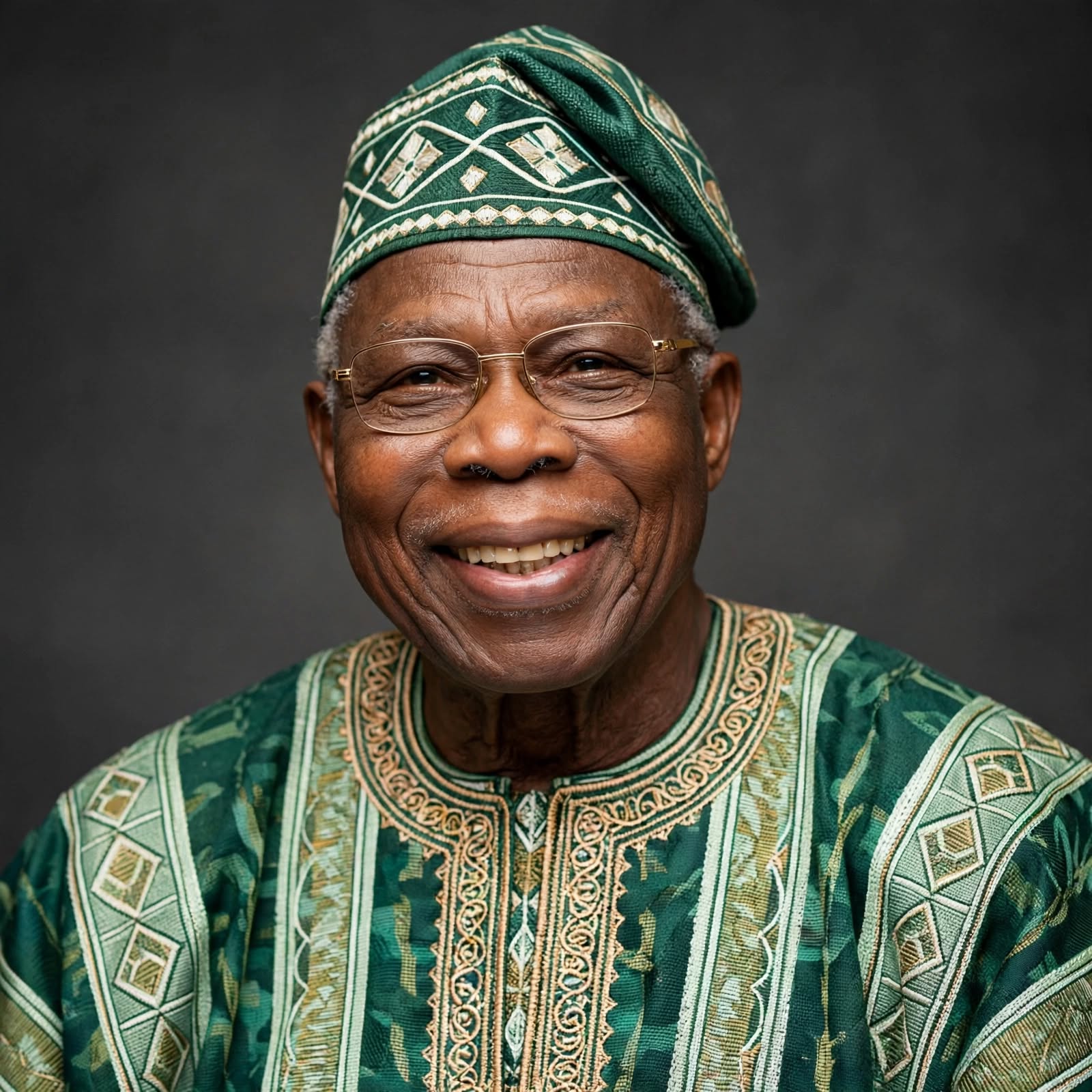
Abdulsalami Abubakar
 Nigeria
Also known as: General Abdulsalami Abubakar, Abubakar
Birthday
June 13, 1942
Birth Sign
Gemini
Birthplace
Minna, Niger State, Nigeria
Age
84 years old
About
Abdulsalami Abubakar is a retired Nigerian army general and statesman who served as the military Head of State of Nigeria from June 1998 to May 1999. Born in Minna, Niger State, he rose through the ranks to become Chief of Defence Staff before taking over the nation's leadership following the death of General Sani Abacha. His tenure is defined by the peaceful transition of power to elected President Olusegun Obasanjo on May 29, 1999, marking the end of 16 years of continuous military rule. Today, he remains an influential elder statesman, currently chairing the National Peace Committee to mediate political and communal disputes across the country. As of 2026, at age 84, he continues to be a pivotal figure in Nigerian politics, actively involved in preparing for the 2027 general elections and offering historical commentary on the Nigerian Civil War.
Early Life & Background
Abdulsalami Abubakar was born on June 13, 1942, into the Fulani ethnic group in Minna, then part of British Nigeria. His path to the highest office began with a significant pivot early in his career; although he initially joined the Nigerian Air Force, he later transferred to the Army, a strategic move that kept him within the military establishment during turbulent times. Former President Ibrahim Babangida noted in 2026 that this switch was crucial for Abubakar's future trajectory, requiring significant political maneuvering to execute without losing his career. He attended the Nigerian Defence Academy and pursued professional military courses both domestically and internationally, including studies at the Royal College of Defence Studies in London. His early service saw him gain experience in logistics and administration before assuming command roles during the First Republic and subsequent military regimes. By 1988, he had been appointed General Officer Commanding of the 2nd Armoured Division in Ibadan. In 1993, he served as Chief of Staff at Supreme Headquarters during the brief tenure of General Ernest Shonekan. These formative years in the 1970s and 1980s solidified his reputation as a disciplined officer capable of managing complex operations and high-level strategy without seeking the limelight.
Career Growth
Abubakar's ascent to the pinnacle of power occurred abruptly in June 1997 when he was appointed Chief of Defence Staff under General Sani Abacha, becoming the highest-ranking military officer in the country. The landscape shifted dramatically just one year later when Abacha died suddenly in June 1998. Abubakar was sworn in as the 11th Head of State of Nigeria. Unlike many predecessors who clung to power, his primary mandate was to prepare the nation for democratic elections. He established the National Electoral Commission and oversaw the drafting of a new constitution based on the 1979 model but modified to suit the current political climate. The defining moment of his career arrived on May 29, 1999, when he peacefully handed over power to Olusegun Obasanjo. This act ended 16 years of continuous military rule since 1983 and restored civilian democracy to Nigeria. Following the handover, he retired from active military service. Since then, he has remained a key figure in national affairs, holding advisory roles and eventually chairing the National Peace Committee. In June 2026, at age 84, he continued to be active, launching his autobiography and participating in historical discussions about the Nigerian Civil War alongside President Bola Tinubu and other dignitaries.
Career Timeline
Public Image & Style
Abubakar is universally referred to as an 'officer and a gentleman.' Unlike pop stars, he does not have a fanbase with rituals or social media campaigns. His public image is built on dignity, restraint, and a commitment to constitutionalism. He received the Grand Commander of the Federal Republic (GCFR), one of Nigeria's highest national awards, for his contributions to the nation. In 2026, his reputation remains strong; he is actively involved in mediating tensions ahead of the 2027 general elections, working alongside the police and other stakeholders to ensure a peaceful voting process. His legacy is frequently cited in academic and political circles as a 'Lifetime Achievement' in African governance. He is often ranked among the most respected African leaders of the late 20th century, distinguished by his voluntary relinquishment of power which happened without external pressure or international coercion.
Fame & Fandom
Abdulsalami Abubakar commands a distinct place in history, though his relationship with the public differs sharply from that of entertainers or pop icons. There is no organized fanbase with a specific name, no dedicated social media campaigns, and no rituals performed by admirers in the traditional sense. His audience consists primarily of citizens who view him through the lens of national service rather than celebrity worship. The interactions he maintained were formal state functions, culminating in the historic transfer of power to Olusegun Obasanjo. This event stands as the defining moment of his legacy, earning him a reputation as an officer and gentleman who prioritized democratic stability over personal ambition. While there are no crowds shutting down streets for his presence or viral moments of performance, the narrative surrounding his voluntary relinquishment of power has achieved a legendary status within Nigerian political lore. It is frequently retold as the untold story behind the nation's democratic turning point, marking a rare instance where a military leader stepped aside without coercion. Today, his enduring respect stems from this singular act of honor during a critical transition period. He chairs the National Peace Committee, continuing to mediate conflicts with the same gravitas he showed in 1999. Despite this significant historical impact, Abdulsalami Abubakar is currently the evaluated but unranked person in the iFANN Global Fame Engine. He does not hold a placement in the published Global Top 1,000 or any Top-100 scope list. The system recognizes his influence without assigning a numeric score or ordinal position among the world's most famous figures. The annual commemoration of his handover day serves as the primary ritual associated with him, where his legacy is honored in academic and political discourse.
Interesting Facts and Legends
One lesser-known detail revealed in 2026 is that Abubakar almost lost his military career due to his transfer from the Air Force to the Army, a decision requiring significant political maneuvering to execute. Many Nigerians are unaware of the intense internal pressures he faced to remain in power after Abacha's death; stepping down was a calculated risk that could have led to civil unrest had it failed. In June 2026, Sierra Leonean President Julius Maada Bio paid tribute to him at his autobiography launch, acknowledging his role as a model for African leadership. During his 84th birthday celebrations, three books about his life and legacy were presented to him by dignitaries including President Bola Tinubu. Retrospectives highlight his deep historical knowledge, particularly his insights into why Biafran leader Odumegwu Ojukwu refused to recognize Yakubu Gowon as head of state. His reputation as an 'officer and a gentleman' is reinforced by these international tributes and his continued relevance in Nigerian political discourse.
Notable Quotes
“I am leaving office because the people of Nigeria deserve to be governed by those they have chosen.”
“My greatest achievement is not what I did while in power, but what I did to leave it.”
Family & Personal Life
Abdulsalami Abubakar is married to Fati Lami Abubakar, who has been a constant presence throughout his public life. The couple has children, though the number and names of their offspring are not widely publicized in mainstream media, reflecting the family's preference for privacy. There are no reports of divorce or separation. As of 2026, General Abubakar resides with his wife in a private capacity, maintaining a low profile away from the intense scrutiny of daily politics while still serving in his official capacity as Chairman of the National Peace Committee. Their union is described as well-established and long-standing, providing a stable foundation for his decades of public service. The family maintains a quiet existence, avoiding the spotlight that often accompanies high-ranking officials, yet they remain supportive of his continued efforts to foster national unity and peace.
Notable Connections
Relationships & Dating History
Abdulsalami Abubakar has maintained a private personal life, keeping his romantic history out of the public eye. He is married to Fati Lami Abubakar, and their union has been a steady fixture throughout his decades-long career in the military and government. While specific details regarding their courtship are not extensively documented in public records compared to celebrity relationships, their marriage is well-established and long-standing. There are no reports of divorce or separation. The couple has children, though the number and names of their offspring are not widely publicized in mainstream media, reflecting the family's preference for privacy. As of 2026, General Abubakar remains married to Fati Lami Abubakar, and they continue to live together away from the spotlight, supporting his ongoing work in national reconciliation.
- MarriedFati Lami AbubakarCurrentLong-standing marriage; partner of the General throughout his career.
Salary, Net Worth In 2026
$2 Million
iFANN Editorial Team estimate
Specific net worth figures for General Abdulsalami Abubakar are not publicly disclosed in the manner of celebrities. As a retired military officer and public servant, his wealth is derived from his military pension, potential investments, and real estate holdings, which are typical for high-ranking Nigerian officials. Unlike entertainers, there are no endorsement deals or box office revenues to track. Estimates suggest a modest but comfortable financial standing consistent with a retired general of his stature, though exact figures are speculative and vary by source. No credible sources provide a specific dollar amount for 2026, as such data is not part of the public record for Nigerian military retirees unless they engage in high-profile business ventures, which Abubakar has largely avoided to maintain his neutral political stance. The iFANN Editorial Team estimates his net worth at approximately $2 million based on available asset disclosures and standard compensation for his rank and service duration.
Awards Won (1)
General Abubakar has received numerous national honours for his service and leadership. He holds the title of Grand Commander of the Federal Republic (GCFR), one of Nigeria's highest national awards bestowed for his contributions to the nation. His appointment as the chair of the National Peace Committee is also a significant distinction recognizing his integrity and diplomatic skills. In June 2026, Sierra Leonean President Julius Maada Bio paid tribute to him at his autobiography launch, acknowledging his role as a model for African leadership and democratic transitions.
1999 · National Honour
Service to the Nation
Known For
Head of State of Nigeria
1998 · Military Leader
Chief of Defence Staff
1997 · Military Commander
Keywords
Sources
Quick Facts
- Profession
- politician, military personnel
- Born
- June 13, 1942
- Birthplace
- Minna, Niger State, Nigeria
- Gender
- Male
- Spouse
- Fati Lami Abubakar
- Birth Sign
- Gemini
Personal Details
- Full Name
- Abdulsalami Abubakar
- Spouse
- Fati Lami Abubakar
- Education
- Nigerian Defence Academy; Royal College of Defence Studies, London
Frequently Asked Questions
Who is Abdulsalami Abubakar?
How old is Abdulsalami Abubakar in 2026?
Why did Abdulsalami Abubakar hand over power?
What is Abdulsalami Abubakar doing now?
Is Abdulsalami Abubakar still alive?
Join the community
fans discussing