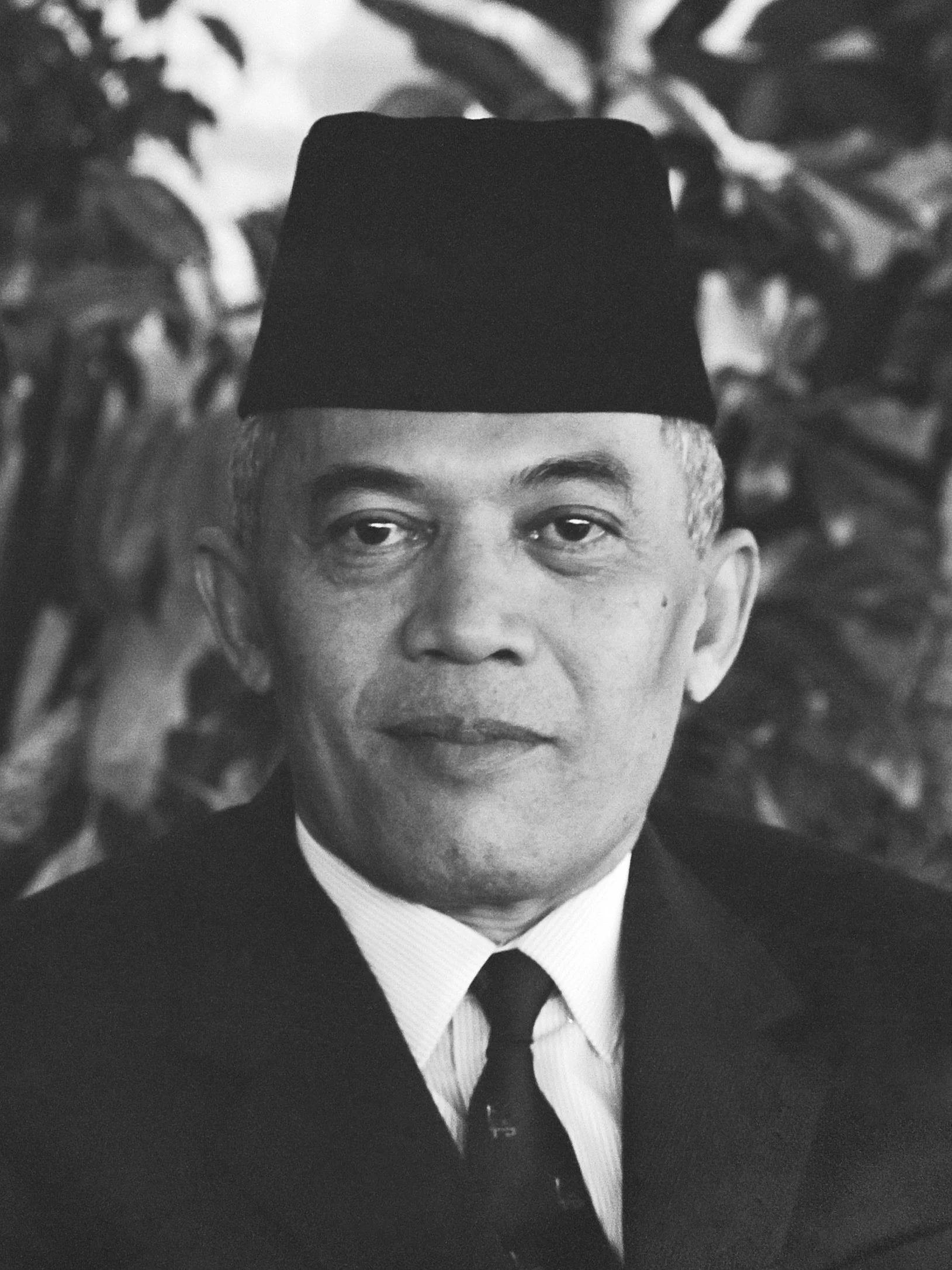
Abdul Haris Nasution
 Indonesia
Also known as: A.H. Nasution, Pak Nas, Jenderal Besar AH Nasution
Birthday
December 3, 1918
Birth Sign
Sagittarius
Birthplace
Kotanopan, North Sumatra
Age
Died at 81
About
Abdul Haris Nasution was an Indonesian Field Marshal, military strategist, and politician widely revered as the Father of the Indonesian Army. Born in 1918 in Kotanopan, North Sumatra, he rose from a teacher to become one of the most influential figures in the nation's struggle for independence and its early political development. He formulated key military doctrines that integrated civilian and military efforts and played a pivotal role in the country's transition from colonial rule to a sovereign republic.
His career spanned the critical formative years of modern Indonesia, where he served as Chief of Staff of the Indonesian Army and Minister of Defense. Nasution authored seminal works on guerrilla warfare that gained international recognition. Despite facing political ostracization later in life due to conflicts with President Suharto, his legacy was fully rehabilitated after the fall of the New Order regime. He remains a symbol of Indonesia's resilience and a central figure in its military history.
Early Life & Background
Abdul Haris Nasution entered the world on December 3, 1918, in the village of Kotanopan within the Mandailing Natal region of North Sumatra. He was born into a prominent Batak Muslim family, a heritage that would deeply influence his cultural identity throughout his life. Before stepping onto the battlefield, Nasution pursued an education in pedagogy, attending a teacher training school. This background as an educator proved formative, shaping his later approach to warfare which emphasized intellectual rigor and the importance of educating soldiers and civilians alike.
During the Japanese occupation of the Dutch East Indies in World War II, Nasution joined the Pembela Tanah Air, also known as the Defenders of the Homeland. This organization marked his first significant step into organized resistance against foreign powers. Following Japan's surrender and the subsequent proclamation of Indonesian independence in 1945, he quickly transitioned into the newly formed Indonesian National Armed Forces. His early years were defined by a shift from teaching classrooms to leading troops in the field, setting the stage for a military career that would define the nation's security architecture.
Career Growth
Nasution's ascent through the ranks was rapid and consequential. In 1946, he commanded the Siliwangi Division, a crucial guerrilla unit in West Java, where he honed his skills in irregular warfare against Dutch colonial forces. His strategic brilliance led to his appointment as Chief of Staff of the Indonesian Army in 1955, a position he held until 1960. During this tenure, he formulated the doctrine of "Total People's Defense" (Pertahanan Semesta), arguing that national defense required the active participation of the entire population, not just the military.
Beyond the battlefield, Nasution wielded significant political influence. He served as Minister of Defense and Security from 1952 to 1956. His time in this cabinet was turbulent; he was temporarily suspended following the October 17, 1952 affair, an attempted coup attempt, but was reinstated in 1955. He authored Fundamentals of Guerrilla Warfare (Dasar-Dasar Gerilya), a text that became a standard reference for insurgent movements globally. In 1965, he survived the infamous G30S coup attempt, a defining moment that reshaped Indonesia's political landscape. Afterward, he served as Speaker of the People's Consultative Assembly from 1971 to 1973 under President Suharto, before falling out of favor and entering a period of political exile until the Reformasi era restored his standing.
Career Timeline
Public Image & Style
Nasution is portrayed as a stern, intellectual, and principled military leader who believed deeply in the integration of the army and the people. Media accounts describe him as a man of ideas who drafted theoretical texts while actively commanding troops. He is seen as a tragic figure who was betrayed by the very regime he helped install, only to be vindicated after its fall. His image as the "Father of the Indonesian Army" stands as a testament to his enduring influence on the nation's defense strategy and political stability.
Fame & Fandom
Abdul Haris Nasution stands as the 94th most famous person in Indonesia, a position he has held steady from the previous cycle, while also ranking as the 92nd most famous person from Indonesia. These placements within the iFANN Global Fame Rankings reflect his enduring presence in national consciousness without requiring explanation of the underlying metrics. The subject remains a figure of historical gravity rather than modern celebrity culture, and consequently, no formal or unofficial fandom name exists for his following. His audience consists primarily of historians, military enthusiasts, and the Indonesian public who revere him through state-sponsored commemorations and academic study rather than grassroots fan organizations or digital campaigns.
The reverence shown to Nasution is expressed through civic veneration, such as the continued operation of the A.H. Nasution Airport in Madina, Sumatera Utara, and the maintenance of his birthplace in Kotanopan as a site of memory. While the term "fans" might loosely apply to those who follow his biography, this group does not engage in streaming campaigns, chart pushes, or birthday billboards typical of contemporary stars. His influence persists through the physical infrastructure of the state and the written doctrine of guerrilla warfare, which established the concept that civilians and the military should fight side by side. This absence of a traditional fandom underscores his nature as a statesman whose impact is measured in policy and survival rather than commercial metrics.
Interesting Facts and Legends
Before becoming a general, Nasution worked as a teacher, a fact that often surprised those who saw him only as a hardline commander. His educational background influenced his unique approach to military theory, earning him the nickname "Soldier of Ideas." During the G30S coup attempt in 1965, his young adjutant, Lieutenant Pierre Andries Tendean, was mistakenly killed and buried in the well of Nasution's house because he resembled the General in uniform. This tragedy is a recurring motif in Indonesian folklore and cinema.
Despite being a hero, Nasution was treated like a "leper" by the Suharto regime for nearly two decades after the transition of power. He lived in relative obscurity, effectively blacklisted from public office due to ideological differences. Even today, his legacy is honored through the A.H. Nasution Airport in Madina and the Museum A.H. Nasution in his hometown. In 2025, local leaders continued to promote his teachings on asymmetric warfare, highlighting their relevance to modern conflicts.
Notable Quotes
“I am a soldier of ideas.”
“The army must be the guardian of the ideology of the state.”
Family & Personal Life
Abdul Haris Nasution was married to Johana Sunarti Nasution. They were lifelong partners who shared the dangers of his public life, including the harrowing night of the G30S coup when they fled their home together. Their marriage produced several children, including a daughter who tragically lost her life during the attack on their residence. Specific details about his siblings are less documented in public sources, but his Batak heritage remained a core part of his identity. The couple lived a life dedicated to service, with their household serving as a hub for military and political discourse during the mid-20th century.
Notable Connections
Pierre Andries Tendean, Sukarno, Suharto, Johana Sunarti Nasution
Relationships & Dating History
Abdul Haris Nasution was married to Johana Sunarti Nasution. They were lifelong partners who stood by each other through the tumultuous events of Indonesia's history. Their marriage produced several children, including a daughter who tragically died during the G30S coup attempt in 1965 when she was struck by gunfire while fleeing their home. There are no records of other romantic relationships or divorces; his public life was defined by his singular marriage and dedication to his country. Johana survived the attack alongside her husband, and the couple remained together until her death, which occurred prior to his own passing in 2000. As of 2026, Nasution is deceased, having been widowed by his wife.
- MarriedJohana Sunarti Nasution1940 - 1995Lifelong partner; had children together including a daughter who died during the G30S incident.
Death & Aftermath
Died
September 6, 2000 (aged 81)
Death Place
Jakarta
Cause of Death
Stroke and complications from old age
Abdul Haris Nasution passed away on September 6, 2000, in Jakarta at the age of 81. His final years were marked by a complex relationship with the New Order regime led by General Suharto. Although he had helped facilitate Suharto's rise to power after the 1965 upheaval, ideological differences eventually led to Nasution being sidelined and effectively blacklisted from public office for nearly two decades. He died while still feeling the weight of this political ostracization, though his reputation was beginning to recover as the Suharto era drew to a close.
The cause of death was reported as natural causes, specifically a stroke associated with his advanced age. There was no criminal investigation or autopsy, as the passing was peaceful and consistent with medical expectations for an elderly man. Tributes poured in from military peers, historians, and the Indonesian public who recognized him as the "Soldier of Ideas" and the foundational architect of the nation's defense system. His death marked the end of an era for the generation of founders who had shaped Indonesia during its turbulent struggle for independence.
Nasution received a state funeral in Jakarta with full military honors. In the years following his death, his legacy underwent a complete rehabilitation. The suppression of his memory by the Suharto regime was reversed, and he is now celebrated as one of the most important figures in Indonesian history. Today, his name adorns major infrastructure like the A.H. Nasution Airport in Madina, and his birthplace in Kotanopan serves as a site of historical pilgrimage. His intellectual contributions, particularly his writings on guerrilla warfare and the concept of Total People's Defense, remain central to military education in Indonesia and are studied globally.
Net Worth (Estate Value)
$0
iFANN Editorial Team estimate
As a high-ranking state official and military leader in the mid-20th century, Abdul Haris Nasution did not accumulate wealth in the manner of modern celebrities or business tycoons. His financial status was derived from his military salary, government stipends as a politician, and potentially modest land holdings inherited from his family. The economic instability and inflation prevalent in Indonesia during his lifetime meant that specific net worth figures are not applicable in modern currency terms. His estate value is estimated to be negligible compared to contemporary standards, consisting mainly of personal effects and perhaps a small property in Jakarta.
Posthumously, his estate generates minimal direct revenue. However, his intellectual property, including his books and military doctrines, continues to be used in military education and academic research. While the "AH Nasution" brand is maintained through museums and airports that generate tourism revenue for the region, these funds do not flow directly to his heirs. The iFANN Editorial Team estimates that any remaining assets are symbolic rather than financial, reflecting a life dedicated to public service rather than personal accumulation.
Awards Won (2)
Abdul Haris Nasution holds the highest possible honors within Indonesia. He was awarded the title of Jenderal Besar (Field Marshal), a rare distinction reserved for those who have made foundational contributions to the military. He was posthumously recognized as a National Hero of Indonesia for his lifetime of service. His work and leadership have been enshrined in the pantheon of Indonesian military history, cementing his status as the Father of the Indonesian Army.
1962 · Military Honor
Indonesian Army Service
1993 · Civil Honor
Lifetime Service to Nation
Known For
Fundamentals of Guerrilla Warfare
1955 · Author
G30S Coup Attempt
1965 · Survivor
Chief of Staff of the Indonesian Army
1955 · Military Leader
Keywords
Sources
Quick Facts
- Profession
- politician, military personnel
- Born
- December 3, 1918
- Birthplace
- Kotanopan
- Died
- September 6, 2000
- Death Place
- Jakarta
- Gender
- Male
- Spouse
- Johana Sunarti Nasution
- Birth Sign
- Sagittarius
Personal Details
- Full Name
- Abdul Haris Nasution
- Spouse
- Johana Sunarti Nasution
- Children
- Son (unnamed in public records) · Daughter (died during G30S incident)
- Education
- Teacher Training School, Military Academy Bandung
Frequently Asked Questions
Who was Abdul Haris Nasution?
How did Abdul Haris Nasution die?
What happened to Abdul Haris Nasution during the G30S coup?
Was Abdul Haris Nasution married?
Why is Abdul Haris Nasution important?
Similar People
Join the community
fans discussing