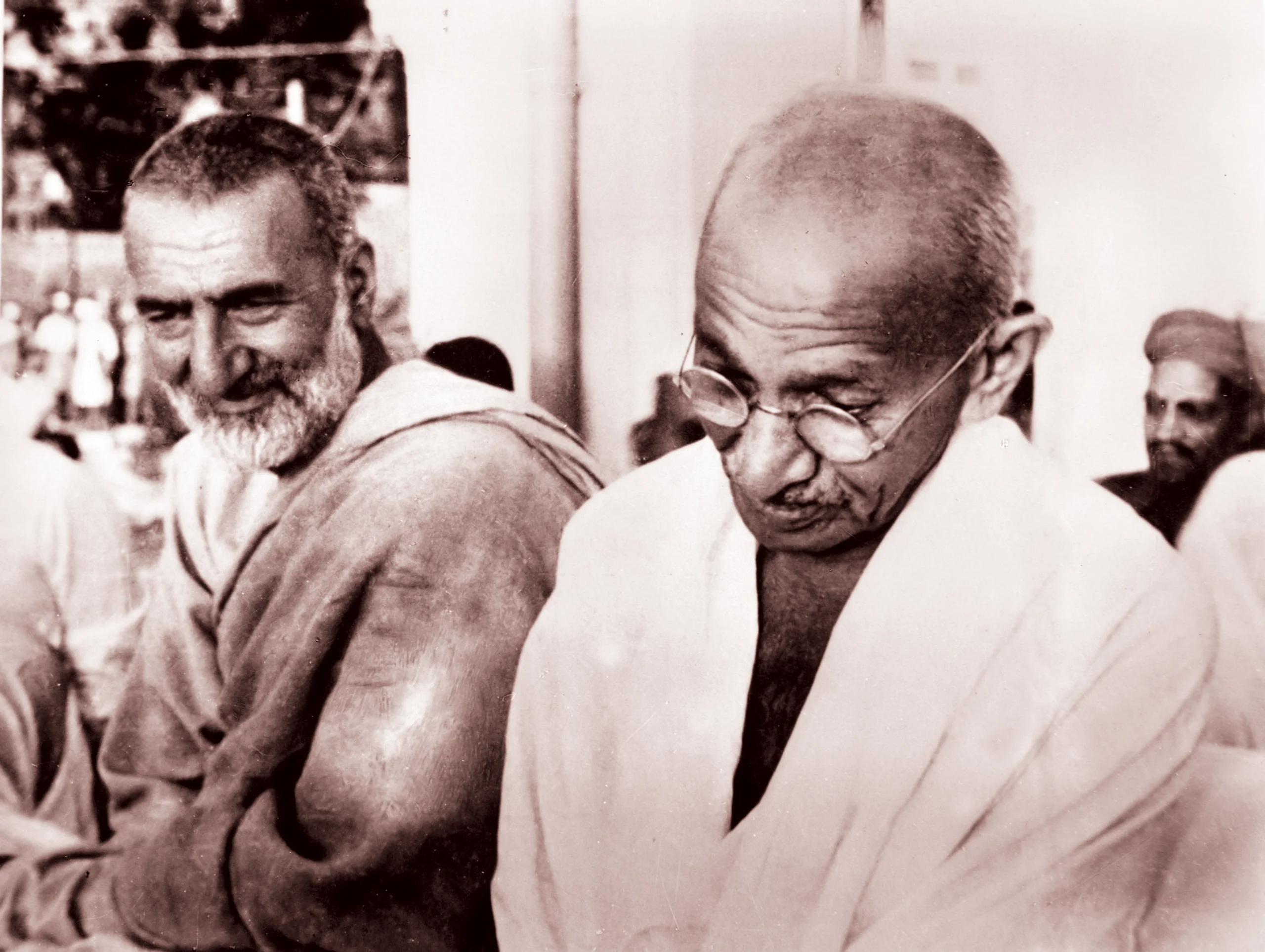
Abdul Ghaffar Khan
 Pakistan
Also known as: Bacha Khan, Badshah Khan, Frontier Gandhi, Fakhr-e-Afghān
Birthday
February 6, 1890
Birth Sign
Aquarius
Birthplace
Utmanzai, Hashtnagar, North-West Frontier Province, British India (now Khyber Pakhtunkhwa, Pakistan)
Age
Died at 97
About
Abdul Ghaffar Khan, universally revered as the "Frontier Gandhi" and affectionately known as "Bacha Khan," was a towering Pashtun political and spiritual leader who dedicated his life to nonviolent resistance against British colonial rule in India. Born on February 6, 1890, in Utmanzai (Hashtnagar), he emerged from a prominent family that provided him with a privileged upbringing, though he later rejected the traditional martial culture of his tribe in favor of pacifism. He founded the Khudai Khidmatgar movement, which mobilized over 100,000 Pashtuns into a disciplined force that refused to carry weapons. Despite spending nearly 40 years in prison under various regimes, he remained steadfast in his commitment to peace and Hindu-Muslim unity. His legacy endures as a symbol of moral courage and the power of nonviolent protest in South Asian history.
Early Life & Background
Born into a prominent Pashtun family in Utmanzai, Abdul Ghaffar Khan grew up in a region known for its fierce martial traditions. His father, Mehtar Abdul Samad Khan, was a respected local chieftain who provided him with a privileged upbringing. Unlike many of his contemporaries who embraced the warrior culture of their tribe, Khan sought a different path early on. He attended a local madrasa where he learned Persian and Arabic, grounding himself in traditional Islamic education. However, his formal Western education began later at the age of 20 when he enrolled in the Oriental College in Lahore. There, he studied English and history, exposing him to modern political thought and the writings of Mahatma Gandhi. Before entering full-time politics, he worked as a lawyer practicing in Peshawar. During this period, he served as a member of the Provincial Legislative Council. His early career was marked by a gradual shift from advocating for tribal rights within the British framework to leading a mass movement for Indian independence through nonviolence. This transition laid the groundwork for his future role as a revolutionary leader who would challenge the very foundations of colonial authority without raising a weapon.
Career Growth
In 1929, Khan founded the Khudai Khidmatgar, also known as the "Red Shirts," marking the beginning of his most significant political achievement. This organization mobilized over 100,000 Pashtuns into a disciplined force that refused to carry weapons, focusing instead on social reform, education, and peaceful protest. This was a radical departure for the fiercely independent and often warlike Pashtun tribes. His breakthrough moment came during the Salt March and subsequent civil disobedience campaigns in the 1930s, where he led massive marches alongside Mahatma Gandhi. Despite facing brutal repression from the British, including the massacre of unarmed protesters at Charsadda in 1930, Khan never retaliated with violence. He spent a total of 39 years of his life imprisoned under various British regimes, enduring solitary confinement and harsh conditions without breaking his resolve. In the 1940s, Khan became a central figure in the debate over the partition of India. He firmly opposed the division of the subcontinent, believing it would fragment the Pashtun community and marginalize them. When the Indian National Congress accepted the partition plan without consulting him, he famously declared they had "thrown us to the wolves." Following the creation of Pakistan in 1947, he continued to advocate for an independent Pashtunistan, a demand that was repeatedly denied by the new Pakistani government, leading to further arrests and house arrest until his death.
Career Timeline
Public Image & Style
Khan is portrayed in media and historical texts as a saintly figure, a man of immense integrity and moral courage. His image is synonymous with patience, forgiveness, and unyielding commitment to truth (*Satyagraha*). He is often depicted as a bridge between cultures, advocating for Hindu-Muslim unity in a time of rising religious nationalism. His attire, consisting of traditional Pashtun clothing including the *pakol* cap and a long coat, became part of his iconic image. He maintained a dignified presence throughout his life, projecting an aura of calm authority that commanded respect from both allies and enemies alike. Known for his imposing yet dignified presence, he is generally described as tall and robust, reflecting the physical stature typical of Pashtun leadership.
Fame & Fandom
Abdul Ghaffar Khan remains a towering figure in the history of nonviolent resistance, frequently ranked among the greatest leaders of the 20th century alongside Gandhi and Martin Luther King Jr. by publications like *TIME* and *Rolling Stone*. While he does not hold a placement within the iFANN Global Top 1,000 as a contemporary celebrity subject to fluctuating popularity metrics, his legacy is sustained by political adherence rather than fandom culture. Unlike modern entertainers who command organized fanbases with specific monikers and digital campaigns, Khan's supporters are activists, students, and historians who view him as a political icon and spiritual guide. No formal name exists for his supporters; they are not fans in the entertainment sense but activists and students of the Khudai Khidmatgar movement he established. This organization functioned as a disciplined force of over 100,000 members who prioritized social reform and peaceful protest against colonial rule. His influence persists through institutional tributes such as Bacha Khan University and the continued political work of his descendants, rather than grassroots fan projects or merchandise drives. While global media coverage and search signals regarding his life remain significant due to his role as the Frontier Gandhi, these metrics reflect his standing as a statesman whose relevance is measured in historical impact rather than immediate consumption data.
Interesting Facts and Legends
Khan opened over 130 schools in the 1920s and 1930s, providing education to thousands of Pashtun children, many of whom were previously denied access to formal schooling. The Red Shirts wore red shirts, a color chosen to symbolize their willingness to shed blood for their cause, even though they refused to use weapons. During the communal riots in Noakhali in November 1946, Khan undertook a seven-week foot march covering 116 miles across 47 villages to restore peace between Hindus and Muslims. Mahatma Gandhi bestowed upon him the title Frontier Gandhi in recognition of his unique ability to bring nonviolence to frontier regions. Recent historical reporting has highlighted a deeper connection between Khan and Lucknow that was previously less known. Modern reverence for his legacy is evident when leaders such as Prime Minister Narendra Modi have referenced the privilege of touching his feet during commemorative events. He received the Soviet Union Peace Prize in 1952 and delivered the Jawaharlal Nehru Memorial Lecture in 1954. Additionally, he was featured on the covers of *Time* and *Life* magazines during the 1940s and 1950s. In 2018, the Government of India released a commemorative stamp on his birth anniversary.
Notable Quotes
“I am not a Muslim politician, I am a Muslim human being.”
“If you want to fight, fight with your hearts, not with weapons.”
“We are ready to die, but we will not kill.”
“The Congress has thrown us to the wolves.”
“Non-violence is not a weapon of the weak; it is the weapon of the strong.”
Family & Personal Life
Abdul Ghaffar Khan was married twice. His first wife was Meharqanda Kinankhel, and his second wife was Nambata Kinankhel. Historical records do not provide extensive details regarding the specific dates of these marriages or the circumstances of their union, but both women are noted in biographical accounts as his spouses. Khan did not have children from either marriage, a fact often cited in discussions about his personal life, as he dedicated his entire existence to his political cause and the welfare of his people rather than a traditional family life. There are no public records of romantic relationships outside of these two marriages, nor any documented divorces or separations. As of his death on January 20, 1988, he was widowed after the passing of his last spouse, though the exact date of Nambata's death is not widely recorded in public sources. His grandson, Aimal Wali Khan, went on to become a prominent political leader in Pakistan, continuing the family's legacy of activism. The lack of direct descendants has often been linked to his singular focus on the welfare of his people over domestic duties.
Notable Connections
Mahatma Gandhi was a close friend and ideological mentor to Khan. Jawaharlal Nehru served as a political ally and fellow freedom fighter. Aimal Wali Khan, his grandson, became a prominent political leader in Pakistan. His wives, Meharqanda Kinankhel and Nambata Kinankhel, supported his life and work.
Relationships & Dating History
Abdul Ghaffar Khan was married twice. His first wife was Meharqanda Kinankhel, and his second wife was Nambata Kinankhel. Historical records do not provide extensive details regarding the specific dates of these marriages or the circumstances of their union, but both women are noted in biographical accounts as his spouses. Khan did not have children from either marriage, a fact often cited in discussions about his personal life, as he dedicated his entire existence to his political cause and the welfare of his people rather than a traditional family life. There are no public records of romantic relationships outside of these two marriages, nor any documented divorces or separations. As of his death on January 20, 1988, he was widowed after the passing of his last spouse, though the exact date of Nambata's death is not widely recorded in public sources. His close friendship with Mahatma Gandhi, formed in 1929, is legendary; they embraced each other as brothers, and their partnership became the cornerstone of the nonviolent struggle in the Northwest Frontier. He also maintained a strong political alliance with Jawaharlal Nehru, fellowing as a freedom fighter.
- MarriedMeharqanda KinankhelFirst wife; details of marriage date unknown.
- MarriedNambata KinankhelSecond wife; died before Khan.
Death & Aftermath
Died
January 20, 1988 (aged 97)
Death Place
Peshawar, Pakistan
Cause of Death
Natural causes related to advanced age
Khan died on January 20, 1988, in Peshawar, Pakistan, at the age of 97. The official cause of death was natural causes related to advanced age. His passing was met with widespread grief across South Asia, with tributes pouring in from political leaders in both India and Pakistan. His funeral was a significant event, attended by thousands of mourners who honored his legacy as a symbol of peace. Posthumously, his reputation has only grown; he is remembered as a moral authority whose principles transcended the sectarian divides that continue to plague the region. In 2016, the Taliban's attack on Bacha Khan University in Peshawar was widely condemned as an assault on his legacy of education and nonviolence. Subsequent commemorations have included addresses by his great-grandson Aimal Wali Khan during anniversaries and references by Indian Prime Minister Narendra Modi regarding the enduring respect for his pacifist philosophy. The Awami National Party maintains annual memorials in his name, and his life remains the subject of numerous books, films, and academic studies.
Net Worth (Estate Value)
$0
iFANN Editorial Team estimate
As a political leader and freedom fighter who lived primarily during the colonial era and passed away in 1988, Abdul Ghaffar Khan did not accumulate personal wealth in the manner of modern celebrities. Historical records indicate he lived a life of austerity, donating his personal assets to the Khudai Khidmatgar movement and educational initiatives. Consequently, there is no verified net worth figure for him in 2026. Any estimates suggesting a monetary value for his estate are speculative and likely refer to the value of institutions bearing his name or the economic impact of his legacy, rather than personal assets. His "wealth" is measured in the millions of lives he inspired and the educational institutions he established. He received multiple honorary degrees from universities in India and abroad for his lifelong service to humanity, further cementing his status as a man of principle rather than profit.
Awards Won (3)
While Khan did not receive awards in the modern commercial sense, he holds numerous prestigious historical honors. He was awarded the Soviet Union Peace Prize in 1952 for his contributions to world peace. Mahatma Gandhi bestowed upon him the title "Frontier Gandhi" in recognition of his unique ability to bring nonviolence to frontier regions. He delivered the Jawaharlal Nehru Memorial Lecture in 1954, highlighting his status as a statesman. Both India and Pakistan have issued stamps and commemorated his birthday. In 2018, the Government of India released a commemorative stamp on his birth anniversary.
1952 · Peace
Contributions to world peace and anti-colonial struggles
1954 · Lecture
Speech on peace and unity
Known For
Khudai Khidmatgar
1929 · Founder
Indian Independence Movement
1930 · Leader
Noakhali Peace March
1946 · Organizer
Keywords
Sources
Quick Facts
- Profession
- politician, freedom fighter
- Born
- February 6, 1890
- Birthplace
- Utmanzai, Hashtnagar
- Died
- January 20, 1988
- Death Place
- Peshawar
- Gender
- Male
- Spouse
- Meharqanda Kinankhel, Nambata Kinankhel
- Birth Sign
- Aquarius
Personal Details
- Full Name
- Khan Abdul Ghaffar Khan
- Spouse
- Meharqanda Kinankhel, Nambata Kinankhel
- Children
- Education
- Oriental College, Lahore; Local Madrasa
Frequently Asked Questions
Who was Abdul Ghaffar Khan?
What is the Khudai Khidmatgar?
Why was Abdul Ghaffar Khan called the Frontier Gandhi?
Did Abdul Ghaffar Khan have children?
When did Abdul Ghaffar Khan die?
Similar People
Join the community
fans discussing