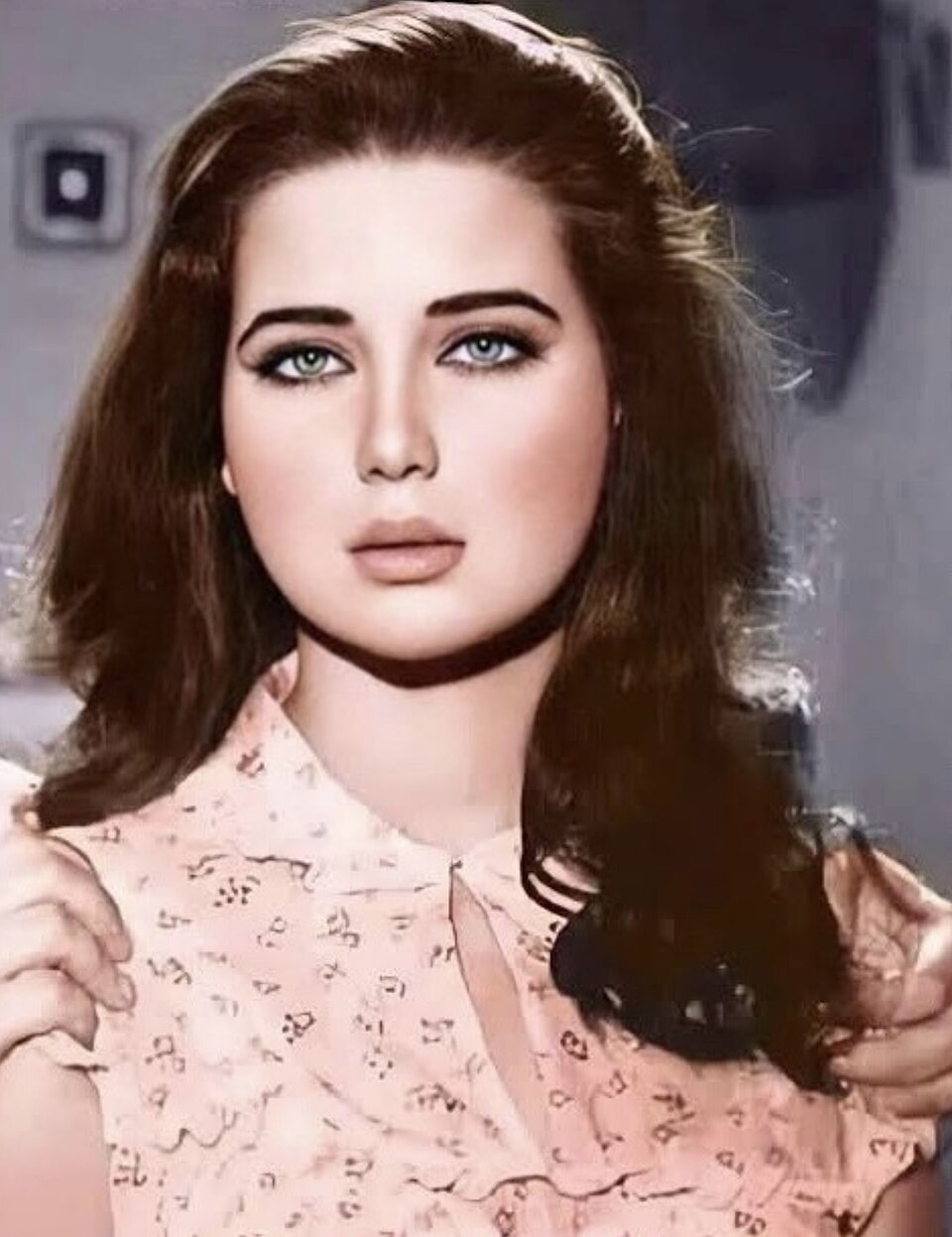
Zubaida Tharwat
 Egypt
EgyptAlso known as: Zubaida Ahmed Tharwat
Birthday
June 14, 1940
Birth Sign
Gemini
Birthplace
Alexandria, Egypt
Age
Died at 76
About
Zubaida Tharwat was an Egyptian film, stage, and television actress whose captivating presence made her a beloved figure in Arab cinema. Born in Alexandria on June 14, 1940, she became widely recognized for her striking beauty and uniquely expressive eyes, which earned her the affectionate nickname "the most beautiful eyes in classic Egyptian cinema." Tharwat built a prolific career, starring in approximately 100 films and television productions over several decades. Her filmography included collaborations with some of the era's biggest names, solidifying her place as a leading lady. Zubaida Tharwat passed away on December 13, 2016, in Cairo, at the age of 76, leaving behind a rich legacy of cinematic work cherished by fans across the region.
Early Life & Background
Zubaida Tharwat's journey into the spotlight began far from a film set, rooted in her childhood in Alexandria, Egypt. She was born on June 14, 1940, into a family where light-colored eyes were a notable trait, a feature that would later become one of her most distinctive and celebrated characteristics on screen. Her formative years in Alexandria were relatively private, but the city itself, a vibrant cultural hub, likely offered a backdrop of artistic inspiration during her youth. While specific details about her schooling or earliest aspirations are not widely documented, her eventual path suggests a natural inclination towards performance or public life.
A pivotal moment arrived in 1955 when she decided to enter a beauty contest organized by a popular teen magazine. This seemingly simple act would change the course of her life. Her striking appearance and natural charm impressed the judges, and she emerged as the winner. Following her victory, Tharwat's photograph received widespread publication, circulating through the entertainment industry. This exposure immediately caught the attention of influential filmmakers and casting directors who saw immense potential in her. Her striking features, particularly her famously expressive eyes, were undeniable, making her an instant candidate for the silver screen. This led to her very first acting opportunity, securing a role in the 1956 film Dalila, which served as her official debut and marked the swift and unexpected beginning of her professional career in Egyptian cinema.
Career Growth
Zubaida Tharwat's acting career took off swiftly after her debut in 1956's Dalila, quickly establishing her as a prominent figure in Egyptian cinema. She was cast in a series of successful projects, including Hekayt 3 Banat and El-Malak el-Sagheir, both released in 1957. By 1958, her role in Bent 17 further solidified her status as a leading lady, admired for both her talent and captivating screen presence. The late 1950s and early 1960s were a particularly active period for Tharwat, as she appeared in commercially well-received films such as A'ashat lelhob (1959), Shams La Tagheeb (1959), and Inni Attahem (1960).
A significant highlight of her early career was sharing the screen with some of Egypt's most celebrated male leads. She starred opposite the legendary singer and actor Abdel Halim Hafez in the beloved 1961 film Youm min Omri. That same year, she also appeared alongside the internationally recognized Omar Sharif in There is a Man in our House, further broadening her appeal. Following this intense period of work, Tharwat took a seven-year hiatus from filmmaking during the mid-1960s. She made a notable return to the big screen in 1969 with the film How to Get Rid of Your Wife. Throughout the 1970s, she continued to deliver memorable performances, starring in films like El-Hob El-Daea (1970), The Other Man (1973), and The Guilty (1975). Her extensive career saw her contribute to Egyptian cinema with approximately 100 films and television appearances before she ultimately retired from acting in the 1980s, leaving behind a substantial body of work.
Career Timeline
Public Image & Style
Zubaida Tharwat was widely perceived as an icon of beauty and grace within Egyptian cinema. Her public persona revolved heavily around her radiant beauty and, most notably, her captivating gaze, which earned her the enduring nickname, "the most beautiful eyes in classic Egyptian cinema." Media portrayals consistently highlighted her elegance and charm, cementing her image as a quintessential leading lady. Fans connected with her not just for her acting abilities but also for her gentle demeanor and timeless aesthetic. Even years after her retirement and passing, her image continued to resonate, evidenced by the internet's fascination with her resemblance to contemporary actress Jennifer Lawrence, which brought her classic beauty to new generations and underscored her lasting visual impact.
Fame & Fandom
For decades, Zubaida Tharwat existed as a silent ghost in the digital age until a viral rediscovery reanimated her legacy. In January 2014, international internet communities erupted over a striking resemblance between the late Egyptian star and American actress Jennifer Lawrence. Headlines from major outlets like the Huffington Post declared her a doppelganger, sparking a global conversation that introduced her face to a generation who had never seen her films. This modern phenomenon transformed her from a historical figure into a trending topic, proving that her image possessed a timeless resonance capable of bridging fifty years of cinema history.
Despite this renewed attention, iFANN's Global Fame Engine has evaluated this person, but they do not currently hold a placement in the published rankings (Global Top 1,000 or a Top-100 scope list). The data confirms she is not ranked among the world's most famous individuals in August 2026. Only use a fandom name if the web research clearly confirms one; otherwise state that the fanbase has no formal name. The fanbase has no formal name. The lack of organized campaigns or digital rituals reflects the era of her peak activity. Her fanbase remains retrospective, defined by cultural memory rather than active mobilization. She was remembered as a beauty icon whose career spanned the golden age of Egyptian cinema, yet she lacks the specific metrics required for a current global ranking slot.
Interesting Facts and Legends
Zubaida Tharwat carried the nickname "the most beautiful eyes in classic Egyptian cinema," a title given to her due to her striking and expressive gaze. Her initial entry into the acting world was quite serendipitous; she started her career after winning a teen magazine beauty contest, which led to her photograph being published and noticed by film directors. It was noted that a significant portion of her family also possessed light-colored eyes, including green, which contributed to her distinctive appearance.
In January 2014, a viral internet comparison linked her features to American actress Jennifer Lawrence, creating a modern legend where media outlets questioned if Lawrence was looking at her own Egyptian double. This story became the primary lore surrounding her posthumous fame. Tharwat also held an unusual distinction for her time: she graduated from the Faculty of Law at Alexandria University before starring in over 30 films. Her death on December 13, 2016, marked the end of a life that left behind a rich legacy of work across film, stage, and television.
Family & Personal Life
Zubaida Tharwat was born in Alexandria, Egypt, into a family where light-colored eyes, including green, were a common feature, a genetic trait that certainly contributed to her famously captivating gaze. While details about her parents and siblings are not widely publicized, her own family life included marriage. At the time of her passing, she was married to Omar Naji. The couple shared a life together, though specific details about their household or any children are not readily available in public records. Her family mourned her loss when she passed away in 2016, remembering her as a beloved member.
Notable Connections
During her career, Zubaida Tharwat shared the screen with prominent Egyptian actors like Abdel Halim Hafez and Omar Sharif. Years after her passing, her striking resemblance to American actress Jennifer Lawrence became a popular topic online. She was also linked by rumor to the legendary Brazilian footballer Pelé.
Relationships & Dating History
Zubaida Tharwat's personal life, while often kept private, included several significant relationships that were of interest to her fans. Her most publicly known and enduring marriage was to Omar Naji. While specific details about how they met or the early years of their relationship are not widely documented, their union lasted until her passing. Before this, or perhaps concurrent with her earlier public life, there were mentions of other romantic connections, though these were generally less publicized and details remain largely out of the public eye, reflecting a more private approach to her personal affairs than many modern celebrities.
A particularly intriguing, albeit unconfirmed, aspect of her romantic history involved a rumored "love story" with the legendary Brazilian football icon, Pelé. This fascinating connection, though details are scarce, suggests a fleeting but notable encounter between two global figures from entirely different fields. Such a rumor, even without concrete evidence, added a layer of mystique to Tharwat's public image and hinted at the far-reaching admiration she garnered. Despite these various connections and the intriguing rumors, Zubaida Tharwat was married to Omar Naji at the time of her death in 2016, marking the conclusion of her known romantic journey.
- RumouredPeléThere were media reports of a "love story" involving the Brazilian football legend, though details are scarce.
- MarriedOmar Naji? - 2016Zubaida Tharwat was married to Omar Naji at the time of her death in 2016.
Death & Aftermath
Died
December 13, 2016 (aged 76)
Death Place
Cairo, Egypt
Cause of Death
Complications from old age and prolonged illness
The death of Zubaida Tharwat triggered an immediate outpouring of grief across Egypt and the Arab world, with the Ministry of Culture issuing tributes that honored her status as a defining icon. Media outlets published extensive obituaries celebrating a career that spanned over three decades. This collective mourning marked the end of an era for a woman whose expressive eyes had captivated audiences since her rise in Alexandria. Tharwat passed away on Tuesday, December 13, 2016, at approximately 7:00 PM local time in Cairo. Reports stated she died at home before being transported to a hospital, though the final moments were described as peaceful following a period of declining health.
The cause was attributed to long-term complications related to old age and a prolonged illness, with no specific medical condition officially detailed by authorities or family members. Her funeral took place shortly after her passing in Cairo, where she was buried in the Al-Rawda Cemetery, a traditional resting place for many Egyptian celebrities. A large gathering of family members, friends, and colleagues from the film industry attended the service to pay their respects. In the years following her death, her legacy has seen renewed attention through digital archives and social media tributes that continue to highlight her beauty and style.
Posthumously, her work remains celebrated through retrospectives and discussions about her life story, including lesser-known facts regarding her heritage and relationships. While her estate is managed privately by her family without public financial disclosure, the cultural impact of her filmography endures through ongoing articles and retrospective projects that keep her memory alive in contemporary discourse.
Net Worth (Estate Value)
As of 2026, Zubaida Tharwat's estate value is not publicly available, with no specific figures or breakdowns having been released to the public. During her extensive career, Tharwat earned her income primarily through her prolific work as an actress in Egyptian film and television. She starred in approximately 100 productions, a substantial body of work that would have provided significant earnings over several decades. Her compensation would have come from her acting fees for each film and television series, which varied based on the project's budget, her role's prominence, and her star power at the time. Like many actors of her era, specific contract details and salaries were typically kept private, making it challenging to estimate her exact earnings.
Following her passing in 2016, any assets she accumulated would have transitioned into her estate. Without public records, it's impossible to detail the estate's management or any posthumous revenue streams. For deceased performers, estates often continue to generate income from royalties for past works, licensing of their image, and other intellectual property rights. However, for Tharwat, such details have not been disclosed. Her financial legacy, while undoubtedly built on a long and successful career, remains largely private, without the public valuations often seen for international celebrities.
Awards & Accolades
Known For
Youm min Omri
1961 ·
There is a Man in our House
1961 ·
Dalila
1956 ·
The Guilty
1975 ·
Keywords
Sources
Quick Facts
- Full Name
- Zubaida Tharwat
- Born
- June 14, 1940
- Died
- December 13, 2016 (age 76)
- Birthplace
- Alexandria, Egypt
- Profession
- Film Actress
- Spouse
- Omar Naji
- Birth Sign
- Gemini
Personal Details
- Spouse
- Omar Naji
- Children
- Education
Filmography
100
Total
0
Film
0
TV
Frequently Asked Questions
When was Zubaida Tharwat born?
How did Zubaida Tharwat become famous?
What was Zubaida Tharwat's nickname?
Who was Zubaida Tharwat married to?
When did Zubaida Tharwat pass away?
Join the community
fans discussing