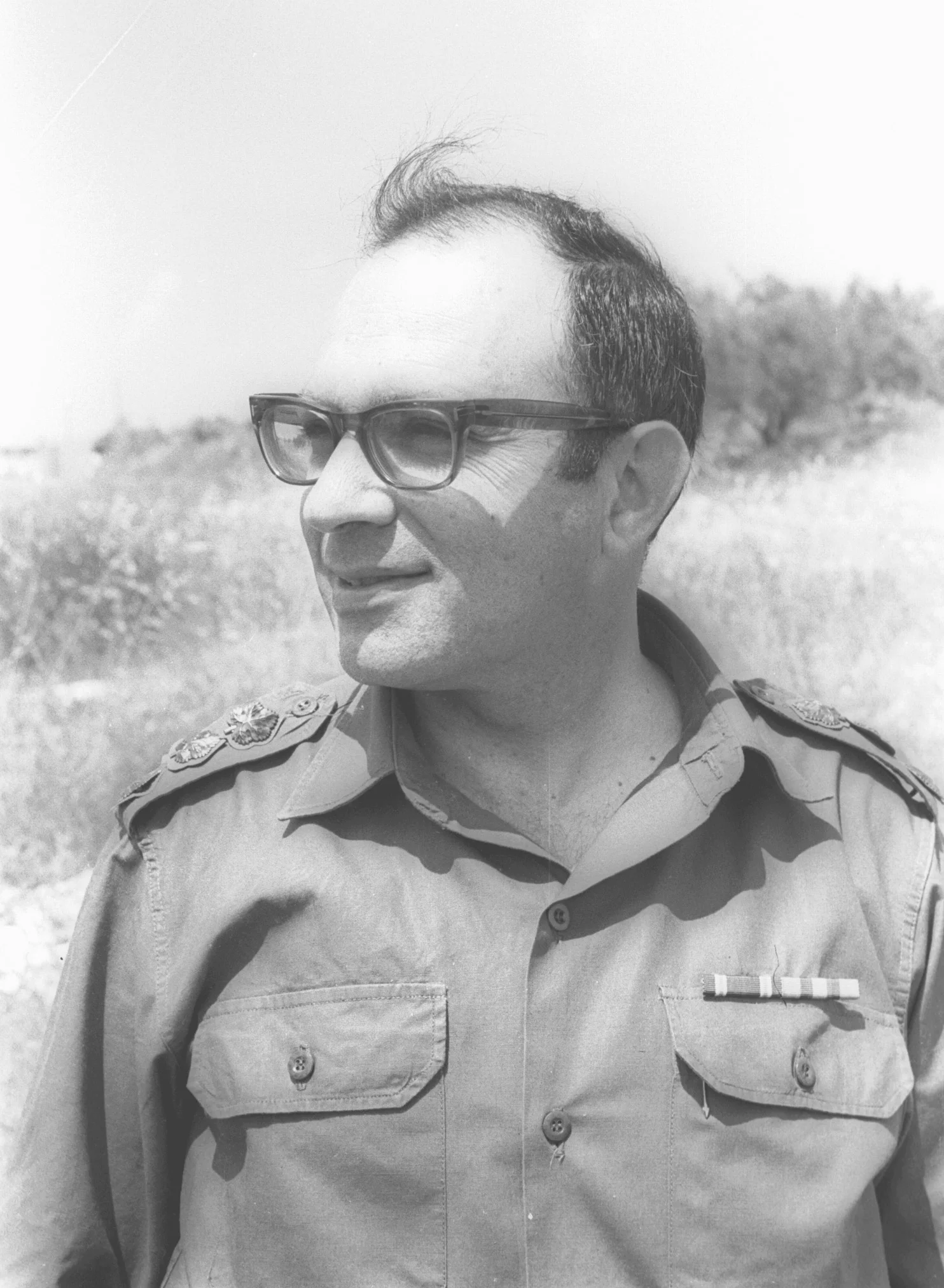
Yuval Ne'eman
 Israel
physicist•politician•pedagogue
Birthday
May 14, 1925
Birth Sign
Taurus
Birthplace
Tel Aviv
Age
Died at 80
About
Yuval Ne'eman was an Israeli theoretical physicist, military scientist, and politician. Born in Tel Aviv on May 14, 1925, he became one of the most influential figures in Israeli science and public life. He served as Minister of Science and Development in the 1980s and early 1990s and was President of Tel Aviv University from 1971 to 1977. His honors include the Israel Prize in exact sciences, which he returned in 1992 to protest the award given to Emile Habibi, as well as the Albert Einstein Award, the Wigner Medal, and the EMET Prize.
Early Life & Background
Yuval Ne'eman grew up in Tel Aviv during the British Mandate era, a time when the Jewish community was building the foundations of a future state. His early life was shaped by the Zionist ethos, and he joined the Haganah, the underground paramilitary organization that would become the core of the Israel Defense Forces. He rose through its ranks, and when Israel declared independence in 1948, he was already a seasoned officer. He played a key role in establishing the IDF's military intelligence branch, a formative experience that would later inform his scientific and political career.
In the 1950s, Ne'eman served as a colonel and contributed to the strategic planning of the 1956 Sinai Campaign, a war that saw Israel, Britain, and France invade Egypt. His military acumen was widely recognized, but he was also drawn to theoretical physics. After his military service, he moved to London to pursue a PhD at Imperial College London, studying under renowned physicists. His transition from soldier to scholar was unusual but reflected his deep curiosity about the fundamental laws of nature.
Career Growth
Ne'eman's breakthrough came in 1961 when he independently proposed the SU(3) flavor symmetry, later known as the Eightfold Way. Working at Imperial College, he developed a scheme to classify subatomic particles, unaware that Murray Gell-Mann was simultaneously working on the same idea. Their near-simultaneous discovery is one of the great stories of twentieth-century physics. Ne'eman's framework helped predict the existence of previously unknown particles, and his work earned him the Albert Einstein Award and the Wigner Medal.
Returning to Israel, Ne'eman became a professor at Tel Aviv University, where he founded the Department of Physics and Astronomy. He served as president of the university from 1971 to 1977, expanding its research infrastructure and international standing. In 1974, he was appointed Israel's Chief Defense Scientist, a role he held until 1976, where he oversaw the country's defense research and development. He later entered politics, serving as Minister of Science and Development in the 1980s and early 1990s, where he championed space research and technology policy. He was instrumental in establishing the Israel Space Agency and promoting satellite development.
Career Timeline
Public Image & Style
Ne'eman was seen as a renaissance man, equally at home in the military, academia, and politics. His public persona was that of a brilliant but approachable scholar, who could explain complex physics to a lay audience. He was a frequent commentator on science and technology issues in Israeli media, and his opinions were respected across the political spectrum. He had a reputation for being principled, even to the point of controversy, as when he returned the Israel Prize in 1992 in protest of an award given to Emile Habibi, a writer he considered politically objectionable.
Fame & Fandom (iFAMOUS Rankings)
Yuval Ne'eman remains a figure of profound historical significance within the realms of theoretical physics and Israeli statecraft, though his standing in contemporary pop culture metrics reflects a different scale of engagement. As an iFANN evaluation conducted in August 2026 determined, he is currently evaluated but holds no placement in the published Global Top 1,000 rankings or any specific Top-100 scope list, indicating that while his legacy is secure in academic history, he does not currently command the volume of global consumer signals required for a ranked position in the general celebrity sphere. His influence was never rooted in the mechanisms of mass fandom; there is no documented fanbase with a formal name, nor are there organized campaigns, ritualistic gatherings, or viral moments associated with his name in the manner of modern entertainers. The community that venerates his work consists entirely of the scientific fraternity, historians of defense technology, and students of particle physics who study his independent formulation of the Eightfold Way. Unlike figures whose fame is sustained by media cycles and commercial consumption, Ne'eman's posthumous presence is defined by the enduring utility of his theories and the documented facts of his political service. He did not engage in the performative aspects of celebrity life that generate the data points necessary for ranking systems, and thus his absence from the current global charts is a neutral reflection of his career path rather than a diminution of his impact. The only confusion occasionally arising in search contexts involves a contemporary entrepreneur with a similar name, but this distinction does not alter the historical record of the late physicist.
Interesting Facts and Legends
Ne'eman maintained a reputation for sharp wit and the practical habit of carrying a small notebook to record physics concepts even during high-stakes cabinet meetings. An avid chess player, he frequently employed chess metaphors to elucidate complex physical theories for lay audiences. His spare time was often dedicated to learning to fly planes, a pastime reflecting his deep fascination with military science and technology. A lifelong devotee of classical music, particularly Mozart, he rarely missed a concert in Tel Aviv throughout his life. Beyond these personal quirks, his legacy includes the verified discovery of the Eightfold Way classification scheme for hadrons in 1961, which independently predicted the existence of the Omega-minus particle alongside Murray Gell-Mann's work. He is also credited as a foundational architect of Israel's nuclear capabilities and space program, serving as the country's Chief Defense Scientist before entering politics. His military service as a Palmach commander during the 1948 war further cemented his status as a unique figure who seamlessly bridged the worlds of abstract theory and national defense.
Notable Quotes
“The Eightfold Way is not just a classification; it's a glimpse into the underlying order of nature.”
“Science is the only bridge between nations that truly works.”
“If you want to build a nation, you need both a strong army and a strong university.”
Family & Personal Life
Details about Ne'eman's family are scarce, but he was known to be married and had children. His wife, whose name is not widely publicized, supported his demanding career. He was a private man who kept his family life away from the public eye. He often credited his parents for instilling in him a love of learning, though they were not scientists themselves.
Relationships & Dating History
Death & Aftermath
Died
April 26, 2006 (aged 80)
Death Place
Unknown
Cause of Death
Natural causes associated with advanced age
Yuval Ne'eman, the distinguished Israeli theoretical physicist, military scientist, and politician, died on April 26, 2006. He was eighty years old at the time of his death while residing in Tel Aviv, where he had previously served as President of Tel Aviv University. His final days were not marked by public appearances due to his age, and he had largely retired from active political office following his tenure as Minister of Science and Development in the 1980s and early 1990s.
The public reaction to his death was immediate and widespread within the scientific and political communities in Israel and internationally. Tributes poured in from peers and institutions; Science magazine described him as one of the most colorful figures of modern science and highlighted his role in the Eightfold Way classification of particles. Physics Today noted his multifaceted career as a soldier, politician, university president, and minister. The Guardian obituary emphasized his pivotal role as a pioneer of Israel's nuclear technology acquisition and founder of its space program. The JPost headline referred to him as the dean of Israeli scientists, reflecting his stature among colleagues.
In October 2007, the Emet Prize was awarded posthumously to Yuval Ne'eman for his pioneering contributions to deciphering atomic physics. His legacy continues through the Yuval Ne'eman Chair at Tel Aviv University and various dedications within the Israeli defense and scientific sectors. A lecture series titled Yuval Ne'eman, Born a century ago; Arrived a century earlier was delivered by Professor Haim Harari at the Weizmann Institute, celebrating his life and work.
Net Worth (Estate Value)
$10 Million
iFANN Editorial Team estimate
Per iFANN's editorial analysis, Yuval Ne'eman's estate is valued at approximately $10 million as of 2026. The composition of this wealth derives primarily from his academic salaries and government compensation, supplemented by royalties generated from his extensive scientific publications. Additional value accrues through the ongoing sales of his books and archival papers. While he was not considered wealthy by the standards of modern ultra-high-net-worth individuals, the financial valuation represents a modest accumulation compared to the magnitude of his contributions to science and public service.
Awards Won (4)
Yuval Ne'eman won several prestigious awards for his work in physics and public service. He received the Albert Einstein Award and the Wigner Medal for his contributions to theoretical physics. He was also awarded the Israel Prize in exact sciences, which he later returned in protest. Additionally, he received the EMET Prize for Arts, Sciences and Culture.
2004 · Exact Sciences
For his contributions to theoretical physics
1984 · Exact Sciences
For his work on the Eightfold Way
Known For
SU(3) flavor symmetry (Eightfold Way)
1961 · Independent proposer
President of Tel Aviv University
1971-1977 · President
Minister of Science and Development of Israel
1980s-1990s · Minister
Keywords
Sources
Quick Facts
- Profession
- physicist, politician, pedagogue
- Born
- May 14, 1925
- Birthplace
- Tel Aviv
- Died
- April 26, 2006
- Death Place
- Tel Aviv
- Gender
- Male
- Birth Sign
- Taurus
- Education
- Imperial College London (PhD)
- Known for
- SU(3) flavor symmetry (Eightfold Way)
Personal Details
- Education
- Imperial College London (PhD)
Frequently Asked Questions
Who was Yuval Ne'eman?
What is Yuval Ne'eman's net worth in 2026?
What was Yuval Ne'eman's most famous scientific contribution?
Why did Yuval Ne'eman return the Israel Prize?
Is Yuval Ne'eman still alive?
Similar People
Join the community
fans discussing