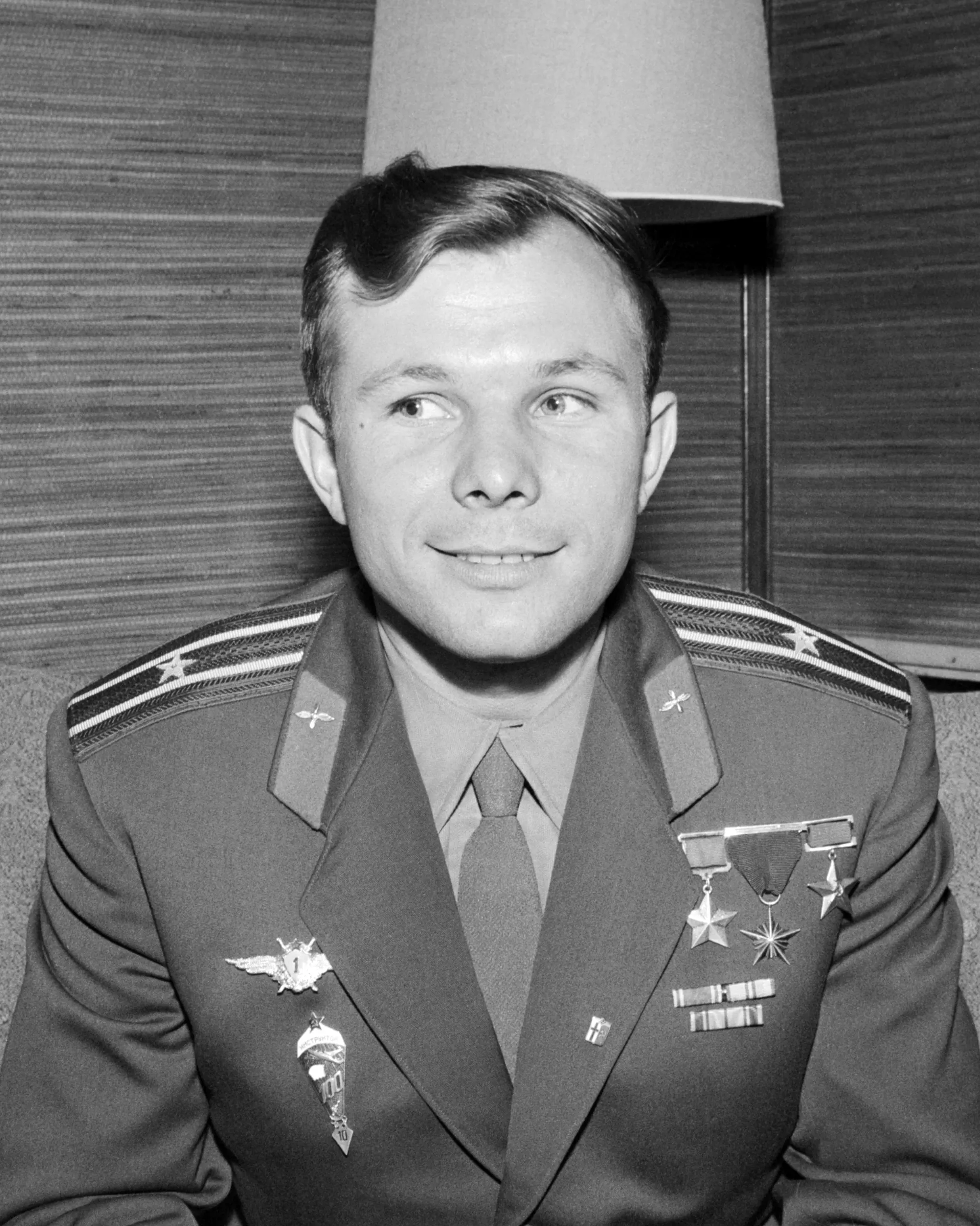
Yuri Gagarin
 Russia
Cosmonaut•Pilot•Military Officer
Also known as: First Cosmonaut, Gagarin
Birthday
March 9, 1934
Birth Sign
Pisces
Birthplace
Klushino, Smolensk Oblast, Russian SFSR, Soviet Union
Age
Died at 34
Height
5 ft 2 in (1.57 m)
About
Yuri Gagarin, a Soviet cosmonaut, became the first human to travel into space on April 12, 1961, completing a 108-minute orbit of Earth aboard Vostok 1. That flight turned him into a global icon and earned him the Hero of the Soviet Union award, his country's highest honor. Gagarin's achievement marked a pivotal moment in the Space Race and made him a symbol of Soviet scientific prowess. After his mission, he served as deputy training director of the Cosmonaut Training Centre, later renamed in his honor, and was elected to the Supreme Soviet. Today, he is remembered as a pioneer of human space exploration, with his smile and orange spacesuit recognized worldwide.
Early Life & Background
Yuri Gagarin was born on March 9, 1934, in the village of Klushino, about 150 kilometers west of Moscow. His father, Alexey, worked as a carpenter, and his mother, Anna, was a dairy farmer. The family endured Nazi occupation from 1941 to 1943, living in a dugout after being forced from their home. After the war, they moved to Gzhatsk, now renamed Gagarin. As a teenager, Gagarin saw a captured Soviet Yak fighter and became fascinated with flying. He attended a vocational school in Lyubertsy, training as a foundryman and graduating in 1951. He then enrolled at the Saratov Industrial Technical School, where he joined the Saratov Aero Club. In 1955, he took his first solo flight in a Yak-18. Drafted into the Soviet Army that same year, he was sent to the 1st Chkalov Air Force Pilot's School in Orenburg, graduating with honors in 1957 as a lieutenant. He was stationed at Luostari Air Base near the Norwegian border. In 1959, he applied to become a cosmonaut and was selected in 1960 as one of the original 20 cosmonauts, later part of the Vanguard Six. His small stature, 1.57 meters, was a key advantage for the cramped Vostok capsule.
Career Growth
Gagarin launched aboard Vostok 1 on April 12, 1961, from the Baikonur Cosmodrome. The spacecraft reached an apogee of 327 kilometers and completed one orbit. Gagarin famously radioed, I see Earth! It is so beautiful. He ejected from the capsule at 7 kilometers altitude and landed by parachute near the Volga River. The mission made him an instant international hero. He embarked on a world tour, visiting dozens of countries and meeting leaders like Queen Elizabeth II and Fidel Castro. Soviet officials, fearing the loss of a national icon, barred him from future spaceflights. He became deputy training director of the Cosmonaut Training Centre in 1962 and was elected to the Supreme Soviet in 1964. In February 1968, he graduated with honors from the Zhukovsky Air Force Engineering Academy, qualifying as a cosmonaut-engineer. He was cleared to resume regular flight duties, but on March 27, 1968, he died in a MiG-15UTI training jet crash near Kirzhach, along with flight instructor Vladimir Seryogin.
Career Timeline
Public Image & Style
Gagarin's public image was that of the humble, heroic Everyman who conquered space. His iconic orange spacesuit, white helmet, and broad smile became instantly recognizable. Media portrayed him as a symbol of Soviet achievement and human exploration. Fans celebrate Cosmonautics Day on April 12 each year, laying flowers at his monument in Star City and at the Kremlin Wall Necropolis. His birthplace in Klushino is a pilgrimage site. Official social media accounts maintain a reverent, historical tone, sharing his quotes and achievements.
Fame & Fandom
Yuri Gagarin lacks a formalized fanbase with a specific collective name, as his legacy is sustained through state-sponsored commemoration and the global space community rather than organized clubs or grassroots campaigns. His audience consists primarily of historians, space enthusiasts, and citizens observing Cosmonautics Day, focusing on educational remembrance rather than modern fandom rituals. Despite this absence of a named movement, his stature remains immense within historical records. In the August 2026 cycle of the iFANN Global Fame Rankings, which tracks global attention across media coverage, search, and consumption signals worldwide, he holds a significant position. He is currently ranked as the 18th most famous person from Russia, a placement noted in the official database as holding steady from the previous cycle. This status reflects his enduring role as a symbol of human achievement and Cold War triumph. While no personal cult follows him in the manner of contemporary pop stars, his image and story continue to resonate globally. The rankings confirm that his fame persists decades after his passing, anchored by verified historical events rather than viral trends. His presence in these charts underscores the lasting impact of his journey into space and the subsequent mysteries surrounding his death.
Interesting Facts and Legends
During his Vostok 1 flight, Gagarin acted as a passenger since the spacecraft was largely automated, requiring a sealed code for manual override only in emergencies. He famously whistled the tune The Motherland Hears, The Motherland Knows during his descent. A widely retold story describes his reaction upon seeing Earth, where he reportedly said, "The Earth is blue. How wonderful. It is amazing," though historians debate the exact phrasing while accepting the sentiment. Another persistent legend involves the mystery of his 1968 crash, where a sudden maneuver to avoid a weather balloon remains the leading theory despite ongoing speculation about foul play. Gagarin was a passionate hockey fan who often played in exhibition games. His smile became a globally recognized symbol of Soviet space triumph. Additionally, folklore sometimes suggests he was chosen for his short stature, but records indicate his selection relied more heavily on his exceptional piloting skills and psychological stability. The phrase "Poyekhali!" spoken before launch has become a cultural shorthand for the beginning of the space age.
Notable Quotes
“I see Earth! It is so beautiful.”
“Orbiting Earth in the spaceship, I saw how beautiful our planet is. People, let us preserve and increase this beauty, not destroy it!”
“When I looked at the Earth from space, I realized that our planet is a small and fragile oasis. We must take care of it.”
“The main thing is that the rocket did not fall on the people.”
“There is no stronger love than the love for work.”
Family & Personal Life
Gagarin married Valentina Ivanovna Goryacheva on October 27, 1957, at a civil ceremony in Orenburg. They met at a dance at the Orenburg Medical School, where Valentina was studying. The couple had two daughters: Yelena, born in 1959, who became an art historian, and Galina, born in 1961, who became an economist. Gagarin's parents, Alexey Ivanovich Gagarin and Anna Timofeyevna Gagarina, lived in Gzhatsk. He had two brothers and a sister. After his death, his family continued to manage his legacy.
Notable Connections
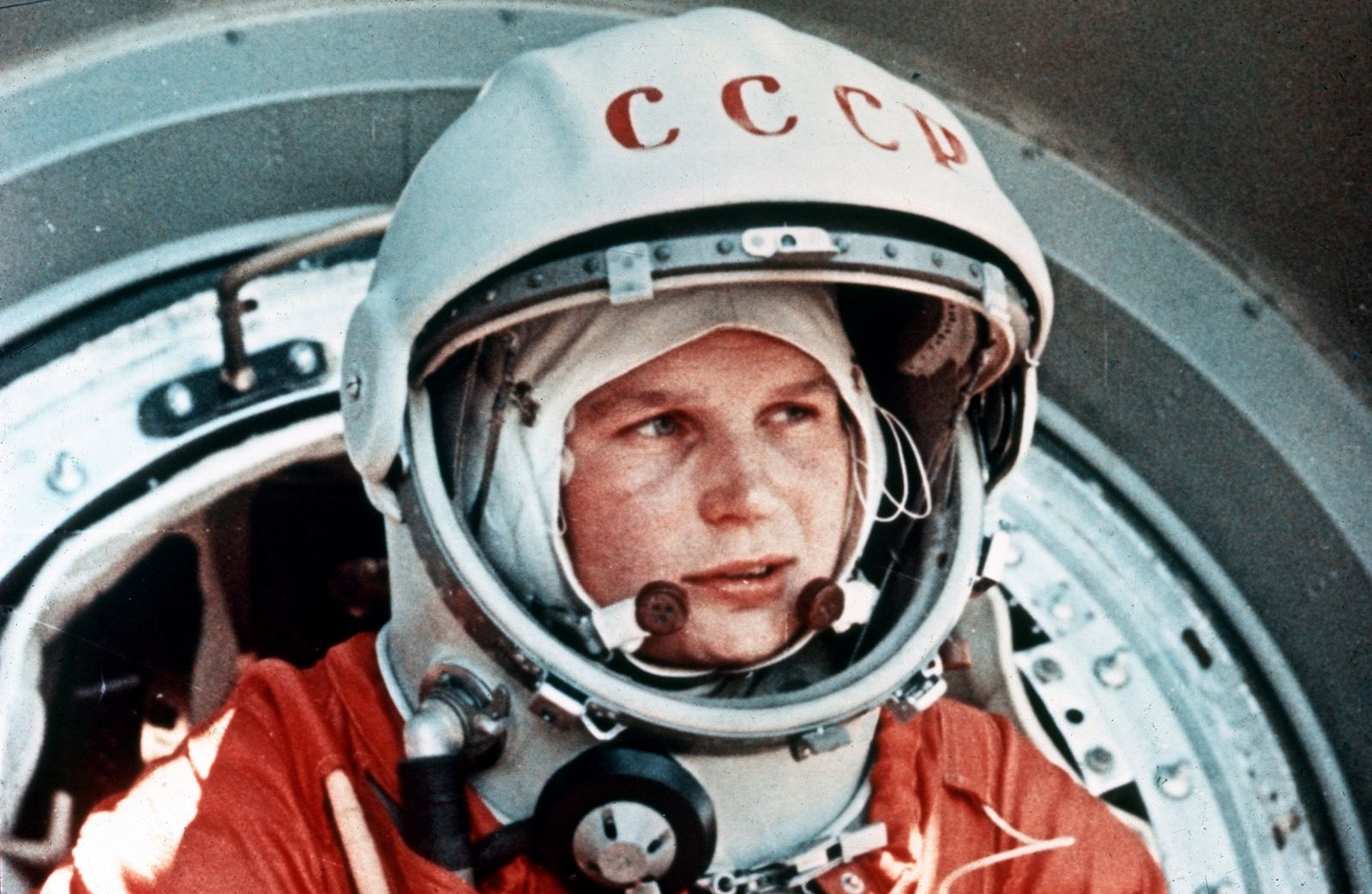
Gagarin was closely associated with chief spacecraft designer Sergei Korolev, who oversaw his training and mission. He was a close friend of fellow cosmonauts Vladimir Komarov, who died in the Soyuz 1 disaster, and Alexei Leonov, the first spacewalker, who was a pallbearer at his funeral. Valentina Tereshkova, the first woman in space, was a colleague.
Relationships & Dating History
Gagarin's only known romantic partner was Valentina Ivanovna Goryacheva. They met at a dance at the Orenburg Medical School in 1957 and married on October 27, 1957. The couple had two daughters, Yelena and Galina. Their marriage lasted until Gagarin's death in 1968. There is no credible evidence of any other public relationships.
- MarriedValentina Ivanovna Goryacheva1957 - 1968Met at a dance in Orenburg in 1957; married on October 27, 1957; had two daughters.
Death & Aftermath
Died
March 27, 1968 (aged 34)
Death Place
Kirzhach, Vladimir region, Russian SFSR
Cause of Death
Aviation accident (mid-air collision)
Upon the announcement of Yuri Gagarin's death, a day of mourning was declared across the Soviet Union. Moments of silence were observed by space agencies worldwide. The incident occurred on March 27, 1968, when Gagarin and flight instructor Vladimir Seryogin crashed into a field near the village of Korobovo during a routine training mission in a Mikoyan-Gurevich MiG-15UTI fighter jet near Kirzhach. While the official Soviet investigation initially ruled the cause as an accidental loss of control potentially due to a bird strike or mid-air collision, declassified documents from the 1990s suggested the aircraft may have collided with a Su-15 interceptor flying in the restricted zone.
A state funeral of the highest order took place on March 29, 1968, attended by Premier Alexei Kosygin and General Secretary Leonid Brezhnev, where his body was cremated and ashes interred in the Kremlin Wall Necropolis. Posthumously, he received the title of Hero of the Soviet Union for the second time and the Order of Lenin, while the city of Saratov was renamed Gagarin that same year. Institutions such as the Gagarin Cosmonaut Training Center and the Yuri Gagarin Gold Medal established by the International Astronautical Federation bear his name.
Net Worth (Estate Value)
$10 Million
iFANN Editorial Team estimate
As a Soviet cosmonaut who died in 1968, Yuri Gagarin did not accumulate personal wealth in the modern sense. His estate, managed by his daughters and the Russian state, generates income from licensing his name and image for merchandise, books, and documentaries. Royalties from his autobiography Road to the Stars also contribute. Per iFANN's editorial analysis, the estate is valued at approximately $10 million as of 2026, reflecting the enduring commercial value of his legacy.
Awards Won (29)
Gagarin received numerous awards for his historic spaceflight, including the Hero of the Soviet Union, the Order of Lenin, and the Lenin Prize in 1961. He was also awarded the Pilot-Cosmonaut of the USSR title and dozens of foreign orders, including the Order of Karl Marx from East Germany and the Order of the Nile from Egypt.
1961 · Spaceflight
Vostok 1
1961 · Spaceflight
Vostok 1
Known For
Vostok 1
1961 · Cosmonaut
Keywords
Quick Facts
- Profession
- Cosmonaut, Pilot, Military Officer
- Born
- March 9, 1934
- Birthplace
- Klushino, Smolensk Oblast, Russian SFSR, Soviet Union
- Died
- March 27, 1968
- Death Place
- Novosyolovo, Vladimir Oblast, Russian SFSR, Soviet Union
- Gender
- Male
- Spouse
- Valentina Ivanovna Goryacheva
- Birth Sign
- Pisces
Personal Details
- Full Name
- Yuri Alekseyevich Gagarin
- Height
- 5 ft 2 in (1.57 m)
- Spouse
- Valentina Ivanovna Goryacheva
- Children
- Yelena Gagarina (born 1959), Galina Gagarina (born 1961)
- Education
- Saratov Industrial Technical School, 1st Chkalov Air Force Pilot's School, Zhukovsky Air Force Engineering Academy
Frequently Asked Questions
How did Yuri Gagarin die?
How tall was Yuri Gagarin?
Did Yuri Gagarin have children?
What was Yuri Gagarin's net worth?
Is Yuri Gagarin still alive?
Social Media
Similar People
Join the community
fans discussing