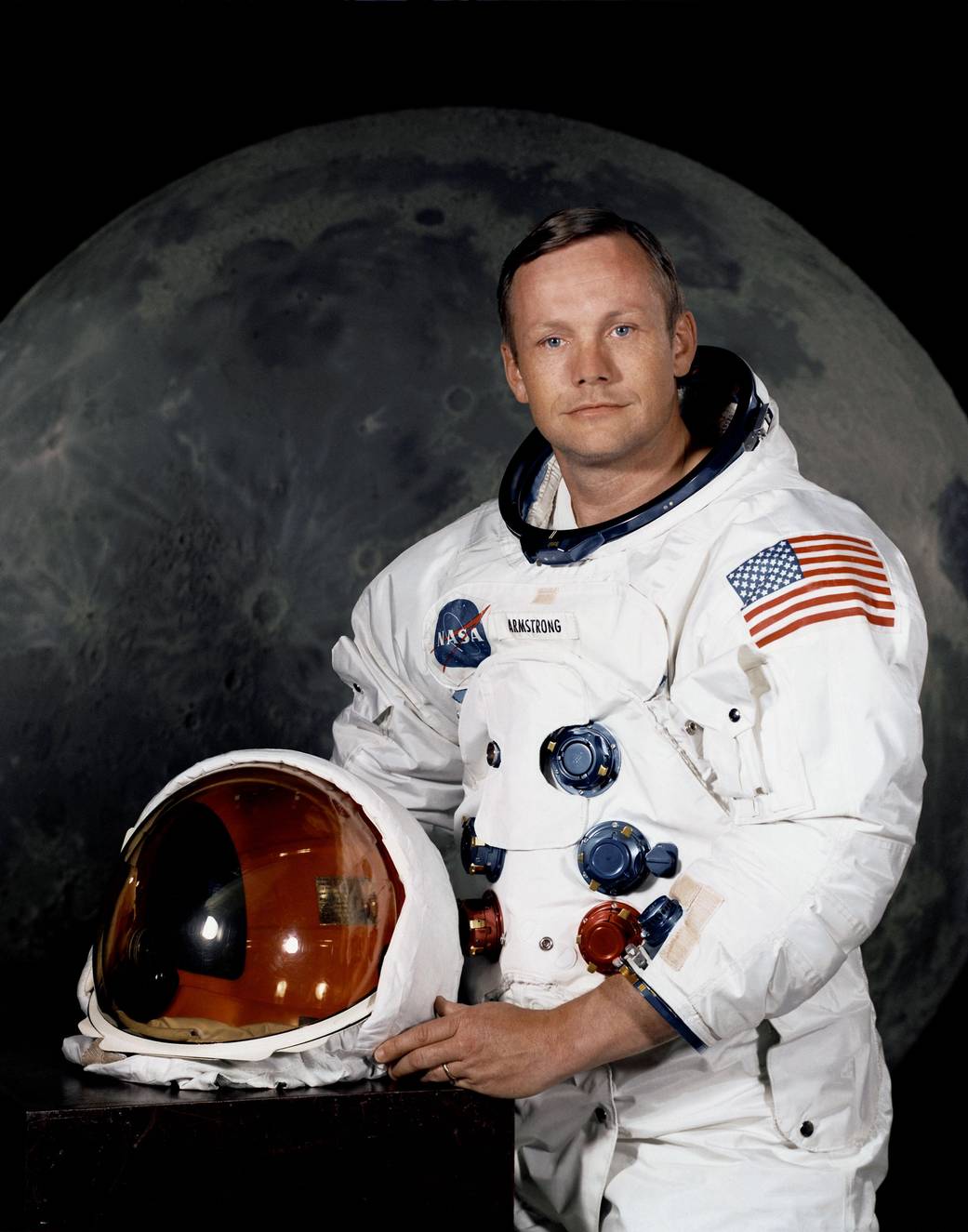
Neil Armstrong
 United States
Member of Kappa Kappa Psi
Astronaut•Aeronautical Engineer•Naval Aviator•Test Pilot•University Professor
Also known as: Neil Alden Armstrong
Birthday
August 5, 1930
Birth Sign
Leo
Birthplace
Wapakoneta, Ohio, USA
Age
Died at 82
Height
5 ft 11 in (180 cm)
About
Neil Alden Armstrong was an American astronaut and aeronautical engineer who became the first person to walk on the Moon as commander of Apollo 11 in 1969. A naval aviator and test pilot, he flew more than 200 aircraft models and logged over 8,000 flight hours. His calm competence under pressure defined a career that took him from the cockpits of X-15 rocket planes to the lunar surface.
Armstrong's place in history is secured by that single step onto the Moon, but his legacy extends well beyond it. He was the first civilian astronaut to fly in space, performed the first spacecraft docking on Gemini 8, and later taught aerospace engineering at the University of Cincinnati. He served on the Rogers Commission investigating the Challenger disaster and remained a reluctant public figure who deflected hero worship with characteristic modesty.
Today, Armstrong is remembered as a symbol of human exploration and the Space Race era. His famous words from the lunar surface are among the most quoted in history. Museums, schools, and NASA's Armstrong Flight Research Center bear his name. He died in 2012 at age 82, but his impact on spaceflight and American culture endures.
Early Life & Background
Armstrong grew up on a farm near Wapakoneta, Ohio, the eldest of three children. His first airplane ride at age 5 or 6 sparked a lifelong passion for flight. As a boy, he built model airplanes and constructed a wind tunnel in his basement to test his designs. He earned the rank of Eagle Scout in the Boy Scouts of America.
He took flying lessons and received his student pilot's license on his 16th birthday, before he could drive a car. In 1947, he entered Purdue University to study aeronautical engineering under the U.S. Navy's Holloway Plan. His studies were interrupted by the Korean War, where he flew 78 combat missions from the aircraft carrier USS Essex as a naval aviator. He was shot down once and received three Air Medals.
After the war, Armstrong returned to Purdue, earning his bachelor's degree in 1955. He then joined the National Advisory Committee for Aeronautics (NACA) as a civilian research pilot at Edwards Air Force Base. There, he flew Century Series fighters and the X-15 rocket plane, reaching Mach 5.74 and an altitude of 207,500 feet. He also participated in the Air Force's Man in Space Soonest and X-20 Dyna-Soar programs before joining NASA's astronaut corps in 1962.
Career Growth
Armstrong's first spaceflight came in March 1966 as command pilot of Gemini 8. He and pilot David Scott performed the first docking of two spacecraft in orbit. The mission was cut short after a stuck thruster caused a dangerous roll, but Armstrong's quick thinking stabilized the craft using re-entry control fuel.
His second and most famous mission was Apollo 11. On July 20, 1969, Armstrong stepped onto the lunar surface, declaring, "That's one small step for [a] man, one giant leap for mankind." He and Buzz Aldrin spent two and a half hours outside the Lunar Module while Michael Collins orbited above. The mission fulfilled President Kennedy's goal of landing a man on the Moon before the decade's end and was watched by an estimated 530 million people worldwide.
After retiring from NASA in 1971, Armstrong taught aerospace engineering at the University of Cincinnati for eight years. He served on the Apollo 13 accident investigation and later on the Rogers Commission that examined the Challenger disaster. In his later years, he testified before Congress about space policy and sat on corporate boards in the aerospace industry.
Career Timeline
Public Image & Style
Neil Armstrong is universally regarded as a humble American hero. The media portrayed him as quiet, private, and reluctant to embrace fame. His iconic Apollo 11 spacesuit and the image of his footprint on the Moon are instantly recognizable. He had no official fandom, but space enthusiasts and history buffs celebrate his legacy annually on July 20, Moon Landing Day. His calm demeanor under pressure and his famous quote define his public persona. Armstrong found press attention exhausting and rarely gave interviews, preferring to let his work speak for itself.
Fame & Fandom
The global attention directed toward Neil Armstrong remains a steady, enduring current of historical reverence rather than the fluctuating tides of celebrity culture. According to the iFANN Global Fame Rankings, he is currently the 423rd most famous person in the world, a position holding steady from the previous cycle. His prominence extends regionally where he stands as the 73rd most famous person in North America, maintaining his rank, and industrially as the 13th most famous person in Tech, a placement that has remained consistent. These metrics reflect a legacy sustained by verified achievement rather than active public engagement. No formal fandom name exists for the astronaut; his admirers are historians, space enthusiasts, and alumni who revere his specific contribution to human exploration without organizing under a collective moniker or engaging in fan-driven campaigns. The absence of a named fanbase aligns with his documented preference for privacy and lack of commercial self-promotion after his historic mission.
Interesting Facts and Legends
Armstrong obtained his student pilot's license at age 16, predating his ability to drive a car. He served as a baritone player in the Purdue All-American Marching Band before becoming an honorary member of the Kappa Kappa Psi national band fraternity. His test piloting career included flights in the X-15 rocket plane, reaching Mach 5.74 near the edge of space. During the Apollo 11 mission, he walked approximately 60 meters from the Lunar Module on the Sea of Tranquility. In 1954, he damaged a club aircraft during a rough landing in a farmer's field. A rare interview on 60 Minutes in 2005 featured him stating, "No, I just don't deserve it. Circumstance put me into that particular role." Legends surrounding his life focus on the singular moment of his first step on the Moon, an event witnessed by an estimated 650 million people globally. Another verified story involves the American flag he carried to the lunar surface, which was later auctioned in October 2018 for $42,000. His passing in August 2012 marked the end of an era, leaving behind a legacy defined by technical precision and quiet dignity rather than public spectacle.
Notable Quotes
“That's one small step for [a] man, one giant leap for mankind.”
“No, I just don't deserve it. Circumstance put me into that particular role.”
Family & Personal Life
Armstrong was born to Viola Louise Engel and Stephen Koenig Armstrong, a state auditor. He had a younger brother, Dean Alan, who worked at General Motors, and a sister, June Louise. The family was of Scotch-Irish and German descent. Armstrong married Janet Shearon in 1956; they had three children: sons Eric and Mark, and daughter Karen, who died of a brain tumor in 1962 at age 2. The couple divorced in 1994. He married Carol Held Knight later that year; they stayed together until his death. Carol managed his estate after his passing.
Notable Connections
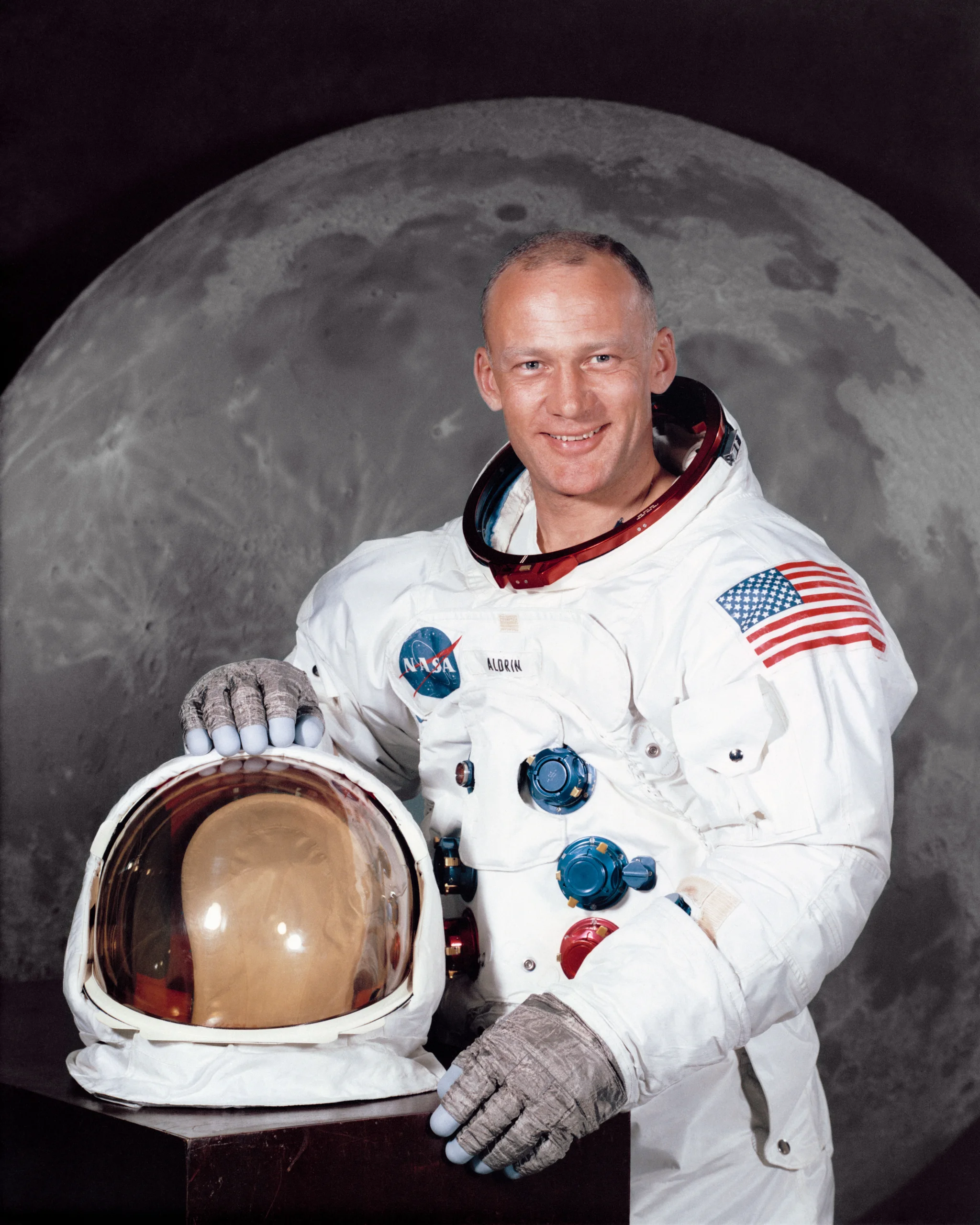
Armstrong is most closely associated with Buzz Aldrin and Michael Collins, his Apollo 11 crewmates. He flew Gemini 8 with David Scott. His first wife was Janet Shearon, and his second was Carol Held Knight. His parents were Stephen and Viola Armstrong. He was a member of Kappa Kappa Psi honorary band fraternity.
Relationships & Dating History
Armstrong married Janet Shearon on January 28, 1956. They had three children: Eric, Mark, and Karen, who died of a brain tumor at age 2. The couple divorced in 1994 after 38 years of marriage. Armstrong then married Carol Held Knight on June 12, 1994; they met at a golf tournament. They remained married until Armstrong's death in 2012. As of 2026, Carol is his widow and manages his estate.
- MarriedJanet Shearon1956 - 1994Married in 1956, had three children, divorced in 1994.
- MarriedCarol Held Knight1994 - 2012Married in 1994, remained together until his death in 2012.
Death & Aftermath
Died
August 25, 2012 (aged 82)
Death Place
Cincinnati, Ohio, USA
Cause of Death
Complications from cardiac surgery
The family of Neil Armstrong and Mercy Health Hospital confirmed on August 25, 2012, that the astronaut had passed away at their Cincinnati facility following complications from heart bypass surgery. Armstrong spent his final days in relative privacy after undergoing triple bypass surgery in late July, with his condition worsening over the subsequent weeks until his passing. Tributes flowed immediately from government officials and space agencies, including statements from President Barack Obama and Vice President Joe Biden, while the National Air and Space Museum erected a memorial display featuring the gloves and visor assembly worn during the moonwalk. A private funeral service took place on September 14, 2012, at St.
John the Evangelist Catholic Church in Wapakoneta, Ohio, attended by former colleagues Buzz Aldrin and Michael Collins alongside representatives from NASA. Following military honors befitting a Korean War veteran, he was laid to rest at Arlington National Cemetery in Section 64, Site 7903. Posthumous recognitions included the inauguration of the Neil Armstrong Space Prize by Purdue University in April 2026 and the establishment of family foundations to support aerospace education. His estate remained a private matter administered by his sons Eric and Mark alongside his wife Carol, with no public probate records released.
Net Worth (Estate Value)
$8 Million
iFANN Editorial Team estimate
Per iFANN's editorial analysis, Neil Armstrong's estate is valued at approximately $8 Million as things stand in 2026. Following his death in 2012, the estate has been administered by his sons Eric and Mark Armstrong alongside his second wife, Carol Held Knight. Primary revenue streams include royalties from authorized biographies, licensing agreements regarding his name and likeness, and proceeds from the sale of personal memorabilia. A legal dispute between the Armstrong family and a Cincinnati-based charity holding portions of his collection was resolved in 2019. The estate continues to generate income through book royalties and licensing deals. Throughout his lifetime, Armstrong relied on government compensation as an astronaut and subsequently earned a professor's salary; he did not aggressively commercialize his fame.
Awards Won (8)
Armstrong received numerous top honors for his spaceflight achievements. He was awarded the Presidential Medal of Freedom in 1969 and the Congressional Space Medal of Honor in 1978. He and his Apollo 11 crewmates received the Congressional Gold Medal in 2009. He also earned the Collier Trophy, the Hubbard Medal, and the General James E. Hill Lifetime Space Achievement Award. For his Korean War service, he received three Air Medals.
2009 · Government
Apollo 11 mission
1978 · Government
Apollo 11 mission
Known For
Apollo 11 Commander
1969 · First person to walk on the Moon
Gemini 8 Command Pilot
1966 · First docking of two spacecraft
X-15 Test Pilot
1960 · Reached Mach 5.74 and altitude of 207,500 feet
Keywords
Sources
Quick Facts
- Profession
- Astronaut, Aeronautical Engineer, Naval Aviator, Test Pilot, University Professor
- Born
- August 5, 1930
- Birthplace
- Wapakoneta, Ohio, USA
- Died
- August 25, 2012
- Death Place
- Cincinnati, Ohio, USA
- Gender
- Male
- Spouse
- Janet Shearon, Carol Held Knight
- Birth Sign
- Leo
Personal Details
- Full Name
- Neil Alden Armstrong
- Height
- 5 ft 11 in (180 cm)
- Spouse
- Janet Shearon, Carol Held Knight
- Children
- Eric Armstrong, Mark Armstrong, Karen Armstrong (deceased)
- Education
- Purdue University (BS Aeronautical Engineering), University of Southern California (MS Aerospace Engineering)
Frequently Asked Questions
How old was Neil Armstrong when he walked on the Moon?
What is Neil Armstrong's net worth in 2026?
What did Neil Armstrong say when he stepped on the Moon?
How many children did Neil Armstrong have?
Is Neil Armstrong still alive?
Similar People
Join the community
fans discussing