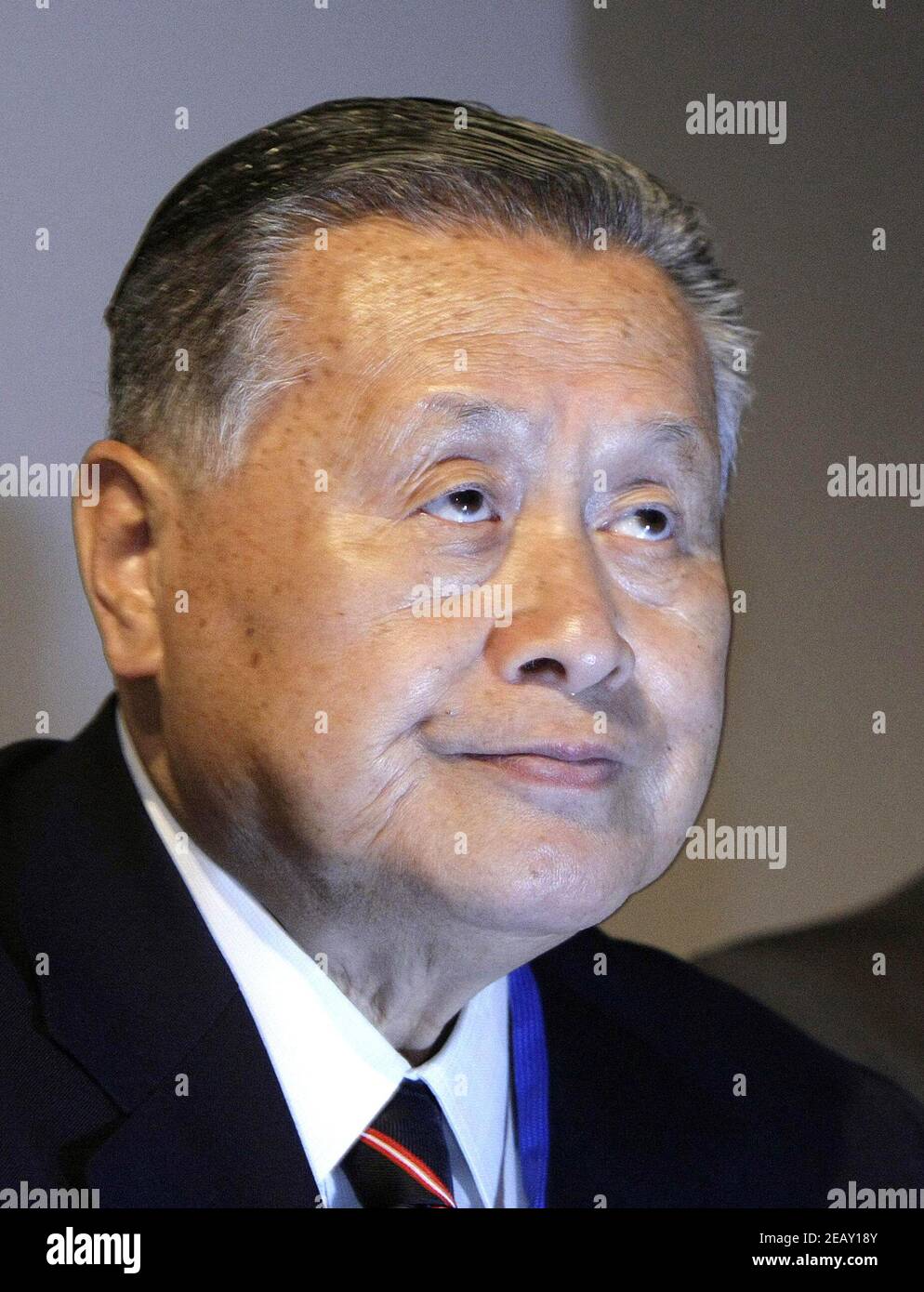
Yoshirō Mori
 Japan
JapanAlso known as: Mori Yoshirō
Birthday
July 14, 1937
Birth Sign
Cancer
Birthplace
Neagari, Ishikawa Prefecture, Japan
Age
89 years old
About
Yoshirō Mori is a Japanese politician who served as the 85th and 86th Prime Minister of Japan from April 2000 to April 2001. He is a member of the Liberal Democratic Party (LDP) and has held several cabinet positions, including Minister of Education, Minister of International Trade and Industry, and Minister of Construction. Mori is known for his brief and controversial premiership, which was marked by a series of public gaffes and a sharp drop in approval ratings.
Before entering politics, Mori worked as a journalist for the Sankei Shimbun, a background that later made his verbal slip-ups all the more ironic. He has been a central figure in Japanese politics for decades, and even after leaving the prime minister's office, he remained influential in the LDP's backroom dealings. In 2014, he was appointed president of the Tokyo 2020 Olympic and Paralympic Organising Committee, a role he resigned from in 2021 after making sexist remarks.
As of 2026, Mori, now 88, remains married to his wife Chieko and continues to be a subject of public interest, particularly regarding his involvement in the LDP's slush fund scandal. He is remembered as a cautionary figure in Japanese political history, whose career was defined by his inability to control his public statements.
Early Life & Background
Yoshirō Mori was born on July 14, 1937, in the small town of Neagari, Ishikawa Prefecture, on Japan's western coast. His father was a local politician and rice farmer, which gave Mori early exposure to the political world. Growing up in a rural setting, he learned the values of hard work and public service from an early age.
Mori attended Waseda University in Tokyo, one of Japan's most prestigious private universities, where he earned a degree in economics. After graduation, he worked as a journalist for the Sankei Shimbun, a major national newspaper. This media background would later make his notorious verbal slip-ups during his political career all the more ironic given his training in communication.
His entry into politics came through family connections and local political networks. In 1962, he became the secretary to a Diet member, beginning his political apprenticeship. Seven years later, in 1969, at the age of 31, he won a seat in the House of Representatives for the Ishikawa 2nd district, marking the true start of his parliamentary career. This first electoral victory set the stage for a political journey that would span more than four decades.
Career Growth
Mori's rise through the LDP ranks was steady and unspectacular. He served as Minister of Education from 1983 to 1984 under Prime Minister Yasuhiro Nakasone, then as Minister of International Trade and Industry from 1992 to 1993 in Kiichi Miyazawa's cabinet, and later as Minister of Construction from 1995 to 1996. By the late 1990s, he had become the LDP's Secretary-General, a powerful party leadership position.
His path to the prime minister's office was sudden and unplanned. When Prime Minister Keizō Obuchi suffered a stroke in April 2000, Mori was chosen as his successor, taking office on April 5, 2000, just weeks before Obuchi's death. His tenure lasted barely a year, but it was marked by a series of public gaffes and undiplomatic remarks that tanked his approval ratings. By November 2000, his support had fallen below 30%, and opposition parties tried to oust him through a no-confidence vote, only to be thwarted when LDP rebels faced expulsion threats. His approval eventually dropped to single digits, and he announced his resignation in April 2001, making way for Junichiro Koizumi.
After leaving office, Mori remained a senior LDP figure and influential backroom politician. In February 2014, he was appointed president of the Tokyo 2020 Olympic and Paralympic Organising Committee, a role that brought him back into the international spotlight. However, in February 2021, he resigned from this position after making sexist remarks about women, a controversy that overshadowed his legacy.
Career Timeline
Public Image & Style
Mori's public image in contemporary Japan is predominantly negative. He is widely remembered for a series of verbal gaffes and undiplomatic remarks during his premiership that severely damaged his approval ratings. His comments referring to Japan as a "divine nation" drew international criticism, and his 2021 sexist remarks about women reinforced his reputation for insensitivity. Media portray him as a cautionary figure in Japanese political history, a politician whose career was defined by his inability to control his public statements. There is no organized fandom or fan culture around him; instead, he serves as a lesson in the importance of careful speech for public figures.
Fame & Fandom
Yoshirō Mori remains a defining figure in modern Japanese political history, though his global celebrity status is anchored firmly in controversy rather than adoration. His tenure as the 85th and 86th Prime Minister of Japan is frequently cited in political science discussions regarding leadership crises and verbal gaffes, yet he does not currently hold a placement in the published rankings for the Global Top 1,000 or any Top-100 scope list according to iFANN's August 2026 evaluation. While media coverage of his career spans decades, including his time as a journalist for the Sankei Shimbun and his long service within the Liberal Democratic Party, this breadth has not translated into a quantifiable global fame ranking at this moment. The absence of a formal numeric rank reflects his status as a serious political actor whose legacy is tied to specific historical moments rather than broad pop culture consumption signals worldwide. Regarding his fanbase, there is no documented fandom name associated with Yoshirō Mori; only the fanbase has no formal name. Unlike entertainers or cultural icons who inspire organized campaigns, birthday billboards, or fan-funded projects, Mori's public presence lacks a dedicated community that engages in interactive fan culture or charitable drives on his behalf. The audience surrounding his name is comprised primarily of political observers, historians, and those following Japanese domestic affairs, but this group operates without an official identity or shared rituals. His most recent high-profile moment involved the controversy leading to his resignation from the Tokyo Olympics organizing committee, an event that generated significant international attention but did not cultivate a traditional fandom. Consequently, while his name carries weight in political discourse, it exists outside the realm of celebrity worship or structured fan engagement.
Interesting Facts and Legends
Mori was a journalist for the Sankei Shimbun before entering politics, making his later verbal gaffes particularly ironic given his media training. He was 83 years old when he made the sexist remarks that forced his resignation from the Tokyo Olympics role in 2021. His accession to the prime ministership was entirely unexpected; he was chosen as a stopgap successor after Keizō Obuchi's stroke, and his tenure was intended to be temporary. During his 2000–2001 premiership, he made remarks referring to Japan as a 'divine nation' (神の国), which drew sharp criticism from domestic opponents and neighboring countries. He is one of the shortest-serving post-war Japanese prime ministers, with only 297 days in office. A widely retold story in recent history centers on the February 2021 scandal where Mori described women as 'annoying' and claimed they talk too much during meetings. These comments were condemned by the International Olympic Committee as completely inappropriate, sparking immediate global backlash and forcing his resignation as head of the Tokyo 2020 organizing committee. This incident stands as the defining moment of his later public life, overshadowing his previous political achievements and cementing his reputation for insensitivity in the eyes of the world.
Notable Quotes
“If we increase the number of female board members, we have to make sure their speaking time is restricted somewhat, they have difficulty finishing, which is annoying.”
“My remarks were inappropriate, and I would like to retract them. I am sorry.”
Family & Personal Life
Mori married Chieko Mori, and they have been together for decades. The exact date of their marriage is not publicly documented, but they remain married as of 2026. His father was a local politician and rice farmer, which influenced his career path. Mori has not publicly shared details about his children or extended family, keeping his personal life relatively private compared to Western politicians.
Notable Connections
Yoshirō Mori is associated with Keizō Obuchi, the Prime Minister whose stroke led to his succession; Junichiro Koizumi, his successor; and international leaders such as Vladimir Putin and Kim Dae-jung, whom he met during his premiership. His wife, Chieko Mori, has been a constant companion throughout his career.
Relationships & Dating History
Public information about Yoshirō Mori's romantic life is extremely limited, reflecting the private nature of Japanese political figures' personal lives. He has been married to Chieko Mori for decades, and this is his only known marriage. There are no public records of any divorces, separations, or extramarital relationships. As of 2026, Mori remains married to Chieko, and no sources indicate any change in his marital status.
- MarriedChieko MoriCurrentMori has been married to Chieko for decades; details of their marriage are not publicly documented.
Salary, Net Worth In 2026
$5 Million
iFANN Editorial Team estimate
Yoshirō Mori's net worth is not publicly documented through traditional financial disclosures, as he is a career politician rather than a business or entertainment figure. His income has primarily come from his parliamentary salary, which for Japanese Diet members is approximately ¥22 million (roughly $150,000) per year, plus allowances. As Prime Minister, his salary was around ¥40 million annually (about $270,000). After leaving office, Mori would have received a lifetime pension for former prime ministers, as well as income from speaking engagements and advisory roles in Japan's political and business circles. These sources, combined with decades of parliamentary earnings, suggest a modest net worth. Per iFANN's editorial analysis, Yoshirō Mori's estimated net worth is $5 Million as of 2026.
Awards Won (2)
Yoshirō Mori has received Japan's highest national honours, including the Grand Cordon of the Order of the Paulownia Flowers and the Grand Cordon of the Order of the Rising Sun, typically awarded to former prime ministers. These honours recognize his decades of public service.
National Honour
Public service
National Honour
Public service
Known For
Prime Minister of Japan
2000-2001 · Prime Minister
Tokyo 2020 Organising Committee
2014-2021 · President
Keywords
Sources
Quick Facts
- Profession
- politician, journalist
- Born
- July 14, 1937
- Birthplace
- Neagari, Ishikawa Prefecture, Japan
- Gender
- Male
- Spouse
- Chieko Mori
- Birth Sign
- Cancer
- Education
- Waseda University
- Prime Minister Terms
- April 5, 2000 – April 26, 2001
Personal Details
- Full Name
- Yoshirō Mori
- Spouse
- Chieko Mori
- Education
- Waseda University, degree in economics
Frequently Asked Questions
How old is Yoshirō Mori?
What is Yoshirō Mori's net worth?
Who is Yoshirō Mori's wife?
Why did Yoshirō Mori resign as Tokyo Olympics chief?
What years was Yoshirō Mori Prime Minister of Japan?
Similar People
Join the community
fans discussing