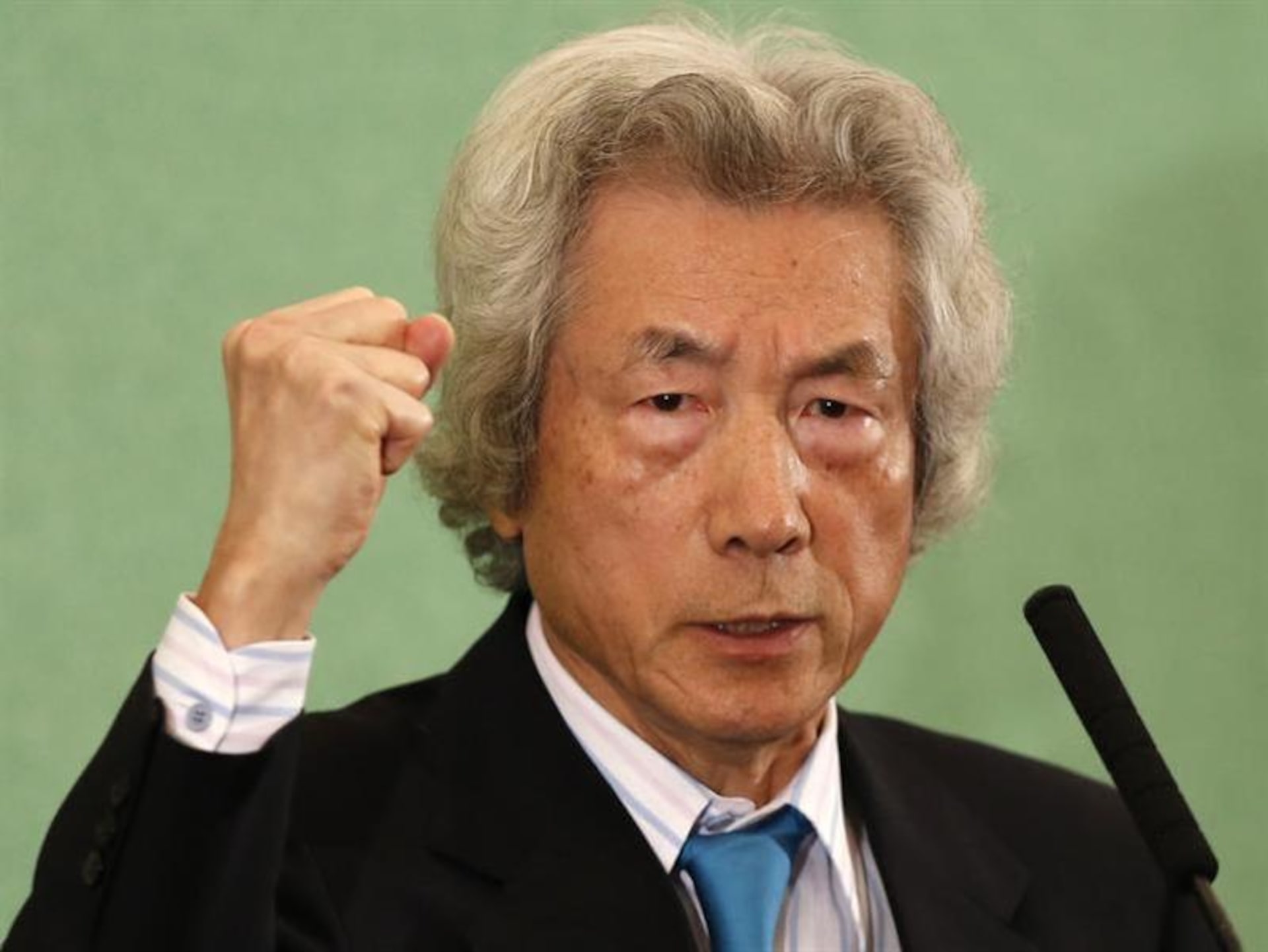
Junichiro Koizumi
 Japan
Also known as: Koizumi Junichiro, Juniçiro Koizumi, Koisan
Birthday
January 8, 1942
Birth Sign
Capricorn
Birthplace
Yokosuka, Kanagawa Prefecture, Japan
Age
84 years old
Height
5 ft 8 in (172 cm)
About
Junichiro Koizumi is a retired Japanese politician and economist who served as the 87th Prime Minister of Japan from April 2001 to September 2006. He led the Liberal Democratic Party during his tenure and became known for implementing aggressive structural reforms that reshaped the nation's economy. His leadership style was distinctively modern, utilizing media savvy and populist rhetoric to bypass traditional bureaucratic channels. As of 2026, he remains an influential elder statesman in Japanese politics.
Koizumi's legacy is defined by the privatization of Japan Post, a massive undertaking that required dissolving the House of Representatives to pass legislation. This bold move secured him a landslide victory and cemented his status as one of Japan's most significant post-war leaders. He also forged a close alliance with U.S. President George W. Bush, positioning Japan as a key partner in global security efforts. Despite controversies regarding visits to the Yasukuni Shrine, his impact on Japanese governance and international relations remains profound and widely studied.
Early Life & Background
Born on January 8, 1942, in Yokosuka, Kanagawa Prefecture, Junichiro Koizumi entered politics through a family legacy. His father, Junnosuke Koizumi, was a prominent minister in the Liberal Democratic Party, establishing the younger Koizumi as a third-generation politician from the start. He attended Waseda University, where he earned a degree in economics, laying the academic groundwork for his future career in public service. Unlike many peers who started in local government or student activism, Koizumi leveraged his family connections to enter the national stage directly after graduation.
His early political career involved steady climbing through various ministerial roles. In 1979, he served as Parliamentary Vice Minister of Finance, gaining experience in fiscal policy. By 1988, he had advanced to become the Minister of Health and Welfare under Prime Minister Noboru Takeshita. A pivotal moment occurred in 1992 when he took the helm as Minister of Posts and Telecommunications. It was here that he first demonstrated his reformist instincts by deregulating the telecommunications sector, challenging the powerful bureaucracy that controlled the industry. These years were marked by unsuccessful bids for the LDP presidency in 1995 and 1998, which tested his resolve but did not deter his ambition.
The period leading up to his premiership saw Koizumi refining his message of structural reform. He positioned himself as an outsider within his own party, willing to challenge entrenched interests that had long dominated Japanese politics. His election as LDP President in April 2001 marked the culmination of this journey, transforming him from a seasoned bureaucrat into the leader of the nation. The groundwork laid in his youth and early career provided the foundation for the radical changes he would soon implement.
Career Growth
Upon becoming Prime Minister in April 2001, Koizumi immediately launched his signature agenda: structural reform. His most ambitious project was the privatization of Japan Post, a state-owned giant that functioned as both a postal service and a massive financial institution. When the Upper House rejected his privatization bills in 2005, Koizumi made the unprecedented decision to dissolve the House of Representatives and call for a general election. Known as the "Postal Election," this gamble resulted in a landslide victory for the Liberal Democratic Party and the defeat of rebel lawmakers who opposed the reform. This victory solidified his control over the legislature and allowed him to proceed with the privatization plan.
His administration also focused heavily on economic revitalization, aiming to break Japan out of its prolonged stagnation. Koizumi introduced measures to reduce government debt and streamline public services. On the international stage, he cultivated a strong relationship with U.S. President George W. Bush, aligning Japan closely with American foreign policy during the War on Terror. This partnership included the deployment of Self-Defense Forces to Iraq, a controversial but decisive move that demonstrated Japan's commitment to global security alliances.
After stepping down in 2006, Koizumi did not fade into obscurity. He emerged from semi-retirement following the 2011 Fukushima Daiichi nuclear disaster to advocate for phasing out nuclear power, a stance that contrasted with the pro-nuclear policies of subsequent governments. In 2026, he continues to offer commentary on defense and security issues, maintaining his influence as a respected elder statesman. His son, Shinjiro Koizumi, has also risen to prominence in the House of Representatives, ensuring the Koizumi name remains central to Japanese political discourse.
Career Timeline
Public Image & Style
Koizumi cultivated a persona that broke away from the stiff, formal image typical of Japanese leadership. His signature look included dark sunglasses worn even indoors, casual attire, and the occasional cigar puff during official events. This aesthetic was part of a calculated effort to present himself as a man of the people rather than a distant bureaucrat. He utilized simple, direct language and avoided the convoluted speech patterns common in Japanese politics, making his messages accessible to a wide audience. This approach earned him the nickname of a political rock star, blending the gravitas of office with the energy of an entertainer.
Fame & Fandom (iFAMOUS Rankings)
Junichiro Koizumi holds a significant place in global consciousness, currently ranked as the 70th most famous person in Japan and the 72nd most famous person in East Asia according to the iFANN Global Fame Rankings. These placements reflect a sustained cultural footprint measured across global media coverage and consumption signals worldwide. Unlike modern pop stars who rely on organized fan clubs or viral hashtags, Koizumi's base was built on voters mobilized through televised press conferences and a signature slogan: structural reform. He did not cultivate a fandom in the entertainment sense; there is no formal name for his supporters, only a political constituency that rallied behind his unscripted defiance of bureaucratic norms. While some might mistake the recent political maneuvers of his son, Shinjiro Koizumi, for a continuation of this specific phenomenon, the elder statesman's legacy stands alone as a singular moment where a prime minister became a celebrity without abandoning the gravitas of office.
Interesting Facts and Legends
Junichiro Koizumi is often credited with creating the first true political celebrity in modern Japanese history. He famously wore dark sunglasses indoors during press conferences, a habit that became his trademark and symbolized his refusal to be intimidated by the media or the bureaucracy. He also smoked cigars on camera, further distinguishing himself from the conservative norms of Japanese politicians. His campaign slogans were simple and repetitive, such as "No pain, no gain," which resonated deeply with voters tired of complex political jargon.
A unique aspect of his career was the creation of "Postal Candidates" in the 2005 election. These were independent candidates who ran specifically to support the privatization of Japan Post, often running against members of their own party. This strategy effectively turned the election into a referendum on his flagship policy. Additionally, despite his reformist image, he was a staunch conservative within the LDP, often clashing with more moderate factions while simultaneously appealing to the broader public.
Notable Quotes
“If you want to change the system, you have to break the system.”
“No pain, no gain.”
“I am not a politician, I am a reformer.”
Family & Personal Life
Junichiro Koizumi has been married to Kayoko Miyamoto since 1967. Their union has lasted over five decades, providing a stable personal foundation amidst his turbulent political career. The couple has two children: a daughter named Sayuri Koizumi and a son, Shinjiro Koizumi. Shinjiro has followed in his father's footsteps, becoming a high-ranking politician and a member of the House of Representatives. The Koizumi family maintains a relatively private life compared to the public scrutiny faced by the Prime Minister, though they are frequently mentioned in the context of his political legacy.
Notable Connections
Kayoko Miyamoto, Shinjiro Koizumi, Sayuri Koizumi, George W. Bush, Shinzo Abe, Junnosuke Koizumi.
Relationships & Dating History
Junichiro Koizumi has been married to Kayoko Miyamoto since their wedding in 1967. There are no publicly recorded dates for a courtship or engagement prior to this marriage, but the union has lasted over five decades. The couple has one daughter, Sayuri Koizumi, and one son, Shinjiro Koizumi, who is currently a high-ranking politician in Japan and a member of the House of Representatives. As of 2026, Koizumi remains married to Kayoko Miyamoto. There are no credible reports of divorce, separation, or extramarital relationships. His family life has been relatively private compared to his public persona, though his son Shinjiro has often been mentioned in the context of following in his father's political footsteps.
- MarriedKayoko Miyamoto1967 - presentCurrentMarried since 1967; parents to Shinjiro and Sayuri Koizumi.
Salary, Net Worth In 2026
$9 Million
iFANN Editorial Team estimate
Specific net worth figures for Junichiro Koizumi are rarely disclosed in detail by financial outlets, as is common for politicians in Japan. However, estimates based on his long career, book royalties, speaking engagements, and real estate holdings suggest a net worth in the range of $5 million to $10 million USD. iFANN currently estimates Koizumi's net worth at approximately $9 million. Wealth sources include his salary as Prime Minister, book sales regarding his reforms, and potential earnings from his son's political success through shared family assets. There are no major business ventures or endorsement deals attributed directly to him in the public domain.
Awards Won (2)
As a politician, Koizumi received several national and international distinctions. He was awarded the Grand Cordon of the Order of the Chrysanthemum, the highest order of merit in Japan. He also received high-level recognition from the U.S. government for his role in the War on Terror, particularly highlighted by President Bush's recollection of their bond. Additionally, he was a finalist for Time Person of the Year and received honorary doctorates from various universities for his contributions to economic reform and international relations.
2006 · National Honor
Service to the Nation
2005 · Global Recognition
Leadership in Japan
Known For
Prime Minister of Japan
2001 · 87th Prime Minister
Japan Post Privatization
2005 · Architect of Reform
Keywords
Sources
Quick Facts
- Profession
- politician, diplomat, economist
- Born
- January 8, 1942
- Birthplace
- Yokosuka, Kanagawa Prefecture, Japan
- Gender
- Male
- Spouse
- Kayoko Miyamoto
- Birth Sign
- Capricorn
Personal Details
- Full Name
- Junichiro Koizumi
- Height
- 5 ft 8 in (172 cm)
- Spouse
- Kayoko Miyamoto
- Children
- Sayuri Koizumi, Shinjiro Koizumi
- Education
- Waseda University
Frequently Asked Questions
How old is Junichiro Koizumi?
Is Junichiro Koizumi still alive?
Who is Junichiro Koizumi's wife?
What was Junichiro Koizumi's biggest achievement?
Does Junichiro Koizumi have a son in politics?
Similar People
Join the community
fans discussing