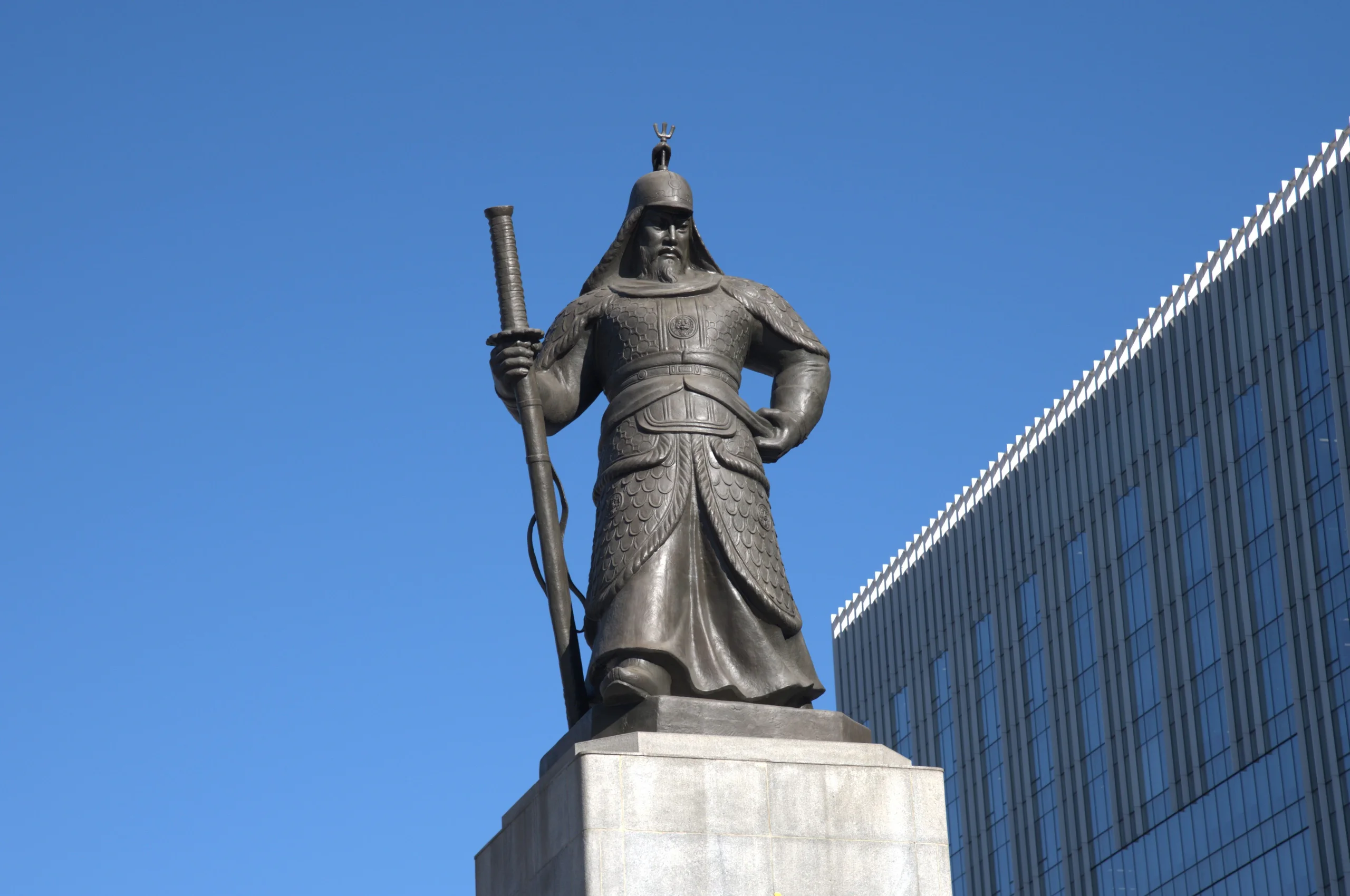
Yi Sun-sin
 South Korea
naval officer•military general
Also known as: Yi Yoon-sin, Yi Sunshin, Yŏhae
Birthday
April 28, 1545
Birth Sign
Sagittarius
Birthplace
Hanseongbu (modern-day Seoul), Korea
Age
Died at 53
Height
5 ft 9 in (175 cm)
About
Yi Sun-sin was a Korean naval commander and military general during the Joseon Dynasty who remains one of history's most celebrated strategists. Born on April 28, 1545, in Hanseongbu, he dedicated his life to defending Korea against Japanese invasions during the Imjin War. His legacy is defined by an undefeated record in 23 documented naval battles, where he consistently outmaneuvered superior enemy forces through innovative tactics and deep knowledge of the seas.
He died on December 16, 1598, at the Battle of Noryang after being mortally wounded by a stray bullet while leading his troops. Despite facing political persecution and imprisonment for years before the war, he maintained his loyalty to the nation. Posthumously, he received the title Lord of Loyal Valor (Chungmugong) and is revered as the greatest national hero in Korean history. His wartime journal, Nanjung Ilgi, is preserved in the UNESCO Memory of the World Register.
Early Life & Background
Yi Sun-sin was born into a yangban aristocratic family in Hanseongbu, but his childhood was marked by hardship after his father, Yi Jeong, fell from grace due to political intrigue. The family was forced to move to Goseong County in Gangwon Province, where they lived in relative obscurity and poverty. Despite these challenges, Yi pursued a rigorous education in Confucian classics and martial arts. He developed a keen interest in strategy and military science, often studying under local scholars and practicing archery and swordsmanship with dedication.
In 1576, he passed the state civil service examination for military officials known as the Gwageo, achieving top marks in archery and horsemanship. This success launched his career in public service, leading to postings in various garrisons along the southern coast. During this period, he successfully suppressed pirate activities and gained a reputation for competence. However, his rise was interrupted by intense court politics. In 1589, rival factions led by Kim Won-ik accused him of insubordination. He was demoted to commoner status and imprisoned for three years. During his incarceration, he wrote poetry and continued to study naval tactics, maintaining his resolve despite the personal suffering and injustice.
Career Growth
The threat of a massive Japanese invasion by Toyotomi Hideyoshi in 1592 forced the Joseon court to reinstate Yi Sun-sin as Admiral of Jeolla Right Province. He immediately began constructing the famous Turtle Ships (Geobukseon), armored vessels equipped with iron spikes and dragon-headed cannons designed to repel boarding parties. His first major engagement came in May 1592 at the Battle of Okpo, where he achieved a decisive victory. He followed this with the Battle of Hansan-do in June, using his signature 'crane wing' formation to destroy a significant portion of the Japanese fleet.
Despite suffering a defeat at Chilcheollyang later that year due to betrayal and lack of supplies, Yi returned to command after the death of the previous Grand Admiral. His most legendary moment occurred on October 26, 1597, at the Battle of Myeongnyang. With only 13 ships remaining after a purge of the navy, he lured a Japanese armada of approximately 133 vessels into a narrow strait. The confined waters negated the enemy's numerical advantage, allowing Yi to sink dozens of ships and kill thousands of sailors. He continued to lead the fleet until the final battle at Noryang in December 1598, where he secured a victory before succumbing to his wounds.
Career Timeline
Public Image & Style
Yi Sun-sin is portrayed as the epitome of loyalty, humility, and strategic brilliance within Korean culture. He is more than a historical figure; he serves as a moral symbol of integrity in the face of political corruption. Media portrayals consistently emphasize his selfless sacrifice and his preference for simple, unadorned armor over the opulent clothing worn by corrupt officials. His image is ubiquitous in South Korea, appearing on banknotes, statues, and educational materials. He is viewed as a spiritual guardian of the nation whose spirit is invoked during times of crisis.
Fame & Fandom
iFANN has not yet collected fame data for this person. As a historical figure from the 16th century, Yi Sun-sin does not have a formal fandom name or organized fanbase in the modern sense. His supporters are generally referred to as patriots or devotees of his legacy. Fan activity is channeled through historical societies, tourism groups, and government-sponsored organizations rather than informal fan clubs. Major projects include fundraising for the restoration of historical sites and organizing the annual Hansan Battle Festival. Koreans traditionally visit his shrines on his birthday and death anniversary to pay respects. Recent cultural impact includes his inclusion as a playable leader in the Civilization VII expansion and a special exhibition at the National Museum of Korea in 2026 that set visitor records.
Interesting Facts and Legends
Yi Sun-sin was a skilled poet whose journals contain entries reflecting on nature and the horrors of war. Historical records suggest he could hit targets with his bow from great distances, a skill he honed since childhood. The Turtle Ships were decades ahead of their time, featuring iron plates and spikes that prevented enemies from boarding. For centuries, Western history books largely ignored his achievements, focusing instead on European admirals like Nelson. It is only in recent decades that his global reputation has surged among military historians. Some legends claim he could predict weather and tides with supernatural accuracy, though modern analysis attributes this to his profound understanding of meteorology.
Notable Quotes
“I have not yet achieved my goal.”
“Even if I am alone, I will not yield.”
“If I die, let my soul guard the country.”
“History is a guide to navigation in perilous times.”
Family & Personal Life
Yi was born into a yangban family that suffered a fall from grace, forcing them to live in poverty in Goseong County. His father, Yi Jeong, lost his status due to political intrigue, shaping Yi's early resilience. He married Lady Park of the Andong Park clan, a union arranged according to the customs of the Joseon Dynasty. They had several children, including sons Yi Wan, Yi Hoe, and Yi Hwan, all of whom served in the military or government. Upon his death, his family inherited little material wealth, as he was known for his frugality and dedication to duty rather than accumulating riches.
Notable Connections
Relationships & Dating History
Yi Sun-sin lived in the 16th century when romantic relationships followed strict societal conventions. He was married to Lady Park of the Andong Park clan in an arrangement typical of the Joseon Dynasty nobility. There are no records of engagements, divorces, or other romantic partnerships outside of this primary union. He remained married to Lady Park until his death in 1598. Their marriage produced several sons, including Yi Wan, Yi Hoe, and Yi Hwan, all of whom went on to serve in the military or government. After his death, Lady Park became a widow, and the couple's legacy was carried forward by their descendants.
- MarriedLady Park of the Andong Park clan? - 1598His wife until his death; mother of his sons Yi Wan, Yi Hoe, and Yi Hwan.
Death & Aftermath
Died
December 16, 1598 (aged 53)
Death Place
Noryang Strait, Geoje-do, Joseon
Cause of Death
Musket ball to the left eye
On the narrow strait between Hansan Island and the Korean mainland near Geoje-do, Admiral Yi Sun-sin stood atop his flagship Panokseon during the final engagement of the Imjin War. The Battle of Noryang raged around him as he directed his fleet against a superior Japanese armada, maintaining command until a stray musket ball struck him in the left eye. He remained standing to ensure his men continued their victory, collapsing only after the battle was decisively won by allied forces on December 16, 1598. Contemporary military chronicles like the Nanjung Ilgi and official Joseon court histories unanimously record the fatal wound as a sniper shot.
King Seonjo wept upon hearing the news, transforming the respected commander into an immediate national martyr. His funeral became a state affair conducted shortly after the war ended, with initial burial on Jindo Island before his remains were moved to Changnyeong County in 1606 for a reburial ceremony attended by high-ranking officials. The site now houses the Hyeonchungsa Shrine, where annual rites and reenactments of his naval battles honor his spirit alongside recitations of his death poem. Posthumous honors include the rare title Eulji Mundeok and induction into global halls of fame, while educational foundations bearing his name promote patriotism and military leadership.
Net Worth (Estate Value)
$0
iFANN Editorial Team estimate
As a historical figure from the 16th century, Yi Sun-sin did not possess a net worth in the modern financial sense. His estate was modest, and upon his death, his family inherited little material wealth. He was known for his frugality and dedication to duty rather than accumulating assets. Today, there is no family trust managing his finances. Instead, the Cultural Heritage Administration of South Korea manages his legacy. This includes museums, festivals, and licensing of his image for educational and commercial purposes. The economic impact of his brand, including tourism and merchandise, runs into hundreds of millions of dollars annually, benefiting the state and private entities rather than a private estate.
Awards Won (3)
Posthumously awarded the title Lord of Loyal Valor (Chungmugong) by King Seonjo. His journal Nanjung Ilgi was inscribed on the UNESCO Memory of the World Register in 1997. He is enshrined in the International Military Heroes Hall of Fame and frequently cited on global lists of the greatest military commanders. His portrait appears on the South Korean 1,000-won banknote, and the Republic of Korea Navy Academy bears his name.
1598 · Posthumous Title
Service to the Joseon Dynasty
1997 · Cultural Heritage
Nanjung Ilgi
Known For
Battle of Myeongnyang
1597 · Commander
Battle of Noryang
1598 · Commander
Imjin War
1592 · Grand Admiral
Turtle Ship Design
1591 · Inventor
Keywords
Sources
Quick Facts
- Profession
- naval officer, soldier
- Born
- April 28, 1545
- Birthplace
- Hanseongbu
- Died
- December 16, 1598
- Death Place
- Namhae County
- Gender
- Male
- Birth Sign
- Sagittarius
Personal Details
- Full Name
- Yi Sun-sin (Courtesy name: Yŏhae)
- Height
- 5 ft 9 in (175 cm)
- Spouse
- Lady Park of the Andong Park clan
- Children
- Yi Wan, Yi Hoe, Yi Hwan
- Education
- Passed the Gwageo military examination in 1576; studied Confucian classics and martial arts
Frequently Asked Questions
How many battles did Yi Sun-sin win?
What is the significance of the Turtle Ship?
Why is Yi Sun-sin so famous in Korea?
Did Yi Sun-sin ever lose a battle?
Where can I see Yi Sun-sin's journal?
Similar People

Join the community
fans discussing