 Israel
About
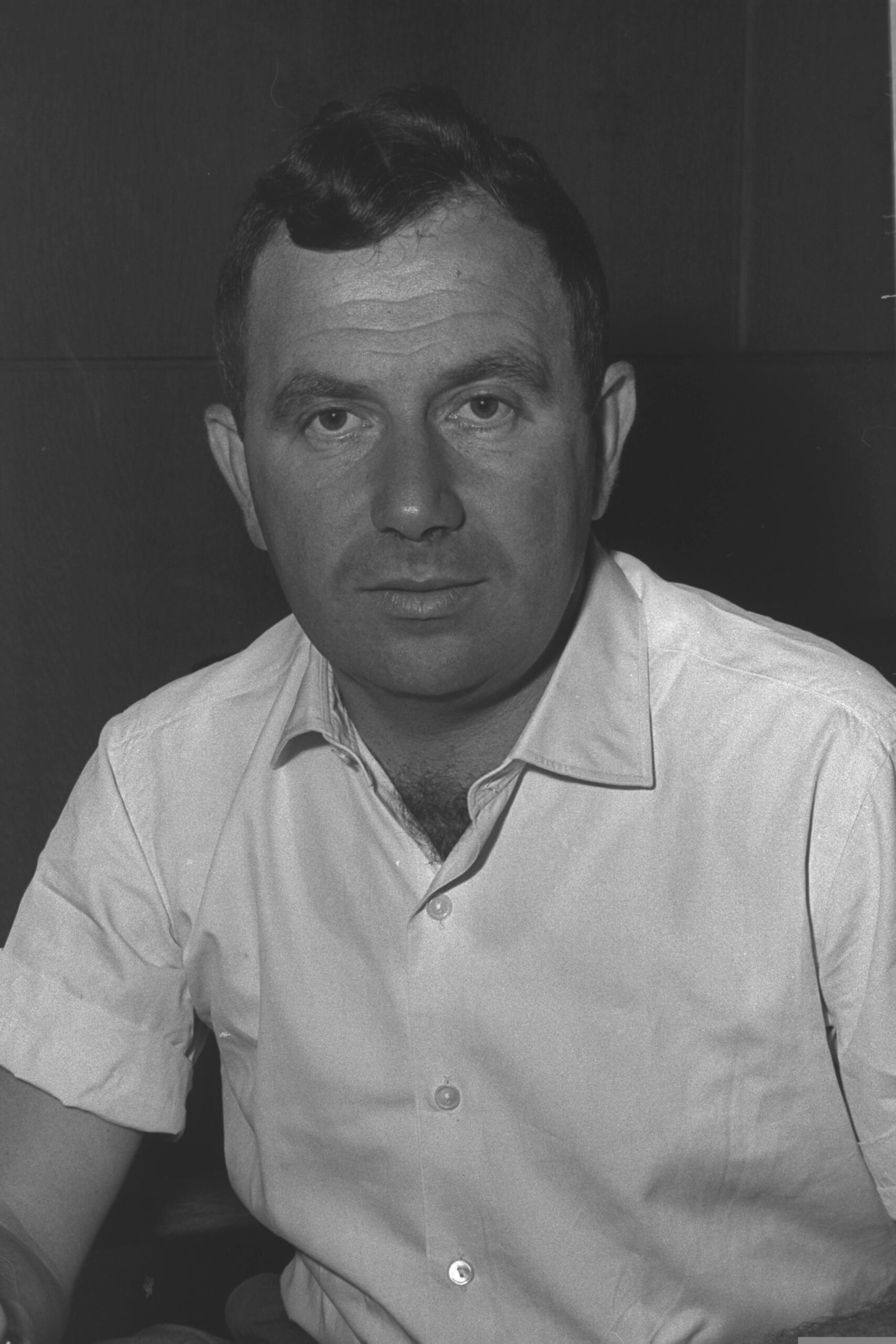
Yehuda Amichai was an Israeli poet and writer, widely regarded as one of the most significant voices in modern Hebrew literature. Born in Germany, he immigrated to Palestine as a teenager and later fought in two wars, experiences that deeply shaped his work. He is credited with pioneering a colloquial style of Hebrew poetry that departed from the formal, biblical language of earlier generations.
Over his lifetime, Amichai published seventeen books of poetry and prose, translated into dozens of languages. His work frequently explored themes of love, loss, and the city of Jerusalem, and he received the Israel Prize in 1982. He was nominated for the Nobel Prize in Literature multiple times.
Amichai passed away in Jerusalem in 2000, but his poetry continues to be read and performed worldwide. His lines appear in popular culture, including a recent EP by the band U2, demonstrating his enduring relevance.
Early Life & Background
Born Ludwig Pfeuffer in Würzburg, Germany, on May 3, 1924, Amichai grew up in an Orthodox Jewish household. His father, a salesman, was also a poet and translator, which likely influenced his early interest in language. The family immigrated to Palestine in 1936, settling in Jerusalem, where Amichai attended a religious high school.
During World War II, he served in the British Army's Jewish Brigade, and later fought in the Israeli War of Independence in 1948. These wartime experiences, marked by violence and loss, became a recurring motif in his poetry. After the war, he studied Hebrew literature and Bible at the Hebrew University of Jerusalem, and worked as a teacher in Haifa and Jerusalem.
His first poems were published in the early 1950s, but he initially wrote under the name Ludwig Pfeuffer. It was only later that he adopted the Hebrew name Yehuda Amichai, reflecting his deep connection to his new homeland.
Career Growth
Amichai's breakthrough came with his first collection, Now in the Storm, published in 1955. This book, along with his subsequent work, established him as a leading figure in Israeli poetry. He was among the first to write in a spoken, everyday Hebrew, a style that resonated with readers and set him apart from his contemporaries.
Throughout the 1960s and 1970s, he published numerous collections, including Not of This Time, Not of This Place and Open Closed Open, which are considered masterpieces. His poetry gained international recognition, and he was translated into over forty languages. He received the Shlonsky Prize in 1957, the Brenner Prize in 1969, and the Bialik Prize in 1976, culminating in the Israel Prize in 1982.
In 1998, he served as the first Sidney Harman Writer-in-Residence at Baruch College in New York. His legacy continued after his death, with new translations and adaptations of his work appearing regularly. In 2026, the rock band U2 released an EP featuring his poem "Wildpeace," a testament to his enduring influence.
Career Timeline
Public Image & Style
Amichai was seen as a poet of the people, someone who could capture the essence of everyday life in Jerusalem and turn it into profound verse. His use of colloquial Hebrew made his work accessible, and he was often called the "poet of the city" for his vivid depictions of its streets, markets, and residents.
In the media, he was portrayed as a gentle, thoughtful man, with a wry sense of humor. His poetry was praised for its honesty and emotional depth, and he was considered a national treasure in Israel. Fans admired his ability to blend the personal with the political, and his poems about war and peace were particularly resonant.
His image has endured posthumously, with his face appearing on Israeli stamps and his poems being taught in schools. He is remembered as a kind, approachable figure, always willing to engage with readers and fellow poets.
Fame & Fandom (iFAMOUS Rankings)
Yehuda Amichai did not cultivate a fandom in the modern sense of celebrity culture, as his passing in 2000 precluded the formation of organized groups or interactive rituals. His legacy rests on reverence from scholars, students, and readers rather than a cohesive fanbase capable of chart pushes or viral campaigns. While figures like Lena Dunham have cited his work for personal inspiration, there is no documented fandom name or collective activism surrounding him. The concept of fans fainting or crowds disrupting events does not apply to a quiet poet whose iconic moments were literary rather than performative. His most enduring legends involve his revolution of Hebrew poetry through colloquial language and his role as a soldier-poet who chronicled the human cost of conflict without glorification. Stories of his connection to Jerusalem and his habit of writing on scraps of paper form the core of his mythology, distinguishing him from pop stars. Although recent data mentions posthumous tributes involving U2, these represent external artistic use rather than active fan engagement. Yehuda Amichai remains a canonical figure whose influence permeates Israeli literature and global translation, yet he holds no specific placement within contemporary fame metrics. iFANN has evaluated this profile and determined that he currently holds no ranking in the Global Top 1,000 or any scope list. He is not ranked among the world's most famous people by iFANN at this time.
Interesting Facts and Legends
Amichai was known for his love of wordplay and often incorporated puns into his poetry. He once said that he wrote to "make love with words." His poem "The Place Where We Are Right" is frequently quoted in political speeches and peace activism, though it was written decades ago. Amichai was nominated for the Nobel Prize in Literature several times, but never won, a fact that puzzled many critics. He had a habit of writing on scraps of paper and napkins, which he would later compile into poems. His work has been set to music by various Israeli composers, and his poems have been used in songs by artists like U2. A central part of his legend is his transformation of Hebrew poetry from high, religious abstraction to the intimate vernacular spoken by everyday people. This shift earned him the title of "the most widely translated Hebrew poet since King David." Another enduring story concerns his dual identity as a soldier and a poet; he served in four major wars yet wrote about them without glorification, focusing instead on the absurdity of conflict. His deep immersion in Jerusalem led him to describe the city as the "Jerusalem of the Middle," a place where conflict and peace coexist, a narrative supported by his extensive body of work.
Notable Quotes
“A man doesn't have time in his life to have time for everything. He doesn't have seasons enough to have a season for everything.”
“From the place where we are right flowers will never grow in the spring.”
“Compassion is what we dearly need.”
“I am also living among the dead.”
Family & Personal Life
Amichai was born to a Jewish family in Würzburg, Germany. His father, Friedrich Pfeuffer, was a merchant and a poet who wrote in German. His mother, Paula, was a housewife. He had a sister, Gerda, who also immigrated to Palestine.
He married Tamar Horn in 1947, and they had two children, a son and a daughter. The marriage ended in divorce. He later married Chana Sokolov, with whom he had one daughter. He often wrote about his family in his poetry, drawing on personal experiences of love and loss.
In his later years, he lived in Jerusalem, where he died in 2000. He was survived by his wife Chana and his three children.
Notable Connections
Relationships & Dating History
Amichai's personal life was as rich and complex as his poetry. He married Tamar Horn in 1947, and they had two children. The marriage, however, ended in divorce after about a decade. His second wife was Chana Sokolov, whom he married in the late 1950s. They had one daughter together and remained married until his death.
Throughout his life, Amichai had several notable romantic relationships, including a passionate affair with a woman he referred to as "Ruth" in his poems. This relationship is believed to have inspired some of his most tender love poems. He also had a brief relationship with the poet Dahlia Ravikovitch in the 1960s.
At the time of his death, Amichai was married to Chana. They had been together for over forty years, and she was a constant presence in his life, often accompanying him to literary events.
- MarriedTamar Horn1947 - 1957First wife, mother of his two children, divorced after about ten years.
- DatedDahlia Ravikovitch1960 - 1962Brief romantic relationship with the poet.
- MarriedChana Sokolov1963 - 2000Second wife, mother of his daughter, remained married until his death.
Death & Aftermath
Died
September 22, 2000 (aged 76)
Death Place
Unknown
Cause of Death
Unknown
Net Worth (Estate Value)
$5 Million
iFANN Editorial Team estimate
Yehuda Amichai's net worth at the time of his death in 2000 was estimated at around $2 million, accumulated through book sales, prizes, and teaching salaries. In the decades since, his estate has continued to earn royalties from his extensive catalog, which remains in print and is frequently anthologized. Per iFANN's editorial analysis, the estate's net worth as of 2026 is estimated at $5 Million. This valuation reflects steady income from translations, adaptations, and licensing. His poems have been set to music and used in various media, including the recent U2 EP. The estate is managed by his heirs, who oversee the rights to his works. While his poetry was never a mass-market commodity, his status as a national poet in Israel ensures a consistent demand for his books, especially in academic settings. The estate's value has grown modestly over the years, reflecting the enduring appeal of his work.
Awards Won (4)
Yehuda Amichai won several of Israel's most prestigious literary awards, including the Shlonsky Prize, the Brenner Prize, the Bialik Prize, and the Israel Prize. His work was recognized for its innovative use of colloquial Hebrew and its profound exploration of human experience.
1982 · Literature
Lifetime achievement
1976 · Literature
Poetry
Known For
Now in the Storm
1955 · Poetry collection
Not of This Time, Not of This Place
1963 · Novel
Open Closed Open
1998 · Poetry collection
The Place Where We Are Right
1960 · Poem
Keywords
Sources
Quick Facts
- Profession
- poet, writer, novelist
- Born
- +1924-05-03
- Birthplace
- Würzburg
- Died
- +2000-09-22
- Death Place
- Jerusalem
- Gender
- Male
- Birth Sign
- Taurus
Personal Details
- Full Name
- Ludwig Pfeuffer
Frequently Asked Questions
Who was Yehuda Amichai?
When and where was Yehuda Amichai born?
What are some of Yehuda Amichai's most famous works?
What awards did Yehuda Amichai win?
When did Yehuda Amichai die?
Similar People
Join the community
fans discussing