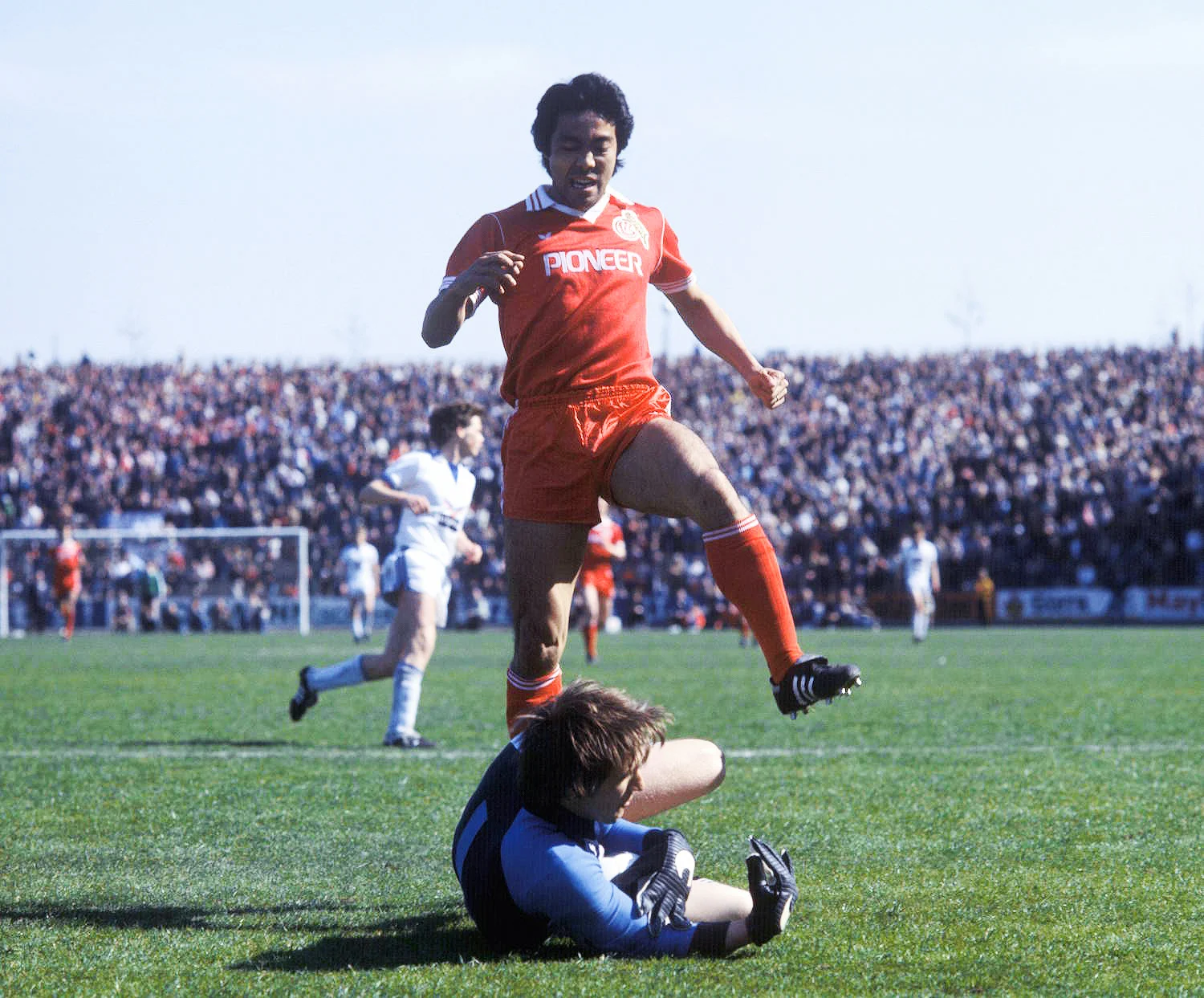
Yasuhiko Okudera
 Japan
Japanassociation football player•association football coach
Also known as: Okudera Yasuhiko
Birthday
March 12, 1952
Birth Sign
Pisces
Birthplace
Kazuno, Japan
Age
74 years old
About
Yasuhiko Okudera is a Japanese former professional footballer and coach, widely recognized as the first Japanese player to compete professionally in Europe. As a midfielder, he broke barriers in the late 1970s, becoming the first Asian to score in the European Cup. His pioneering journey opened doors for generations of Asian footballers in Europe.
Okudera's career spanned domestic success in Japan and a notable stint in the German Bundesliga, where he played for clubs like 1. FC Köln and Werder Bremen. He earned 32 caps for Japan, captaining the national team in the late 1970s. After retiring, he transitioned into coaching and later took on presidential roles at clubs like Yokohama FC and Plymouth Argyle. In 2014, he was inducted into the AFC Hall of Fame, cementing his status as a trailblazer in Asian football.
Early Life & Background
Yasuhiko Okudera was born on March 12, 1952, in Kazuno, a city in Akita Prefecture, Japan. Growing up in the post-war era, football was not yet a mainstream sport in Japan, but Okudera's talent and passion stood out from an early age. He began his career with Furukawa Electric, a corporate team based in Yokohama, where he quickly made a name for himself as a skilled midfielder.
In 1970, Okudera made his debut for Furukawa Electric. His performances helped the team win the Japan Soccer League in 1976, a title that put him on the radar of international scouts. At a time when Japanese football was largely isolated from the global scene, Okudera's ambition to play abroad was extraordinary. His move to Germany in 1977 was not just a personal milestone but a historic moment for Asian football.
Career Growth
In 1977, Yasuhiko Okudera made history by joining 1. FC Köln in the German Bundesliga, becoming the first Japanese player to play professionally in Europe. His debut season was a success, as he helped Köln reach the 1978 DFB-Pokal final. The following year, he scored a memorable goal in the European Cup semi-final against Nottingham Forest, making him the first Asian to score in the competition.
After his time in Cologne, Okudera moved to Hertha BSC and later Werder Bremen, where he continued to impress. Over his career in Germany, he made more than 200 competitive appearances, a remarkable feat for any player. He also earned 32 caps for the Japanese national team, scoring nine goals and captaining the side in the late 1970s.
Following his retirement as a player, Okudera transitioned into coaching. He managed JEF United Ichihara in Japan and also worked with the national youth teams. His administrative career saw him become president of Yokohama FC and later Plymouth Argyle, roles that kept him close to the game he loved.
Career Timeline
Public Image & Style
Yasuhiko Okudera is revered in Japan as a national hero who paved the way for Japanese football's global rise. His success in the Bundesliga inspired a generation of players, including Shinji Kagawa and Makoto Hasebe, who followed in his footsteps. Fans admire his courage to leave Japan at a time when such a move was unprecedented.
In Germany, he is remembered as a skilled and hardworking midfielder who earned respect through his performances. His legacy is that of a trailblazer, and he is often invited to speak about his experiences. Okudera's humility and dedication have made him a respected figure in both countries.
Fame & Fandom
Yasuhiko Okudera does not currently hold a placement in the published iFANN Global Top 1,000 rankings or any scope-specific top-100 lists. The evaluation conducted by the iFANN system in August 2026 confirms his status as an unranked figure within the current global fame hierarchy, reflecting a historical stature that differs from contemporary metrics of viral celebrity. While he lacks a formal numeric rank, his influence remains a defining chapter in the history of Asian football. A specific fandom name has not been documented for Okudera; unlike modern athletes who command organized support clubs with distinct titles, his audience is defined by universal reverence rather than active, ritualized campaigns. There are no records of birthday billboards, subway advertisements, or charity drives bearing his unique branding. His legacy functions as a foundational myth for Japanese football, celebrated through the lens of his pioneering career rather than through the mechanisms of a dedicated fanbase. He is recognized globally as the first Japanese player to compete professionally in Europe and the first Asian to score in the European Cup, achievements that serve as the primary cultural touchstones for his reputation. This historical significance anchors his standing, distinguishing him from figures whose fame relies on immediate media consumption or search volume. The narrative surrounding Okudera focuses on his role as a trailblazer who paved the way for future generations, including stars like Shinji Kagawa and Makoto Hasebe. His story is one of professional breakthrough and sustained influence on the sport's development in Asia, rather than a collection of viral moments or crowd disruptions typical of modern stardom.
Interesting Facts and Legends
During his time in Germany, Yasuhiko Okudera was affectionately known by the nickname "Oku," a moniker that stuck with fans throughout his tenure. He possessed a powerful right-footed shot, which he utilized to score some of his most memorable goals across various competitions. In 1979, he scored a historic European Cup goal against Nottingham Forest at the City Ground, a moment that remains a landmark in Asian football history. Earlier, in 1978, he made history as the first Japanese player to appear in a DFB-Pokal final while playing for 1. FC Köln. After retiring from play, Okudera took on a groundbreaking administrative role when he became the first Asian president of a European football club, leading Plymouth Argyle starting in 2008. Beyond his playing and coaching career, he has been a vocal advocate for football development in Asia, frequently emphasizing the necessity of international exposure for young talent. His legacy is further cemented by his induction into both the Japan Football Hall of Fame and the AFC Hall of Fame, solidifying his status as the foundational figure of Japanese football's international presence.
Family & Personal Life
Details about Yasuhiko Okudera's family life are scarce, as he has kept his personal affairs private. It is known that he was born in Kazuno, Akita Prefecture, to a family that supported his early interest in football. He has not publicly shared information about his parents or siblings.
Okudera is married, but the name of his wife and details about his children are not widely publicized. He has lived in both Japan and Germany over the years, maintaining ties to both countries. His dedication to football has been a constant, and he has often credited his family's support for his successful career.
Notable Connections
Yasuhiko Okudera is often mentioned alongside other Japanese pioneers in the Bundesliga, such as Shinji Kagawa and Makoto Hasebe, who have credited him for paving the way. He also worked with notable figures in football administration, including his roles at Yokohama FC and Plymouth Argyle, where he collaborated with various club officials and coaches.
Relationships & Dating History
Yasuhiko Okudera has kept his personal life out of the public eye, and details about his romantic relationships are not well-documented. It is known that he is married, but the identity of his wife and the timeline of their relationship have not been publicly shared.
Given his private nature, there are no records of high-profile relationships or marriages that have been reported in the media. As of 2026, Okudera is presumed to be married, but his relationship status remains largely unknown to the public.
Salary, Net Worth In 2026
$10 Million
iFANN Editorial Team estimate
As of 2026, iFANN currently estimates Yasuhiko Okudera's net worth at $10 Million. This valuation reflects a lifetime of earnings derived from his professional football career, subsequent coaching roles, and high-level administrative positions. During his active playing days in the Bundesliga, salaries were modest by modern standards, yet they provided a stable income that supported his family and career transitions. Following his retirement, Okudera expanded his financial portfolio through managerial duties and presidential appointments at clubs such as Yokohama FC and Plymouth Argyle. These leadership roles offered substantial compensation compared to standard coaching wages. Additional contributions to his wealth likely include endorsement deals and public appearances related to his status as a national icon. While his financial standing may not rival that of contemporary superstars earning record-breaking contracts, it represents the successful accumulation of assets over a long and varied career in the sport.
Awards Won (1)
Yasuhiko Okudera's most significant honor came in 2014 when he was inducted into the AFC Hall of Fame, recognizing his contributions to Asian football. He also won the Japan Soccer League with Furukawa Electric in 1976, a major domestic achievement. His pioneering career has been celebrated with various tributes and recognitions.
2014 · Hall of Fame
Lifetime achievement in football
Known For
Being the first Japanese player in European professional football
1977 · Pioneer
First Asian to score in the European Cup
1979 · Scorer
AFC Hall of Fame inductee
2014 · Inductee
Keywords
Sources
Quick Facts
- Profession
- association football player, association football coach
- Born
- March 12, 1952
- Birthplace
- Kazuno, Japan
- Gender
- Male
- Birth Sign
- Pisces
Frequently Asked Questions
Who is Yasuhiko Okudera?
When was Yasuhiko Okudera born?
What clubs did Yasuhiko Okudera play for?
What is Yasuhiko Okudera famous for?
Is Yasuhiko Okudera still active in football?
Similar People

Join the community
fans discussing