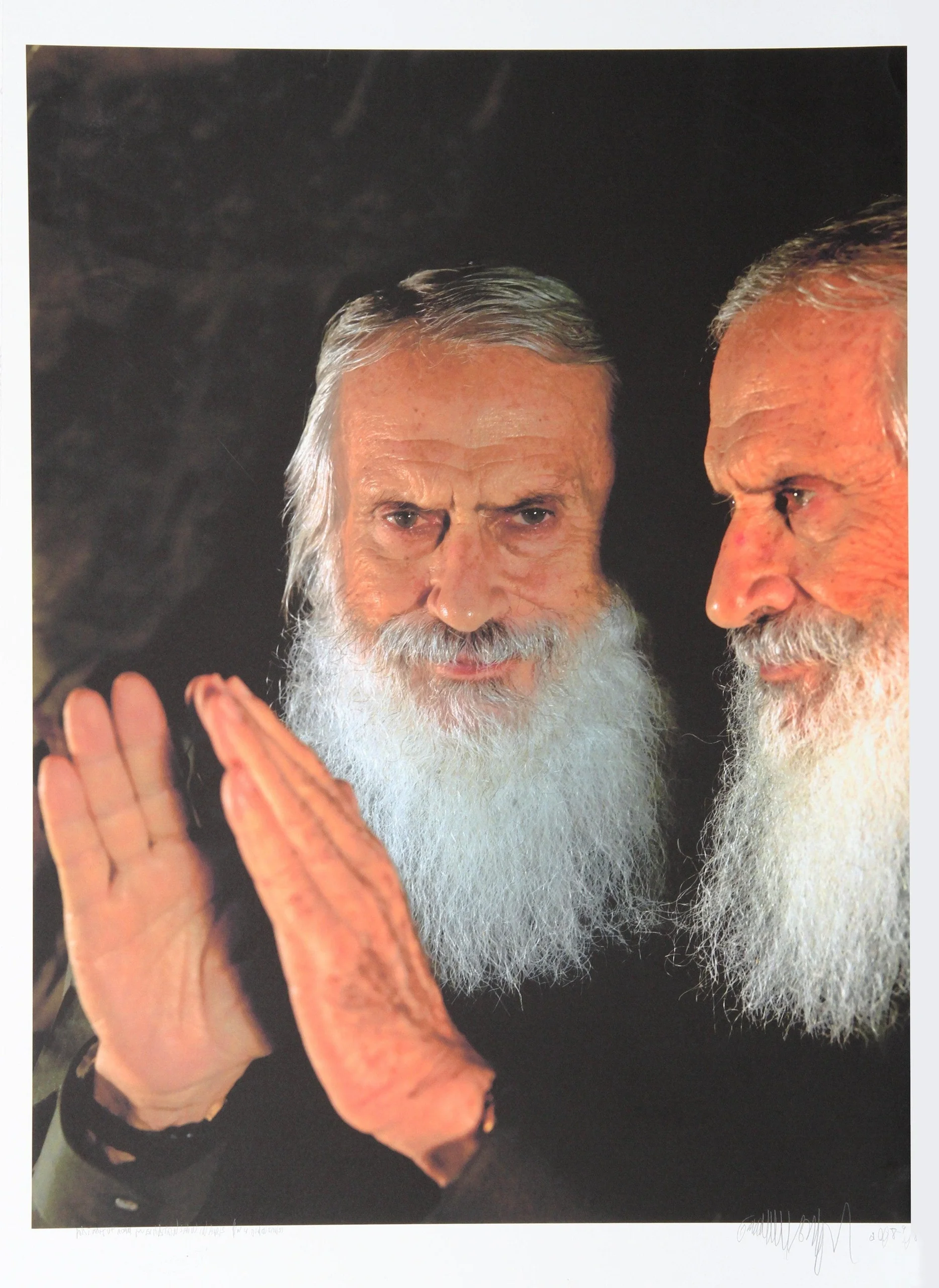
Yaacov Agam
 Israel
sculptor•experimental artist•painter
Also known as: Yaacov Gipstein, Yaakov Agam, Jacob Gipstein Agam, Yaacov Gipshtein
Birthday
May 11, 1928
Birth Sign
Taurus
Birthplace
Rishon LeZion, Mandatory Palestine
Age
Died at 98
About
Yaacov Agam was an Israeli sculptor and experimental artist, widely recognized as a pioneer of optical and kinetic art. Born Yaacov Gipstein on May 11, 1928, in Rishon LeZion, Mandatory Palestine, he spent more than seventy years creating works that demanded active participation from the viewer. His art shifted, moved, and transformed depending on where you stood, breaking the static frame that had defined painting and sculpture for centuries.
Agam died on June 21, 2026, at age 98, just months after receiving the Israel Prize for Visual Arts, the nation's highest cultural honor. His signature pieces, from the Agamograph series to the Fire and Water Fountain in Tel Aviv, are held in over 100 museums worldwide, including the Guggenheim and the Tate. He saw art not as an object to be admired, but as a living experience. As he once put it, "My aim is to create art that is not static, but alive, changing with the viewer's movement."
Early Life & Background
Yaacov Gipstein grew up in Rishon LeZion, a small settlement in Mandatory Palestine, in a deeply religious home. His father, Yehoshua Gibstein, was a rabbi and kabbalist, and the family's spiritual traditions would later echo in Agam's use of Hebrew letters and Jewish symbols. As a boy, he showed an early interest in drawing, but his path to art was far from straight.
During the British Mandate, Agam joined the Jewish underground and took part in Operation Agatha, a coordinated action against British authorities in 1946. He was arrested and spent time in prison, an experience that shaped his fierce commitment to Jewish statehood. After Israel's independence, he moved to Jerusalem to study at the Bezalel Academy of Arts and Design, where he trained under the painter Mordecai Ardon. In 1951, he left for Zurich, Switzerland, to study under Johannes Itten at the Kunstgewerbeschule. Itten, a former Bauhaus master, introduced Agam to color theory and the idea that art could be a dynamic, spiritual experience.
Agam's first solo exhibition at the Galerie Craven in Paris in 1953 marked his arrival on the international scene. Critics immediately noticed his unusual approach: paintings with movable parts, layered panels that revealed different images as you walked past, and sculptures that seemed to change shape. He was no longer Yaacov Gipstein; he had become Yaacov Agam, a name that would soon be synonymous with kinetic art.
Career Growth
The 1953 Paris show at Galerie Craven launched Agam's career, and he never slowed down. Throughout the 1950s and 1960s, he exhibited at major venues including the Venice Biennale and the Museum of Modern Art in New York. His work gained a reputation for being playful yet intellectually rigorous, and collectors scrambled to acquire his pieces.
In the 1960s, Agam developed the Agamograph, a lenticular print that shifts between two or more images as the viewer moves. These works became his most recognizable, sold in editions and displayed in homes and galleries around the globe. In 1968, he created the Fire and Water Fountain for Tel Aviv's Dizengoff Square, a kinetic sculpture that combines jets of flame and water in a spiral of movement. The piece became a city landmark, though it was later relocated during renovations.
Agam also turned to religious and national commissions. He designed a menorah for the Knesset in Jerusalem, a towering work of steel and glass that fuses Jewish tradition with his signature dynamism. He created the official logo for the March of the Living, the Holocaust education program, and his art has been installed in synagogues and public spaces across Israel and beyond. His works are now in the permanent collections of the Guggenheim, the Tate, and more than a hundred other museums. In 2026, weeks before his death, he received the Israel Prize for Visual Arts, a fitting capstone to a career that redefined what art could be.
Career Timeline
Public Image & Style
Agam's public persona was that of a visionary who made art that moved, quite literally. He was often photographed in front of his colorful, geometric works, wearing a beret and a knowing smile. Critics and fans alike described him as a "global sensation" and one of the "most influential artists of modern times."
His art was accessible in a way that high modernism rarely was. The Agamographs, with their shifting images, appealed to both serious collectors and casual museum-goers. He also embraced public art, creating fountains, menorahs, and logos that brought kinetic principles into everyday life. The March of the Living logo, with its flowing lines, is still seen on banners and T-shirts at Holocaust remembrance events.
Agam's style was unmistakable: bold primary colors, interlocking geometric shapes, and a sense of play that invited viewers to move. He was not afraid to be called a "trickster" of art, and he wore that label with pride. "Art should not be a passive experience," he told interviewers. "It should be a dialogue."
Fame & Fandom (iFAMOUS Rankings)
Yaacov Agam commanded a global audience that spanned decades, drawing millions of viewers to his kinetic installations and museum retrospectives rather than the fleeting attention typical of pop culture icons. His influence extended across continents through public commissions and academic study, establishing him as a definitive figure in modern art history. According to iFANN evaluations conducted in August 2026, Yaacov Agam is currently evaluated but does not hold a placement in the published Global Top 1,000 rankings or any specific scope list. The absence of a numerical rank reflects his status as a historical pioneer whose fame is anchored in institutional legacy rather than current viral metrics. While the evaluation engine has assessed his data, no ordinal position was assigned for the current period. The community surrounding his work lacks a formalized fandom name, with supporters identified instead as art collectors, scholars, and visitors to the Agam Museum in Nahariya. These groups engage through the physical ritual of viewing his sculptures, moving around the pieces to witness the shifting images he designed. There are no organized fan campaigns, dedicated social media hashtags, or grassroots movements bearing his name; the connection remains one of cultural appreciation and educational reverence. Tributes following his death were issued by cultural bodies like the March of the Living organization, highlighting his role as a national architect rather than a celebrity subject of fan worship. His enduring presence is measured by the continued display of his works in major museums and the active use of his designs in public spaces.
Interesting Facts and Legends
Yaacov Agam's father was a kabbalist, and some art historians see mystical influences in his layered, ever-changing compositions. He once said that his goal was to create art that reflected the infinite nature of God, never fully revealed in a single glance. He spent time in a British prison during Operation Agatha in 1946, an experience he rarely discussed but which deepened his connection to the Zionist cause. Agam was also an educator, teaching at the Bezalel Academy and writing about his theories of art. He believed that viewers should be co-creators of the artwork, and his pieces often require physical movement to be fully appreciated. In 2018, a retrospective at the Park West Gallery in Miami drew thousands of visitors, and his works have been featured in films and television shows as symbols of modernist innovation. Agam also designed a series of limited-edition watches and jewelry, bringing his kinetic vision to everyday objects. A widely cited legend involves his design of the world's largest menorah in Jerusalem's Independence Park, which serves as a massive, communal gathering point for Hanukkah celebrations. Another enduring story concerns his creation of the official logo for the March of the Living, an organization that mourned his passing as the loss of a key cultural architect. Upon his death in June 2026 at age 98, the art world marked the end of an era for kinetic art, cementing his reputation as the father of the movement.
Notable Quotes
“My aim is to create art that is not static, but alive, changing with the viewer's movement.”
“Art should not be a passive experience. It should be a dialogue.”
Family & Personal Life
Details about Agam's family life are scarce, but his father, Yehoshua Gibstein, was a rabbi and kabbalist who deeply influenced his worldview. Agam was born in Rishon LeZion, where his family had settled after immigrating from Eastern Europe. He later changed his surname from Gipstein to Agam, a Hebrew word meaning "lake," a nod to his artistic rebirth.
Agam was married, though little is known about his wife or children. He lived for many years in Paris, where he maintained a studio, and also spent time in Israel. He was known to be a private person, rarely discussing his personal life in interviews. His art, he said, was his true legacy.
Notable Connections
Yaacov Agam was part of a generation of artists who broke with static tradition, and he counted among his influences Johannes Itten, the Bauhaus master who taught him color theory. He was associated with the kinetic art movement, which included figures like Jean Tinguely and Alexander Calder. Agam also had a long relationship with the Bezalel Academy in Jerusalem, where he taught and mentored younger Israeli artists.
Relationships & Dating History
Agam was a private man, and little is known about his romantic life. He was married, though the name of his wife and the duration of their marriage are not widely documented. He is believed to have had children, but they have stayed out of the public eye.
At the time of his death, Agam was widowed. He spent his final years in Tel Aviv and Paris, surrounded by his art. His dedication to his work left little room for public romance, and he rarely spoke about his personal relationships in interviews.
Death & Aftermath
Died
June 21, 2026 (aged 98)
Death Place
Unknown
Cause of Death
Natural causes associated with old age
The death of Yaacov Agam was confirmed on Sunday, June 21, 2026, through statements issued by his family and cultural institutions rather than a public hospital announcement. The internationally renowned sculptor passed away at the age of 98 following natural causes associated with old age, though the specific location of his final moments remains unrecorded in available reports. His end was treated as a peaceful conclusion to a life that spanned nearly a century, with no disputed accounts regarding the circumstances of his final days surfacing in the media. Public tributes began immediately upon the news breaking, with Culture and Sport Minister Miki Zohar releasing a statement expressing deep sadness over the loss of the artist who helped shape modern art. The International March of the Living issued an In Memoriam tribute highlighting Agam's role as the designer of their iconic logo, while institutions including the Guggenheim Museums and Foundation and Park West Gallery mourned the loss of a true giant of the art world.
Sales of his works saw increased interest on platforms like Artsy shortly after his death, with listings for pieces such as Light Beams appearing in the wake of the announcement. Details regarding the funeral or memorial service, including the date, location, or notable attendees, were not made public in the provided records. Similarly, specific information regarding his burial or cremation location has not been reported. His estate continues to be managed by his survivors: his second wife, French harpist Chantal Thomas d'Hoste, and his three children, including New York-based artist Ron Agam.
Net Worth (Estate Value)
$10 Million
iFANN Editorial Team estimate
Agam's net worth at the time of his death is estimated at around $10 million, a figure that reflects decades of gallery sales, public commissions, and licensing deals. Per iFANN's editorial analysis, this valuation accounts for the steady income generated by his Agamographs sold in editions since the 1960s. His public works, including the Fire and Water Fountain and the Knesset menorah, were commissioned by government bodies and private patrons. In recent years, the market for kinetic art has grown, and Agam's pieces have appeared at auction with increasing frequency. His estate continues to manage his catalog, licensing his images for prints, posters, and merchandise. The March of the Living logo, which he designed, remains in active use, generating royalties for his heirs. While Agam was never among the wealthiest artists, his financial legacy is secure. His works are in the collections of major museums, ensuring that his art will continue to be studied and sold for generations.
Awards Won (1)
Yaacov Agam received the Israel Prize for Visual Arts in 2026, the highest cultural honor in Israel. The award recognized a lifetime of innovation in kinetic and optical art, a field he helped define. Agam's work has been exhibited in over 100 museums worldwide, and his contributions to art education were also honored by the Bezalel Academy, where he taught for many years.
2026 · Visual Arts
Lifetime achievement
Known For
Agamograph series
1960s · Creator
Fire and Water Fountain
1968 · Designer
Menorah for the Knesset
1970s · Designer
March of the Living logo
1980s · Designer
Keywords
Sources
Quick Facts
- Profession
- sculptor, experimental artist, painter
- Born
- May 11, 1928
- Birthplace
- Rishon LeZion, Mandatory Palestine
- Died
- June 21, 2026
- Death Place
- Tel Aviv
- Gender
- Male
- Birth Sign
- Taurus
- Nationality
- Israeli
Personal Details
- Full Name
- Yaacov Gipstein
- Education
- Kunstgewerbeschule, Zurich (under Johannes Itten)
Frequently Asked Questions
Who was Yaacov Agam?
What is Yaacov Agam's net worth in 2026?
How did Yaacov Agam die?
What is Yaacov Agam best known for?
Is Yaacov Agam still alive in 2026?
Similar People
Join the community
fans discussing