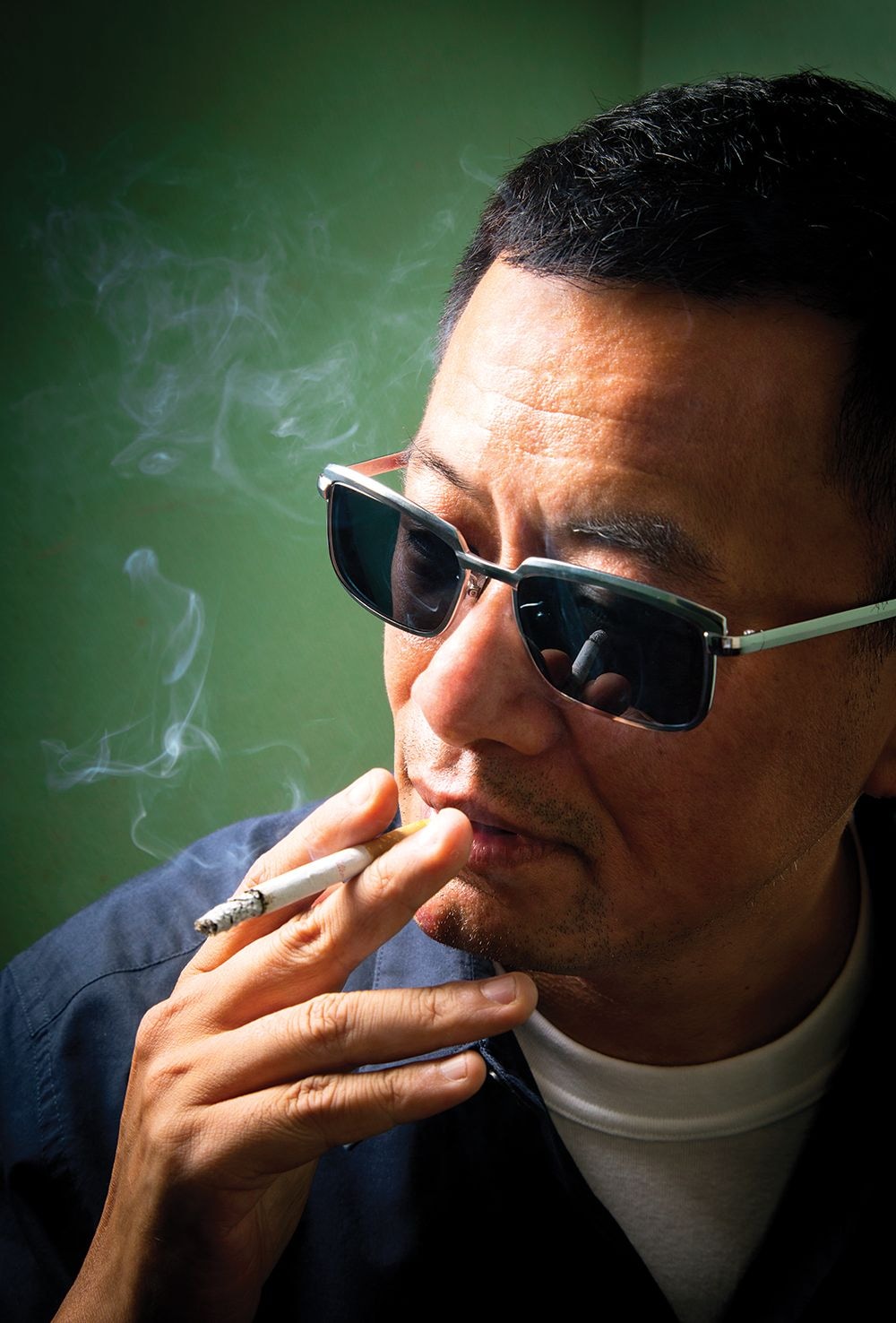
Wong Kar-wai
 China
Chinafilm director•screenwriter•film producer
Birthday
July 17, 1958
Birth Sign
Cancer
Birthplace
Shanghai, China
Age
68 years old
Height
5 ft 7 in (1.70 m)
About
Wong Kar-wai is a Hong Kong-based filmmaker whose lush, emotionally resonant movies have made him one of the most distinctive directors in world cinema. Born in Shanghai and raised in Hong Kong, his work is instantly recognizable: saturated colors, slow-motion gestures, a soundtrack that feels like a heartbeat, and stories that loop around memory and missed connections. He is the kind of director whose name alone signals a certain mood, romantic, melancholic, visually intoxicating.
Today, Wong remains an active force in cinema. His 2013 martial arts epic The Grandmaster earned 12 Hong Kong Film Awards, and he continues to restore and re-release his classics in 4K. In 2023, he announced a television adaptation of In the Mood for Love, expanding his signature world into a new format. Fans and critics alike regard him as a poet of the screen, a filmmaker who treats every frame like a painting and every love story like a ghost story.
Early Life & Background
Wong Kar-wai was born in Shanghai in 1958, a time of great political upheaval in China. When he was five years old, his family fled the chaos and settled in Hong Kong, a move that would shape his entire worldview. Growing up in the crowded, neon-lit streets of Hong Kong, Wong was a quiet, observant child who spent hours at the cinema, absorbing everything from Hollywood musicals to French New Wave films.
He studied graphic design at the Hong Kong Technical College, where he developed a keen eye for composition and color. After graduating, he landed a job as a screenwriter for TVB, Hong Kong's dominant television network. For several years, he churned out episodes of popular soap operas, learning the mechanics of storytelling under tight deadlines. It was a grind, but it taught him how to write dialogue that crackled and characters that felt real. In 1982, he wrote his first feature film script, Once Upon a Rainbow, and by 1987, he had written a dozen more. The turning point came when producer Alan Tang offered him the chance to direct his own script. The result was As Tears Go By (1988), a gritty crime drama that became a box office hit and launched his career.
Career Growth
Wong's breakthrough arrived with Days of Being Wild (1990), a moody, nonlinear portrait of restless youth that won Best Film and Best Director at the Hong Kong Film Awards. It was the first film to showcase his signature style: drifting narratives, longing glances, and a soundtrack that felt like a character. But it was Chungking Express (1994) that made him an international name. Shot in just two months during a break from the exhausting production of Ashes of Time, the film was a loose, playful meditation on love and loneliness in Hong Kong. It earned him a second Best Director award at the Hong Kong Film Awards and a devoted following overseas.
He followed it with Fallen Angels (1995), a kinetic, neon-drenched crime story that became a cult classic. Then came Happy Together (1997), a raw, beautiful film about a gay couple in Buenos Aires that won him the Best Director prize at Cannes. But his magnum opus arrived in 2000: In the Mood for Love, a devastatingly romantic story of unspoken love between two neighbors. It won the Best Foreign Language Film at BAFTA and the César Awards, and it is regularly voted one of the greatest films of all time. Wong continued to push boundaries with 2046 (2004), a sci-fi-tinged sequel, and The Grandmaster (2013), a visually stunning biopic of Ip Man that swept the Hong Kong Film Awards with 12 wins.
Career Timeline
Public Image & Style
Wong Kar-wai is the archetypal auteur, a filmmaker whose name is synonymous with a specific, instantly recognizable aesthetic. In the public imagination, he is a romantic, an artist who makes movies about the ache of love and the beauty of loss. Critics often describe his style as "painterly" and "sensual," and his influence can be seen in everything from Sofia Coppola's Lost in Translation to the visuals of music videos by Lana Del Rey and The Weeknd. His fans, a global community of cinephiles, pore over his films frame by frame, debating the meaning of every recurring image. Wong's own social media presence is minimal but carefully curated, his Instagram feed, @wongkarwai, features behind-the-scenes photos, vintage film stills, and the occasional cryptic caption. He is known for wearing sunglasses indoors and speaking in a soft, measured voice, adding to his mystique. There is no official fandom name, but his admirers are often called "Wong Kar-wai fans" or simply "cinephiles."
Fame & Fandom
A single frame of Maggie Cheung walking down a stairway in slow motion still defines how the world sees Wong Kar-wai. That specific visual rhythm, paired with his saturated colors and melancholic scores, anchors a global reputation that transcends language barriers. His influence ripples through modern culture, visible in the work of Sofia Coppola and the aesthetic choices of artists like Lana Del Rey. This enduring resonance places him firmly within the pantheon of cinematic giants. According to the iFANN Global Fame Rankings, he is the 92nd most famous person in China, holding steady from the previous cycle. Furthermore, he ranks as the 7th most famous person from China, a position that reflects his status as an international ambassador for Hong Kong cinema. These metrics track global attention across media coverage, search trends, and cultural consumption signals worldwide. While pop stars often command armies of followers with organized campaigns, Wong's audience operates differently. There is no formal moniker for his fanbase; instead, his supporters identify primarily as cinephiles, film students, and critics who revere his auteur status rather than a unified organization. Unlike idol groups where fans drive chart numbers or organize birthday billboards, engagement here centers on professional circles and educational masterclasses. Recent events reinforce this dynamic: a major retrospective titled "Love Power" at BAMPFA in January 2026 drew industry heavyweights, while outdoor screenings of In the Mood for Love in August 2026 attracted enthusiasts rather than frenzied mobs. His first TV series, Blossoms Shanghai, set for release by MUBI in early 2026, continues to draw viewership based on artistic merit. The legendary bond between Wong and actor Tony Leung remains a topic of deep professional admiration, with Leung noting in May 2026 how their collaboration transformed his existential state. No viral legends of crowds shutting down streets exist for him; his mythology is built entirely on the screen, sustained by a quiet but devoted community of those who understand the weight of every step.
Interesting Facts and Legends
Wong is notorious for shooting without a finished script, often rewriting scenes on the spot and letting actors improvise. This approach drove some collaborators crazy but also produced some of cinema's most spontaneous, alive moments. He is a collector of vintage cameras and has a particular fondness for the Canon 5D Mark II, which he used for certain sequences in The Grandmaster. His films are filled with recurring motifs: clocks, trains, hotel corridors, and characters who eat alone. The famous slow-motion shot of Maggie Cheung walking down a stairway in In the Mood for Love was actually filmed at 48 frames per second, then slowed further in post-production. Wong once said he wanted the audience to feel the weight of every step. He also has a cameo in his own films, look closely for a brief appearance in Chungking Express as a man eating at the Midnight Express food stall. A persistent story among crew members details how he would shoot dozens of takes just to capture a fleeting expression, leaving actors exhausted but the final result uncanny. Another tale involves his team waiting hours for the perfect rainstorm to fall on a specific street corner in Bangkok, refusing to move the camera even when the weather turned. These anecdotes highlight his obsession with atmospheric precision over efficiency.
Notable Quotes
“I don't want people to see my films and feel they have to think too hard. I want them to feel it.”
“If you can't get rid of the past, then you should try to make the best of it.”
“There are no choices that have no regrets.”
“I think if you are a filmmaker, you have to be a dreamer. You have to be able to create a different world.”
Family & Personal Life
Wong is famously private about his personal life, but it is known that he married Chan Ye-ching, a film producer who has worked on several of his movies, including In the Mood for Love and 2046. The couple has two sons, and the family has lived in Hong Kong for decades. Wong rarely discusses his parents, though he has mentioned that his mother was a fan of Shanghai opera and that his father worked in a bank. The experience of leaving Shanghai as a child and growing up in a new city deeply influenced his films' themes of displacement and longing. He does not have any pets, as far as public records show, and his household is a quiet, book-filled home where he writes and edits late into the night.
Notable Connections
Wong Kar-wai has built a repertory company of actors and technicians who appear across his filmography. Tony Leung Chiu-wai is his most frequent collaborator, starring in Days of Being Wild, Chungking Express, In the Mood for Love, 2046, and The Grandmaster. Maggie Cheung is his other great muse, appearing in As Tears Go By, Days of Being Wild, and In the Mood for Love. Cinematographer Christopher Doyle shot many of Wong's most visually stunning films, including Chungking Express, Fallen Angels, and Happy Together. Other frequent collaborators include actors Faye Wong, Zhang Ziyi, and Gong Li, as well as composer Shigeru Umebayashi, who created the haunting score for In the Mood for Love.
Relationships & Dating History
Wong Kar-wai has been married to Chan Ye-ching for decades, though the exact year of their marriage is not publicly known. Chan Ye-ching is a film producer who has worked on several of Wong's films, including In the Mood for Love and 2046. The couple has two sons together. There are no records of any other public relationships or romantic rumors involving Wong. His private nature means that little is known about how he and Chan met, but they have remained a steady presence in each other's lives and careers. As of 2026, Wong is still married to Chan Ye-ching.
- MarriedChan Ye-chingCurrentFilm producer who has worked on Wong's films; they have two sons.
Salary, Net Worth In 2026
$5 Million
iFANN Editorial Team estimate
iFANN currently estimates Wong Kar-wai's net worth in 2026 at $5 Million. This figure reflects his earnings from directing, writing, and producing a relatively small but highly influential filmography. Unlike many blockbuster directors, Wong's films are art-house productions with modest budgets, though they often perform well on the festival circuit and in home video sales. His income streams include director fees, producer credits, and royalties from streaming and physical media sales of his restored classics. The 4K restoration of In the Mood for Love and other titles has generated renewed revenue. Wong also earns from occasional commercial work, he directed a short film for luxury brand Saint Laurent in 2021, and from speaking engagements and masterclasses at film festivals. He does not own a production company or have major endorsement deals, keeping his financial profile relatively low compared to mainstream Hollywood directors.
Awards Won (49)
Wong Kar-wai has won over 30 awards for his films. He won Best Director at the Cannes Film Festival for Happy Together and has taken home 10 Hong Kong Film Awards, including Best Film and Best Director for Days of Being Wild, Chungking Express, In the Mood for Love, 2046, and The Grandmaster. His international honors include the BAFTA for Best Foreign Language Film and the César Award for Best Foreign Film, both for In the Mood for Love. He also received the Golden Horse Award for Best Director three times.
2002 · Best Film Not in the English Language
In the Mood for Love
1997 · Best Director
Happy Together
Known For
In the Mood for Love
2000 · Director, Screenwriter, Producer
Chungking Express
1994 · Director, Screenwriter, Producer
Happy Together
1997 · Director, Screenwriter, Producer
2046
2004 · Director, Screenwriter, Producer
The Grandmaster
2013 · Director, Screenwriter, Producer
Keywords
Quick Facts
- Profession
- film director, screenwriter, film producer
- Born
- July 17, 1958
- Birthplace
- Shanghai, China
- Gender
- Male
- Birth Sign
- Cancer
- Height
- 5 ft 7 in (1.70 m)
- Spouse
- Chan Ye-ching
- Children
- 2 sons
Personal Details
- Height
- 5 ft 7 in (1.70 m)
- Spouse
- Chan Ye-ching
- Children
- 2 sons
- Education
- Hong Kong Technical College (graphic design, film)
Filmography
12
Total
11
Film
1
TV
Frequently Asked Questions
What is Wong Kar-wai's signature filmmaking style?
What are Wong Kar-wai's most famous films?
Where was Wong Kar-wai born?
Who are Wong Kar-wai's frequent collaborators?
What awards has Wong Kar-wai won?
Social Media
Similar People
Join the community
fans discussing