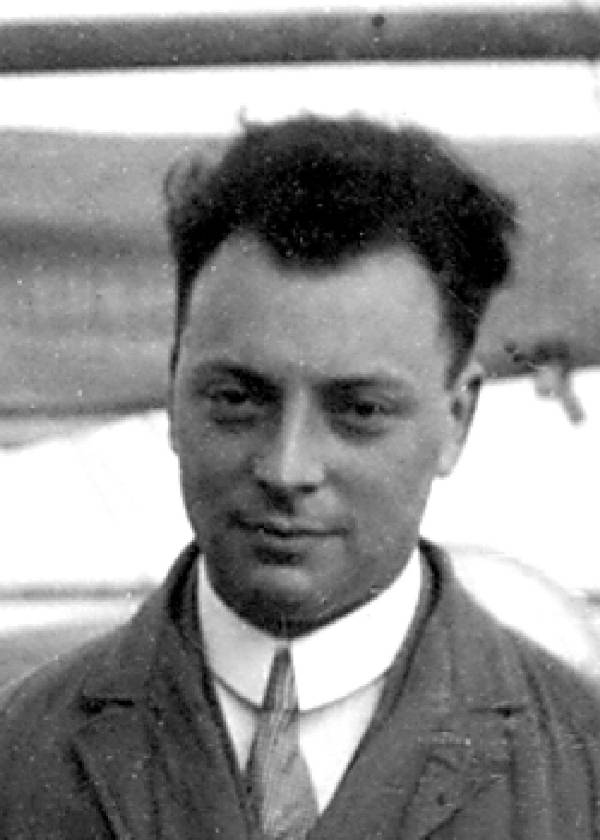
Wolfgang Pauli
Awards & Honours
2
Awards Won
6
Honours
1
Rankings
2
Records
Wolfgang Pauli's discovery of the exclusion principle in 1925 is one of the cornerstones of quantum mechanics and chemistry, explaining the structure of atoms and the periodic table. For this, he was awarded the Nobel Prize in Physics in 1945, nominated by Albert Einstein. His 1930 postulate of the neutrino was a bold theoretical leap that was confirmed in 1956, reshaping particle physics. He also introduced the concept of electron spin. His 200-page encyclopedia article on relativity remains a classic treatise. Pauli's work is foundational to modern physics, and his name is attached to numerous concepts: the Pauli matrices, Pauli equation, Pauli paramagnetism, Pauli–Villars regularization, and the Pauli–Jung conjecture.
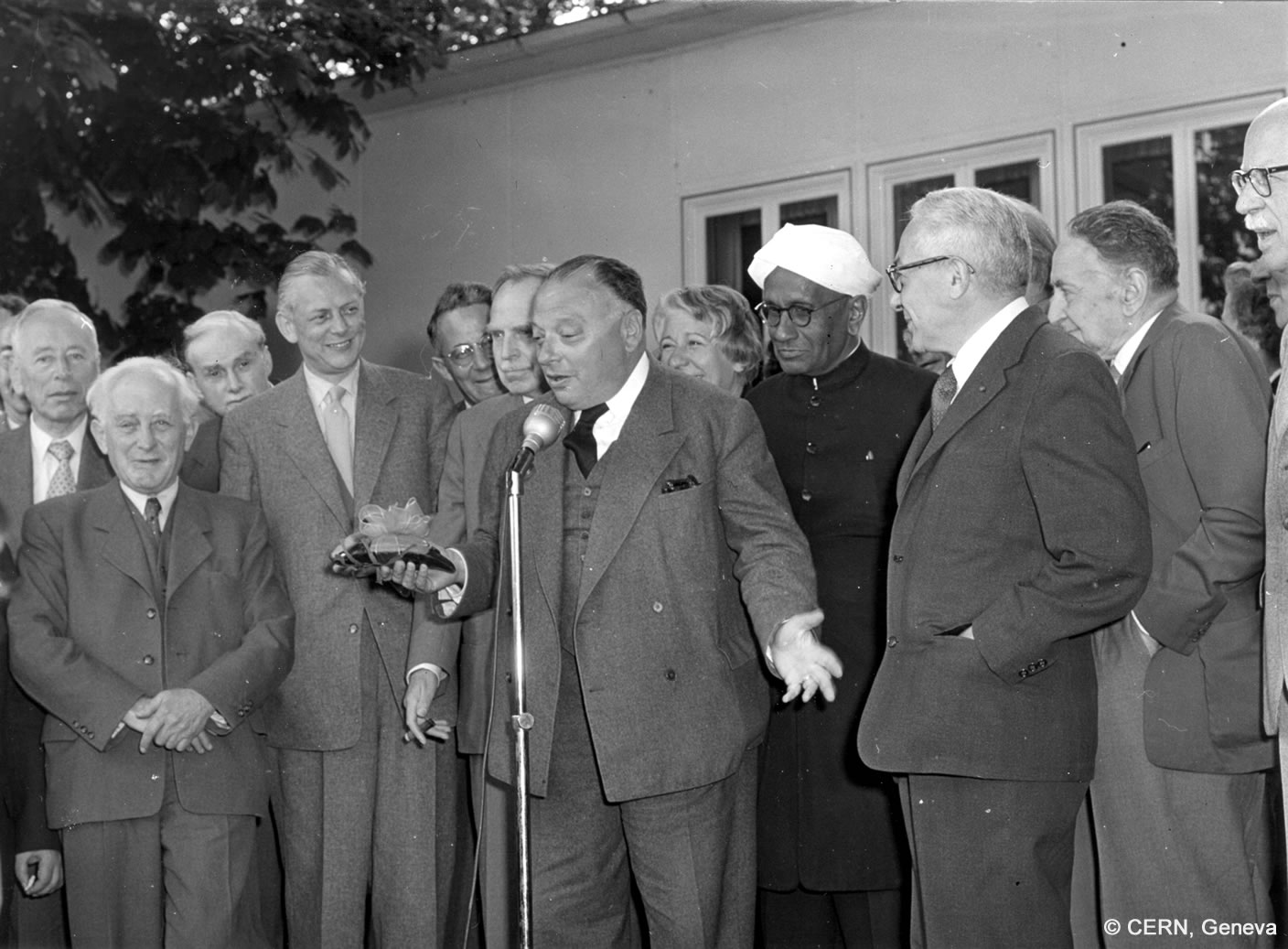
Awards
Honours & Distinctions
Nobel Prize in Physics
For the discovery of the Exclusion Principle, also called the Pauli Principle.
Max Planck Medal
Awarded for outstanding achievements in theoretical physics.
Foreign Member of the Royal Society
Elected as a foreign member.
Member of the Swiss Physical Society
Member of the American Physical Society
Honorary doctorates
Received honorary doctorates from multiple institutions.
Rankings & Lists
Founding fathers of quantum mechanics
Records & Feats
First to formulate the exclusion principle for fermions
In 1925, Pauli stated that no two electrons can occupy the same quantum state, a fundamental law of nature.
First to postulate the neutrino
In 1930, Pauli proposed the existence of a neutral particle to conserve energy in beta decay, later named the neutrino.