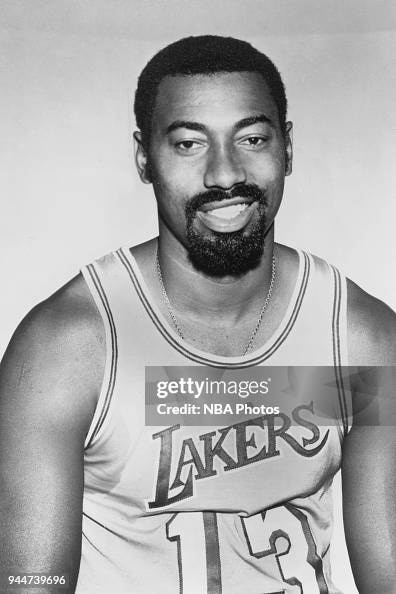
Wilt Chamberlain
 United States
Also known as: Wilt the Stilt, The Big Dipper, Wilton Norman Chamberlain
Birthday
August 21, 1936
Birth Sign
Leo
Birthplace
Philadelphia, Pennsylvania, USA
Age
Died at 63
Height
7 ft 1 in (216 cm)
About
Wilt Chamberlain, born Wilton Norman Chamberlain on August 21, 1936, in Philadelphia, was a towering figure in basketball, standing 7 feet 1 inch tall. Over 14 NBA seasons, he rewrote the record books. He is the only player to score 100 points in a single game, and he once grabbed 55 rebounds in a contest. Chamberlain averaged 50 points per game in the 1961-62 season and never fouled out of a game. His 72 NBA records include seven scoring titles, eleven rebounding titles, and nine field goal percentage crowns. He won two NBA championships, four regular-season MVP awards, and was named to 13 All-Star Games. In 1978, he entered the Naismith Memorial Basketball Hall of Fame, and he was later selected to the NBA's 35th, 50th, and 75th anniversary teams. As former teammate Billy Cunningham said, "The NBA Guide reads like Wilt's personal diary."
Chamberlain's college career at the University of Kansas included a triple-overtime loss in the national championship game. He then played for the Harlem Globetrotters before joining the NBA with the Philadelphia Warriors. He later played for the San Francisco Warriors, Philadelphia 76ers, and Los Angeles Lakers. His rivalry with Boston Celtics center Bill Russell was legendary. After years of playoff defeats, Chamberlain finally won his first title in 1967 with the 76ers, and his second in 1972 with the Lakers, a team that set a record with a 33-game winning streak. Following his NBA career, he played volleyball in the International Volleyball Association and served as its president, earning induction into the IVA Hall of Fame.
Nicknamed "the Big Dipper" because he dipped his head through doorways, Chamberlain disliked the more derogatory "Wilt the Stilt." His signature moves included the dipper dunk, the fadeaway jump shot, and the finger roll. His dominance near the basket forced rule changes: the lane was widened, offensive goaltending was banned, and inbound passes over the backboard were prohibited. A poor free-throw shooter, Chamberlain could dunk from the foul line, leading to the rule that a shooter must keep both feet behind the line. He died on October 12, 1999, at age 63, but his records and impact endure.
Early Life & Background
Chamberlain was one of nine children growing up in a working-class Philadelphia household. He was a sickly child, nearly dying from pneumonia at age 10, but his extraordinary height made him a local curiosity. By age 10 he stood 6 feet tall, and by his junior year at Overbrook High School he had reached 6 feet 11 inches. At Overbrook, he was not just a basketball phenomenon but also a track star, winning the city championship in the high jump. In a Philadelphia public league game, he scored 90 points, drawing national attention. Over two seasons, his high school team went 56-3. Hundreds of college recruiters pursued him, and he chose the University of Kansas for its basketball tradition under coach Phog Allen.
Career Growth
Chamberlain entered the NBA with the Philadelphia Warriors in 1959 and was named Rookie of the Year and MVP in his first season. On March 2, 1962, he scored 100 points against the New York Knicks in Hershey, Pennsylvania, a record that still stands. That same season, he averaged 50.4 points per game and 25.7 rebounds per game. He won four MVP awards (1960, 1966, 1967, 1968) and led the league in rebounding 11 times. His first NBA championship came in 1967 with the Philadelphia 76ers, and his second in 1972 with the Los Angeles Lakers, a team that set a record with a 33-game winning streak. At age 35, he was named Finals MVP. Chamberlain never fouled out of a game in his entire career, spanning 1,045 regular-season and 160 playoff games. After retiring from basketball in 1973, he played professional volleyball in the International Volleyball Association and served as its president.
Career Timeline
Public Image & Style
Chamberlain was known for his dominant post play, finger roll, and fadeaway jump shot. His rivalry with Bill Russell shaped his legacy, often casting him as a "loser" despite his individual brilliance. Recent documentaries have attempted to reframe his career. His fanbase consists of basketball historians and stat enthusiasts. There is no official fandom name. Fan culture includes debates about his place in the GOAT conversation and the validity of his records. His social media presence is maintained by fan accounts that emphasize his records and highlight reels.
Fame & Fandom (iFAMOUS Rankings)
The reverence for Wilt Chamberlain has never manifested as a modern, organized fan club with a specific name or viral social media campaigns. Instead, his legacy lives through a deep-seated cultural devotion centered on institutional philanthropy and the intense preservation of physical history. The most tangible expression of this community is the Wilt Chamberlain Memorial Fund in Philadelphia, which remains highly active in supporting education, recently welcoming new scholars to continue his mission of giving back to his hometown. This charitable infrastructure serves as the primary ritual for his followers, who honor him by funding postsecondary journeys rather than gathering at rallies. A thriving niche of collectors also sustains his mythos, driving high-profile auctions where artifacts like a Lakers warmup jacket sold for nearly $90,000, proving that fans remain willing to pay significant sums to own a piece of his physical presence. While no official fandom name exists, the collective memory of his dominance ensures he remains a constant subject of debate among basketball historians and stat enthusiasts. Despite the absence of a formal organization, the sheer scale of his global recognition places him firmly within the upper echelons of historical fame. According to iFANN's Global Fame Engine evaluation in August 2026, Wilt Chamberlain does not currently hold a placement in the published rankings.
Interesting Facts and Legends
Wilt Chamberlain possessed physical attributes that defy logic, including a 29-inch vertical leap despite his massive size. His dominance on the court led to rule changes, specifically the requirement for shooters to keep both feet behind the free-throw line after he demonstrated the ability to dunk from that distance. Beyond basketball, he was an accomplished track athlete who ran the 60-yard dash in 6.6 seconds and high-jumped 48 inches. He was also a chess enthusiast who played against grandmasters and owned a custom Rolls-Royce built with a higher roof to accommodate his 7-foot-1 frame. In 1965, he became the first NBA player to earn $100,000 in a single season, following an earlier stint with the Harlem Globetrotters where he earned $65,000. His cultural footprint extended to film, appearing as a gladiator in Conan the Destroyer (1984). Legends of his career include the verified 100-point game against the New York Knicks in 1962, a feat that has stood for over six decades. Another iconic moment involves his 1961–62 season, where he averaged 50.4 points per game, a statistical anomaly so extreme it often feels like folklore. Stories persist of his collegiate dominance at Kansas, where he set school records for scoring and rebounding that remain untouchable. An anecdote often retold involves his near-return from retirement, where reports surfaced that the New York Knicks nearly pulled him out of retirement, with Chamberlain admitting, "New York would have been nice," highlighting the enduring emotional pull he held even after stepping away.
Notable Quotes
“Nobody roots for Goliath.”
“They say that nobody can do what I did. But I did it. And I'm not even sure I was the best player ever. I just had the best stats.”
“I'm not a 7-foot ego. I'm a 7-foot person.”
“It's not whether you win or lose, it's how you play the game. And I played the game better than anyone.”
“I'm the only player in NBA history who never fouled out. That's not because I wasn't aggressive. It's because I was smart.”
Family & Personal Life
Chamberlain was born to Olivia Ruth Johnson Chamberlain and William Chamberlain. He was one of nine children in a working-class family in Philadelphia. His mother initially worried about his rapid growth. He never married and had no known children. He lived in a Bel Air mansion and was an avid reader with a personal library of thousands of books. His estate is managed by a trust.
Notable Connections
Chamberlain's career was defined by his rivalry with Bill Russell, the Boston Celtics center who won 11 championships. They faced off in eight playoff series, with Russell's teams winning seven. Chamberlain also played alongside Jerry West and Elgin Baylor on the Lakers, winning the 1972 title. With the 76ers, he teamed with Hal Greer and Billy Cunningham to win the 1967 championship.
Relationships & Dating History
Chamberlain never married and had no known children. He famously claimed to have had sexual relations with 20,000 women in his 1991 autobiography, though this number is widely considered exaggerated. His known public relationships include a fellow student at the University of Kansas in the late 1950s, a girlfriend named Suzie during his early NBA years, and a secretary named LaVerne in the mid-1960s. Rumors linked him to several celebrities, including Tina Turner, but neither party confirmed a relationship. As of 2026, Chamberlain is deceased, and his estate is managed by a trust.
- DatedUnnamed woman from Kansas1957 - 1959Chamberlain dated a fellow student at the University of Kansas.
- DatedSuzie1960 - 1962Girlfriend during his early NBA years with the Philadelphia Warriors.
- DatedLaVerne1965 - 1967Relationship during his time with the 76ers; she was a secretary.
Death & Aftermath
Died
October 12, 1999 (aged 63)
Death Place
Century City, Los Angeles, California
Cause of Death
Heart failure (coronary artery disease)
Wilt Chamberlain died on October 12, 1999, at his home in Century City, Los Angeles, California. He passed away in his sleep and was discovered by a housekeeper the following morning after he had not been seen for several hours since the previous evening. The Los Angeles County Coroner's Office conducted an autopsy that ruled the cause of death as heart failure due to coronary artery disease, finding no evidence of foul play or external trauma. While tabloid rumors suggested drug involvement over the years, these accounts were never substantiated by official medical records or police reports, which consistently cited natural cardiovascular causes.
Public reaction to the loss was marked by widespread mourning across the basketball community. Tributes poured in from NBA players, coaches, and officials, with peers like Larry Bird and Bill Russell praising his unparalleled athleticism and competitive spirit. The NBA held moments of silence during games immediately following the announcement, and fan vigils were organized in Philadelphia, Los Angeles, and other cities where he played. A private funeral service took place on October 15, 1999, at the Westwood Village Memorial Park Cemetery in Los Angeles, attended by fellow Hall of Famers, former teammates, and family members before his cremation and interment.
Posthumous recognition continued to grow through various honors and institutions dedicated to his memory. Although inducted into the Naismith Memorial Basketball Hall of Fame in 1978 prior to his passing, he was named one of the "50 Greatest Players" in NBA history in 1996 and selected for the "75th Anniversary Team" in 2021. In 2001, his daughter Lisa established the Wilt Chamberlain Memorial Fund to provide scholarships to students from the Overbrook High School area in Philadelphia. The fund continues to award scholarships annually, ensuring his legacy supports future generations while his estate remains managed privately by his family.
Net Worth (Estate Value)
$10 Million
iFANN Editorial Team estimate
Per iFANN's editorial analysis, the estate of Wilt Chamberlain is valued at approximately $10 million as of 2026. Revenue streams for the estate include posthumous licensing deals for NBA video games, merchandise, and documentary rights. During his playing days, Chamberlain was the highest-paid player of his era, earning $250,000 per season at his peak, a sum equivalent to over $2 million today. He also secured $65,000 for one season while playing for the Harlem Globetrotters. His business acumen extended beyond the court, encompassing a nightclub in Harlem named Big Wilt's Smalls Paradise and real estate investments in Los Angeles and Philadelphia. Additionally, he authored two autobiographies, including A View from Above (1991), which continues to generate royalties for his heirs. The estate is managed by a trust, and no major posthumous releases have occurred since his passing.
Awards Won (51)
Chamberlain won two NBA championships and four regular-season MVP awards. He was named Finals MVP in 1972, Rookie of the Year in 1960, and All-Star Game MVP in 1960. He led the league in scoring seven times and rebounding eleven times. He was selected to the All-NBA First Team seven times and the All-Defensive First Team twice. In 1978, he was inducted into the Naismith Memorial Basketball Hall of Fame.
1972 · Team
Los Angeles Lakers
1967 · Team
Philadelphia 76ers
1972 · Individual
Los Angeles Lakers
Known For
100-point game
1962 · Player
NBA championships
1967 · Player
NBA championships
1972 · Player
Keywords
Quick Facts
- Profession
- basketball player, basketball coach, coach
- Born
- +1936-08-21
- Birthplace
- Philadelphia
- Died
- +1999-10-12
- Death Place
- Los Angeles
- Gender
- Male
- Birth Sign
- Leo
Personal Details
- Full Name
- Wilton Norman Chamberlain
- Height
- 7 ft 1 in (216 cm)
- Education
- University of Kansas
Filmography
1
Total
1
Film
0
TV
Frequently Asked Questions
How tall was Wilt Chamberlain?
What is Wilt Chamberlain's net worth in 2026?
Did Wilt Chamberlain ever foul out of a game?
How many points did Wilt Chamberlain score in his highest-scoring game?
Who was Wilt Chamberlain's biggest rival?
Similar People
Join the community
fans discussing