“Gene Wilder's Willy Wonka is one of the most intriguing characters in children's cinema, a man who seems both benevolent and dangerous, often at the same time.”
Roger Ebert
Chicago Sun-Times
 United States
"It's scrumdidilyumptious!"
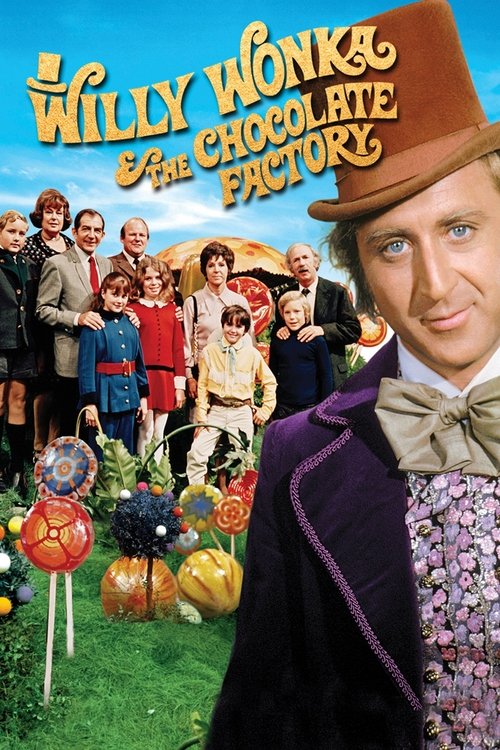
Mel Stuart's 1971 musical fantasy Willy Wonka & the Chocolate Factory imagines what happens when a reclusive candy genius opens his mysterious factory to five lucky children. Gene Wilder plays Willy Wonka with a perfect blend of whimsy and menace, while Peter Ostrum's Charlie Bucket anchors the story in genuine warmth. Jack Albertson brings spirited energy as Grandpa Joe, and the supporting cast includes Roy Kinnear as Mr. Salt, Julie Dawn Cole as the spoiled Veruca Salt, and Leonard Stone as Mr. Beauregarde. Shot on a $3 million budget, the film earned $4 million at the box office and holds a 7.5/10 rating on IMDb. Though initially a modest success, it grew into a family classic, praised for its imaginative sets, memorable songs, and Wilder's iconic performance.
The Quaker Oats Company financed the production to promote their new Wonka chocolate bar, giving director Mel Stuart unusual creative freedom. The factory sets were built in a Munich warehouse, and the chocolate river used 150,000 gallons of water mixed with cream and food coloring. Roald Dahl, who wrote the screenplay from his own novel, later expressed dissatisfaction with the adaptation, particularly the expanded role of Slugworth and the musical numbers. Despite this, the film was inducted into the National Film Registry in 2014 for its cultural significance.
Availability and pricing can change. Confirm on the provider's site before purchasing.
Charlie Bucket lives with his mother and four bedridden grandparents in a cramped, dilapidated house on the edge of town. The family is desperately poor, Charlie's father is dead, and his mother works long hours as a laundress. Despite their hardships, the Buckets share a warm, loving bond. Charlie's only luxury is a single Wonka chocolate bar on his birthday each year, a treat he savors slowly.
Across town, the mysterious Willy Wonka has closed his chocolate factory for years, firing all his workers after spies stole his secret recipes. Suddenly, Wonka announces a global contest: five Golden Tickets hidden inside Wonka bars will grant the finders a lifetime supply of chocolate and a guided tour of the factory. The world goes mad with excitement. Children and adults alike buy bars by the dozen, and news reports track each ticket discovery.
The first four winners embody different flaws. Augustus Gloop, a gluttonous boy from Germany, finds his ticket while stuffing chocolate into his mouth. Veruca Salt, a spoiled rich girl, demands her father use his factory workers to find hers. Violet Beauregarde, a competitive gum-chewer, sets a world record while discovering her ticket. Mike Teevee, a television-obsessed brat, uses his knowledge of probability to find his.
Charlie's family holds out hope. For his birthday, he receives a single Wonka bar, no ticket. Disappointed but not bitter, Charlie later finds a dollar bill in the street. He buys a Wonka bar and, unwrapping it, discovers the fifth Golden Ticket. The news spreads quickly, and a local candy shop owner, Bill, warns Charlie that others will try to steal it. Charlie rushes home, where Grandpa Joe springs out of bed for the first time in years, dancing with joy. The two prepare for the tour.
On the appointed day, the five children and their chaperones gather outside the factory gates. Wonka emerges, walking with a cane and a limp, then suddenly performs a forward roll, revealing his playful, unpredictable nature. He leads the group into a wondrous world of edible grass, chocolate waterfalls, and rivers of molten chocolate. The Oompa-Loompas, tiny orange-skinned workers, maintain the factory and sing cautionary songs about each child's downfall.
Augustus falls into the chocolate river while drinking from it and is sucked up a pipe. Violet chews an experimental three-course dinner gum and swells into a giant blueberry. Veruca demands a golden-egg-laying goose and is thrown down a garbage chute. Mike Teevee is shrunk to miniature size after misusing Wonka's television chocolate technology. One by one, the children are removed from the tour, leaving only Charlie and Grandpa Joe.
Wonka grows increasingly agitated, especially when Charlie and Grandpa Joe disobey his instructions and sample Fizzy Lifting Drinks, a carbonated beverage that makes them float. The story builds toward a final confrontation in Wonka's office, where the true nature of the contest is revealed.
Official 4K Trailer
Original Theatrical Trailer
Digital Trailer
Critical Consensus
Critics praise Willy Wonka & the Chocolate Factory as a darkly whimsical musical fantasy anchored by Gene Wilder's iconic, mercurial performance. The film's imaginative sets, memorable songs, and moral fable structure have made it a beloved family classic, though some note its uneven pacing and Roald Dahl's own dissatisfaction with the adaptation.
“Gene Wilder's Willy Wonka is one of the most intriguing characters in children's cinema, a man who seems both benevolent and dangerous, often at the same time.”
Roger Ebert
Chicago Sun-Times
“The movie is a sometimes charming, sometimes heavy-handed musical fantasy that will probably delight children and leave their parents wishing they'd stayed home.”
Vincent Canby
The New York Times
“Gene Wilder is perfectly cast as the eccentric candy maker, bringing a touch of menace to his whimsy that keeps the audience guessing.”
Variety Staff
Variety
“The film is a visual treat, with sets that are genuinely imaginative and a score that includes at least one song ('Pure Imagination') that deserves to become a standard.”
Charles Champlin
Los Angeles Times
Peter Ostrum
Charlie
Gene Wilder
Willy Wonka
Jack Albertson
Grandpa Joe
Roy Kinnear
Mr. Salt
Julie Dawn Cole
Veruca Salt
Leonard Stone
Mr. Beauregarde
Denise Nickerson
Violet Beauregarde
Paris Themmen
Mike Teevee
Michael Böllner
Augustus Gloop
Diana Sowle
Mrs. Bucket
Günter Meisner
Mr. Slugworth / Mr. Wilkinson
Aubrey Woods
Bill the Candy Shop Owner
David Battley
Mr. Turkentine
Director
Mel Stuart
Writers
Roald Dahl, Anthony Newley, Leslie Bricusse
Composers
Leslie Bricusse, Walter Scharf
Cinematographer
Arthur Ibbetson
Producers
David L. Wolper, Stan Margulies
Academy Award for Best Original Score (1972)
Best Original Score: Nominated
Academy Award for Best Original Song (1972)
Best Original Song: Nominated
Golden Globe for Best Actor in a Musical or Comedy (1972)
Best Actor in a Musical or Comedy: Nominated
BAFTA Award for Best Cinematography (1972)
Best Cinematography: Nominated
National Film Registry (2014)
Culturally, historically, or aesthetically significant: Inducted
Join the community
fans discussing