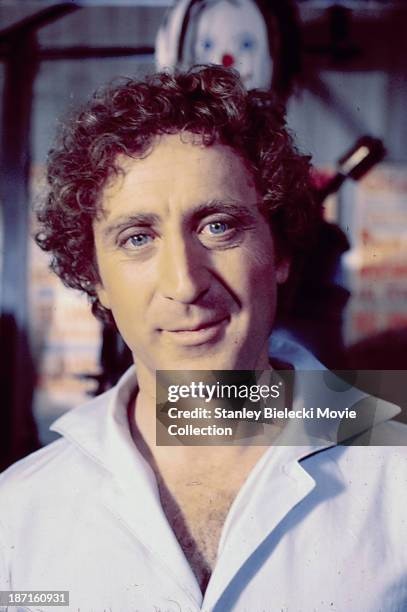
Gene Wilder
 United States
Also known as: Jerome Silberman
Birthday
June 11, 1933
Birth Sign
Gemini
Birthplace
Milwaukee, Wisconsin
Age
Died at 83
Height
5 ft 10 in (1.78 m)
About
Gene Wilder was an American actor, comedian, writer, and director whose career spanned four decades. Born Jerome Silberman on June 11, 1933, in Milwaukee, Wisconsin, he became one of the most cherished comic performers of the 20th century, known for his wide-eyed intensity, gentle vulnerability, and impeccable timing. His most famous roles include Leopold Bloom in The Producers, Willy Wonka in Willy Wonka & the Chocolate Factory, the Waco Kid in Blazing Saddles, and Dr. Frederick Frankenstein in Young Frankenstein. Wilder earned two Academy Award nominations, one for acting, one for screenwriting, and won a Primetime Emmy Award for his guest role on Will & Grace in 2003. He also wrote several books, including the memoir Kiss Me Like a Stranger and the novel My French Whore. Beyond the screen, Wilder was a devoted philanthropist, co-founding Gilda's Club, a cancer support network named after his late wife Gilda Radner. He also co-founded the Gilda Radner Ovarian Cancer Detection Center in Los Angeles. His legacy endures through his films, which continue to delight new generations, and through the ongoing work of the organizations he helped establish. Wilder died on August 29, 2016, at age 83 from complications of non-Hodgkin lymphoma, leaving behind a body of work that remains beloved worldwide.
Early Life & Background
Wilder's path to comedy began at age eight when his mother was diagnosed with rheumatic fever. A doctor warned the boy that arguing could be fatal to her and told him to make her laugh instead. That directive sparked a lifelong devotion to performance; Wilder began improvising accents and skits to lift her spirits. At 11, he saw his older sister Corinne on stage and asked to study acting; told to wait until he was 13, he called a teacher the very next day after his thirteenth birthday and began formal lessons, studying for two years.
His parents sent him to the Black-Foxe Military Institute in California, where he endured anti-Semitic bullying as the only Jewish student. After they withdrew him, he graduated from Washington High School in Milwaukee in 1951. He then earned a BA in Communication and Theatre Arts from the University of Iowa in 1955, followed by a year studying theater and fencing at the Bristol Old Vic Theatre School in England. After returning to the US, he studied the Stanislavski method and was promptly drafted into the US Army, serving two years as a medic in Pennsylvania. In New York, he taught fencing to support himself while studying at Lee Strasberg's Actor's Studio, which he joined in 1961. That same year, he made his Broadway debut in The Complaisant Lover and won the Clarence Derwent Award for most promising newcomer. He also appeared in serious dramas on Broadway including One Flew Over the Cuckoo's Nest and Mother Courage and Her Children.
Career Growth
Wilder's screen debut came in a 1961 episode of The Play of the Week, and his first film role was a small part as a hostage in Bonnie and Clyde (1967). His career-defining breakthrough arrived later that year when he was cast as Leopold Bloom in Mel Brooks's The Producers. The role earned him an Academy Award nomination for Best Supporting Actor and launched a legendary collaboration with Brooks. Wilder met Brooks through Anne Bancroft, whom he was performing alongside in Bertolt Brecht's Mother Courage on Broadway in 1963; Bancroft introduced the two backstage.
In 1971, Wilder portrayed Willy Wonka in Willy Wonka & the Chocolate Factory, a role that became one of the most iconic in cinema. He then starred in Woody Allen's Everything You Always Wanted to Know About Sex (1972) before a banner year in 1974: he played the Waco Kid in Blazing Saddles and conceived, co-wrote, and starred in Young Frankenstein. The latter earned him a second Oscar nomination, this time for Best Adapted Screenplay. Wilder formed a successful comedy partnership with Richard Pryor, co-starring in Silver Streak (1976), Stir Crazy (1980), See No Evil, Hear No Evil (1989), and Another You (1991). He also wrote, directed, and starred in several films, including The Adventure of Sherlock Holmes' Smarter Brother (1975), The World's Greatest Lover (1977), The Woman in Red (1984), and Haunted Honeymoon (1986). After retiring from acting, Wilder turned to writing, publishing his memoir Kiss Me Like a Stranger in 2005 and several other books. His last acting performance was a guest role on Will & Grace in 2003, for which he won a Primetime Emmy Award for Outstanding Guest Actor in a Comedy Series.
Career Timeline
Public Image & Style
Wilder was celebrated for his wild-eyed energy, gentle demeanor, and unique blend of vulnerability and manic humor. His characters often displayed a neurotic, anxious quality combined with sweetness and warmth, a combination that made him instantly recognizable and deeply beloved. Media consistently portrayed him as one of America's most cherished comic actors, noting his ability to balance absurd comedy with genuine emotional depth. He is remembered as a gentle soul who brought joy to millions. Wilder's fan base spans generations, with annual birthday tributes on June 11 common on social media. The official Gene Wilder accounts, managed by his widow Karen Boyer, share archival photos and memories in a warm, nostalgic tone. He received a star on the Hollywood Walk of Fame posthumously and was awarded an honorary doctorate from the University of Iowa in 2005.
Fame & Fandom (iFAMOUS Rankings)
Gene Wilder holds no current placement in the iFANN Global Top 1,000 rankings or any scope-specific top lists as of August 2026. While the iFANN evaluation confirms his enduring cultural footprint, he does not currently occupy a numbered slot in the published hierarchy. His legacy remains anchored in a fanbase that lacks a formal moniker, often simply referred to as admirers of Gene Wilder or devotees of his iconic turn as Willy Wonka. Unlike modern phenomena with branded tribes like the Beyhive, Wilder's supporters are united by a shared reverence for his specific brand of neurotic charm and manic vulnerability. This community is highly organized around preserving the integrity of his 1971 performance, frequently defending it against reboots and newer adaptations on social media platforms. Fans engage in rituals that involve reciting lines from Young Frankenstein and Willy Wonka & the Chocolate Factory, creating an inside language that connects generations. The interaction between Wilder and his audience was defined by his later withdrawal from public life, yet his passing sparked spontaneous charity drives and tributes that highlighted his charitable nature. A significant chapter in his modern legend emerged in mid-2026 when Netflix partnered with ElevenLabs to recreate his voice for the series Wonka's Golden Ticket, a project that reignited debates about digital resurrection while securing the blessing of his estate. Despite the absence of a ranked position, the consensus among critics and fans alike remains that his portrayal of the eccentric candy maker is untouchable, cementing his status as the definitive version of the character fifty-five years after its release.
Interesting Facts and Legends
The actor adopted his stage name from two literary sources: Gene from Eugene Gant in Thomas Wolfe's Look Homeward, Angel and Wilder from playwright Thornton Wilder. He served as a medic in the US Army for two years after college and supported himself by teaching fencing in New York City before his acting career took off. At age 51, Wilder began painting watercolors and continued throughout his later years; his artwork has been sold and exhibited. Later in life, he learned to tap dance with his wife Karen. In 2001, he donated a significant collection of scripts, correspondence, and film memorabilia to the University of Iowa Libraries, including a draft of Young Frankenstein. Wilder was 5 feet 10½ inches tall. A legendary moment from his career involves his insistence that his first entrance in Willy Wonka & the Chocolate Factory be hidden behind a large door, revealing himself only amidst smoke and bubbles to preserve the character's mystery. Another verified historical fact marks his debut in the 1967 crime classic Bonnie and Clyde, where his brief appearance as Buck Barrow launched his career into the pantheon of great American actors. His work on Young Frankenstein, particularly the line Put 'em up!, has become part of the cultural lexicon, quoted verbatim by fans decades later.
Notable Quotes
“I was having trouble with one little section of the play, and he gave me tips on how to act. He said, 'That's a song and dance. He's proselytizing about communism. Just skip over it, sing and dance over it, and get on to the good stuff.' And he was right.”
“Don't ever argue with your mother... you might kill her. Try to make her laugh.”
“I don't know what the secret to comedy is, but I know that you can't force it.”
“Willy Wonka is a very strange character. He's not a good guy, he's not a bad guy. He's a mystery.”
“I never wanted to be a comedian. I wanted to be an actor who made people laugh.”
Family & Personal Life
Wilder was born to William J. Silberman, a Russian Jewish immigrant who worked as a manufacturer and salesman of novelty items, and Jeanne Baer Silberman, who was of Polish descent. He had one older sister, Corinne. At age eight, his mother was diagnosed with rheumatic fever, which led to his early comedic efforts to make her laugh. Wilder had no biological children but was a devoted stepfather to Katherine, whom he adopted during his second marriage. He was married three times: first to theater actress Mary Mercier (1960–1965), then to Mary Joan Schutz (1967–1974, who had a daughter Katherine whom Wilder adopted), and finally to Gilda Radner (1984 until her death in 1989). In 1991, he married Karen Boyer, a wardrobe supervisor he met on a film set; they remained together until his death.
Notable Connections
Wilder is closely associated with director Mel Brooks, with whom he made The Producers, Blazing Saddles, and Young Frankenstein. He formed a celebrated comedy duo with Richard Pryor, starring in four films together. His third wife, Gilda Radner, was his co-star in The Woman in Red and Haunted Honeymoon. He also frequently worked with actors Marty Feldman, Madeline Kahn, and Dom DeLuise.
Relationships & Dating History
Wilder married three times. His first wife was theater actress Mary Mercier (married 1960, divorced 1965). In 1967 he married Mary Joan Schutz, who had a daughter, Katherine, whom Wilder adopted; they divorced in 1974. Wilder met Gilda Radner in 1982 while filming Hanky-Panky; they married on September 18, 1984, and co-starred in The Woman in Red (1984) and Haunted Honeymoon (1986). Radner died of ovarian cancer on May 20, 1989. Her death profoundly affected Wilder and led him to co-found the Gilda Radner Ovarian Cancer Detection Center and Gilda's Club. On September 8, 1991, Wilder married Karen Boyer, a wardrobe supervisor he met on a film set. They remained together until his death. As of 2026, Wilder is deceased; he was married to Karen Boyer at the time of his death. Boyer manages his estate and legacy.
- MarriedMary Mercier1960 - 1965Wilder's first marriage; she was a theater actress. No children.
- MarriedMary Joan Schutz1967 - 1974Wilder adopted Schutz's daughter Katherine. Divorced in 1974.
- MarriedGilda Radner1984 - 1989Married September 18, 1984. Radner died of ovarian cancer on May 20, 1989.
- MarriedKaren Boyer1991 - 2016CurrentMarried September 8, 1991. Wardrobe supervisor. Remained married until Wilder's death.
Death & Aftermath
Died
August 29, 2016 (aged 83)
Death Place
Greenwich Village, New York City, USA
Cause of Death
Complications from Alzheimer's disease
The release of the documentary Gene Wilder: A Life in Comedy marked a posthumous celebration of his career, while later digital projects sparked discussion regarding the ethics of AI recreations of his likeness. Tributes poured in from peers like Mel Brooks, who called him a genius, and institutions including the Academy of Motion Picture Arts and Sciences held moments of silence as streaming viewership for classics like Willy Wonka & the Chocolate Factory surged. Fan vigils spontaneously gathered outside his former homes in New York and Los Angeles to leave flowers and memorabilia honoring his legacy. Gene Wilder passed away on August 29, 2016, at his home in Greenwich Village, New York City, after a long battle with Alzheimer's disease that had led him to withdraw from public life since 2010.
His wife Karen Webb Wilder confirmed the cause as complications from advanced dementia, noting he had been under hospice care. A private funeral service was held shortly after his death, though details regarding the exact date and attendees remained confidential to protect the family's privacy. He was cremated, and his ashes were scattered in an undisclosed location consistent with his wishes for a low-profile farewell. The estate, managed by his widow, continues to generate revenue through licensing and residuals.
Net Worth (Estate Value)
$20 Million
iFANN Editorial Team estimate
iFANN currently estimates Gene Wilder's net worth at $20 Million. Following his death in 2016, his estate, managed by his widow Karen Boyer, has continued to generate revenue through ongoing licensing, streaming residuals, and merchandise tied to his filmography. Major sources include royalties from Willy Wonka & the Chocolate Factory, Young Frankenstein, Blazing Saddles, and The Producers. The estate also earns from book royalties on his memoir Kiss Me Like a Stranger and other publications, as well as sales of his watercolor paintings. The 2023 documentary Remembering Gene Wilder added further income. As of 2026, the estate's value is estimated at approximately $20 Million, consistent with its posthumous valuation, with estimates ranging between $15-25 million.
Awards Won (5)
Wilder won a Primetime Emmy Award for Outstanding Guest Actor in a Comedy Series for his 2003 appearance on Will & Grace. He received two Academy Award nominations: Best Supporting Actor for The Producers (1968) and Best Adapted Screenplay for Young Frankenstein (1975). He also won the Clarence Derwent Award for Most Promising Male Newcomer for his Broadway debut in The Complaisant Lover (1961).
2003 · Outstanding Guest Actor in a Comedy Series
Will & Grace
2003 · Outstanding Guest Actor in a Comedy Series
Will & Grace
Known For
Willy Wonka & the Chocolate Factory
1971 · Willy Wonka
Young Frankenstein
1974 · Dr. Frederick Frankenstein
Blazing Saddles
1974 · Waco Kid
The Producers
1967 · Leopold Bloom
Silver Streak
1976 · George Caldwell
Stir Crazy
1980 · Skip Donahue
Keywords
Sources
Quick Facts
- Profession
- Actor, Comedian, Writer
- Born
- +1933-06-11
- Birthplace
- Milwaukee, Wisconsin
- Died
- +2016-08-29
- Death Place
- Stamford, Connecticut
- Gender
- Male
- Spouse
- Karen Boyer
- Birth Sign
- Gemini
- Height
- 5 ft 10 in (1.78 m)
Personal Details
- Full Name
- Jerome Silberman
- Height
- 5 ft 10 in (1.78 m)
- Spouse
- Karen Boyer
- Children
- 1 stepdaughter (Katherine)
- Education
- University of Iowa (BA, 1955); Bristol Old Vic Theatre School; Actor's Studio
Filmography
39
Total
28
Film
11
TV
Frequently Asked Questions
How old was Gene Wilder when he died?
What is Gene Wilder's net worth in 2026?
Who was Gene Wilder married to?
What is Gene Wilder best known for?
Did Gene Wilder write any books?
Social Media
Similar People
Join the community
fans discussing