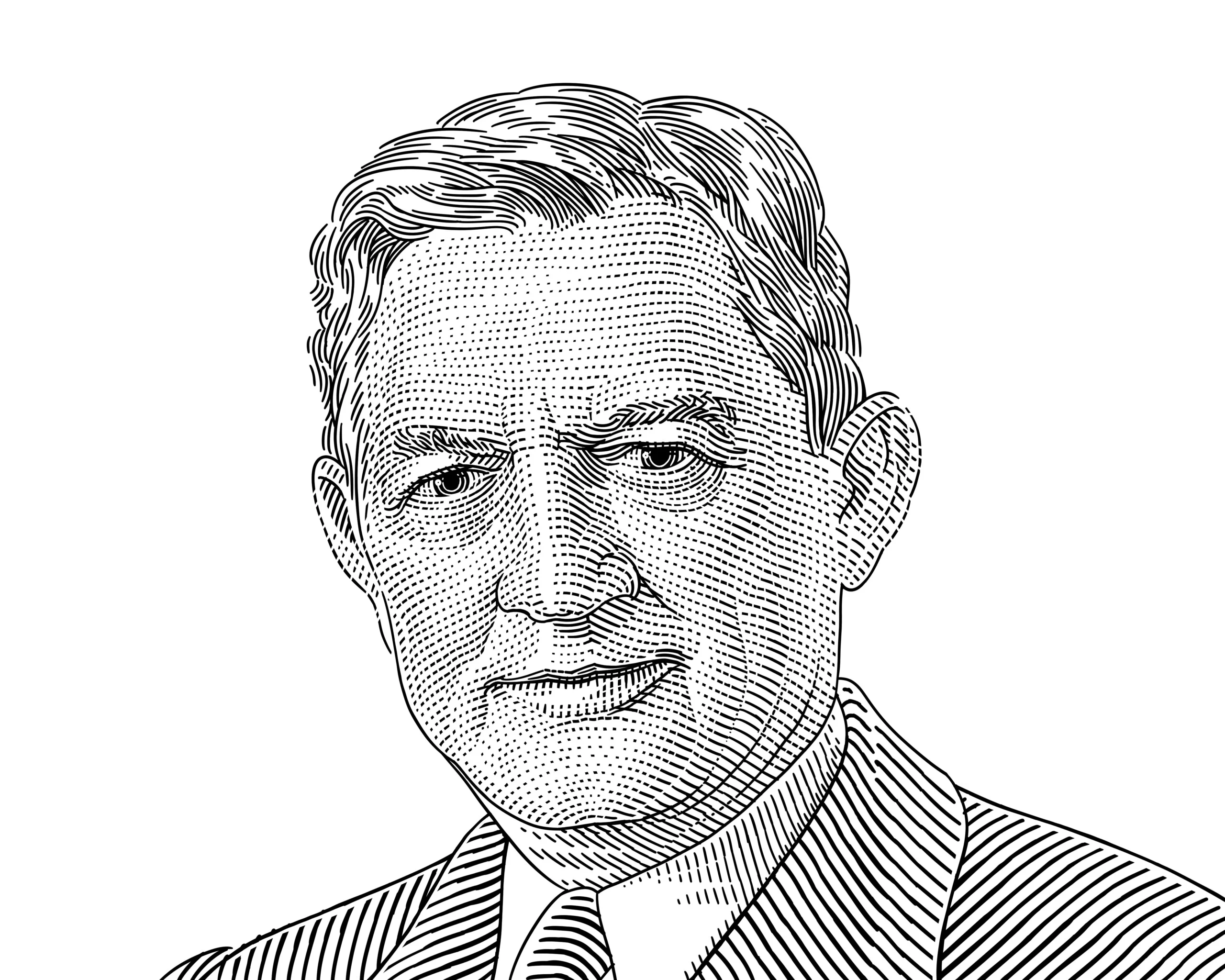
Willis Carrier
 Angola
engineer•inventor•businessperson
Also known as: Willis Haviland Carrier
Birthday
November 26, 1876
Birth Sign
Sagittarius
Birthplace
Angola, New York, USA
Age
Died at 73
About
Willis Haviland Carrier was an American engineer and inventor, and the man most often credited with creating modern air conditioning. His 1902 system for a Brooklyn printing plant, built to cool and dehumidify air, became the template for an industry. He held more than 80 patents, founded the Carrier Engineering Corporation in 1915, and gave engineers the psychrometric chart and the dew point control method that still underpin HVAC design.
He died on October 7, 1950, in New York City at age 73. The company he built remains one of the largest climate control manufacturers in the world, and his name is still on the equipment.
Early Life & Background
Carrier was born on a farm near Angola, New York, on November 26, 1876, to Duane Williams Carrier and Elizabeth R. Haviland. He grew up close to Lake Erie in a household of modest means. His mother was mechanically inclined and encouraged his early tinkering with household devices, and he showed a sharp aptitude for mathematics. He later described sitting up at night working through calculations.
A scholarship took him to Cornell University, where he earned a degree in mechanical engineering in 1901. That same year he joined the Buffalo Forge Company in Buffalo, New York, at a salary of $10 a week. The figure has followed him ever since; a 2026 Buffalo News profile called him the $10-a-week Buffalonian who invented air conditioning. At Buffalo Forge he designed heating systems and grew interested in humidity control, a field that was then barely understood.
The problem that made his name arrived in 1902. A Brooklyn printing plant, Sackett-Wilhelms Lithographing and Publishing, was losing money because summer humidity warped paper and threw color printing out of alignment. Carrier designed a system that passed air over coils chilled with cold water, cooling and dehumidifying it. The date was July 17, 1902, and the industry has treated it as its founding moment ever since.
Career Growth
The Brooklyn installation worked, and Carrier kept building on it. On January 2, 1906, he received a patent for his dew point control method, a foundational concept in psychrometrics. In 1911 he published Rational Psychrometric Formulae, the paper that gave air conditioning a scientific footing. The psychrometric chart he developed is still used by HVAC engineers.
In 1915 he and several Buffalo Forge colleagues founded the Carrier Engineering Corporation, capitalized at $35,000. The company grew as air conditioning moved out of factories and into movie theaters, department stores and offices through the 1920s. In 1928 Carrier developed the first residential Weathermaker home air conditioner. The business merged into Carrier Corporation in 1930 and expanded internationally through the 1930s and 1940s, with equipment installed in landmark buildings including the U.S. Capitol. Carrier died in 1950 as chairman of the company he had built.
Career Timeline
Public Image & Style
The press of his day cast Carrier as the man who put weather indoors. Modern coverage frames him as the accidental architect of the modern world, a sober engineer-industrialist rather than a celebrity. His image is tied to the printing plant, the coils and the psychrometric chart, not to any personal mythology. The 2026 retrospectives have reinforced that picture, emphasizing that air conditioning was invented to solve a printing problem, not human comfort.
Fame & Fandom (iFAMOUS Rankings)
iFANN has not yet collected fame data for Willis Carrier, so no ranking is available. He is a historical figure rather than a celebrity, and his fame rests on the 1902 invention and the company that still carries his name. He does not appear on the September 2026 iFAMOUS Rankings flagship list.
There is no formal fandom and no fan campaign. The closest analogue is the affection of the HVAC industry, which marks his birthday with posts from utilities and trade groups. His audience is engineers, historians and anyone curious about the machine that made hot climates livable.
Interesting Facts and Legends
The story fans of engineering history tell first is the $10-a-week engineer who solved a printing plant's humidity problem and accidentally invented comfort cooling. The folklore that he set out to keep people cool is false; the problem was paper.
He also developed sound-absorbing sonic curtains in 1919, a side venture into acoustics. His name lives on in the Carrier brand, and in 2026 a wave of global retrospectives from outlets in the U.S., India and Korea revived the 1902 printing-plant story for new audiences.
Family & Personal Life
Carrier married Edith Claire Seymour in 1902, the same year as his breakthrough. They had children, though the names and dates are thinly documented in the sources available. After Edith's death he remarried. He was a lifelong Episcopalian and a Republican. Family life stayed private and rarely appears in the engineering histories, which focus on the work.
Notable Connections
Relationships & Dating History
Carrier's public romantic history is limited to his marriages. He married Edith Claire Seymour in 1902, the same year as his breakthrough. The marriage ended with her death, and he later remarried. No tabloid record or high-profile flings exist. He died in 1950, so no living-partner status applies as of 2026.
- MarriedEdith Claire Seymour1902 - presentMarried in 1902; the marriage ended with her death.
Death & Aftermath
Died
October 7, 1950 (aged 73)
Death Place
New York City, New York, USA
Cause of Death
Undisclosed
Willis Carrier died on October 7, 1950, in New York City. He was 73. The cause was never made public, and the sources that record his passing do not describe his final days or any funeral arrangements.
What followed was institutional rather than personal. The company he had co-founded in 1915, Carrier Engineering Corporation, carried his name forward and kept the July 17, 1902 date as the founding moment of the air-conditioning industry. The firm's own histories, along with profiles from ASME and the Lemelson-MIT program, have repeated that origin story far more often than they have marked the anniversary of his death.
Commemoration of his life has centered on the work. The National Inventors Hall of Fame inducted him, and the American Society of Mechanical Engineers recognized him with the Rufus Oldenburger Medal. The Carrier brand itself, still attached to one of the world's largest HVAC manufacturers, functions as the most visible memorial. No foundation or major posthumous release is documented in the sources available.
In 2026, a wave of retrospectives from outlets including The Wall Street Journal, NewsNation and Korea's MK revived the story of the printing plant and the $10-a-week engineer, treating the 1902 invention as an accidental cornerstone of modern life. Those pieces did more to shape his public memory than any ceremony at the time of his death.
Net Worth (Estate Value)
$5 Million
iFANN Editorial Team estimate
No credible modern estimate of Willis Carrier's personal estate exists. He died in 1950, and the net worth sites that carry living celebrities do not list a reliable figure for him. The iFANN Editorial Team's analysis of his career earnings and the company he founded points to roughly $5 Million as a present-day equivalent, but this is an editorial estimate rather than a documented estate valuation.
His real financial legacy is the Carrier Corporation. The company he co-founded in 1915 with $35,000 in capital grew into one of the world's largest HVAC manufacturers, and the Carrier name remains on equipment sold around the globe. That corporate success, not a personal fortune, is what the modern curiosity about his net worth reflects.
Awards Won (2)
Carrier received the ASME Rufus Oldenburger Medal posthumously and was inducted into the National Inventors Hall of Fame. His name is carried by the Carrier corporation and the Willis Carrier brand.
Engineering
Contributions to automatic control
Honor
Air conditioning
Known For
Modern air conditioning
1902 · Inventor
Dew point control patent
1906 · Inventor
Carrier Engineering Corporation
1915 · Co-founder
Keywords
Sources
Quick Facts
- Profession
- engineer, inventor, businessperson
- Born
- November 26, 1876
- Birthplace
- Angola, New York, USA
- Died
- October 7, 1950
- Death Place
- New York City, New York, USA
- Gender
- Male
- Birth Sign
- Sagittarius
- Education
- Cornell University, 1901
Personal Details
- Full Name
- Willis Haviland Carrier
- Spouse
- Edith Claire Seymour
- Children
- Children with Edith Claire Seymour (names not widely documented)
- Education
- Cornell University (B.S. Mechanical Engineering, 1901)
Frequently Asked Questions
What is Willis Carrier famous for?
How did Willis Carrier die?
Did Willis Carrier have children?
Who is the real inventor of air conditioning?
What was Willis Carrier's net worth?
Join the community
fans discussing