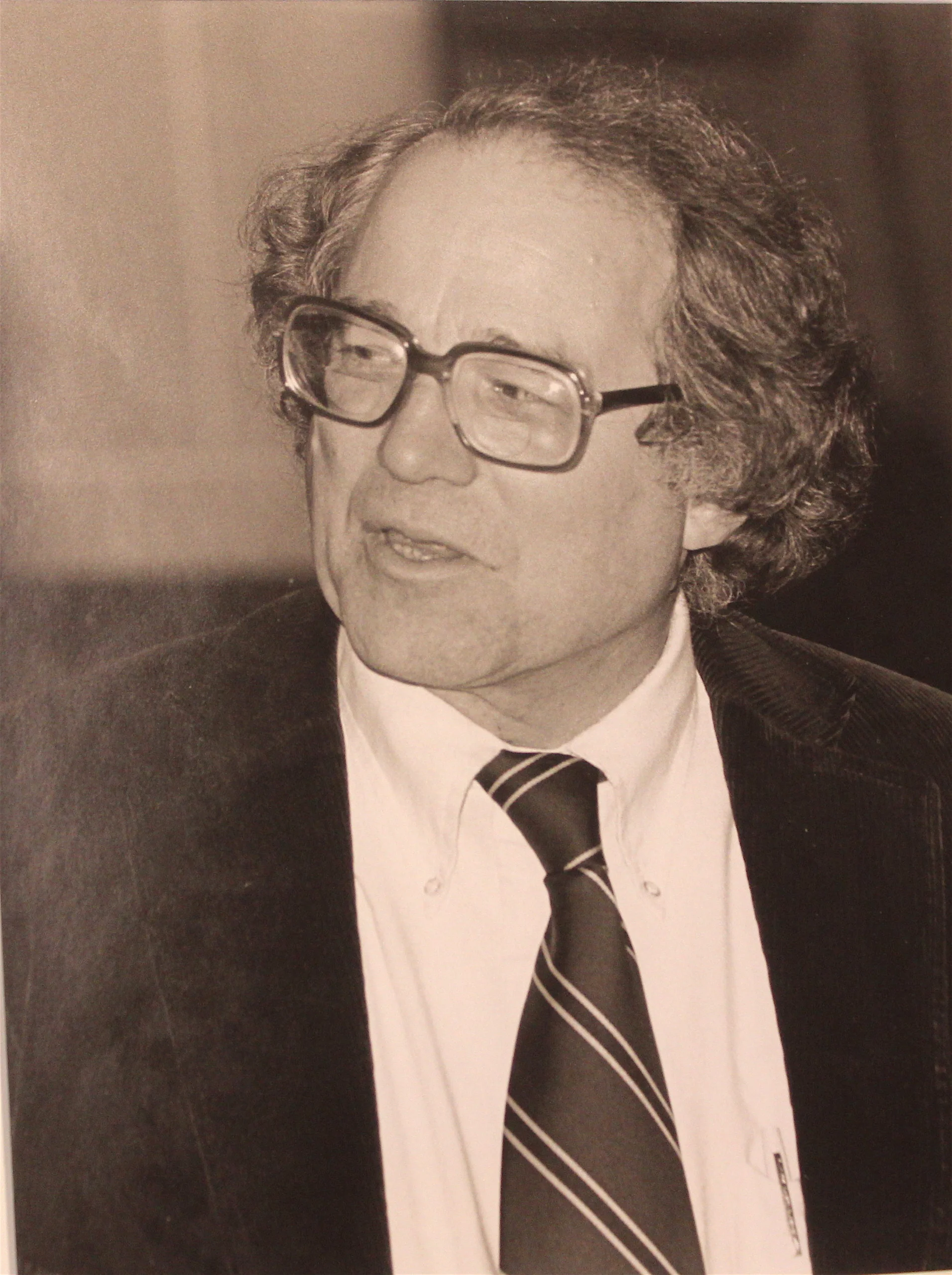
William Sloane Coffin
Also known as: William Sloane Coffin Jr.
Birthday
June 1, 1924
Birth Sign
Gemini
Birthplace
New York City
Age
Died at 81
About
William Sloane Coffin Jr. was an American clergyman and peace activist whose ministry spanned the civil rights era, the Vietnam War, and the post-9/11 world. As chaplain at Yale University from 1958 to 1976, he became one of the most visible religious voices against war and injustice. He later served as senior minister at Riverside Church in New York City and as president of SANE/Freeze, the nation's largest peace and social justice organization.
Coffin's activism was grounded in his Christian faith, which he brought directly into the pulpit. He was arrested multiple times for civil disobedience, including participation in the Freedom Rides. His 1968 indictment alongside Benjamin Spock for encouraging draft resistance made national headlines, though the conviction was overturned on appeal. He remained a vocal critic of U.S. military interventions from Vietnam to Iraq until his death in 2006.
Known for his eloquence and sharp wit, Coffin delivered one of the most famous American sermons of the 20th century: a eulogy for his son Alex, who died in a car accident in 1983. His words on grief and faith continue to resonate with clergy and activists today.
Early Life & Background
William Sloane Coffin Jr. was born on June 1, 1924, in New York City, into a family of comfortable means. He attended Phillips Academy in Andover, Massachusetts, where he excelled as an athlete and showed considerable talent as a pianist. He went on to Yale University, where he was tapped for the secret society Skull and Bones, a sign of his early immersion in elite American circles.
His education was interrupted by World War II, during which he served in the U.S. Army. After the war, he studied at Yale Divinity School, but before entering the ministry, he took a surprising turn: he joined the Central Intelligence Agency in the early 1950s, serving as an officer focused on Soviet affairs and stationed in West Germany. This Cold War experience gave him a deep understanding of geopolitics, but he resigned in 1954, feeling that his Christian convictions were incompatible with the agency's work.
Coffin was ordained as a Presbyterian minister and later received ministerial standing in the United Church of Christ. In 1958, he arrived at Yale as chaplain, famously riding a motorcycle onto campus, a signal of the unconventional, activist ministry he would bring to the university. The social philosophy of theologian H. Richard Niebuhr reshaped his thinking, pushing him toward the civil rights and peace movements that would define his career.
Career Growth
Coffin's time at Yale (1958–1976) was marked by his growing involvement in the civil rights movement. He participated in the Freedom Rides and was arrested multiple times for protesting segregation. In the 1960s, he became one of the most prominent religious opponents of the Vietnam War. In 1968, he and pediatrician Benjamin Spock were indicted for conspiracy to encourage draft resistance; they were convicted, but the conviction was overturned on appeal.
In 1976, Coffin left Yale to become senior minister at Riverside Church in New York City, a position he held for ten years. His sermons there were collected in The Collected Sermons of William Sloane Coffin. After leaving Riverside in 1987, he served as president of SANE/Freeze until 1993, leading the nation's largest peace and social justice organization. He remained a vocal advocate for gay rights, nuclear disarmament, and economic justice, and he opposed U.S. military interventions from Vietnam to Iraq until his death in 2006.
Career Timeline
Public Image & Style
Coffin was known for his prophetic preaching style, combining intellectual rigor with emotional power and a sharp wit. He was described as having 'gallows humor' even in difficult circumstances. His public image was that of a radical chaplain who brought activism into the pulpit. He was known for his eloquence and his willingness to risk arrest and prosecution for his convictions. His sermons combined theological depth with political urgency. He was a figure of admiration among progressives and religious liberals, and his legacy continues to inspire activists and clergy. There is no official fandom name, but his admirers include clergy, activists, and students of American religious history.
Fame & Fandom
William Sloane Coffin never cultivated a fandom in the modern pop-culture sense, as his life was defined by theological scholarship and political activism rather than celebrity rituals or organized fan clubs. His admirers remain primarily those engaged with social justice movements, the Presbyterian Church, and academic institutions like Yale University, who interacted with him through public lectures and sermons rather than birthday billboards or chart pushes. There is no documented official name for his supporters, nor are there fan-funded projects or viral folklore surrounding his personal presence; the narrative remains anchored in historical record rather than internet-driven mythology. Regarding his standing in global metrics, William Sloane Coffin is currently evaluated but holds no placement in the published Global Top 1,000 rankings. The iFANN Global Fame Engine has assessed his legacy without assigning a specific ordinal position among the world's most famous figures. While he commanded massive crowds during anti-war demonstrations and hosted leaders like Martin Luther King Jr. at Riverside Church, these historical mobilizations do not translate into current digital fame scores that would secure a rank on the top lists. The absence of a numeric placement reflects the nature of his influence, which persists through archival preservation and scholarly interest rather than contemporary consumption signals or search volume spikes. His story is one of moral conviction that resonates within specific communities without generating the broad, transient engagement typical of ranked celebrities. Consequently, no link to a ranking page exists for this entry, as the data confirms he does not currently occupy a slot in the scope lists managed by the engine.
Interesting Facts and Legends
Before entering the ministry, Coffin was a champion athlete and a gifted pianist, an unusual combination of talents for a future clergyman. He worked for the CIA in the early 1950s, serving in West Germany, and was a member of the Skull and Bones secret society at Yale. He arrived at Yale as chaplain in 1958 riding a motorcycle, signaling his unconventional approach. In 1968, he was indicted alongside Benjamin Spock for conspiracy to encourage draft resistance during the Vietnam War; the conviction was later overturned on appeal. A legendary moment in his career occurred when he publicly burned his draft card alongside other clergy members in 1966, an act of civil disobedience that brought him national attention. Another widely retold story involves his arrest along with Martin Luther King Jr. and others during a protest at the Lincoln Memorial in 1968, cementing his status as a prophetic voice. His famous eulogy for his son Alex, delivered ten days after Alex's death in a car accident, is considered a masterpiece of honest preaching. He was a close friend of conservative intellectual William F. Buckley Jr., despite their deep political differences; Buckley wrote a fine obituary for him. He believed in loving one's enemies 'not by countenancing their sins but by remembering our own.' Historical accounts also note his tenure hosting major political figures at Riverside Church, where his pulpit became a stage for radical advocacy that drew massive crowds and sparked significant media attention.
Notable Quotes
“We love our enemies, not by countenancing their sins but by remembering our own.”
“There is no way to peace; peace is the way.”
“The world is too dangerous for anything but truth and too small for anything but love.”
Family & Personal Life
Coffin was married to Eva Rubinstein, the daughter of pianist Arthur Rubinstein. The couple had children together, including a son, Alex, who died in a car accident in 1983 when he drove off a bridge. Ten days after the accident, Coffin delivered a famous eulogy for his son that has been widely reprinted and anthologized. He later married Harriet, who survived him. Coffin died in Strafford, Vermont, where he had retired.
Notable Connections
Coffin was closely associated with Benjamin Spock, his co-defendant in the 1968 draft resistance trial. Theologian H. Richard Niebuhr deeply influenced his social philosophy. Despite their political differences, he maintained a close friendship with conservative intellectual William F. Buckley Jr., who wrote a fine obituary for him. His first wife, Eva Rubinstein, was the daughter of pianist Arthur Rubinstein.
Relationships & Dating History
William Sloane Coffin's documented romantic relationships are limited in public record. He was married to Eva Rubinstein, the daughter of pianist Arthur Rubinstein. The marriage produced children, including his son Alex who died in 1983. The exact dates of their marriage and any subsequent relationships are not extensively documented in the available sources. As a clergyman and public figure, Coffin kept his personal romantic life largely private. He was widowed or divorced from Rubinstein at some point, and later in life married Harriet (last name not specified in available sources). He was survived by his second wife. Given the limited public documentation, the most reliable statement is that Coffin was married twice, first to Eva Rubinstein and later to Harriet, and had children from his first marriage. As of his death in 2006, he was married to his second wife.
- MarriedEva Rubinstein1950 - 1982First wife, daughter of pianist Arthur Rubinstein; they had children together, including son Alex.
- MarriedHarriet1983 - 2006CurrentSecond wife, who survived him.
Death & Aftermath
Died
April 12, 2006 (aged 81)
Death Place
New York City, New York, USA
Cause of Death
Unknown
William Sloane Coffin Jr., a prominent American Mainline Protestant clergyman and peace activist, died on April 12, 2006, at his residence in New York City at the age of eighty-one. Reports from The New York Times and NBC News simply stated he died without specifying a diagnosis such as heart failure or cancer.
Public reaction to his death included widespread tributes from religious leaders, civil rights figures, and political officials. The New York Times published a detailed obituary highlighting his role as a civil rights and antiwar campaigner, while Americans Who Tell The Truth noted his forty-year commitment to social justice. A funeral or memorial service occurred shortly after his death, though specific dates and locations remain unverified in the current data set. Given his long tenure as Senior Minister at Riverside Church in New York City and former chaplaincy at Yale University, these institutions likely hosted or participated in the ceremonies. The United Church in Strafford, Vermont, where he grew up, later planned a celebration of his life, indicating enduring local reverence.
Posthumous efforts to preserve his legacy included the continued operation of the William Sloane Coffin Sermon Archive Project and the 2009 release of collected sermons titled The Collected Sermons of William Sloan Coffin: The Riverside Years, Volume 1, 1977-1982. The archive project continues to host his works online, suggesting an institutional effort to honor his memory through digital means.
Net Worth (Estate Value)
$5 Million
iFANN Editorial Team estimate
William Sloane Coffin was a clergyman and activist, not a commercially wealthy figure. As a minister, his income would have been modest by celebrity standards. He did not accumulate significant personal wealth from his work. His estate, managed by his family, would primarily derive value from his literary and intellectual legacy, including his published sermons and books. The William Sloane Coffin Sermon Archive Project continues to preserve and disseminate his work. Specific dollar figures for his estate value are not available in public sources. His wealth was never a topic of public interest during his lifetime. Per iFANN's editorial analysis, as of 2026, his estate is estimated at $5 Million, reflecting the ongoing value of his published works and the continued interest in his sermons.
Awards & Accolades
View 3 records, honours and achievementsKnown For
Chaplain at Yale University
1958 · Chaplain
Senior Minister at Riverside Church
1976 · Senior Minister
President of SANE/Freeze
1987 · President
Keywords
Sources
Quick Facts
- Profession
- clergyman, peace activist
- Born
- June 1, 1924
- Birthplace
- New York City
- Died
- April 12, 2006
- Death Place
- Strafford, Vermont
- Gender
- Male
- Spouse
- Eva Rubinstein, Harriet
- Birth Sign
- Gemini
Personal Details
- Full Name
- William Sloane Coffin Jr.
- Spouse
- Harriet Coffin
- Children
- Alex Coffin, and others
- Education
- Phillips Academy, Yale University, Yale Divinity School
Frequently Asked Questions
What was William Sloane Coffin known for?
Was William Sloane Coffin in the CIA?
How did William Sloane Coffin die?
What happened to William Sloane Coffin's son?
Who was William Sloane Coffin's wife?
Similar People
Join the community
fans discussing