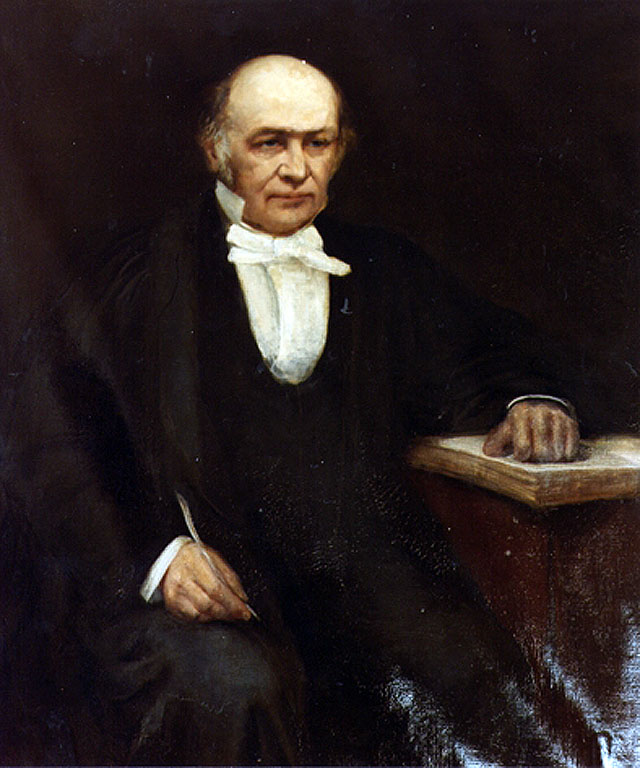
William Rowan Hamilton
 Ireland
mathematician•physicist•astronomer
Birthday
August 4, 1805
Birth Sign
Leo
Birthplace
Dublin, Ireland
Age
Died at 60
About
William Rowan Hamilton was an Irish mathematician, physicist, and astronomer, one of the most influential scientists his country has produced and a towering figure in the history of mathematics. His enduring fame rests largely on his discovery of quaternions, a four-dimensional number system extending complex numbers, which helped lay the groundwork for modern vector analysis and abstract algebra. He also made profound contributions across algebra, optics, and classical mechanics, work that proved foundational to modern theoretical physics, including his reformulation of mechanics, now called Hamiltonian mechanics, which became essential to quantum mechanics and field theories. Brilliant, prolific, and widely honored, he remains a celebrated figure throughout Ireland, commemorated by institutions and an annual walk retracing his quaternion discovery. His work continues to be studied by mathematicians, physicists, and computer scientists worldwide, and the Hamilton Institute at Maynooth University carries forward his academic legacy.
Early Life & Background
William Rowan Hamilton was born on August 4, 1805, at 29 Dominick Street in Dublin, Ireland. He was the fourth of nine children, but at age three, he was sent to live with his uncle, the Reverend James Hamilton, a Church of Ireland clergyman and schoolmaster at Talbots Castle in Trim, County Meath. Under his uncle's diligent oversight, Hamilton proved to be a childhood prodigy, displaying extraordinary linguistic talent from a very young age. By the time he was five, he was proficient in Latin, Greek, and Hebrew. Before his twelfth birthday, he had expanded his linguistic repertoire to include French, Italian, Arabic, Syriac, Persian, and Sanskrit. This remarkable facility with languages even led his family to consider a career for him with the East India Company, prompting his studies in Indian languages.
Tragedy struck his family when his mother died when he was eleven, followed by his father's death two years later, leaving the fourteen-year-old in his uncle's sole care. Amidst these personal changes, a pivotal moment in his intellectual development occurred at sixteen when his uncle presented him with a book on analytic geometry, igniting a lifelong and profound passion for mathematics. He openly expressed this burgeoning dedication to another uncle, famously questioning, "who would not rather have the fame of Archimedes than that of his conqueror Marcellus?", a clear indication of his preference for mathematical genius over classical studies. His exceptional mathematical abilities quickly garnered attention, with a friend sharing his work with the eminent Irish astronomer John Brinkley. Upon reviewing the eighteen-year-old Hamilton's contributions, Brinkley made a prophetic observation, declaring, "This young man, I do not say will be, but is, the first mathematician of his age."
At eighteen, Hamilton entered Trinity College Dublin, where he continued to excel academically. Even with his deep dive into mathematics, he still achieved an "optime" in Classics during his first year, a rare distinction awarded only once in twenty years, showcasing his continued breadth of intellect. Before the end of 1824, he submitted his first significant paper, "On Caustics," to the Royal Irish Academy, marking his formal entry into the world of scientific research and laying the groundwork for his future groundbreaking contributions.
Career Growth
In 1827, while still an undergraduate, Hamilton was appointed Andrews Professor of Astronomy at Trinity College Dublin and director of Dunsink Observatory, positions he held until his death. He earned his B.A. that year and his M.A. in 1837. In 1834, he received the Cunningham Medal from the Royal Irish Academy, followed by a knighthood and the Royal Medal from the Royal Society in 1835. His major contributions include Hamiltonian mechanics, Hamilton's principle, the Hamilton–Jacobi equation, and the Cayley–Hamilton theorem (a special case proved for quaternions). He also made advances in optics, including conical refraction, and developed the icosian game. On October 16, 1843, while walking along the Royal Canal, Hamilton had a flash of insight at Broom Bridge and carved the fundamental formula for quaternions, i² = j² = k² = ijk = −1, into the stone. This discovery extended complex numbers into a four-dimensional algebraic system and forced the abandonment of the commutative law of multiplication. He received a second Cunningham Medal in 1848. His work on mechanics later became central to quantum mechanics and classical field theories such as electromagnetism.
Career Timeline
Public Image & Style
Hamilton is celebrated as Ireland's greatest mathematician and one of the nineteenth century's most important scientific figures. His "eureka moment" at Broom Bridge is among the most famous stories in the history of mathematics, commemorated by an annual Hamilton Walk from Dunsink Observatory to the bridge. He is remembered for "blue-skies" research driven by scientific rigor without commercial limits. The Hamilton Institute at Maynooth University continues his academic legacy. His work is studied by mathematicians, physicists, and computer scientists worldwide.
Fame & Fandom
William Rowan Hamilton currently holds no placement in the iFANN Global Top 1,000 rankings. The iFANN Global Fame Engine evaluated his standing as of August 2026 and determined that he does not occupy a spot on any published scope list or top-tier tiered chart. This absence reflects his status as a historical figure rather than a contemporary celebrity subject to modern ranking mechanics. While he lacks a formal fandom name or an organized group of enthusiasts who campaign for him with billboards and social media rituals, his legacy commands a distinct form of reverence. There are no fan clubs calling themselves 'Hamiltonians' nor viral challenges dedicated to his memory in the way living stars attract such attention. Instead, his audience exists within academic circles and mathematical communities where his contributions remain vital study material. Annual commemorations like Hamilton Day serve as educational observances rather than fan festivals. The Hamilton Prize at Trinity College Dublin honors students annually, and conferences gather leading thinkers to discuss his work, but these are institutional acts of scholarship. His cultural footprint is defined by the enduring power of his ideas rather than the fluctuating metrics of fame. No crowd has ever fainted at his appearance, and no subway ads have been funded by a fanbase because such interactions require a living presence. The silence of his ranking speaks to a different kind of immortality; he is remembered not for what he sold or how many people followed his life, but for the fundamental structures he built that still underpin physics and mathematics today.
Interesting Facts and Legends
William Rowan Hamilton was born exactly at midnight, poised equally between August 3 and 4. He famously carved his quaternion formula into the stone of Broom Bridge with a knife, creating the world's only mathematical graffiti to mark his breakthrough. His original ambition was to investigate the algebra of triplets before discovering quaternions instead. In a letter to his son, he described this discovery as an electric current that closed and sent a spark flashing forth. Hamilton also invented the icosian calculus to investigate closed edge paths on a dodecahedron that visit each vertex exactly once. He served as a Fellow of the Royal Astronomical Society throughout his career. A legendary moment from his life involves the epiphany he experienced while walking with his wife along the Royal Canal in Dublin. Overwhelmed by the sudden realization of extending complex numbers into four dimensions, he inscribed the equation $i^2 = j^2 = k^2 = ijk = -1$ onto the bridge stone. This verified event liberated algebra by breaking the constraint that multiplication must be commutative. Another aspect of his mythos highlights his childhood prodigy status, noting he learned Latin, Greek, and Hebrew before age ten. His reformulation of Newtonian mechanics quietly laid the groundwork for quantum mechanics over a century before the field formally emerged.
Notable Quotes
“This young man, I do not say will be, but is, the first mathematician of his age.”
“I fear I shall never be so fond of them [classics] as of the mathematics that I am now reading... who would not rather have the fame of Archimedes than that of his conqueror Marcellus?”
“An electric current closed, and a spark flashed forth.”
Family & Personal Life
Hamilton was the fourth of nine children born to Archibald Hamilton, a Dublin solicitor, and Sarah Hutton, who came from a family of coachbuilders. His godfather was Archibald Hamilton Rowan, the Irish patriot from whom he received his middle name. At age three, he was sent to live with his uncle, the Reverend James Hamilton, who raised and educated him after both parents died, his mother when he was eleven, his father when he was fourteen. He had a sister named Eliza Mary Hamilton. Hamilton married Helen Maria Bayly in 1833, and they had three children, including a son named William. Helen was with him on October 16, 1843, when he discovered quaternions while walking along the Royal Canal to a meeting of the Royal Irish Academy.
Notable Connections
Hamilton's uncle James Hamilton raised and educated him after his parents died. Astronomer John Brinkley recognized his genius and served as his academic advisor. His godfather, Archibald Hamilton Rowan, was an Irish patriot and namesake. Catherine Disney was an early romantic interest. His wife Helen Maria Bayly was with him during the quaternion discovery. Mathematician Arthur Cayley is associated with the Cayley–Hamilton theorem.
Relationships & Dating History
In August 1824, Hamilton's uncle took him to meet the Disney family in Summerhill, where he met Catherine Disney and fell hopelessly in love. With three years remaining at Trinity College, he was not in a position to propose, and the relationship did not progress. In 1833, he married Helen Maria Bayly. They had three children together, including a son named William. The marriage endured until Hamilton's death in 1865.
- DatedCatherine Disney1824 - 1825Hamilton met Catherine Disney in Summerhill in August 1824 and fell hopelessly in love, but was unable to propose due to his studies.
- MarriedHelen Maria Bayly1833 - 1865CurrentMarried in 1833, had three children together. She was with Hamilton when he discovered quaternions in 1843.
Death & Aftermath
Died
September 2, 1865 (aged 60)
Death Place
Dublin, Ireland
Cause of Death
Stroke following gout and bladder complications
The Royal Astronomer of Ireland spent his final days in seclusion at Dunsink Observatory, his home and workplace in Dublin, where severe gout and chronic bladder issues had long since eroded his physical strength. On the morning of September 2, 1865, a sudden stroke struck Hamilton while he was at rest; he lost consciousness shortly after and passed away later that day at the age of sixty. Medical authorities established the cause through family observation and the statements of attending physicians rather than an autopsy or coroner's inquest, noting the fatal progression of his long-standing ailments. News of his passing sparked profound mourning across the scientific community and throughout the Irish nation, with tributes pouring in from peers in Europe and America who recognized him as one of the century's greatest minds.
Institutions like Trinity College Dublin and the Royal Irish Academy held special sessions to honor his contributions, while major newspapers published widespread eulogies celebrating his work on optics, mechanics, and quaternions. His funeral took place shortly after his death, featuring services likely at St. Nicholas' Church in Drumcondra before a procession to Glasnevin Cemetery, where a large gathering of scientists, university officials, and clergy laid him to rest among prominent Irish figures. Posthumous honors arrived swiftly and have endured for over a century, including the preservation of his papers by his son William Edwin Hamilton and the establishment of the Hamilton Prize at Trinity College Dublin.
A statue now stands outside the Hamilton Mathematics Institute, and the fundamental formula for quaternions remains carved into the stone of Broom Bridge, marking the site of his 1843 insight. His intellectual legacy permeates modern physics and mathematics, ensuring that the man who reformulated classical mechanics continues to influence quantum theories and field studies today.
Net Worth (Estate Value)
As a nineteenth-century academic who died in 1865, Hamilton's personal net worth is not documented in modern financial sources. He lived as a university professor and observatory director. His intellectual legacy, including quaternion theory, Hamiltonian mechanics, and other mathematical contributions, exists in the public domain. No estate management entity or posthumous revenue stream has been publicly documented.
Awards Won (3)
Hamilton received the Cunningham Medal from the Royal Irish Academy twice, in 1834 and 1848. He was awarded the Royal Medal by the Royal Society in 1835 and was knighted as a Knight Bachelor in the same year.
1848 · Mathematics
Contributions to mathematics
1834 · Mathematics
Contributions to mathematics
1835 · Science
Contributions to mathematics and physics
Known For
Quaternions
1843 · Discoverer
Hamiltonian Mechanics
1833 · Developer
Hamilton's Principle
1834 · Formulator
Cayley–Hamilton Theorem
1858 · Contributor
Icosian Game
1857 · Inventor
Keywords
Sources
Quick Facts
- Profession
- mathematician, physicist, astronomer
- Born
- +1805-08-04
- Birthplace
- Dublin
- Died
- +1865-09-02
- Death Place
- Dublin
- Gender
- Male
- Spouse
- Helen Maria Bayly
- Birth Sign
- Leo
Personal Details
- Full Name
- William Rowan Hamilton
- Spouse
- Helen Maria Bayly
- Children
- Three children, including a son named William
- Education
- Trinity College Dublin (B.A., 1827; M.A., 1837)
Frequently Asked Questions
What is William Rowan Hamilton known for?
How old was William Rowan Hamilton when he died?
Did William Rowan Hamilton have children?
What languages did William Rowan Hamilton speak?
Where did William Rowan Hamilton discover quaternions?
Join the community
fans discussing