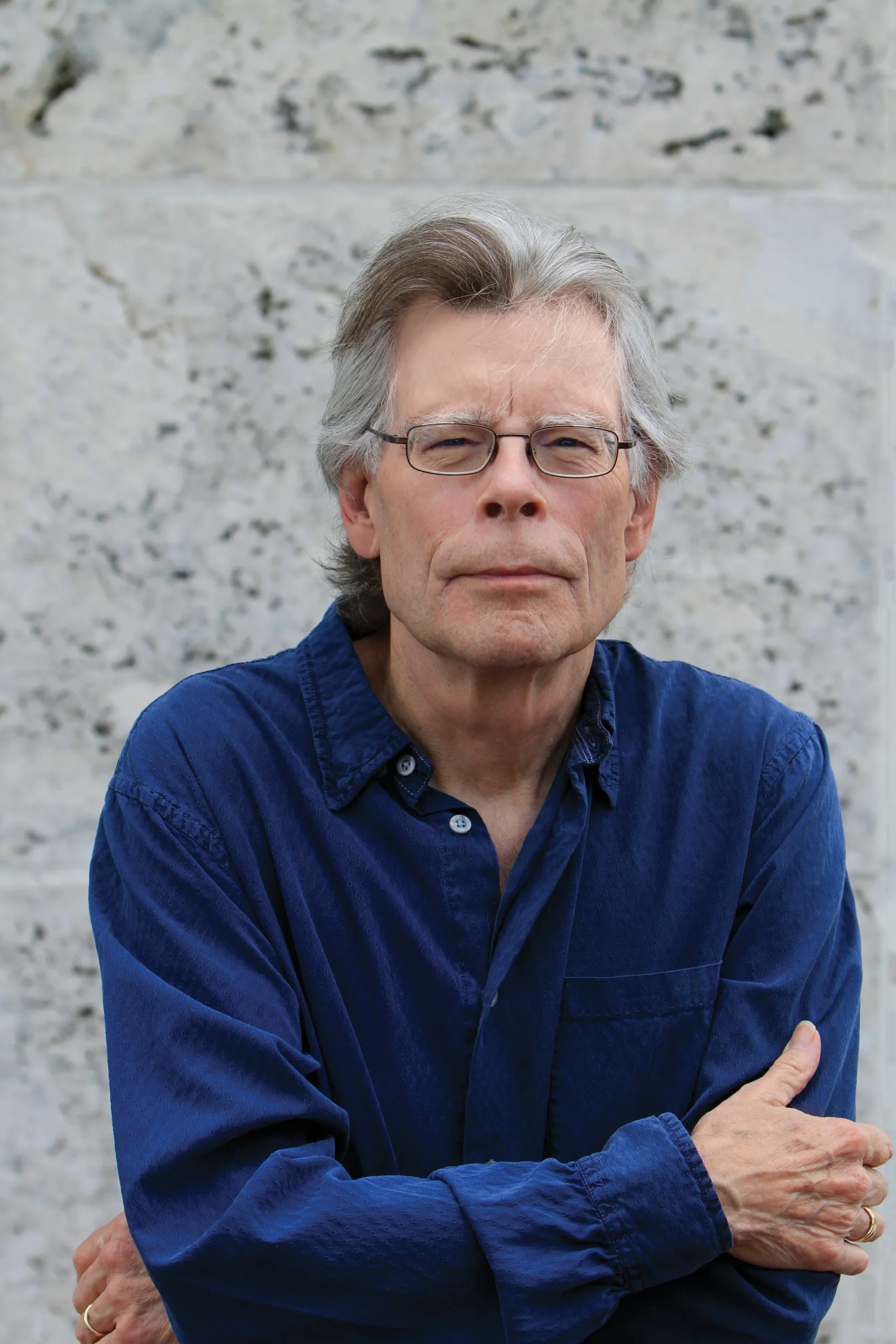
William Peter Blatty
 United States
film director•screenwriter•novelist
Birthday
January 7, 1928
Birth Sign
Capricorn
Birthplace
New York City, New York, USA
Age
Died at 89
About
William Peter Blatty was an American writer, director, and producer best known for his 1971 novel The Exorcist and the Academy Award-winning screenplay for its 1973 film adaptation. Born in Manhattan to a Cuban immigrant father and an Irish mother, he grew up in a devout Catholic household that would later shape his exploration of faith and evil. He passed away at the age of 89 in Bethesda, Maryland, just five days after his birthday anniversary.
Blatty's career bridged military service, academia, and Hollywood with remarkable discipline. After earning degrees from Georgetown and George Washington University, he served in the U.S. Air Force psychological warfare division before turning to writing. His breakthrough came with The Exorcist, which became a global phenomenon. He won the Oscar for Best Adapted Screenplay and a Golden Globe for Best Motion Picture – Drama as a producer. Though often defined by one work, he directed two other films and wrote numerous novels that proved his range extended well beyond horror.
Early Life & Background
William Peter Blatty arrived in New York City on January 7, 1928, into a home where religion played a central role. His father had immigrated from Cuba and his mother came from Ireland, creating a cultural blend that influenced his worldview. He attended Georgetown University, graduating with a Bachelor of Arts in English in 1950. This academic foundation did not immediately lead to a literary career; instead, he entered the United States Air Force shortly after college.
During his time in the military, Blatty worked within psychological warfare divisions. This experience exposed him to the mechanics of fear and belief, providing a unique lens through which he would later view human nature. The rigorous discipline he learned in the service translated directly into his writing habits. Following his discharge, he returned to education, earning a Master of Arts in literature from George Washington University in 1954. During this period, he worked as a copywriter for advertising agencies like J. Walter Thompson while writing short stories and non-fiction pieces on the side. These early years of professional writing and academic study prepared him for the massive success that awaited with his first major novel.
Career Growth
Blatty's literary breakthrough arrived in 1971 with the publication of The Exorcist. The novel spent over a year on the New York Times Best Seller list and sold millions of copies worldwide. When William Friedkin adapted the book into a film in 1973, Blatty took on the rare task of writing the screenplay himself. The result was a critical and commercial juggernaut that grossed over $441 million globally against a budget of just $12 million. In 1974, Blatty won the Academy Award for Best Adapted Screenplay, joining a select group of authors who have won Oscars for adapting their own books.
He also produced the film, earning a Golden Globe for Best Motion Picture – Drama and a nomination for Best Picture. Despite the massive success, Blatty refused to participate in the first sequel, Exorcist II: The Heretic, feeling it lacked the spiritual depth of the original. Years later, he returned to direct and write The Ninth Configuration in 1980, based on his 1966 novel Twixt Twelve and Two. This film won the Golden Globe for Best Screenplay and showcased his ability to handle complex themes regarding mental illness and faith. He followed this with The Exorcist III in 1990, adapting his 1983 novel Legion. Throughout the rest of his life, he continued to publish works like Elsewhere, Dimiter, and Crazy, maintaining a steady output of fiction that defied easy categorization.
Career Timeline
Public Image & Style
Blatty cultivated an image of a serious, intellectual, and somewhat stoic figure in the public eye. Unlike many directors of his era who sought the spotlight, he maintained a low profile, preferring to let his work speak for itself. He was often described as thoughtful, articulate, and deeply religious in his later years. His reputation was that of a "writer's writer," a man of letters who happened to create the ultimate horror story. Media portrayals emphasized his disciplined nature and his commitment to exploring theological questions through fiction. He was respected for his integrity, particularly when he walked away from projects that compromised his artistic vision.
Fame & Fandom (iFAMOUS Rankings)
William Peter Blatty remains a figure of enduring global attention, primarily anchored by the cultural footprint of his 1971 novel The Exorcist and its 1973 film adaptation. While his work continues to generate discussion within horror literature circles and religious studies communities, he does not currently hold a placement in the iFANN Global Top 1,000 rankings or any other published scope list evaluated as of August 2026. His legacy is defined by a specific niche of reverence rather than broad, mass-market celebrity status comparable to living pop culture icons. The fanbase surrounding his life and work lacks a formal, unified designation such as those found for major franchises. Readers and admirers identify themselves primarily through their engagement with The Exorcist or as general enthusiasts of horror fiction, rather than under a singular brand name dedicated to Blatty himself. There is no evidence of an official fan club or a widely adopted nickname for his devotees. Discourse is largely concentrated on online forums where fans frequently advocate for recognition of his broader bibliography beyond his most famous work. A recurring theme in these discussions involves the theological nuances of his writing, particularly his insistence that the entity in The Exorcist was not Satan, a distinction often cited as a cornerstone of his intellectual contribution. The preservation of his legacy has seen activity centered on anniversary retrospectives and academic examinations of his Catholic faith, but organized fan rituals, birthday campaigns, or charity drives remain undocumented. His interaction with the public was historically conducted through interviews and occasional public appearances rather than direct engagement with fan events. Although his career bridged military service, academia, and Hollywood with remarkable discipline, the modern perception of him is that of a writer whose identity was permanently shaped by a single story, leading to a persistent, albeit quiet, effort among readers to contextualize his entire body of work.
Interesting Facts and Legends
One of the most enduring legends surrounding the production of The Exorcist involves the infamous head-spinning scene. When actress Linda Blair fell backward during filming, the crew initially believed a stunt mechanism had failed. It turned out the rig was so powerful it caused genuine physical strain, leading Blatty to insist on using a mechanical device rather than a human double to ensure safety while maintaining realism. Another fascinating detail is Blatty's cameo appearance as a priest in the 1973 film, a small role that placed him directly inside the story he created.
Blatty's time in the Air Force's psychological warfare division was not just background noise; it fundamentally shaped his understanding of fear. He studied how beliefs could be manipulated and used those insights to craft a narrative that terrified audiences on a visceral level. He famously stated that the devil was not a monster but a fallen angel who chose to rebel, a theological stance that separated his work from typical slasher films. Even decades later, reports persist of audience members fainting or vomiting in theaters upon the film's release, reactions Blatty admitted he found surprising given his intent to explore the existence of evil rather than simply shock viewers.
Notable Quotes
“I think the whole point of The Exorcist is that there is good in the world, and there is evil in the world, and we have to choose which one we want to be.”
“The devil is not a monster. He is a fallen angel. He is a being who was once perfect and chose to rebel.”
“I wanted to write a story that would make people think about the nature of evil and the power of faith.”
Family & Personal Life
William Peter Blatty was married to Linda Tuero, a woman he met while he was serving in the Air Force and she was a student at Georgetown University. Their relationship began in their youth and lasted until his death in 2017. They were known to be deeply devoted to one another throughout their long marriage. There are no public records of prior engagements or significant romantic relationships before they wed. The couple did not have any children together. Linda managed the estate following his passing, ensuring his legacy remained intact. She was a constant presence in his life, supporting his creative endeavors and standing by him through the intense scrutiny that followed the success of The Exorcist.
Notable Connections
Relationships & Dating History
William Peter Blatty's romantic life was defined by a single, lifelong partnership. He met Linda Tuero while he was serving in the United States Air Force and she was a student at Georgetown University. Their relationship blossomed during this time, leading to a marriage that lasted until his death. There are no public records of prior marriages, engagements, or significant long-term relationships before he wed Linda. Sources consistently refer to her as his wife throughout his adult life, and there are no reports of divorces or separations. As of his death on January 12, 2017, he was widowed, having been the husband of Linda Tuero. The couple did not have children together, focusing their lives on their shared interests and his career.
- MarriedLinda Tuero1950 - 2017Met while he was in the Air Force and she was a student at Georgetown; married until his death.
Death & Aftermath
Died
January 12, 2017 (aged 89)
Death Place
Bethesda, Maryland, USA
Cause of Death
Unknown
The cultural landscape of horror and faith received a somber recalibration in 2023 when the film industry marked the fiftieth anniversary of The Exorcist, a retrospective that reaffirmed the enduring power of the author's legacy long after his final days. Tributes poured from institutions including The Guardian and EWTN News, with critics noting how Blatty had often been miscast as a mere purveyor of fright rather than a serious explorer of spiritual conflict. His passing occurred on Friday, January 12, 2017, just five days after his eighty-ninth birthday. While he had largely retired from public life following his later works, no specific events or last appearances were recorded in the days preceding his death.
Official records did not specify a medical cause, nor was an autopsy report made public to confirm physiological details beyond his advanced age. Posthumous commercial activity continued through the management of his estate, which saw original materials such as copies of Mystery Men Comics #3 appear at auction in 2025, ensuring that the intellectual property remained active without new films or books being released immediately after his death.
Net Worth (Estate Value)
$75 Million
iFANN Editorial Team estimate
As of 2026, William Peter Blatty is deceased, so his financial standing refers to the value of his estate. Research by the iFANN Editorial Team puts his fortune at around $75 Million. This valuation reflects the enduring power of the Exorcist intellectual property, which continues to generate significant revenue through book sales, film licensing, merchandise, and streaming rights. The estate earns primarily from royalties on his novels, including The Exorcist and Legion, as well as licensing fees for the film franchise managed by Warner Bros.
The estate also benefits from theme park attractions and recent television adaptations that keep the brand relevant. While exact figures fluctuate, industry analysts estimate the Exorcist brand generates between $10 and $20 million annually in royalties and licensing alone. Over the more than 50 years since the novel's release, cumulative earnings have likely exceeded hundreds of millions. The estate is managed by his widow, Linda Tuero Blatty, ensuring that the assets continue to appreciate and support the family legacy. The total value represents a conservative estimate derived from accumulated royalties and asset appreciation.
Awards Won (3)
William Peter Blatty achieved the highest honors in both literature and film. He won the Academy Award for Best Adapted Screenplay for The Exorcist in 1974, becoming one of the few authors to win an Oscar for adapting his own book. He also received a Golden Globe for Best Motion Picture – Drama as a producer of the same film. Later, he won another Golden Globe for Best Screenplay for directing The Ninth Configuration in 1981. His contributions to the genre were further recognized with induction into the Horror Writers Association Hall of Fame posthumously.
1974 · Best Adapted Screenplay
The Exorcist
1981 · Best Screenplay
The Ninth Configuration
1974 · Best Motion Picture – Drama
The Exorcist
Known For
The Exorcist
1973 · Screenwriter
The Exorcist
1971 · Novel Author
The Ninth Configuration
1980 · Director
The Exorcist III
1990 · Director
Keywords
Sources
Quick Facts
- Profession
- film director, screenwriter, novelist
- Born
- January 7, 1928
- Birthplace
- New York City
- Died
- January 12, 2017
- Death Place
- Bethesda
- Gender
- Male
- Spouse
- Linda Tuero
- Birth Sign
- Capricorn
Personal Details
- Full Name
- William Peter Blatty
- Spouse
- Linda Tuero
- Children
- Education
- Georgetown University (BA), George Washington University (MA)
Filmography
15
Total
10
Film
5
TV
Frequently Asked Questions
How old was William Peter Blatty when he died?
Did William Peter Blatty write the screenplay for The Exorcist?
Who was William Peter Blatty married to?
What other movies did William Peter Blatty direct?
Is William Peter Blatty still alive?
Similar People


Join the community
fans discussing