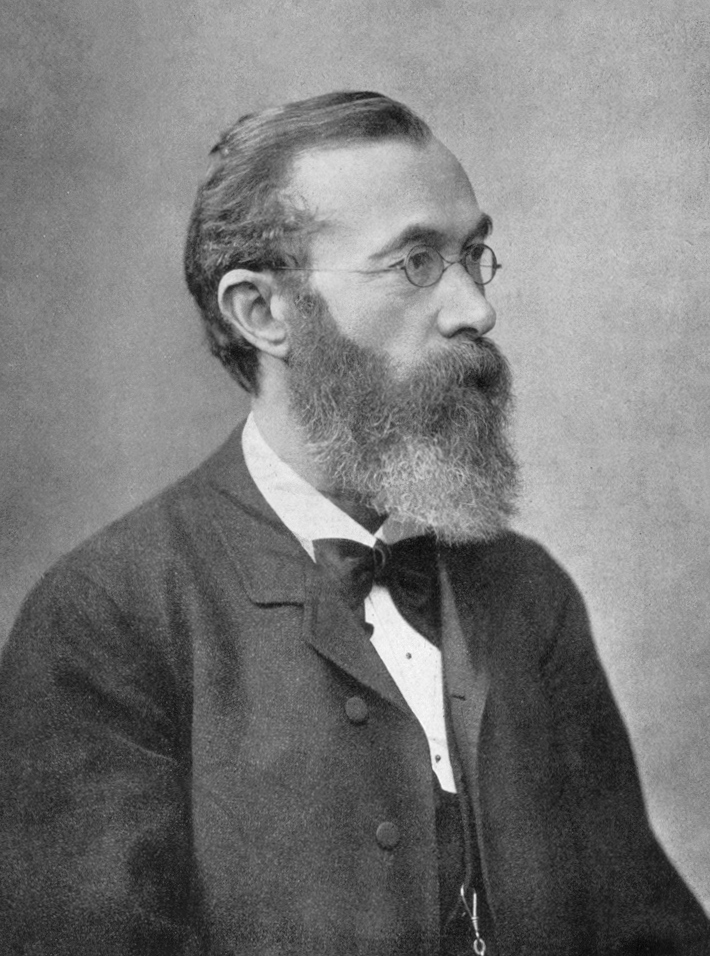
Wilhelm Wundt
 Germany
philosopher•university teacher•psychologist
Birthday
+1832-08-16
Birth Sign
Leo
Birthplace
Neckarau
Age
Died at 88
About
Wilhelm Maximilian Wundt, born on August 16, 1832, in Neckarau, Germany, was a physiologist, philosopher, and professor who is often called the father of modern psychology. He was the first person to identify himself as a psychologist, separating the field from philosophy and biology. In 1879, at the University of Leipzig, he founded the first formal laboratory dedicated to psychological research, a move that established psychology as an independent scientific discipline. Wundt also launched the first academic journal for psychology, Philosophische Studien (1883–1903), followed by Psychologische Studien (1905–1917), to share the work coming out of his lab. A 1991 survey in American Psychologist ranked him first for "all-time eminence" among historians of psychology, well ahead of William James and Sigmund Freud. He died on August 31, 1920, at the age of 88, leaving behind a legacy that reshaped how we understand the human mind.
Fame & Fandom
Wilhelm Wundt currently holds no placement in the published iFANN Global Top 1,000 rankings or any scope-specific top lists. The iFANN evaluation confirms that while his historical footprint is massive, he does not register within the current global fame metrics for living or recently active public figures. This absence of a rank reflects his status as a nineteenth-century academic rather than a contemporary celebrity whose name circulates through modern media cycles. His legacy is preserved in the annals of science, not on popularity charts. The concept of a fandom does not apply to Wilhelm Wundt in the way it does for pop culture icons. There is no organized group of individuals who call themselves fans, nor is there a formal name for any collective following him. Unlike modern stars who might have dedicated subreddits, fan clubs, or charity drives, Wundt has never engaged with an audience directly. He passed away long before the cultural infrastructure for fan campaigns existed. Instead of a fanbase, his influence is sustained by the academic community, historians of psychology, and students who study the foundational texts of their field. When his name appears today, it is typically within educational contexts or inspirational quote columns where he serves as a source of wisdom rather than an idol. His "followers" are those who cite his work in textbooks and continue the scientific traditions he established, measuring his impact through the proliferation of psychology departments rather than social media engagement.
Interesting Facts and Legends
Wilhelm Wundt stands as the first person to identify himself explicitly as a psychologist, a deliberate choice that carved the discipline out of philosophy and biology. In 1879, he founded the first laboratory dedicated exclusively to psychological research at the University of Leipzig, an event widely regarded as the birth of experimental psychology as an independent science. He also launched the first academic journal for the field, Philosophische Studien, which ran from 1883 to 1903 before being succeeded by Psychologische Studien. His method of introspection remains a core part of his story, as he attempted to break down conscious experience into its most basic elements. While this structuralist approach eventually faced criticism and evolved, the narrative of his rigorous self-observation continues to be retold in every introductory psychology course. Wundt began his journey as a medical student at the University of Tübingen in 1851, eventually rising to become a professor who shaped the discipline through steady academic contribution rather than dramatic personal scandals. His life was defined by the quiet persistence of scholarly work, leaving behind a legacy measured by the continued citation of his theories and the enduring presence of his laboratories in the history of science.
Death & Aftermath
Died
+1920-08-31 (aged 88)
Death Place
Grossbothen, Tharandt, Germany
Cause of Death
Natural causes
Wilhelm Maximilian Wundt passed away on August 31, 1920, at his home in Grossbothen, a village now absorbed into Tharandt near Leipzig. The event was a quiet natural conclusion to an eighty-eight-year life. Having retired from his professorship at the University of Leipzig three years prior in 1917, he spent his final days in relative seclusion while maintaining his intellectual presence until shortly before his end. No specific medical cause was recorded in public biographical accounts. While immediate tributes or vigils are not documented in the historical record for that specific month, the scientific community universally acknowledged the loss of the man who first identified himself as a psychologist and established the field's independence. His legacy has endured through the preservation of his laboratory in Leipzig and the continued citation of his work in modern discussions regarding the replication crisis in psychology. Historical consensus places his burial in Leipzig, though the specific logistics of the funeral service remain unrecorded. The estate and his extensive writings continue to influence the discipline.
Awards & Accolades
Keywords
Quick Facts
- Profession
- philosopher, university teacher, psychologist
- Born
- +1832-08-16
- Birthplace
- Neckarau
- Died
- +1920-08-31
- Death Place
- Großbothen
- Gender
- Male
- Spouse
- Sophie melano
- Birth Sign
- Leo
Personal Details
- Spouse
- Sophie melano
Join the community
fans discussing