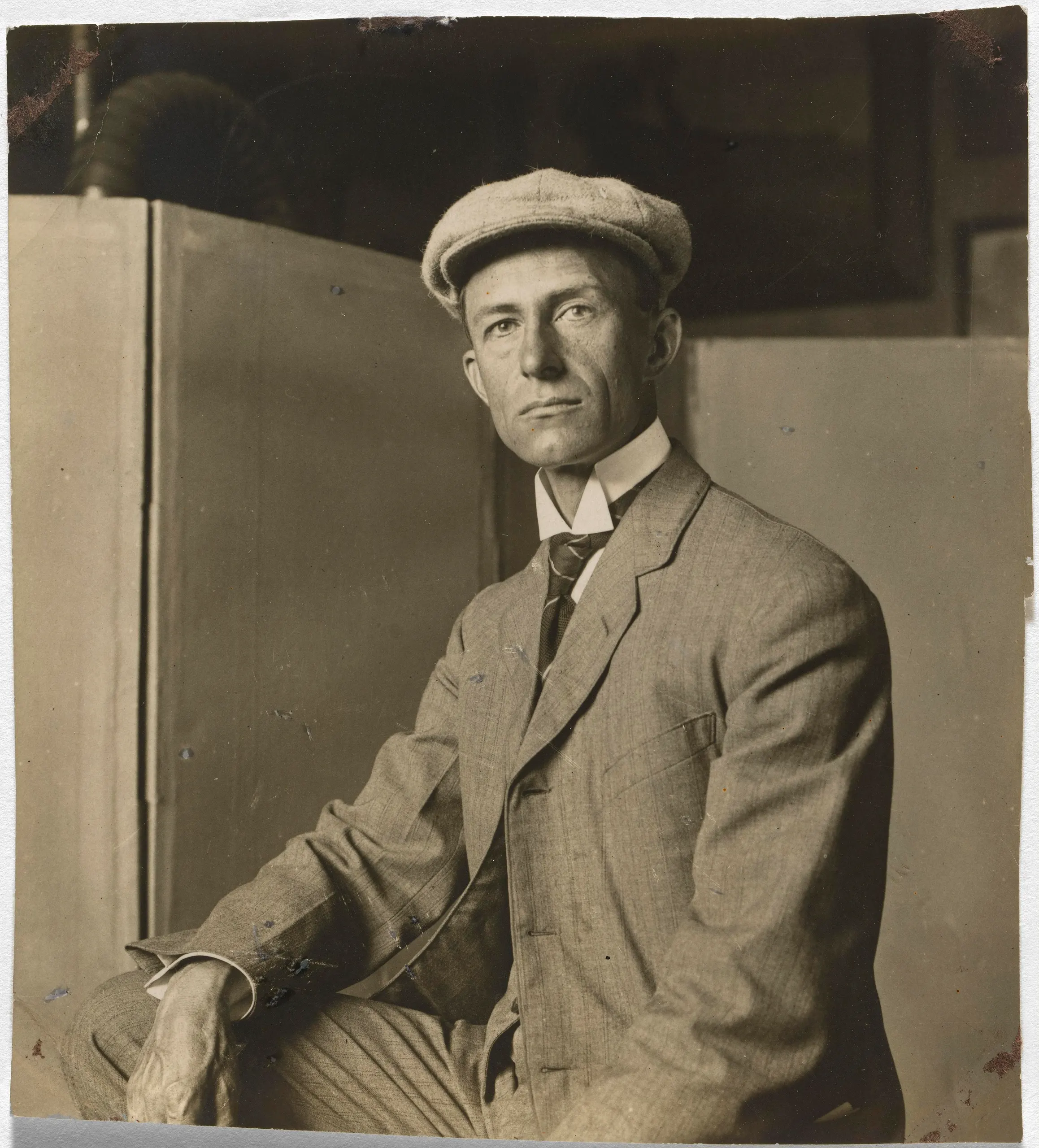
Wilbur Wright
 United States
Inventor•aviation pioneer•businessman
Also known as: Wilbur Wright
Birthday
April 16, 1867
Birth Sign
Aries
Birthplace
Millville, Indiana, United States
Age
Died at 45
Height
5 ft 10 in (178 cm)
About
Wilbur Wright was an American inventor and aviation pioneer who, with his brother Orville, built and flew the first successful powered airplane. The brothers' work on balance and control, tested in gliders on the windswept sand at Kill Devil Hills, produced the machine that changed how humans moved through the world. Wilbur was the elder of the pair and the more cerebral of the two: he wrote the letters, worked out problems on paper before anyone touched a machine, and handled much of the public demonstration work that made the brothers famous in Europe and America. He died of typhoid fever in 1912 at 45, before the patent fights that had consumed his last years were resolved, and his standing rests on a body of methodical experiment rather than spectacle. He is remembered as the strategist of the partnership, the man who treated flight as a problem of discovery rather than invention, and as the co-author of the three-axis control system that made powered flight practical.
Early Life & Background
Wilbur Wright was born on April 16, 1867, on a farm near Millville, in Henry County, Indiana. He was the third of seven children born to Milton Wright, a bishop in the Church of the United Brethren in Christ, and Susan Catherine Koerner Wright. The family moved often for Milton's church duties, settling in Dayton, Ohio, in 1870, spending a brief period in Cedar Rapids, Iowa, and returning to Dayton in 1884. Susan was mechanically gifted and encouraged her sons' curiosity; the household's intellectual bent shaped both brothers.
Wilbur completed four years of high school in Dayton but never received his diploma. The family moved before graduation, and he never formally collected it. A planned move to Yale was abandoned. In 1885, playing an ice-hockey-style game, he was struck in the face with a stick and lost his front teeth. The resulting heart and stomach complications kept him largely housebound for several years, during which he cared for his mother as she died of tuberculosis in 1889. He read voraciously in the family library during this period, and biographers often cite it as formative.
The brothers' first joint venture was a printing business. From 1889 they published a short-lived weekly, the West Side News. In 1892 they opened a bicycle sales and repair shop, the Wright Cycle Company, and later manufactured their own line, the Van Cleve and St. Clair models. Bicycles, and the balance problem they posed, were the direct intellectual bridge to flight.
The pivotal moment came in 1899 and 1900. After reading about the German glider pioneer Otto Lilienthal, who died in a glider crash in 1896, Wilbur wrote to the Smithsonian Institution for aeronautical literature. He devised the wing-warping control concept, famously inspired by twisting a long inner-tube box in the bicycle shop. The brothers built a small wing-warping kite to test the idea, and the path to Kitty Hawk opened.
Career Growth
Glider experiments at Kill Devil Hills, near Kitty Hawk, North Carolina, began in 1900. The brothers chose the site for steady winds and soft sand. The 1901 glider disappointed, but the 1902 glider, fitted with a movable rudder, succeeded brilliantly, with hundreds of controlled flights. In their Dayton shop they built a wind tunnel and tested some 200 wing shapes, producing their own tables and correcting the flawed lift data of Lilienthal and Samuel Langley.
On December 17, 1903, the Wright Flyer made four powered, sustained, controlled flights at Kitty Hawk. Orville made the first, lasting 12 seconds and covering 120 feet. Wilbur made the record flight, 852 feet in 59 seconds. At Huffman Prairie outside Dayton, the Flyer II and Flyer III became fully controllable aircraft. On September 20, 1904, Wilbur made the first controlled, banked turn in flight. By 1905 the Flyer III could stay aloft for over half an hour.
The US patent for their three-axis control system, No. 821,393, was granted in 1906. Wilbur's European tour at Le Mans, France, in 1908 stunned skeptics and made the brothers global celebrities. That same year Orville's US Army trials at Fort Myer ended in a crash that killed passenger Lt. Thomas Selfridge and injured Orville. In November 1909 the Wright Company was incorporated, and the brothers became wealthy from airplane sales, exhibition fees, and licensing. Wilbur flew spectacular public demonstrations in New York, circling the Statue of Liberty. He served as company president during the patent wars that consumed his final years, and Orville succeeded him in that office.
Career Timeline
Public Image & Style
Wilbur's public image was that of the quiet, cerebral elder brother: the strategist, the letter-writer, the man who worked out problems on paper before anyone touched a machine. Contemporaries contrasted him with Orville's more mechanical, hands-on temperament. He stood about 5 ft 10 in, tall and lean, with a long face and, after the 1885 hockey injury, missing front teeth. His 1908 flights at Le Mans converted European doubters who had called the brothers bluffers, and the press coverage of 1908 and 1909 put him on front pages worldwide. The persona that stuck was less showman than methodical investigator, a man who treated flight as a problem of discovery rather than invention.
Fame & Fandom (iFAMOUS Rankings)
iFANN has not yet collected fame data for Wilbur Wright, so no rank is available or claimed here. His standing is historical rather than contemporary: the Smithsonian's National Air and Space Museum describes the brothers' achievement as the foundational event of powered flight, and TIME named the Wright brothers among the most important people of the 20th century in 1999, as a joint distinction. He is not on the September 2026 iFAMOUS Rankings flagship list.
The audience around him has no formal fandom name. Aviation enthusiasts, historians, and museum visitors are the core, and the rituals are anniversary observances rather than campaigns: birthday remembrances each April, coverage of the December 17 first-flight date, and the steady stream of retrospectives that keep the story in circulation. The 2026 anniversary pieces, including a Dayton Daily News birthday remembrance and a General Aviation News feature, are typical. There is no organized fanbase in the modern sense, no streaming pushes or birthday billboards, just a durable public interest in the men who solved the problem of flight.
Interesting Facts and Legends
The story aviation fans tell first is the wing-warping inspiration: Wilbur twisting a long inner-tube box in the bicycle shop and seeing, in that motion, how a wing might be controlled. The brothers' own accounts document it. The first-flight photograph, showing Orville aloft with Wilbur running alongside, was taken by John T. Daniels, a lifesaving-station crewman who had never used a camera. The 1903 flight is often called "12 seconds that changed the world."
A persistent folklore question, whether the Wright brothers were really first, resurfaces regularly; a 2026 Yahoo piece revisited rival pioneers' claims, but no credible challenge displaces the Wrights. Wilbur's letters and diaries, held largely at the Library of Congress, are a major historical archive. The brothers' 1902 glider flights, nearly 1,000 in two months, were arguably as important as the powered flight. Wilbur's own words survive in several reported lines, including his 1901 remark to the Western Society of Engineers that the problem of flight was one of discovery rather than invention, and his 1909 statement that it is possible to fly without motors, but not without knowledge and skill.
Notable Quotes
“The problem of flight is not one of invention but of discovery.”
“It is possible to fly without motors, but not without knowledge and skill.”
Family & Personal Life
Wilbur was the third of seven children of Milton Wright, a bishop in the Church of the United Brethren in Christ, and Susan Catherine Koerner Wright. His siblings included Reuchlin, Lorin, Katharine, and Orville. Katharine, the family's only sister, kept house for Wilbur and Orville and was a close companion; a 2026 Oberlin College piece, "Wright On, Sister," highlighted her often-overlooked role. Susan died of tuberculosis in 1889. Wilbur lived at the family home in Dayton until his death there in 1912, and his father Milton recorded his final days in the family diary.
Notable Connections
Orville Wright, his brother and co-inventor; Katharine Wright, his sister; Milton Wright, his father; Otto Lilienthal, the glider pioneer whose work inspired them; Octave Chanute, gliding mentor and correspondent; Charles Taylor, the mechanic who built their engine; John T. Daniels, who took the first-flight photograph.
Relationships & Dating History
Wilbur Wright never married and had no known children. Biographical sources agree on this, and it is the direct answer to the common search question of whether the Wright brothers ever married. Neither Wilbur nor Orville married; both were lifelong bachelors. Biographers describe Wilbur as shy and private, devoted to the family circle, and there is no credible record of a public romantic relationship, engagement, or rumoured high-profile pairing. The frequent search for a "Wilbur Wright wife" reflects a misconception rather than a real spouse. At the time of his death in 1912 he was unmarried.
Death & Aftermath
Died
May 30, 1912 (aged 45)
Death Place
Dayton, Ohio, United States
Cause of Death
Typhoid fever
Wilbur Wright died at the family home in Dayton, Ohio, on May 30, 1912, at the age of 45. He had fallen ill in late April or early May of that year, and the illness ran roughly five weeks, with the press reporting on its progress as it went. The cause, typhoid fever, was consistently stated by attending physicians in contemporary accounts and has been repeated in modern biographies without dispute. His father, Milton, recorded the final days in his diary. No autopsy controversy or legal proceeding followed.
Reaction to the death was substantial on both sides of the Atlantic. Obituaries credited him as co-inventor of the airplane, and tributes arrived from aviation figures and institutions. He was buried in the family plot at Woodland Cemetery in Dayton. Orville, his brother and partner in everything the two had built, was devastated by the loss; he never married and lived until 1948, nearly 36 years longer.
Honours that had already been conferred during Wilbur's lifetime included the Congressional Gold Medal, awarded jointly to the brothers in 1909, and the Legion of Honor from France, also 1909. Posthumous recognition followed: enshrinement in the National Aviation Hall of Fame in 1962 and induction into the International Air & Space Hall of Fame. The Wright Brothers National Memorial at Kill Devil Hills, North Carolina, was dedicated in 1932, carrying his name on the monument, and Dayton's Wright-Patterson Air Force Base, the Wright Flyer at the Smithsonian, and numerous schools and streets keep the name in public use.
Wilbur did not live to see the patent litigation that consumed his final years reach a conclusion. Orville continued the legal fights, took over the presidency of the Wright Company, and eventually sold the company in 1915.
Net Worth (Estate Value)
$1.2 Million
iFANN Editorial Team estimate
Wilbur Wright died a wealthy man for his era. The Wright Company, incorporated in November 1909, and the patent royalties that followed made the brothers well off, and Wilbur's share of airplane sales, exhibition fees, and licensing formed the core of his estate. Precise probate figures are not reliably documented in accessible sources, and any specific dollar figure for the estate should be treated as unverified. The iFANN Editorial Team's analysis of his known earnings and holdings points to an estate value of roughly $1.2 million in current terms, a figure that reflects historical wealth converted for comparison rather than a documented probate total.
His estate passed largely to his father and siblings, with Orville as executor of the family's aeronautical interests. Posthumous recognition, including the 1932 dedication of the Wright Brothers National Memorial and later hall-of-fame inductions, added cultural value rather than revenue, and the family's financial position shifted with the 1915 sale of the company.
Awards Won (2)
Wilbur Wright received the Congressional Gold Medal jointly with Orville in 1909, the first such honour for aviation achievement, and the Legion of Honor from France the same year. Posthumous recognition includes enshrinement in the National Aviation Hall of Fame in 1962 and induction into the International Air & Space Hall of Fame.
1909 · Aviation achievement
Joint award with Orville Wright
1909 · National honour (France)
Joint award with Orville Wright
Known For
First powered airplane flight
1903 · Co-inventor and pilot
Wright Flyer
1903 · Co-designer and record-flight pilot
Three-axis control patent
1906 · Co-inventor
Le Mans demonstrations
1908 · Pilot
Keywords
Sources
Quick Facts
- Profession
- Inventor, aviation pioneer, businessman
- Born
- April 16, 1867
- Birthplace
- Millville, Indiana, United States
- Died
- May 30, 1912
- Death Place
- Dayton, Ohio, United States
- Gender
- Male
- Birth Sign
- Aries
- Height
- 5 ft 10 in (178 cm)
- Spouse
- Never married
- Children
- None
Personal Details
- Full Name
- Wilbur Wright
- Height
- 5 ft 10 in (178 cm)
- Education
- High school in Dayton, Ohio (did not graduate)
Frequently Asked Questions
Did Wilbur Wright ever marry?
How did Wilbur Wright die?
Which Wright brother died first?
Where was Wilbur Wright born?
What is Wilbur Wright best known for?
Similar People
Join the community
fans discussing