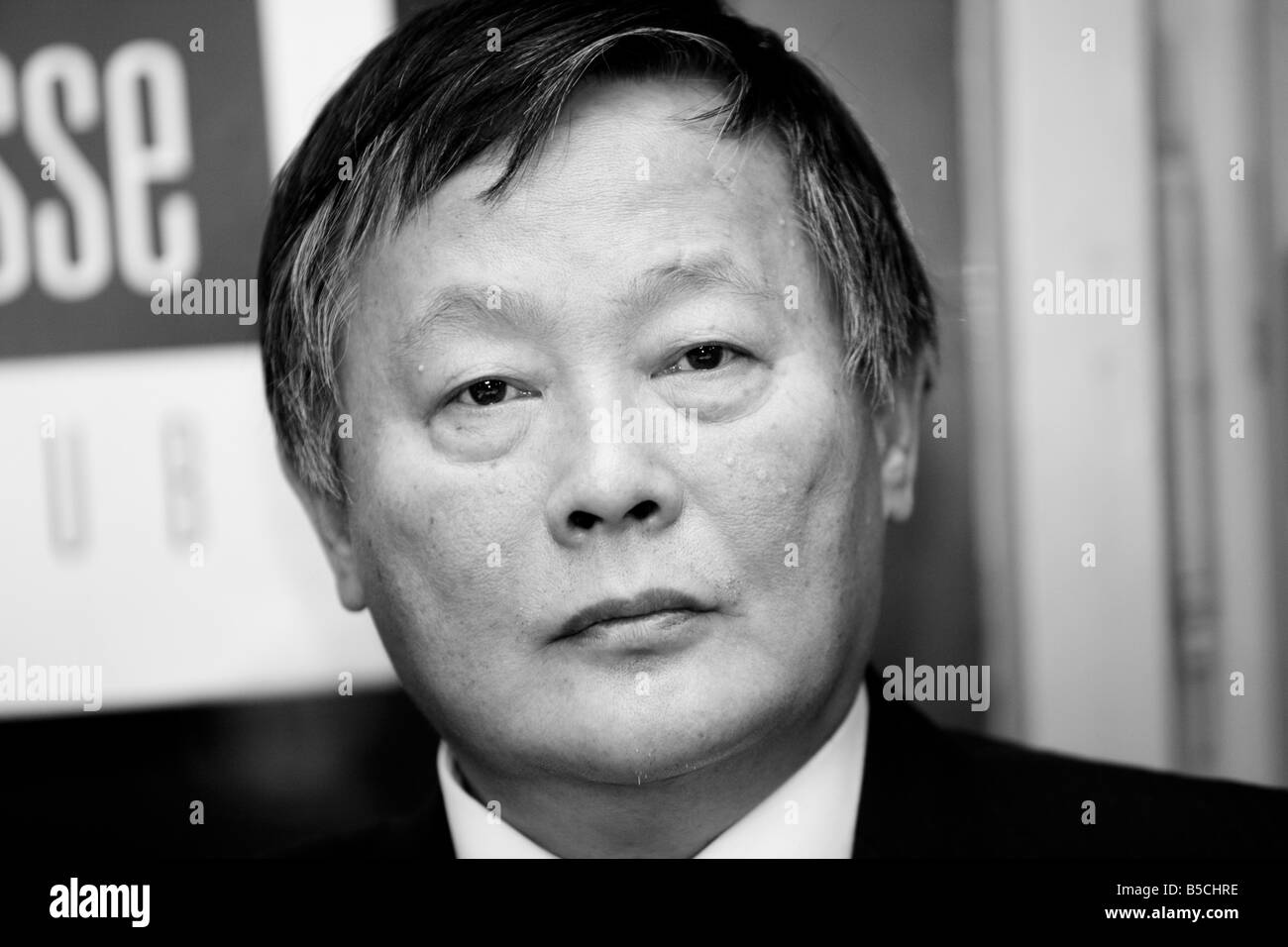
Wei Jingsheng
 China
ChinaAlso known as: Jingsheng Wei, Wei Jing-sheng
Birthday
May 20, 1950
Birth Sign
Taurus
Birthplace
Beijing, China
Age
76 years old
About
Wei Jingsheng is a Chinese human rights activist and writer, widely recognized as one of the most prominent dissidents to emerge from the People's Republic of China. Born in Beijing in 1950, he became a symbol of the struggle for democratic reform through his 1978 essay "The Fifth Modernization," which argued that democracy was essential to China's progress. His activism led to two prison terms totaling 18 years, and he was eventually deported to the United States in 1997. Today, Wei leads the Wei Jingsheng Foundation, based in Washington, D.C., which advocates for human rights and democratization in China. His writings and public statements continue to inspire activists and scholars, and he remains a respected voice in the global human rights community.
Early Life & Background
Wei Jingsheng was born on May 20, 1950, in Beijing, just a year after the founding of the People's Republic of China. Growing up during the Mao era, he witnessed the intense political campaigns that shaped the country, including the Cultural Revolution, which began when he was a teenager. Like many of his generation, Wei became a Red Guard, but the violence and chaos of the movement gradually turned him against the system. He later worked as an electrician in Beijing, a trade that gave him practical skills and a working-class perspective. His disillusionment deepened as he observed the gap between Communist rhetoric and the realities of daily life. By the late 1970s, as the Democracy Wall movement emerged, Wei was ready to speak out. In December 1978, he posted his famous essay on the wall, a bold act that would define his life.
Career Growth
Wei's essay "The Fifth Modernization: Democracy" was posted on the Democracy Wall in December 1978, just weeks after Deng Xiaoping announced the Four Modernizations. The essay argued that without political democracy, economic and social reforms would fail. Within months, Wei was arrested in March 1979 and sentenced to 15 years in prison for "counter-revolutionary" activities. He served his full term, being released on September 14, 1993. During his imprisonment, he was held in solitary confinement for extended periods, yet he remained defiant. After his release, he was rearrested in 1994 for speaking to foreign journalists, and in December 1995 he was convicted again. International pressure, including the European Parliament's decision to award him the Sakharov Prize in 1996, led to his deportation to the United States on November 16, 1997. In 1998, he founded the Wei Jingsheng Foundation in New York City, which later moved to Washington, D.C. Since then, he has continued to write and speak out, publishing essays and giving interviews that criticize the Chinese Communist Party's authoritarian rule.
Career Timeline
Public Image & Style
In Western media, Wei Jingsheng is often described as "China's most prominent dissident" and a symbol of the struggle for human rights. His public image is that of a principled, long-suffering activist who endured 18 years in prison for his beliefs. He is known for his direct, analytical style, and his statements tend to focus on political analysis rather than personal anecdotes. While he does not have a fandom in the traditional sense, he commands deep respect among human rights advocates, democracy activists, and scholars of China. His writings, particularly "The Fifth Modernization," are studied as key documents in the history of Chinese dissent. Wei's public appearances are rare, but when he speaks, his words carry weight, as seen in his 2022 interview with Politico, where he warned about the fragility of Xi Jinping's regime.
Fame & Fandom
Wei Jingsheng commands a unique form of reverence that defies the mechanics of traditional celebrity fandom. Unlike the organized armies surrounding pop stars or athletes, his following is not built on merchandise, social media hashtags, or shared rituals. There is no formal name for his supporters; instead, they are united as admirers, fellow dissidents, and human rights advocates who view his life's work as a foundational text for political resistance. His influence flows through institutional channels rather than fan clubs, with international bodies like the European Parliament and organizations such as the Victims of Communism Memorial serving as the primary hubs for honoring his legacy. The story told by those who follow him centers on his 1978 essay "The Fifth Modernization," which remains the defining legend of his career and a rallying cry for democracy movements worldwide. While he does not engage in direct fan interactions or participate in charity drives typical of modern celebrities, his continued writings and interviews from exile sustain a deep, scholarly respect among activists who see his endurance as a moral imperative. This community operates through political discourse and archival preservation rather than the ephemeral trends of pop culture. Despite his global recognition as a symbol of the struggle for freedom, Wei Jingsheng is currently evaluated as unranked by iFANN's Global Fame Engine, holding no placement in the published rankings. He is also not ranked within any Top-100 scope list, reflecting an EVALUATED_UNRANKED status where his fame exists outside standard commercial metrics.
Interesting Facts and Legends
Wei Jingsheng's background as an electrician is a detail that often surprises people, but it was this trade that allowed him to post his famous essay on the Democracy Wall. He has met several U.S. presidents, including George H.W. Bush and Bill Clinton, during his time in exile. In 2012, he paid tribute to fellow dissident Fang Lizhi, calling him a "hero of the people." Wei is one of the few Sakharov Prize laureates to receive the award while still imprisoned. In 2017, during a visit to France, he publicly condemned China's leadership of Interpol, a rare statement on international organizations. Despite his long exile, he continues to write in Chinese, and his essays are widely circulated among dissidents and scholars. A central legend of his life involves his participation in the Democracy Wall movement while working at the Beijing Zoo, where he posted "The Fifth Modernization" in late 1978, sparking a brief era of public political expression. Another iconic moment is his imprisonment spanning nearly two decades, which became a cause célèbre after he was arrested in 1979 and again in 1994, leading to his eventual release on medical parole in 1997. Supporters often retell the story of his 1996 Sakharov Prize win, received in absentia while he was behind bars, symbolizing his unsilenced voice against the regime.
Notable Quotes
“What is true democracy? It is when the people, acting on their own will, have the right to choose representatives to manage affairs on the people's behalf.”
“So I proposed The Fifth Modernization: Democracy. What I meant was, without the fifth modernization, without democracy, all the other modernizations could not [succeed].”
“When you have no credibility... you are in big trouble.”
Family & Personal Life
Details about Wei Jingsheng's family life are scarce, as he has kept his personal affairs private. Public records do not mention a spouse or children, and he has not spoken publicly about his family. What is known is that he was born in Beijing, and his formative years were shaped by the political upheavals of the Mao era. His decision to post the essay on the Democracy Wall in 1978 undoubtedly put his family at risk, yet they have remained out of the public eye. As of 2026, Wei lives in the United States, but he has not shared information about his household or any relatives.
Notable Connections
Wei Jingsheng's life has been intertwined with key figures in Chinese dissident history. He paid tribute to Fang Lizhi, the astrophysicist and dissident, on his death in 2012. He has met U.S. presidents George H.W. Bush and Bill Clinton during his exile. His activism was a direct response to Deng Xiaoping's Four Modernizations, and he has been a vocal critic of Xi Jinping's leadership. His work has been supported by organizations such as the Bush Center and the Sakharov Prize committee.
Relationships & Dating History
Salary, Net Worth In 2026
Wei Jingsheng's net worth is not publicly documented, as he is not a commercial figure. His income is derived from his work with the Wei Jingsheng Foundation, a nonprofit organization that advocates for human rights in China. The foundation is funded by donations from supporters and grants from human rights organizations. As of 2026.
Awards Won (1)
Wei Jingsheng was awarded the Sakharov Prize for Freedom of Thought in 1996 by the European Parliament, one of the highest honors in human rights. He has also been recognized by the Victims of Communism Memorial Foundation and the Robert & Ethel Kennedy Human Rights organization.
1996 · Human Rights
For his leadership in the Chinese democracy movement
Known For
The Fifth Modernization: Democracy
1978 · Author
Wei Jingsheng Foundation
1998 · Founder
Keywords
Sources
Quick Facts
- Profession
- human rights defender, writer
- Born
- May 20, 1950
- Birthplace
- Beijing, China
- Gender
- Male
- Birth Sign
- Taurus
Frequently Asked Questions
Who is Wei Jingsheng?
What did Wei Jingsheng do?
Why was Wei Jingsheng imprisoned?
Where is Wei Jingsheng now?
What is the Fifth Modernization?
Social Media
Join the community
fans discussing