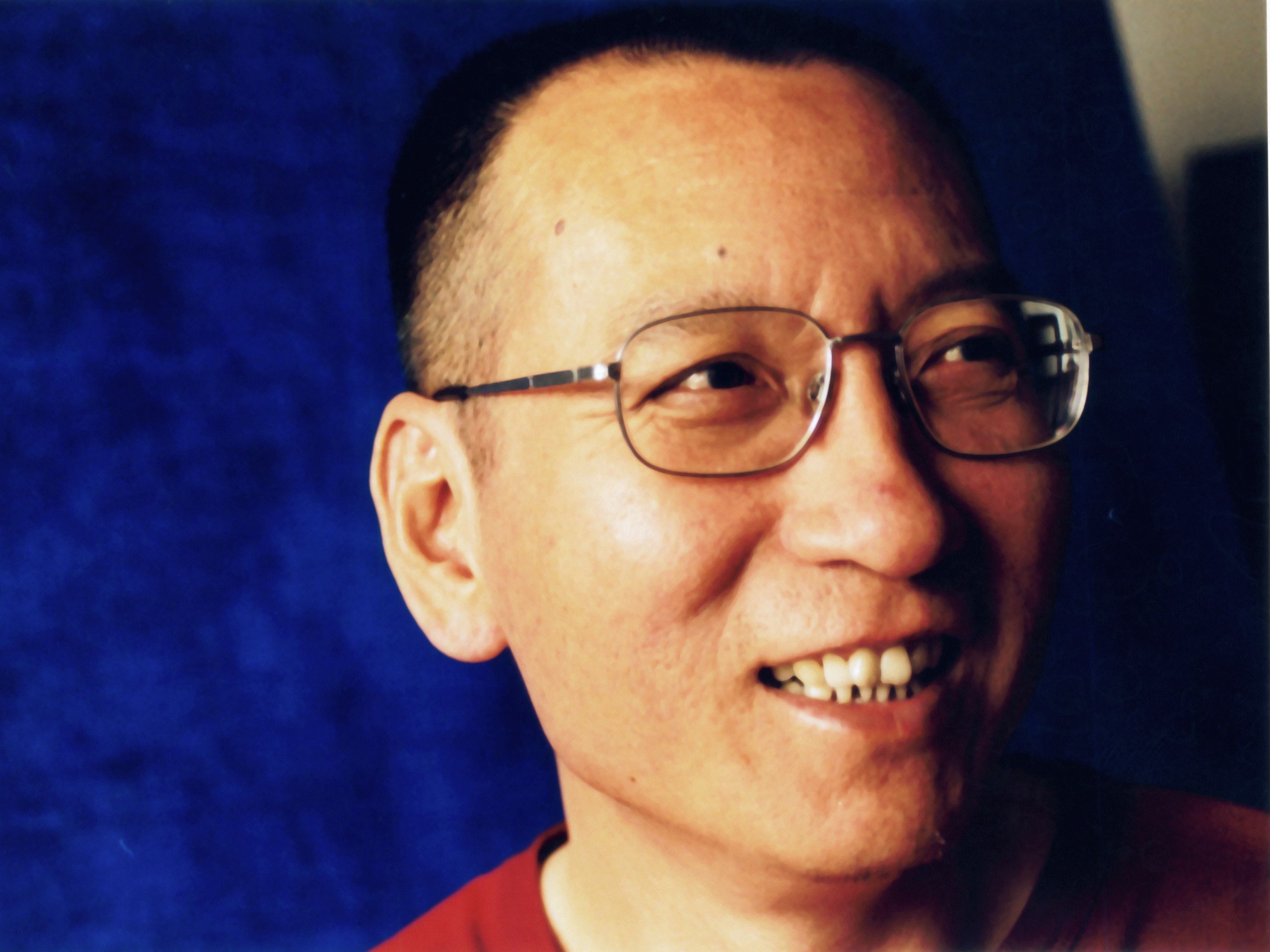
Liu Xiaobo
 China
Chinaliterary critic•philosopher•poet•human rights activist
Also known as: Liú Xiǎobō, Liu Xiao Bo, Xiaobo Liu
Birthday
December 28, 1955
Birth Sign
Capricorn
Birthplace
Changchun, Jilin, China
Age
Died at 61
About
Liu Xiaobo was a Chinese literary critic, philosopher, poet and human rights activist who became the first citizen of the People's Republic of China to receive the Nobel Peace Prize while still living inside the country. He remains the only laureate in the prize's history who could not attend the ceremony or deliver an acceptance speech because his own government had him in prison.
He died in 2017 while on medical parole from an 11-year sentence. His name has not faded since. Each July, PEN centres, human rights organisations and exiled Chinese writers mark the date, and in 2026 an award created in his honour held its first ceremony in Leipzig. His essays and poetry still circulate abroad while remaining banned at home. For readers outside China he is the clearest single symbol of peaceful dissent against one-party rule; inside China, saying his name aloud can still carry a cost.
Early Life & Background
Liu Xiaobo was born on 28 December 1955 in Changchun, the capital of Jilin Province in China's northeast, and he came up through literature rather than politics. He studied literature and philosophy as a young man, earned a doctorate, and by the 1980s had made a name in Chinese literary circles as a critic willing to turn a sharp eye on his own society and culture. That willingness set him apart from the more cautious academics of the period.
His academic career took him abroad for visiting scholar posts at universities outside China, and by the late 1980s he was an established independent intellectual with a reputation for plain speaking. Then came 1989. Liu returned home from his overseas positions specifically to support the Tiananmen Square protests, a decision that ended any conventional academic future he might have had. He was imprisoned from 1989 to 1991 for that involvement.
The pattern of the next decade was set. Further detentions followed, from 1995 to 1996 and again from 1996 to 1999. Between spells in custody he kept writing and organising, and in 2003 he became president of the Independent Chinese PEN Center, a role he held until 2007, while also heading the magazine Democratic China. He was, in other words, a fully formed dissident long before the document that made him globally known. What remained was the moment that pushed him from independent intellectual to political prisoner of the first order: co-authoring the Charter 08 manifesto, which called for fundamental human rights and an end to one-party rule. He was arrested in December 2008.
Career Growth
The conviction came first. On 25 December 2009 a Chinese court found Liu Xiaobo guilty of inciting subversion of state power over his role in Charter 08 and sentenced him to 11 years. He had co-authored the manifesto in 2008 with a group of signatories demanding democratic reforms, and the state treated it as the centrepiece of its case. He was 53 when the sentence was handed down and would never be free again.
Then the Nobel Committee made its decision. Because he was in prison, the prize was accepted on his behalf, and the empty chair at the ceremony in Oslo became the image everyone remembers. It was the first time a Chinese citizen had won the Peace Prize while resident in China, and the Chinese government's furious reaction, including diplomatic pressure on Norway, made the award a story in itself.
His written work outlasted him. Charter 08 remains the document most associated with his name, alongside essays, literary criticism and poetry collected in volumes published abroad. After his death in 2017 his writings stayed banned in mainland China, but international editions kept circulating, and his line about the human quest for freedom kept turning up in campaigns and commemorations. The work, in other words, did not stop when the man did.
Career Timeline
Public Image & Style
International media have consistently framed Liu Xiaobo as a symbol of peaceful resistance and, after 2017, as a martyr for human rights. The image is not built on charisma or performance. It is built on the fact that he kept writing and organising through repeated imprisonment and was awarded the world's most prominent peace prize while sitting in a cell.
His public voice was literary rather than performative: essays, criticism, poetry and political commentary, delivered in plain language. There was no social media presence to speak of, and he was not a public figure in the modern sense at all. What the world saw of him was mostly a courtroom, a sentence, and then an empty chair in Oslo.
Chinese state media have portrayed him very differently, treating his conviction as a matter of law and his death as a routine medical event. That gap between the international and domestic images is part of what makes him such a charged figure: the same man is a moral reference point abroad and an unmentionable name at home.
Fame & Fandom
Fame in Liu Xiaobo's case does not look like celebrity. He never cultivated a fanbase with an official name, and no fandom label is documented. His supporters are a diffuse coalition of writers, intellectuals, human rights organisations and exiled Chinese democrats rather than a mass audience, and his memory is sustained through institutional work: PEN International and its Chinese and American centres issue statements every July, Human Rights Watch and Front Line Defenders have published tributes, and academic commemorations keep his essays in circulation.
By the numbers, attention holds steady well beyond what you would expect for a writer dead since 2017. His Wikipedia articles drew 30,509 views across 38 language editions in a recent 30-day window, with the largest audiences in Chinese (17,389), English (6,655) and Japanese (2,017). That Chinese-language figure is the striking one: the people most likely to seek him out are the ones for whom reading about him carries the most risk.
As of the September 2026 rankings, iFANN's Global Fame Engine has evaluated Liu Xiaobo but he does not currently hold a placement in the published rankings, whether the Global Top 1,000 or a Top-100 scope list. That is a measure of how the rankings work rather than a statement about his importance: the engine tracks worldwide attention across public signals such as Wikipedia readership and global search interest, and a writer who died in custody nine years ago generates steady, quiet traffic rather than viral spikes.
The closest thing to organised fandom around him is commemorative. Each 13 July brings coordinated statements, vigils outside Chinese diplomatic offices, and reading events, giving supporters an annual institution to gather around. It is a following built on principle rather than affection, and it has proved remarkably durable.
Interesting Facts and Legends
He is the only Nobel Peace Prize laureate in history who was unable to attend the ceremony or deliver an acceptance speech because he was imprisoned by his own government. The empty chair at the 2010 Oslo ceremony has become the shorthand image for that fact.
His wife, Liu Xia, is a poet and photographer in her own right, and her inability to mourn him publicly after his death became one of the most retold parts of the story. Supporters still describe the restrictions she faced as a kind of second imprisonment.
One line of his gets quoted constantly, especially around the anniversary of his death: "There is no force that can put an end to the human quest for freedom." It resurfaced in a March 2026 international feature and has become the sentence most associated with him.
Liu spent roughly a quarter of his life behind bars, a figure The Guardian used in its obituary to frame just how long the state had been dealing with him. His first stretch came in 1989, and he was never fully out of custody for long after that.
His name has become a comparison point in other cases. A 2026 opinion piece in The Hill argued that Jimmy Lai must not be allowed to become another Liu Xiaobo, which shows how often his story is invoked when a new dissident is on trial.
Notable Quotes
“There is no force that can put an end to the human quest for freedom.”
Family & Personal Life
Liu Xiaobo was married to Liu Xia, a poet and photographer who became the most visible figure in his later story. She was his wife at the time of his death in July 2017 and remains his widow. After he died she was kept under surveillance and made no public statements, and the restrictions that prevented her from mourning him openly were widely reported by human rights organisations.
The sources on his family background are thin. Detailed public documentation of his parents, siblings or childhood household is not present in the retrieved record, and the same is true of any earlier marriages. No children are documented. What is documented is the way his marriage became part of the political story itself: Liu Xia's treatment after his death, including the limits placed on her movements and speech, drew as much international attention as the death itself, and she is named in almost every tribute and anniversary statement issued since.
Notable Connections
Liu Xia, his wife and a poet and photographer in her own right. The Norwegian Nobel Committee, which awarded him the 2010 Peace Prize. PEN International, the Independent Chinese PEN Center and PEN America, which have marked his death each year. Human Rights Watch and Front Line Defenders. The Journal of Democracy. And, in 2026, the organisers of the Liu Xiaobo Human Rights Award in Leipzig.
Relationships & Dating History
Public documentation of Liu Xiaobo's romantic history is unusually thin, and that is not an accident. He spent much of his adult life under detention or surveillance, and the only relationship the record documents in any detail is his marriage to Liu Xia, the poet and photographer.
Liu Xia became his wife and, over time, the most visible figure in his story. When he was sentenced in December 2009 and imprisoned, she was the person outside the cell, and when he was granted medical parole and hospitalised in Shenyang in 2017, she was the one the world watched for news. Human rights organisations reported that she faced severe restrictions on her movements and speech, particularly after his death, when she was prevented from mourning him publicly and kept under surveillance.
No earlier marriages, divorces or publicly documented relationships appear in any of the retrieved sources, and no children are documented. Rumoured or speculative pairings do not feature in the credible record at all, which is worth saying plainly given how often his personal life is treated as an afterthought to the politics.
At the time of his death he was married to Liu Xia, and she remains his widow. As of 2026 she is the surviving spouse of record, and she has made no public statements since his death.
- MarriedLiu Xia? - 2017The poet and photographer who was his wife at the time of his death in July 2017; she faced surveillance and restrictions that prevented her from mourning him publicly.
Death & Aftermath
Died
July 13, 2017 (aged 61)
Death Place
Shenyang, Liaoning, China
Cause of Death
Liver cancer
Word came out of Shenyang on 13 July 2017: the Bureau of Justice announced that Liu Xiaobo had died of liver cancer at 61. He had been serving an 11-year sentence for inciting subversion of state power, handed down in December 2009, and was on medical parole, hospitalised under police supervision in Liaoning. He had not been seen in public since his 2009 trial.
How he got there is the part that turned his death into an international incident. Human rights organisations and his wife, Liu Xia, said authorities had delayed and denied adequate medical care as his cancer advanced; Chinese state media described the death as a routine medical event. The New York Times reported he died of cancer under guard in a hospital, and The Guardian noted he had spent almost a quarter of his life behind bars. The precise circumstances of his care remain disputed, and no independent investigation followed.
The Norwegian Nobel Committee issued a statement of profound sorrow. PEN International, the Independent Chinese PEN Center and PEN America have marked the anniversary of his death every year since, and Human Rights Watch and Front Line Defenders published memorial tributes. In Hong Kong, pro-democracy protesters held vigils outside the Chinese liaison office. The Journal of Democracy ran an obituary tribute.
His funeral and burial were never made public. No ceremony was announced, and Liu Xia, under surveillance, made no public statement. Memorial events were held outside China, among them the inaugural Liu Xiaobo Human Rights Award ceremony in Leipzig in 2026, nine years after his death. His books stayed banned at home while international editions kept circulating, and the estate has never been publicly discussed. A 2026 opinion piece in The Hill urged readers not to let Jimmy Lai become another Liu Xiaobo, which tells you how firmly his name still sits in human rights advocacy.
Net Worth (Estate Value)
$1 Million
iFANN Editorial Team estimate
There is no reliable figure for Liu Xiaobo's estate, and the iFANN Editorial Team's review of the record points to a modest one, in the region of $1 Million. That is an estimate, not a documented number.
The reason is straightforward. His income came from academic and literary work: teaching posts, visiting scholar positions abroad, book royalties and essay fees, at a time when Chinese academic salaries were modest and his most important writing was banned at home. He spent roughly a quarter of his life in prison, which cut off earning years entirely. After his conviction in 2009, his ability to publish or earn inside China disappeared.
Posthumous revenue has been limited and largely outside any formal estate structure. His books remain banned in mainland China, so there is no domestic royalty stream. International editions of his essays, criticism and poetry continue to circulate, but no posthumous commercial releases, licensing deals, merchandising or estate-managed businesses are documented. The Liu Xiaobo Human Rights Award, founded in his name and first presented in Leipzig in 2026, is a human rights initiative rather than a revenue-generating asset tied to the estate.
Liu Xia, his widow, has been under surveillance and has made no public statements about finances or anything else. The iFANN Editorial Team's estimate of roughly $1 Million as of 2026 reflects a lifetime of academic and literary earnings, not wealth accumulated through fame. Anyone quoting a much larger figure for Liu Xiaobo should be treated with scepticism; the sources simply do not support it.
Awards Won (1)
Liu Xiaobo's defining honour is the 2010 Nobel Peace Prize, awarded for his long and non-violent struggle for fundamental human rights in China. He received it while imprisoned and could not attend the ceremony or deliver an acceptance speech, the only laureate in the prize's history in that position.
2010 · Peace
Long and non-violent struggle for fundamental human rights in China
Known For
Nobel Peace Prize 2010
2010 · Laureate
Charter 08
2008 · Co-author
Independent Chinese PEN Center presidency
2003 · President
Tiananmen Square protests support
1989 · Activist
Keywords
Sources
Quick Facts
- Profession
- literary critic, philosopher, poet, human rights activist
- Born
- December 28, 1955
- Birthplace
- Changchun, Jilin, China
- Died
- July 13, 2017
- Death Place
- Shenyang, Liaoning, China
- Gender
- Male
- Spouse
- Liu Xia
- Birth Sign
- Capricorn
- Nobel Peace Prize
- 2010
Personal Details
- Full Name
- Liu Xiaobo
- Spouse
- Liu Xia
- Education
- Doctorate in literature; former professor of literature at Beijing Normal University
Frequently Asked Questions
Who was Liu Xiaobo?
How did Liu Xiaobo die?
Why did Liu Xiaobo win the Nobel Peace Prize?
What was Liu Xiaobo imprisoned for?
Who was Liu Xiaobo's wife?
Similar People
Join the community
fans discussing