 United Kingdom
“Garfield and Pugh are luminous here, finding a rhythm in their chaos that feels both urgent and timeless. It is a movie that demands you feel everything.”
A.O. Scott
The New York Times
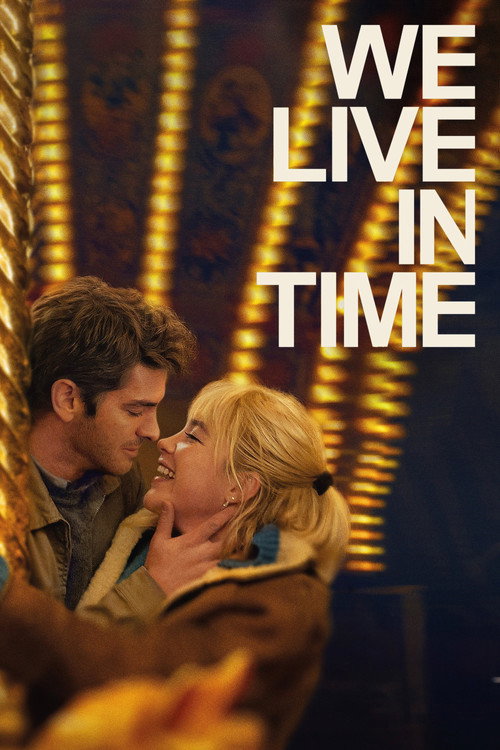
Tobias Durand is a chef chasing perfection in London's high-pressure kitchens, while Almut Brühl is a German mother trying to piece her life back together after a divorce. Their worlds collide in a chaotic car accident that leads to a meeting at a community garden, sparking an instant and magnetic connection between two people who thought they were done with love.
Director John Crowley and writer Nick Payne structure this decade-spanning romance as a fragmented mosaic rather than a straight line. The narrative jumps between the exhilarating early days of their courtship, the messy realities of raising children, and the quiet intimacy of shared meals. This non-linear approach mirrors how memory actually works, presenting moments of joy and sorrow out of order to show how deeply intertwined their lives have become.
Availability and pricing can change. Confirm on the provider's site before purchasing.
The story begins by introducing Tobias, a talented but demanding chef navigating the competitive culinary scene of London, and Almut, a resilient woman adjusting to single parenthood with her young daughter, Ella. Their first interaction is anything but romantic; it involves a fender bender and a subsequent encounter where their initial friction quickly dissolves into genuine curiosity. As they spend more time together, the film shifts through various timelines, showing us glimpses of their life before they met, the rapid acceleration of their romance, and the slow, steady build of a family unit.
We see them move into a home together, where Tobias brings his passion for cooking into their daily routine. The kitchen becomes a central character, filled with the sounds of chopping, sizzling, and laughter. These scenes highlight the sensory nature of their bond, emphasizing how food serves as a language of love between them. Almut struggles to balance her new relationship with the responsibilities of being a mother, while Tobias learns to navigate the complexities of step-parenthood and the lingering shadows of his own past.
The middle section of the film delves deeper into the challenges they face as a couple. They argue over household chores, financial stress, and the exhaustion of parenting. Despite these conflicts, their commitment remains unshaken. The narrative introduces supporting characters like Tobias's father, Simon, and Almut's ex-husband, adding layers to their domestic dynamic. The film captures the specific texture of British and European life, from bustling city streets to the quiet corners of their home.
A significant turning point occurs when a medical diagnosis looms over their relationship, casting a long shadow that alters how they perceive every passing day. The film focuses heavily on the ordinary aspects of their lives, the arguments over chores, the laughter shared over dinner, the exhaustion of parenting, and the small gestures of affection, that accumulate to form the extraordinary architecture of a life built together. The tension builds as the characters grapple with the limitations of their situation, trying to find meaning and joy in the face of uncertainty.
The narrative weaves back and forth, showing us the aftermath of certain events before revealing the causes, forcing the audience to piece together the emotional trajectory of the couple. Key story beats include the birth of their second child, the strain placed on their careers, and the gradual realization that their future is not what they initially envisioned. The film captures the specific texture of British and European life, from the bustling streets of London to the quiet corners of their home. It is a meditation on memory and the way love persists even when the world around it seems to be crumbling. The climax approaches as the couple faces a critical juncture that will define the rest of their lives, testing the very foundations of their commitment to one another. The story asks whether love can truly conquer all, or if it is simply enough to live fully in the time that remains, regardless of the outcome. The journey is marked by a poignant blend of humor and heartbreak, leaving the audience to wonder how far two people can go when the clock is ticking louder than ever.
Official Trailer
Critical Consensus
Critics praise the film for its non-linear storytelling and the chemistry between Garfield and Pugh, calling it a tear-jerker that masterfully balances romance and tragedy. The performances are highlighted as career-best work, delivering an emotional depth that resonates long after the credits roll.
“Garfield and Pugh are luminous here, finding a rhythm in their chaos that feels both urgent and timeless. It is a movie that demands you feel everything.”
A.O. Scott
The New York Times
“A devastatingly good film that uses its fractured timeline to show how love survives even when time runs out. Pugh is heartbreaking, and Garfield is magnificent.”
Peter Bradshaw
The Guardian
“John Crowley has crafted a masterpiece of modern romance, proving that the most profound stories are often the ones told in fragments. A must-see for anyone who believes in love.”
David Ehrlich
IndieWire
“This is a film that cuts deep, not because of the tragedy, but because of the sheer authenticity of the love story. It's a rare gem that lingers in the mind.”
Owen Gleiberman
Variety
Andrew Garfield
Tobias Durand
Florence Pugh
Almut Brühl
Grace Delaney
Ella
Lee Braithwaite
Jade
Aoife Hinds
Skye
Adam James
Simon Maxson
Douglas Hodge
Reginald
Amy Morgan
Leah
Niamh Cusack
Sylvia
Lucy Briers
Dr. Kerri Weaver
Robert Boulter
Dr. Hernandez
Nikhil Parmar
Sanjaya
Director
John Crowley
Writer
Nick Payne
Composer
Bryce Dessner
Cinematographer
Stuart Bentley
Producers
Leah Clarke, Adam Ackland, Guy Heeley
Toronto International Film Festival (2024)
Special Presentations: Premiere
BFI London Film Festival (2024)
Gala Presentation: Screening
Join the community
fans discussing