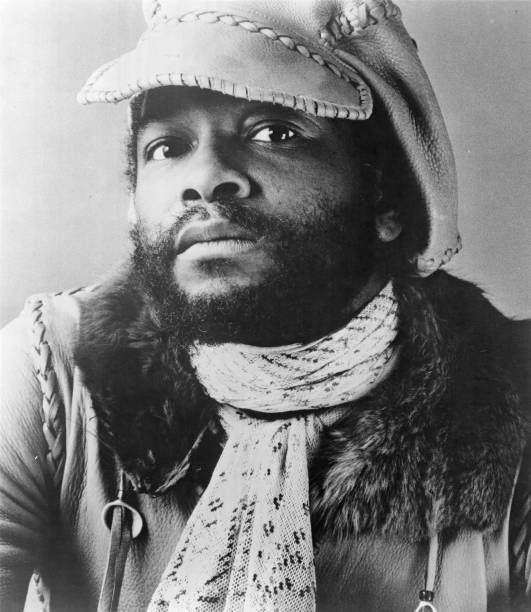
Wayne Shorter
 Jersey
Member of Weather Report
Jazz saxophonist•composer•bandleader
Birthday
August 25, 1933
Birth Sign
Virgo
Birthplace
Newark, New Jersey
Age
Died at 89
About
Wayne Shorter was an American jazz saxophonist, composer, and bandleader, who passed away on March 2, 2023, in Los Angeles at the age of 89. He was widely regarded as one of modern jazz's most significant and innovative figures. Across a career that spanned more than six decades, Shorter earned 12 Grammy Awards and the Polar Music Prize, receiving international recognition for his original compositions, profound harmonic sensibility, and transformative approach to improvisation.
His musical identity was marked by a shift in the late 1960s from primarily playing the tenor saxophone to focusing on the soprano saxophone, an instrument he mastered and with which he achieved sustained critical acclaim. Shorter's work consistently influenced generations of musicians, solidifying his stature through a distinctive style characterized by narrative depth and philosophical underpinnings. He was celebrated for his ability to craft complex yet accessible musical landscapes.
Early Life & Background
Wayne Shorter's journey into music began after his birth in Newark, New Jersey, on August 25, 1933. Growing up in a vibrant urban environment, he was exposed to various musical traditions that would later inform his distinctive style. His early education in Newark helped lay a foundation, though specific details regarding his initial musical studies or formal training are not extensively documented in public records. He developed an early aptitude for the tenor saxophone, which would be his primary instrument for the initial phase of his career.
The cultural landscape of the mid-20th century in New Jersey and New York City was a fertile ground for the burgeoning jazz scene, and Shorter immersed himself in this dynamic world. While detailed accounts of his childhood and early interests remain private, his eventual mastery of his instrument and his unique compositional voice suggest a period of intense dedication and exploration during his formative years. This foundational period, though less publicized than his later achievements, was essential in shaping the musician he would become, preparing him for the pivotal roles he would play in jazz history.
Career Growth
Shorter's career gained significant momentum in 1959 when he joined Art Blakey's Jazz Messengers. Within this influential ensemble, he quickly established himself as a primary composer and a defining creative voice, contributing substantially to the group's repertoire. A truly transformative period began in 1964 when he became a member of Miles Davis's Second Great Quintet. Here, Shorter's compositions and performances were instrumental in shaping one of the most innovative and influential eras in jazz, pushing the boundaries of the genre.
By 1970, Shorter co-founded the jazz fusion band Weather Report with keyboardist Joe Zawinul, an endeavor that brought him international acclaim. Weather Report redefined the possibilities of electric jazz, blending improvisational freedom with intricate arrangements and global influences. Concurrently, Shorter pursued a prolific solo career, recording over 20 albums as a bandleader. Many of his compositions, including those written for Davis, Weather Report, and his own projects, became enduring jazz standards, recognized for their harmonic sophistication and narrative depth. His artistic pursuits continued through various collaborations and solo efforts until his passing in 2023.
Career Timeline
Public Image & Style
Wayne Shorter cultivated a public image defined by his profound musical intellect and an enigmatic presence. He was often described as an intrepid and introspective artist, whose approach to jazz was both innovative and deeply considered. Media and fans alike perceived him as a visionary, capable of pushing musical boundaries while maintaining a distinct, recognizable voice.
The New York Times music critic Ben Ratliff once characterized Shorter as "probably jazz's greatest living small-group composer and a contender for greatest living improviser," a description that captured the respect and admiration he commanded within the jazz community. His philosophical outlook on music resonated with audiences who appreciated the depth and complexity embedded in his compositions and improvisations.
Fame & Fandom (iFAMOUS Rankings)
The audience for Wayne Shorter has never coalesced into a formal, named collective like those surrounding pop icons. Instead, his following consists of musicians, scholars, and audiophiles who engage through critical appreciation and the preservation of live recordings rather than coordinated campaigns or organized chart-pushing efforts. This organic fanbase interacts with his legacy via academic study and deep listening, valuing his role as a mentor who elevated the genre itself over direct celebrity engagement. The cultural mythology surrounding him centers on his pivotal evolution of jazz and the tragic end of his life, which triggered a global outpouring of grief from major institutions. A recurring story in this lore involves the foundational myth that without his work in Weather Report, the development of jazz rap would not exist in its current form. Another narrative highlights how he and Joe Zawinul fundamentally changed the language of jazz by blending rock, funk, and Latin rhythms, a tale often illustrated by anecdotes of unknown young men approaching the band after gigs to express inspiration. While no crowds have ever shut down streets for his performances, the reverence shown to his compositions remains absolute. Despite this enduring influence across generations of artists, iFANN's Global Fame Engine has evaluated this person, but they do not currently hold a placement in the published rankings.
Interesting Facts and Legends
Wayne Shorter demonstrated remarkable dominance in music polls following his shift to the soprano saxophone in the late 1960s. Beginning in 1970, he won DownBeat magazine's critics' poll for soprano saxophone for ten consecutive years. He also secured the readers' poll for soprano saxophone an impressive eighteen times. His music was often described as deeply philosophical, with critics frequently noting the narrative quality of his compositions. Shorter approached improvisation not merely as a technical exercise but as a form of storytelling, imbuing his solos with a sense of developing plot and character. A widely retold legend in the jazz community suggests that without Shorter's work in Weather Report, the development of jazz rap would not exist in its current form. Another recurring story involves the band's unique compositional process where Shorter and Joe Zawinul co-led the group to change the language of jazz. A specific anecdote describes an unknown young man approaching Shorter and Zawinul after a gig in South America, illustrating the band's ability to attract future talent directly on the road. These narratives underscore his status as a visionary whose influence extended far beyond traditional jazz boundaries.
Family & Personal Life
Information regarding Wayne Shorter's family life, including details about his parents, siblings, or any children, is not extensively detailed in the publicly available research. He maintained a relatively private personal life throughout his long career. Any insights into his household or family values largely remain outside the public domain, focusing instead on his profound musical contributions.
Notable Connections
Wayne Shorter's career was closely tied to several highly influential jazz ensembles and musicians. He was a crucial member of Art Blakey's Jazz Messengers in the late 1950s, where he honed his compositional skills. Later, he became an integral part of Miles Davis's Second Great Quintet in the 1960s, contributing significantly to that group's innovative sound. In 1970, he co-founded Weather Report with Joe Zawinul, shaping the landscape of jazz fusion. He also collaborated with artists like Herbie Hancock on various projects.
Relationships & Dating History
Public records do not provide extensive details regarding Wayne Shorter's personal relationships or marital history. His focus remained largely on his musical career, and he maintained a private stance concerning his dating life. Information about any spouses or long-term partners is not widely publicized in the available research.
Death & Aftermath
Died
March 2, 2023 (aged 89)
Death Place
Los Angeles, California
Cause of Death
Natural causes
Wayne Shorter died on March 2, 2023, in Los Angeles, California, at the age of 89. The cause was attributed to natural causes according to statements from his family and confirmed by major news outlets including The New York Times and Britannica. His final days remained out of the public eye following a retirement from touring in 2021 due to health issues, though he continued composing until shortly before his passing. The music community responded with immediate tributes, highlighted by a comprehensive obituary in The New York Times titled "Wayne Shorter, Innovator During an Era of Change in Jazz, Dies at 89." The Herbie Hancock Institute of Jazz issued statements honoring him as one of the greatest jazz artists of all time, while moments of silence were observed at various jazz venues and institutions.
A surge in streaming and sales of his catalog accompanied the widespread media coverage, leading to continued releases of tribute content in subsequent years. Details regarding the specific date, location, or nature of any funeral or burial service have not been made public. Posthumous recognition has included anniversary tributes such as the 2026 celebration of his music by Markowitz's Palladium concert series and birthday tributes by artists like Robbie Love. His compositions remain enduring standards, and his legacy continues to be celebrated globally through ongoing performances and honors.
Net Worth (Estate Value)
$15 Million
iFANN Editorial Team estimate
At the time of his passing, Wayne Shorter's estate was valued at an estimated $15 Million per iFANN's editorial analysis. His wealth was primarily accumulated through his extensive career as a jazz saxophonist, composer, and bandleader, spanning over six decades. A significant portion of his earnings came from album sales, both from his solo releases and his work with influential groups like Art Blakey's Jazz Messengers, Miles Davis's Second Great Quintet, and Weather Report. Royalties from his numerous compositions, many of which became jazz standards, also contributed substantially to his financial standing. Posthumous earnings for his estate continue from licensing his vast musical catalog for various uses, as well as ongoing album sales and streaming revenue. The consistent demand for his work, even after his death, ensures a steady revenue stream for his estate, managed to preserve his musical legacy.
Awards Won (49)
Wayne Shorter received considerable recognition throughout his career for his profound contributions to jazz. He was honored with 12 Grammy Awards, acknowledging his excellence in both performance and composition across various jazz categories. Beyond the Grammys, he also received the prestigious Polar Music Prize and was recognized as an NEA Jazz Master, underscoring his lasting impact on the genre.
2023 · Best Improvised Jazz Solo
"Endangered Species"
2021 · Best Jazz Instrumental Album
Live at the Detroit Jazz Festival
2019 · Best Jazz Instrumental Album
Emanon
2018 · Best Large Jazz Ensemble Album
Emanon
2018 · Best Jazz Instrumental Album
Emanon
2014 · Best Jazz Instrumental Solo
"Orbits"
2013 · Best Jazz Instrumental Album
Without a Net
2005 · Best Instrumental Composition
Ceramics
2005 · Best Jazz Instrumental Album, Individual or Group
Beyond the Sound Barrier
2005 · Best Jazz Instrumental Performance, Individual or Group
Beyond the Sound Barrier
2003 · Best Instrumental Composition
Sacajawea
2003 · Best Jazz Instrumental Album, Individual or Group
Alegria
2003 · Best Jazz Instrumental Performance, Individual or Group
Alegría
1999 · Best Jazz Instrumental Solo
"In Walked Wayne"
1997 · Best Instrumental Composition
"Aung San Suu Kyi"
1996 · Best Jazz Instrumental Performance, Individual or Group
Alegria
1996 · Best Contemporary Jazz Album
High Life
1994 · Best Jazz Instrumental Performance, Individual or Group
High Life
1988 · Best Instrumental Composition
Call Sheet Blues
1987 · Best Instrumental Composition
"Call Sheet Blues"
1979 · Best Jazz Fusion Performance, Vocal Or Instrumental
8:30
2014 · Lifetime Achievement
Career
Known For
Speak No Evil
1966 · Composer, Saxophonist
Footprints
1966 · Composer
Nefertiti
1968 · Composer
Palladium
1977 · Composer
Keywords
Sources
Quick Facts
- Profession
- Jazz saxophonist, composer, bandleader
- Born
- August 25, 1933
- Birthplace
- Newark, New Jersey
- Died
- March 2, 2023
- Death Place
- Los Angeles, California
- Gender
- Male
- Birth Sign
- Virgo
Frequently Asked Questions
How did Wayne Shorter die?
What was Wayne Shorter's net worth at the time of his death?
What was Wayne Shorter best known for?
Which groups was Wayne Shorter a part of?
How many Grammy Awards did Wayne Shorter win?
Join the community
fans discussing