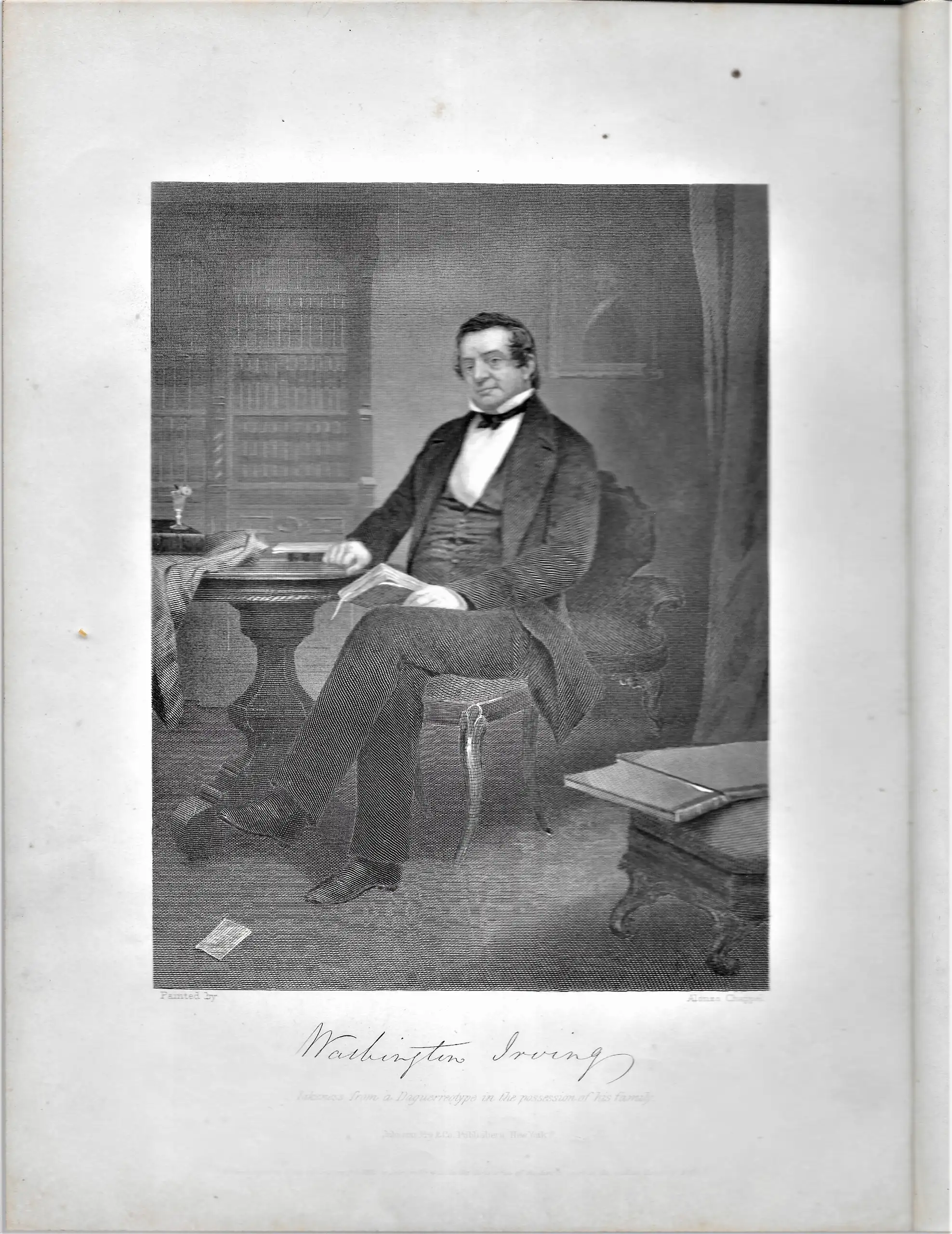
Washington Irving
short-story writer•essayist•biographer•historian•diplomat
Also known as: Diedrich Knickerbocker, Jonathan Oldstyle, Geoffrey Crayon
Birthday
April 3, 1783
Birth Sign
Aries
Birthplace
New York City
Age
Died at 76
About
Washington Irving was an American short-story writer, essayist, biographer, historian, and diplomat widely regarded as the first American author to achieve international fame. Born in Manhattan to a prosperous merchant family during the final year of the American Revolutionary War, he carved out a unique space as both a statesman and a storyteller. His career began with sharp observational letters under the pseudonym Jonathan Oldstyle for the Morning Chronicle in 1802. A temporary move to England in 1815 to handle family business proved pivotal, launching his international fame when he published The Sketch Book of Geoffrey Crayon, Gent. between 1819 and 1820.
Irving's legacy rests on works like "Rip Van Winkle" and "The Legend of Sleepy Hollow," which became foundational texts in American literature. He also served as a U.S. diplomat in London and Spain, producing significant historical biographies including a five-volume life of George Washington. Even after his death in 1859, his estate at Sunnyside remains a National Historic Landmark, and his stories continue to be adapted for stage and screen around the world.
Early Life & Background
Born on April 3, 1783, near present-day Wall Street in New York City, Washington Irving was the youngest of eleven children born to William Irving, a successful Scottish immigrant merchant, and Sarah Livingston Irving. His upbringing was marked by wealth and exposure to diverse cultures due to his father's trade connections. Irving attended a private school run by a Scottish tutor and later studied law under Judge James Kent, though he found little interest in the legal profession.
His early interests lay in literature and history rather than commerce or law. At age 14, he began writing for the Morning Chronicle under the pseudonym "Jonathan Oldstyle," publishing sharp observational letters that showcased his wit and satirical eye. These essays, published between 1802 and 1803, were his first steps toward a literary career. Despite pressure from his family to pursue law or business, Irving devoted himself to writing, often working in isolation at his family home or traveling to absorb new experiences.
A pivotal moment occurred in 1804 when he traveled to Europe with his brother to recover from tuberculosis. This trip exposed him to European culture and inspired much of his later work. In 1815, Irving moved to England to manage his family's failing import business. While the business failed, this period proved transformative for his writing. Living in Birmingham and London, he immersed himself in English folklore and history, eventually publishing The Sketch Book of Geoffrey Crayon, Gent. (1819–1820), which included his most famous stories: "Rip Van Winkle" and "The Legend of Sleepy Hollow." This collection catapulted him to international stardom, making him the first American author to gain serious respect across the Atlantic.
Career Growth
Irving's career can be divided into several distinct phases, starting with his literary debut in 1802. He published his first letters under the pseudonym "Jonathan Oldstyle" for the Morning Chronicle. In 1807, he co-authored A History of New-York, written under the pseudonym Diedrich Knickerbocker, a satirical take on early New York history that became a bestseller. By 1809, he had solidified his reputation as a humorist.
His international breakthrough came between 1819 and 1820 with the publication of The Sketch Book of Geoffrey Crayon, Gent., containing "Rip Van Winkle" and "The Legend of Sleepy Hollow." This work earned him acclaim in both America and Europe, establishing him as a major literary figure. He followed this with Bracebridge Hall in 1822 and Tales of a Traveller in 1824. During this time, he also entered diplomatic service, serving as secretary to the U.S. legation in London starting in 1826 and later as Secretary of Legation in Madrid, Spain, from 1829 to 1832.
During his time in Spain, Irving conducted extensive research on Spanish history and culture, leading to the publication of A Chronicle of the Conquest of Granada in 1832. He purchased and renovated Sunnyside in 1835, which became his primary residence and a hub for literary and political figures. Later in his career, he served as the U.S. Minister to Spain under President John Tyler in 1842. He published Life of Oliver Goldsmith in 1843 and completed his monumental five-volume biography, Life of George Washington, in 1855. His final years were dedicated to writing and managing his estate until his death in 1859.
Career Timeline
Public Image & Style
Washington Irving is remembered as a pioneering American author who helped establish a distinct national literature. His works are characterized by their blend of humor, romance, and historical insight. Media portrayals of Irving emphasize his role as a diplomat and writer, highlighting his contributions to both American and international culture. His signature style includes vivid descriptions, witty dialogue, and a deep appreciation for folklore and history. Contemporary accounts describe him as having a dignified presence with long hair and a beard.
Fame & Fandom (iFAMOUS Rankings)
As of the September 2026 rankings, iFANN's Global Fame Engine has evaluated Washington Irving, but he does not currently hold a placement in the published rankings (Global Top 1,000 or a Top-100 scope list). While he lacks a modern numerical rank, his cultural footprint remains massive through his enduring influence on American literature.
There is no established fandom name for Washington Irving, as he lived in the 19th century and did not have a fanbase in the modern sense. However, his works continue to inspire scholars, students, and enthusiasts of American literature. Notable fan campaigns include the preservation of Sunnyside as a historic site and the ongoing publication of his works in new editions. Fans often gather for literary festivals and readings to celebrate Irving's legacy. Recent events in 2026 include a stage production of "The Legend of Sleepy Hollow" by R'ville Stage Creations and a new edition of The Sketch Book featuring commentary by Phillip Lopate, keeping his stories alive for new generations.
Interesting Facts and Legends
Washington Irving used multiple pseudonyms throughout his career, including "Jonathan Oldstyle," "Diedrich Knickerbocker," and "Geoffrey Crayon." He was named after George Washington, reflecting the patriotic sentiment of the era. Irving suffered from tuberculosis throughout his life, which influenced his decision to travel to Europe for health reasons. His estate, Sunnyside, was designed in a unique Gothic Revival style and included a library that housed over 3,000 books.
The story of Rip Van Winkle, who slept for 20 years and woke up to find his village transformed, is one of the most retold legends in American folklore. It symbolizes the rapid changes in American society during the late 18th and early 19th centuries. The tale of Ichabod Crane and the Headless Horseman has become a cultural icon, inspiring countless adaptations in literature, film, and theater. When The Sketch Book was published, it caused extraordinary reactions among readers, with crowds gathering to discuss the stories and demand copies.
Notable Quotes
“I am a child of the world, and I love my country.”
“Literature is the art of discovering something extraordinary about ordinary people, and saying with extraordinary force what is common to all of us.”
Family & Personal Life
Washington Irving was the youngest of eleven children born to William Irving, a successful Scottish immigrant merchant, and Sarah Livingston Irving. His upbringing was marked by wealth and exposure to diverse cultures due to his father's trade connections. Throughout his life, he maintained close friendships with various women, including his sister Ann and his cousin Margaret, but there is no record of any romantic relationships, engagements, or marriages. He lived with his sister Ann and other family members at Sunnyside, and his household was known for its warmth and hospitality. Irving remained single throughout his life, dedicating himself entirely to his writing and public service.
Notable Connections
Relationships & Dating History
Washington Irving never married. Throughout his life, he maintained close friendships with various women, including his sister Ann and his cousin Margaret, but there is no record of any romantic relationships, engagements, or marriages. He lived with his sister Ann and other family members at Sunnyside, and his household was known for its warmth and hospitality. Irving remained single throughout his life, dedicating himself entirely to his writing and public service. His bachelorhood allowed him the freedom to travel extensively and focus on his literary and diplomatic careers without the constraints of a traditional family structure.
Death & Aftermath
Died
November 28, 1859 (aged 76)
Death Place
Tarrytown, New York
Cause of Death
Complications from heart condition and old age
Washington Irving spent his final years at Sunnyside, the Tarrytown estate he had purchased and renovated in 1835, where he remained active in writing and social life until shortly before his passing. He died on November 28, 1859, at the age of seventy-six. The event occurred privately within his home without the need for hospitalization or public medical intervention, reflecting the status of the era and his standing in New York society. Tributes poured in from peers and institutions who recognized him as one of America's most distinguished literary figures. His funeral was a private affair attended by family and close friends, resulting in his burial in the Irving Family Cemetery located on the grounds of Sunnyside. Following his death, his extensive library of works continued to generate revenue and remain in print globally, while his estate was managed by family executors who eventually preserved Sunnyside as a historic site open to the public.
Net Worth (Estate Value)
$5 Million
iFANN Editorial Team estimate
As a deceased individual, Washington Irving's net worth is represented by the value of his estate. The estate continues to generate revenue through tourism, licensing of his works, and royalties from publications. The exact value of the estate is not publicly disclosed, but it is estimated to be in the millions of dollars due to the enduring popularity of his works and the historical significance of Sunnyside. Research by the iFANN Editorial Team puts his estate's value at around $5 million, reflecting the ongoing commercial viability of his intellectual property and the museum operations at his former home.
Awards & Accolades
View 7 records, honours and achievementsKnown For
Rip Van Winkle
1819 · Author
The Legend of Sleepy Hollow
1820 · Author
The Sketch Book of Geoffrey Crayon, Gent.
1819 · Author
A History of New-York
1809 · Author
Life of George Washington
1855 · Biographer
Keywords
Sources
Quick Facts
- Profession
- politician, lawyer, writer
- Born
- April 3, 1783
- Birthplace
- New York City
- Died
- November 28, 1859
- Death Place
- Tarrytown
- Gender
- Male
- Birth Sign
- Aries
Personal Details
- Full Name
- Washington Irving
- Children
- Education
- Private school run by a Scottish tutor; studied law under Judge James Kent
Frequently Asked Questions
Who was Washington Irving?
When did Washington Irving die?
What is Washington Irving's most famous work?
Did Washington Irving ever get married?
Where is Washington Irving buried?
Similar People
Join the community
fans discussing