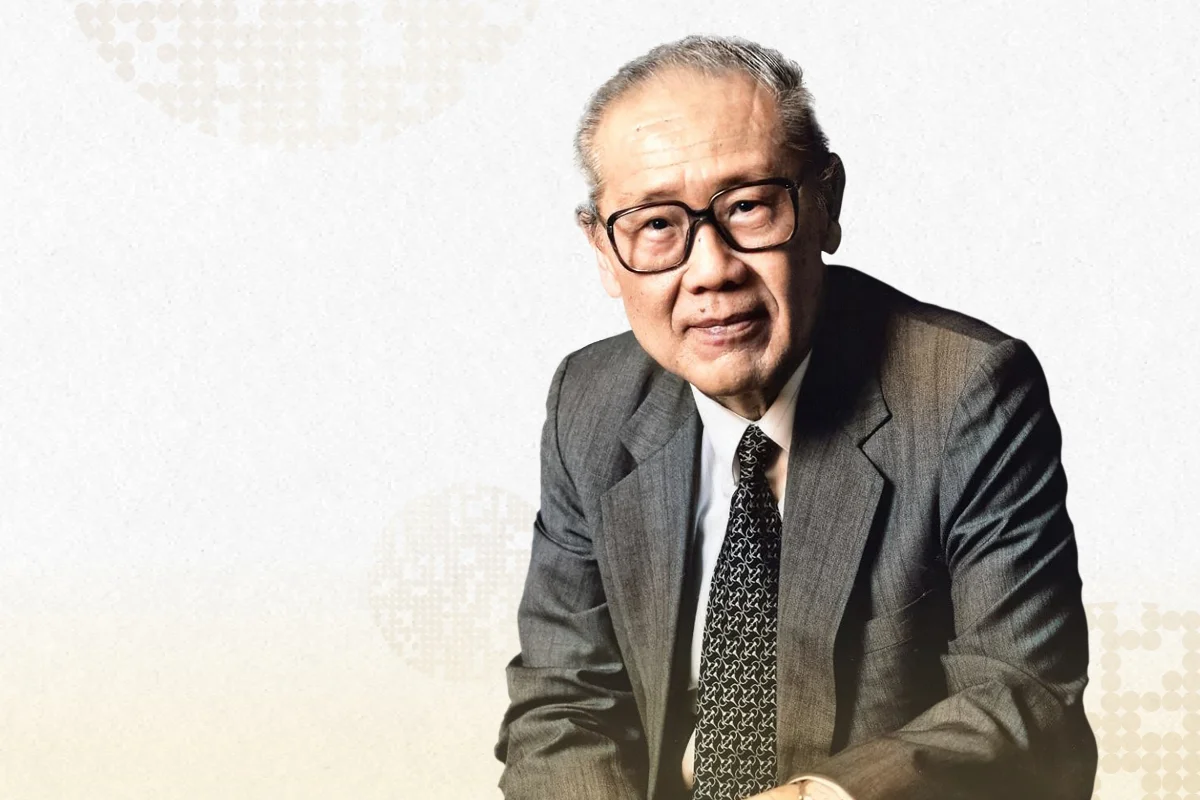
Wang Gungwu
Awards & Honours
1
Awards Won
5
Honours
2
Records
Wang Gungwu's career is marked by a series of historic firsts and enduring contributions. He pioneered the study of the Chinese diaspora as a diverse, adaptive phenomenon, challenging monolithic views that had dominated scholarship. His application of the concept of tianxia to modern geopolitics opened a new line of inquiry that continues to influence international relations theory. The Tang Prize, often described as the Nobel Prize for Asian studies, recognized his lifetime of work in 2020. He has held the highest academic positions in three countries and has shaped generations of scholars through his teaching and writing.
Awards
Honours & Distinctions
Fellow of the American Academy of Arts and Sciences
Elected as a member of one of the oldest learned societies in the United States.
Tang Prize in Sinology
Awarded for his outstanding contributions to the study of China and the Chinese diaspora.
Wang Gungwu Lecture
An annual lecture series in Australia named in his honor, celebrating the work of a prominent Chinese Australian.
Wang Gungwu Visiting Fellows Programme
A fully funded fellowship program for researchers and policymakers, named after him.
Wang Gungwu Professor in East Asian Affairs
A named chair at NUS held in his honor, currently occupied by Professor Joseph Chinyong Liow.
Records & Feats
First scholar to apply tianxia to modern global politics
Wang Gungwu was the first to suggest that the ancient Chinese concept of tianxia could be used to analyze contemporary international relations, coining the phrase 'American tianxia.'
Pioneer of Chinese diaspora studies
His work in the 1950s and 1960s established the study of overseas Chinese communities as a distinct academic field, challenging the notion of a monolithic diaspora.