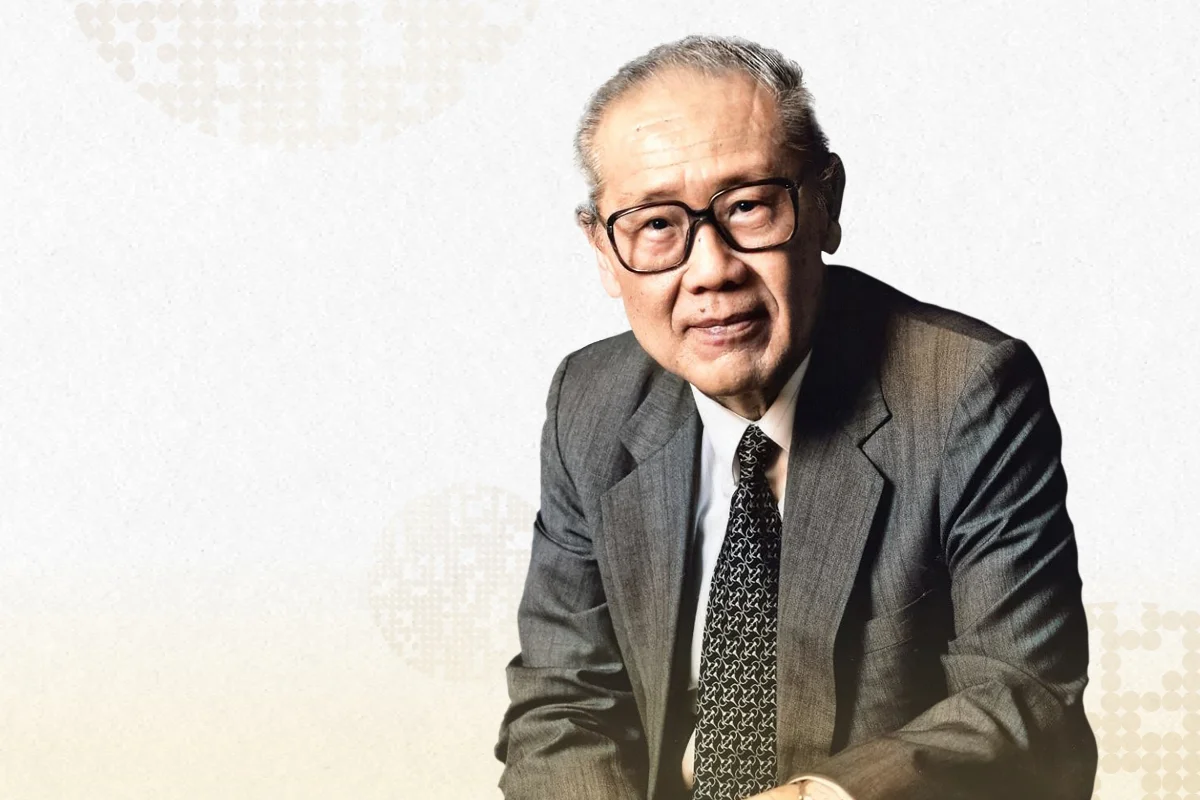
Wang Gungwu
 Singapore
Also known as: Gungwu Wang
Birthday
October 9, 1930
Birth Sign
Libra
Birthplace
Surabaya, Indonesia
Age
95 years old
About
Wang Gungwu is a Chinese Australian historian and sinologist whose work has reshaped how scholars and policymakers understand China and Southeast Asia. Born in Surabaya, Indonesia, in 1930, he has spent more than six decades probing the long arc of Chinese history and the lives of Chinese communities scattered across the globe. His books, more than thirty of them, are standard references in university libraries from Singapore to Oxford.
His most distinctive intellectual move came when he took the ancient Chinese concept of tianxia, or "all under heaven," and applied it to the modern world, famously describing an "American tianxia" to capture the shape of contemporary global power. That idea, first articulated in the 1990s, still sparks debate in policy circles and lecture halls. In 2020 he received the Tang Prize in Sinology, one of the field's most prestigious honors.
Now in his mid-nineties, Wang remains an active presence in public life. His 2026 memoir, No Borders: Journeys Across Islands and Continents, traces a life lived across empires and nations, and his voice continues to carry weight in discussions of China's rise and the fate of the Chinese diaspora.
Early Life & Background
Wang Gungwu was born on October 9, 1930, in Surabaya, a port city in what was then the Dutch East Indies. His parents had come from Jiangsu province in China, an unusual origin among the ethnic Chinese of the region, who were mostly from Fujian or Guangdong. That mix of circumstances, a Chinese family in a colonial Southeast Asian city, set the stage for a life spent navigating multiple worlds.
His childhood was shaped by the upheavals of the 1930s and 1940s: the Great Depression, the Japanese occupation of Southeast Asia, and the struggle for independence that followed. The family moved across the region, and Wang experienced firsthand what it meant to be part of a minority community in a time of war and revolution. These early years gave him a deep, personal understanding of the Chinese diaspora, a subject he would later transform into a field of study.
He pursued higher education in the late 1940s, studying at the National Central University in Nanjing before moving to Singapore, where he completed his undergraduate degree at the University of Malaya. He then went to the School of Oriental and African Studies in London for his doctorate, writing a thesis on the history of the Five Dynasties and Ten Kingdoms period. That academic path, from the peripheries of the Chinese world to its imperial heartlands, gave him a perspective that few of his peers shared.
Career Growth
Wang Gungwu's breakthrough came in the 1950s and 1960s, when he began publishing work that challenged the prevailing view of overseas Chinese communities as a single, homogeneous bloc. His early studies, including The Nanhai Trade (1958) and A Short History of the Nanyang Chinese (1959), argued that Chinese migrants adapted to local conditions in ways that varied enormously from place to place. That insight, now taken for granted, was radical at the time.
He held academic posts in Singapore and Kuala Lumpur before being appointed to the chair of Chinese history at the Australian National University in 1968. From 1986 to 1995 he served as Vice-Chancellor of the University of Hong Kong, steering it through a period of rapid expansion and the transition toward Chinese rule. In 2007 he became University Professor at the National University of Singapore, a position he still holds.
His later work turned to grand themes of Chinese civilization, including the idea of tianxia and its relevance to the modern order. In 2020 he won the Tang Prize, and in 2021 he delivered its lecture, "China's road from wen to shi." His memoir, No Borders, appeared in 2026, and he continues to write and speak with undiminished energy.
Career Timeline
Public Image & Style
Wang Gungwu is widely regarded as a scholar-statesman, a figure whose academic authority extends into the worlds of policy and public debate. In media portrayals, he is the wise elder of Chinese studies, someone who has lived the history he writes about. His tone is measured, reflective, and often gently ironic, and he is known for his ability to speak plainly about complex subjects.
He does not have a fandom in the popular sense, but he commands deep respect within academic and policy communities. The Wang Gungwu Lecture in Australia and the Wang Gungwu Visiting Fellows Programme at NUS are named in his honor, and his name lends weight to any project it is attached to. His public image is that of a man who has spent a lifetime crossing borders, intellectual and geographical, and who has done so with grace and humility.
Fame & Fandom
Wang Gungwu commands a sphere of influence distinct from the performative adoration reserved for entertainers, as his following is composed entirely of scholars, policymakers, and students rather than a fanbase with rituals or collective monikers. His public profile is defined by intellectual authority and decades of shaping discourse on Chinese history and the diaspora, with no organized campaigns, birthday billboards, or viral incidents attached to his name. The audience he engages consists of researchers and intellectuals who interact with him through lectures, book launches, and academic dialogues, treating his work as essential reference material rather than pop culture content. Despite this lack of traditional fandom structures, his global standing remains formidable within his specific domains of expertise. In August 2026, iFANN evaluated his status and determined that Wang Gungwu does not currently hold a placement in the published Global Top 1,000 rankings or any Top-100 scope list. Consequently, he is not ranked numerically against other global figures at this time.
Interesting Facts and Legends
Born in Surabaya, Indonesia, to parents from Jiangsu province, Wang Gungwu was part of a rare demographic combination among the ethnic Chinese of the Dutch East Indies. He holds the distinction of being the first scholar to apply the ancient concept of tianxia to modern global politics, coining the phrase "American tianxia" to describe contemporary power structures. His administrative legacy includes serving as Vice-Chancellor of the University of Hong Kong for nearly a decade and holding the rank of University Professor at the National University of Singapore since 2007. The annual Wang Gungwu Lecture in Australia honors prominent Chinese Australians, with the 2026 edition delivered by Professor Kelvin Kong. A defining legend of his career involves his pioneering redefinition of the Chinese in Southeast Asia as a diverse, integrated population rather than a monolithic group, a perspective now cited as central to modern sinology. In early 2026, his memoir No Borders: Journeys Across Islands and Continents drew significant attention during its launch in Singapore, where he recounted his transition from a child born in Surabaya to a key figure in regional academia. His continued relevance as a 95-year-old authority was highlighted in late 2025 and 2026 when he provided commentary on geopolitical shifts involving China and the United States.
Notable Quotes
“We did not expect to have so much to learn from Singapore.”
“The lessons of history must be made to work for us.”
Family & Personal Life
Wang Gungwu's family background is central to his identity. His parents migrated from Jiangsu province in China to Southeast Asia, settling in Surabaya, where he was born. The family moved frequently during his childhood, a pattern that continued into his own adult life as he took up positions in Singapore, Malaysia, Australia, Hong Kong, and back to Singapore.
His memoir, No Borders: Journeys Across Islands and Continents, published in 2026, offers a personal account of that itinerant life. It details the household he grew up in, the values his parents instilled, and the ways his family's history intersected with the great events of the twentieth century. He has spoken of the importance of maintaining ties to China while also embracing the cultures of Southeast Asia and the West.
Today he lives in Singapore, in the Novena area, where he continues to work and receive visitors. Details about his spouse and children are not widely documented in public sources, though his memoir is expected to shed light on those relationships.
Notable Connections
Wang Gungwu has collaborated with and influenced a wide circle of scholars and policymakers. He is closely associated with the National University of Singapore, where he has been a University Professor since 2007. The Wang Gungwu Professor in East Asian Affairs chair at the Lee Kuan Yew School of Public Policy is currently held by Professor Joseph Chinyong Liow. The 2026 Wang Gungwu Lecture was delivered by Professor Kelvin Kong, with welcome remarks by Australian Minister Anne Aly.
Relationships & Dating History
Wang Gungwu's personal life has not been the subject of public documentation. As a distinguished academic historian, his romantic relationships have not been covered by the media, and no information about a spouse or partner is available in the public record. His memoir, No Borders, may contain personal reflections, but specific details about his relationships are not known. As of 2026, he is 96 years old and living in Singapore.
Salary, Net Worth In 2026
No credible public estimates of Wang Gungwu's personal net worth are available. As a career academic and university administrator, his income has come from university salaries, book royalties, and honoraria for lectures and fellowships. His memoir, No Borders, published in 2026, is likely to generate additional royalty income. His financial profile is not a matter of public record, and he has never sought the kind of celebrity that would attract net worth tracking.
Awards Won (1)
Wang Gungwu's most significant award is the Tang Prize in Sinology, which he received in 2020. He is also a Fellow of the American Academy of Arts and Sciences. His work has been recognized through named lectureships and professorships, including the Wang Gungwu Lecture in Australia and the Wang Gungwu Visiting Fellows Programme at NUS.
2020 · Sinology
Lifetime achievement in Chinese diaspora studies
Known For
The Nanhai Trade
1958 · Author
A Short History of the Nanyang Chinese
1959 · Author
China and the Chinese Overseas
1991 · Author
The Chinese Overseas: From Earthbound China to the Quest for Autonomy
2000 · Author
Renewal: The Chinese State and New Global History
2013 · Author
No Borders: Journeys Across Islands and Continents
2026 · Author
Keywords
Sources
Quick Facts
- Profession
- historian, sinologist
- Born
- October 9, 1930
- Birthplace
- Surabaya, Indonesia
- Gender
- Male
- Birth Sign
- Libra
- Age
- 96
Frequently Asked Questions
Who is Wang Gungwu?
What is Wang Gungwu known for?
How old is Wang Gungwu?
What is Wang Gungwu's net worth?
Did Wang Gungwu write an autobiography?
Join the community
fans discussing