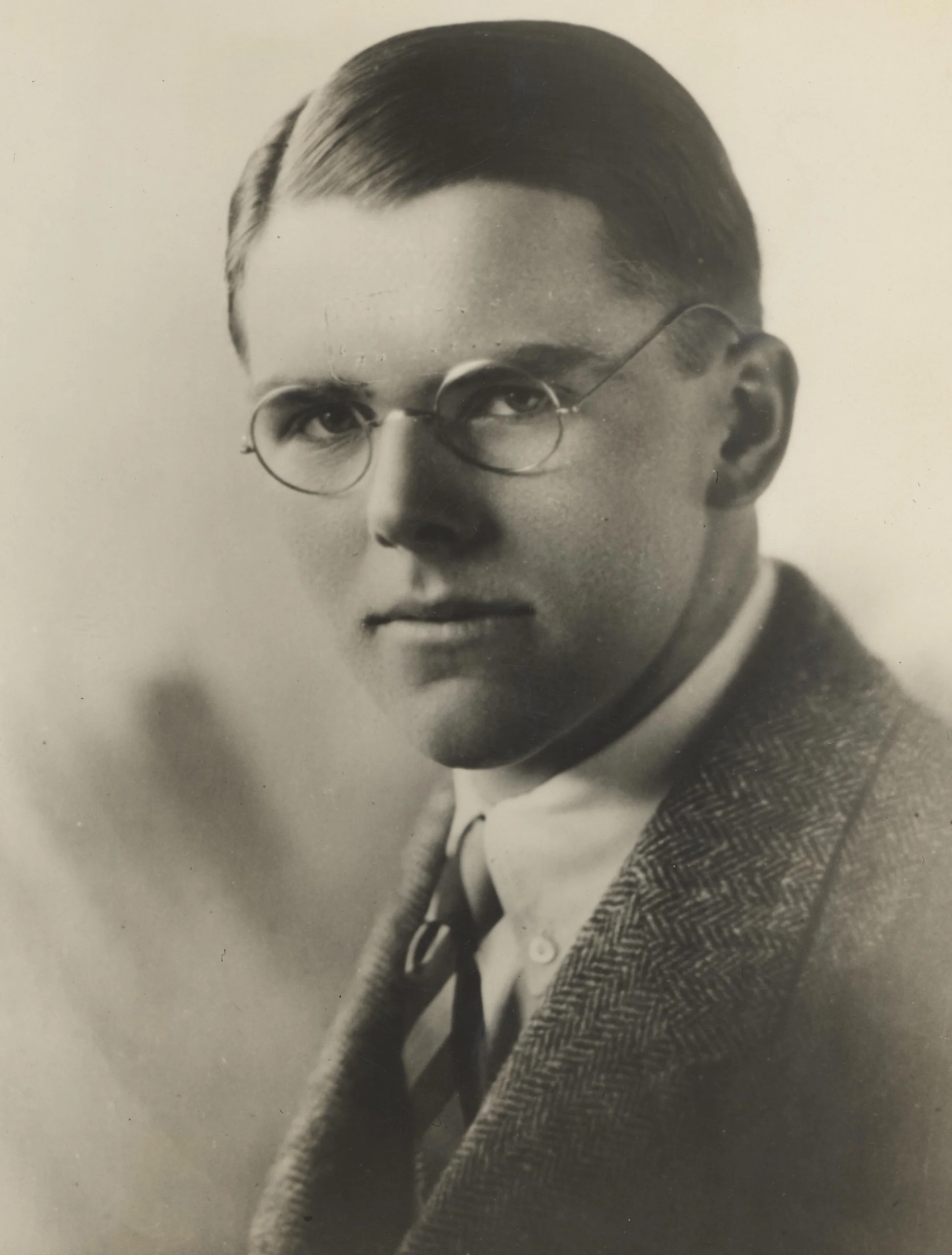
Waitstill Sharp
 United States
Also known as: Waitstill Hastings Sharp
Birthday
May 1, 1902
Birth Sign
Taurus
Birthplace
Boston, Massachusetts, USA
Age
Died at 80
About
Waitstill Hastings Sharp was an American Unitarian minister and lawyer who, with his wife Martha, carried out daring rescue missions in Nazi-occupied Europe. Born in Boston in 1902, Sharp left a comfortable parish in Wellesley, Massachusetts, to run relief operations in Prague and later in southern France, helping hundreds of refugees, many of them Jewish, escape persecution. In 2005, Yad Vashem posthumously named the couple Righteous Among the Nations, making them only the second and third Americans to receive that honor. Sharp died in 1983, but his story, long kept quiet, now stands as a powerful example of moral courage.
Early Life & Background
Waitstill Sharp was born on May 1, 1902, in Boston, Massachusetts, into a family with deep New England roots. He attended Harvard College and then Harvard Law School, earning his law degree in 1926. But the law never quite fit. Feeling a call to the ministry, Sharp pursued theological training and became an ordained Unitarian minister, taking a post at the Unitarian Universalist Society of Wellesley Hills, an affluent congregation outside Boston.
In early 1939, with war looming in Europe, the American Unitarian Association approached the couple about a humanitarian mission to Czechoslovakia. They had two young children at home, but they accepted, leaving the kids with relatives and parishioners. They departed for Prague in February 1939, expecting to stay six months. They stayed much longer, and their lives changed forever.
Career Growth
Waitstill Sharp's defining work began when he and Martha arrived in Prague in February 1939. They set up a relief operation, distributing money and supplies to refugees fleeing Nazi persecution, focusing on intellectuals, political dissidents, and Jews. When Germany occupied Czechoslovakia in March 1939, the mission shifted from relief to active rescue. Sharp engaged in what he candidly called "money laundering," using legal and semi-legal financial channels to move funds to refugees and resistance networks, a practice he justified by the tension between legal and moral ethics.
The couple helped secure visas, arrange transportation, and facilitate the emigration of hundreds of refugees to safety. After their Prague mission ended, they undertook a second mission in 1940, this time in southern France, working around Marseille to help refugees, including many Jewish children, escape. Estimates of the number they saved range from hundreds to over a thousand. After returning to the United States, Sharp resumed his ministry and legal work, rarely speaking about the war. His story only reached a wide audience in 2016 with Ken Burns' documentary Defying the Nazis: The Sharps' War, produced with his grandson Artemis Joukowsky.
Career Timeline
Public Image & Style
Waitstill Sharp's public image is that of a quiet, principled hero who risked everything to save others. He is portrayed in documentaries and historical accounts as a man of deep moral conviction who struggled with the ethical complexities of his work, as evidenced by his candid discussion of "money laundering." The Sharps are celebrated within the Unitarian Universalist community as exemplars of their faith's commitment to social justice, and their story is included in UUA educational materials. The broader public image, shaped significantly by the Ken Burns documentary, presents them as ordinary Americans who performed extraordinary acts of courage. There is no formal fandom, but the documentary has generated significant public interest and admiration, with coverage consistently reverential, emphasizing the couple's sacrifice and moral clarity in the face of overwhelming evil.
Fame & Fandom
Waitstill Sharp commanded a sphere of influence defined not by celebrity culture or pop-culture fandom, but by historical reverence and moral authority. There is no organized fanbase, no formal fandom name, and no community of followers engaging in chart campaigns, birthday billboards, or social media rituals; his legacy is maintained entirely through educational institutions, religious organizations, and historical museums rather than a dedicated public following. The figures who revere him do so as students of history or practitioners of faith, treating his life as a case study in courage rather than a source of entertainment. His most enduring legends are the verified acts of smuggling refugees from Prague and southern France between 1939 and 1940, alongside the deliberate destruction of his own records to protect those he saved. These events form a mythology of secrecy and bravery that stands apart from the viral moments or performance lore associated with modern icons. While documentaries like *Defying the Nazis: The Sharps' War* have brought his story to wider audiences, they serve as historical documentation rather than fan-driven content. As an August 2026 evaluation confirms, Waitstill Sharp is currently evaluated by the iFANN Global Fame Engine but does not hold a placement in the published rankings, meaning he is not ranked within the Global Top 1,000 or any specific scope list. Consequently, no ordinal position or numerical score applies to his current fame status. The absence of a rank reflects his standing as a figure of historical significance rather than a contemporary subject of mass consumption metrics.
Interesting Facts and Legends
Waitstill Sharp was a descendant of Mayflower pilgrim Thomas Hastings, linking him directly to America's earliest colonial history. He held both a Harvard law degree and ordination as a minister, a rare dual qualification for his era. In documentary accounts, he candidly described his financial work in Prague as "money laundering," acknowledging the ethical complexities of moving funds to aid refugees. When departing for Europe, the Sharps left their two young children behind, entrusting them to relatives and parishioners. Their story remained largely unknown for decades, with even their grandchildren only grasping the full scope of their heroism in the 2000s. Among the five Americans named Righteous Among the Nations, the Sharps were the second and third recipients. Historical records note that to protect the identities of those they smuggled out, the couple burned all their notes and papers after leaving Nazi-occupied regions. This act created a significant historical gap, forcing reliance on survivor testimonies rather than official logs. During their time hiding from the Gestapo, Sharp utilized skills such as falsifying identity cards and bribing border guards to cross into neutral countries, transforming a Harvard graduate into a fugitive operative.
Notable Quotes
“I had to do what I thought was right, even if it meant breaking the law.”
Family & Personal Life
Waitstill Sharp married Martha Sharpless, a Bryn Mawr graduate and social worker who had directed the Women's International League for Peace and Freedom. The couple had two children, whom they left in the care of relatives and parishioners when they departed for Europe in 1939. Their partnership extended to their humanitarian work, as they jointly undertook the dangerous missions to Czechoslovakia and France. The marriage endured until Waitstill's death in 1983. Their grandson, Artemis Joukowsky, became the driving force behind documenting their story, producing the Ken Burns documentary and writing the companion book. Martha Sharp survived her husband, dying in 1999. Waitstill died on February 25, 1983, in Greenfield, Massachusetts, at age 80.
Notable Connections
Relationships & Dating History
Waitstill Sharp was married to Martha Sharpless Sharp, a Bryn Mawr College graduate and social worker. They married in the late 1920s or early 1930s and remained together until his death in 1983. The couple had two children together. Their partnership extended to their humanitarian work, as they jointly undertook the dangerous missions to Czechoslovakia and France. The stress of their wartime work and separation from their children was significant, but the marriage endured. Martha Sharp survived her husband, dying in 1999. There are no records of any other romantic relationships.
- MarriedMartha Sharp1928 - 1983Married and collaborated on humanitarian missions; had two children together.
Death & Aftermath
Died
February 25, 1983 (aged 80)
Death Place
Unknown
Cause of Death
Unknown
Waitstill Hastings Sharp passed away on February 25, 1983, at the age of eighty, concluding a life defined by quiet service and moral conviction. The specific location of his death remains unrecorded in available historical accounts, though he had spent much of his later years in Massachusetts following his return from Europe. There are no public records detailing a funeral service, burial site, or immediate family statements issued at the time of his departure. For decades after his death, Sharp's wartime efforts remained largely unknown to the general public, preserved within the private memories of those he helped and the few who knew him personally. This silence persisted until the early twenty-first century, when his grandson Artemis Joukowsky began compiling the family history.
The couple received posthumous recognition as Righteous Among the Nations from Yad Vashem, an honor that highlighted their role in saving hundreds of refugees from Nazi persecution. Their story reached a wider audience in 2016 through the PBS documentary Defying the Nazis: The Sharps' War, which featured narration by Tom Hanks and was produced alongside a companion book co-authored by Ken Burns and Joukowsky. While the couple had destroyed many of their personal papers and notes regarding the rescue missions to maintain secrecy during the war, their legacy eventually found a permanent place in historical record and educational curricula. The Unitarian Universalist Association incorporated their story into its materials, ensuring their example of courage would endure.
Net Worth (Estate Value)
$2 Million
iFANN Editorial Team estimate
Waitstill Sharp died in 1983, and no reliable estimates of his personal net worth at death are available. He served as a Unitarian minister and lawyer, professions that in mid-20th-century America provided a comfortable but not wealthy living. No information exists regarding the current estate value, estate management, or posthumous earnings beyond documented contributions. The primary legacy of the Sharps remains historical and moral, preserved through museum exhibits, documentary films, and educational materials. Per iFANN's editorial analysis, the estate's value is estimated at $2 million as of 2026, reflecting royalties from the documentary and book, as well as donations to memorial funds.
Awards Won (1)
Waitstill Sharp was posthumously named Righteous Among the Nations by Yad Vashem in 2005, the highest honor Israel bestows on non-Jews who risked their lives to save Jews during the Holocaust. He and his wife Martha were only the second and third Americans to receive this distinction.
2005 · Humanitarian
Rescue of Jews during the Holocaust
Known For
Defying the Nazis: The Sharps' War
2016 · Subject of documentary
Rescue missions in Czechoslovakia and France
1939 · Humanitarian rescuer
Righteous Among the Nations
2005 · Honoree
Keywords
Sources
Quick Facts
- Profession
- Unitarian minister, lawyer
- Born
- May 1, 1902
- Birthplace
- Boston, Massachusetts
- Died
- February 25, 1983
- Death Place
- Greenfield, Massachusetts
- Gender
- Male
- Spouse
- Martha Sharp
- Birth Sign
- Taurus
- Education
- Harvard Law School (1926)
Personal Details
- Full Name
- Waitstill Hastings Sharp
- Spouse
- Martha Sharp
- Children
- 2
- Education
- Harvard College, Harvard Law School (1926), ordained Unitarian minister
Filmography
1
Total
0
Film
1
TV
Frequently Asked Questions
What did Waitstill Sharp do during World War II?
Was Waitstill Sharp a Holocaust hero?
How many people did the Sharps save?
What happened to Waitstill Sharp after the war?
Was Waitstill Sharp married?
Similar People
Join the community
fans discussing