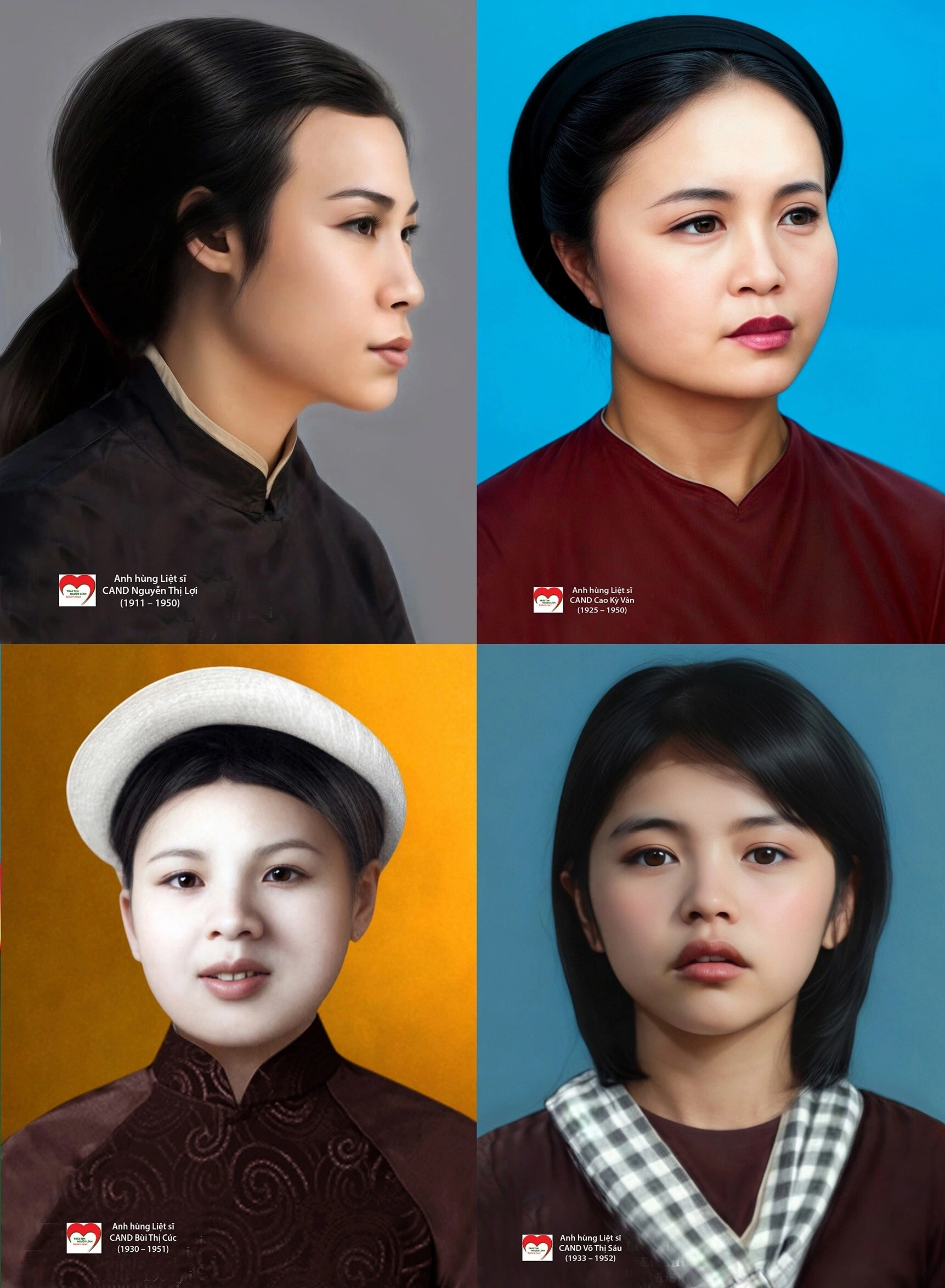
Võ Thị Sáu
 Vietnam
Also known as: Nguyễn Thị Sáu, Anh hùng liệt sĩ Võ Thị Sáu
Birthday
1933
Birth Sign
Capricorn
Birthplace
Đất Đỏ, Bà Rịa–Vũng Tàu, Vietnam
Age
Died at 19
About
Võ Thị Sáu remains a towering national symbol of Vietnamese resistance against French colonial rule during the First Indochina War. Born in 1933 in Đất Đỏ, she joined the Viet Minh forces as a teenager, distinguishing herself through acts of guerrilla warfare that challenged the occupying power. Her legacy is defined by her unwavering courage and sacrifice at a young age, culminating in her execution in 1952. Today, she stands as the archetype of youthful patriotism, with her image perpetually featured in educational materials to instill values of freedom and defiance. The state continues to honor her memory through annual commemorations, statues, and cultural works, ensuring her story inspires new generations of Vietnamese citizens who revere her as a martyr for independence.
Early Life & Background
Born Nguyễn Thị Sáu in 1933 in Phước Long Thọ village, Đất Đỏ district, she grew up in a family deeply involved in the anti-colonial struggle. Her father was a member of the Communist Party, and her older brother also fought in the resistance. Unlike many children of her time who were kept out of political affairs, she was immersed in revolutionary ideology from a young age. Her family home served as a meeting place for local cadres, exposing her to the logistics of guerrilla warfare. She attended school but left her formal education early to support the revolution. By the age of 14 or 15, she was already active in local youth organizations, distributing propaganda and gathering intelligence. Her upbringing was shaped by the harsh realities of colonial occupation, and she developed a strong sense of patriotism and a willingness to sacrifice for the nation's freedom. Her first steps toward her role as a revolutionary were not formal training but practical participation in sabotage and intelligence gathering alongside her brother and other local youths. The environment of her childhood was one of constant vigilance, where the line between civilian life and resistance work was blurred by necessity.
Career Growth
Her career as a revolutionary began in earnest around 1947 when she joined the local youth resistance movement in Đất Đỏ. By 1949, she was actively engaged in intelligence work and propaganda distribution. The pivotal moment of her career occurred on February 1, 1950, when she was only 16 years old. She threw a grenade at a group of French soldiers and their collaborators in the village of Phước Long Thọ. The attack killed one officer and injured several others, marking her breakthrough as a fearless combatant in the eyes of both the resistance and the colonial authorities. Following the attack, she was captured shortly after and imprisoned at Côn Đảo Prison. During her imprisonment from 1950 to 1952, she endured severe torture and interrogation but refused to reveal information about her comrades. She continued to organize underground activities within the prison, inspiring fellow prisoners. On January 23, 1952, she was tried by a French military court and sentenced to death. She was executed by firing squad on March 13, 1952, becoming the first woman and the youngest person to die there. In 1993, the Vietnamese government officially recognized her contributions by awarding her the title "Hero of the People's Armed Forces." In 2026, a new feature film titled Đất Đỏ was announced to further commemorate her life story.
Career Timeline
Public Image & Style
Võ Thị Sáu is portrayed as a paragon of virtue, courage, and patriotism. She is the archetype of the young revolutionary who sacrificed everything for her country. Media portrayals emphasize her youth, her defiance, and her unwavering commitment to the cause. Her image is used in educational contexts to instill patriotic values in children. She is depicted as a petite, determined young woman who stood firm against overwhelming odds. Statues and memorials across Vietnam serve as physical manifestations of this public image, ensuring her face remains a familiar symbol of national pride.
Fame & Fandom (iFAMOUS Rankings)
Võ Thị Sáu does not have a fanbase in the modern celebrity sense. Instead, she is revered by the Vietnamese people as a national hero. Citizens do not call themselves 'fans' but honor her through state-sponsored ceremonies, pilgrimages, and educational study. There is no organized fan club or unofficial fandom name. Her influence flows one-way, from the state and history to the people. According to the iFANN Global Fame Rankings, she holds the 19th most famous person in Vietnam. She was featured at No. 19 in the September 2026 iFAMOUS Rankings.
Interesting Facts and Legends
While 1933 is the accepted birth year, some documents suggest 1935, leading to slight variations in her reported age at death between 18 and 19. She was the first woman to be executed at Côn Đảo Prison, a site notorious for its harsh conditions. A famous legend says she told her captors, "I am only sixteen years old, I cannot be executed," challenging the death sentence until she reached adulthood. Folklore claims her spirit protects Côn Đảo, and her grave is believed to be a place of power for those seeking inspiration. Multiple films have been made about her life, with a new one announced in 2026, showing the enduring interest in her story. Specific details regarding her height or physical appearance are not well-documented in historical records, as she was a young girl in a time of war where such data was rarely recorded for non-combatants. However, she is often depicted in art and film as a petite, determined young woman. There are no magazine covers featuring Võ Thị Six in the modern sense (e.g., TIME, Vogue) because she lived in the mid-20th century before such media formats existed for Vietnamese revolutionaries. However, her image frequently appears on the covers of Vietnamese state publications, educational textbooks, and commemorative calendars, particularly around her death anniversary in January.
Notable Quotes
“I am only sixteen years old, I cannot be executed.”
“Continue the fight!”
Family & Personal Life
Võ Thị Sáu was born into a family deeply committed to the revolutionary cause. Her father was a member of the Communist Party, and her older brother also fought in the resistance. Her family's home often served as a meeting place for local cadres, exposing her to the political struggles of the time. She never married or had children. At the time of her death, she was approximately 18 or 19 years old, and her entire adult life was consumed by the demands of the revolutionary struggle. Her personal life was entirely dedicated to the cause of Vietnamese independence.
Notable Connections
Relationships & Dating History
Võ Thị Sáu never married or had children. There are no public records of romantic relationships, dating history, or engagements. At the time of her death, she was approximately 18 or 19 years old, and her entire adult life was consumed by the demands of the revolutionary struggle. Her personal life was entirely dedicated to the cause of Vietnamese independence. Consequently, she remains single in all historical accounts, and no partner is associated with her name. There is no public record of her having children or surviving descendants; she died unmarried and without issue.
Death & Aftermath
Died
1952-03-13 (aged 19)
Death Place
Côn Đảo Prison, Bà Rịa–Vũng Tàu, Vietnam
Cause of Death
Execution by firing squad
Võ Thị Sáu was executed by firing squad on March 13, 1952, at Côn Đảo Prison. The official cause of death was a summary sentence handed down by French colonial military authorities following her capture after a grenade attack in February 1950. She was the first woman and the youngest person to be executed at this notorious penal colony. Her final moments were marked by defiance; reports state she shouted revolutionary slogans even as she faced the executioners, urging others to continue the fight for independence. Her last words reportedly urged others to continue the fight. There was no traditional funeral ceremony. She was buried immediately in the prison cemetery, which has since transformed into a major pilgrimage site visited annually by officials, veterans, and citizens seeking inspiration. Decades later, the narrative surrounding her death shifted dramatically. In 1993, the Vietnamese government posthumously awarded her the title "Hero of the People's Armed Forces," effectively reversing her conviction from a criminal act to an act of patriotic heroism. This legal reversal cemented her status as a national symbol. Tributes have been continuous ever since, with annual commemorations held on the dates of her trial and execution. In recent years, including 2026, high-ranking officials like the National Assembly Chairman have paid tribute in Ho Chi Minh City, and new artistic works such as the painting Girl from the Red Earth have been unveiled to honor her legacy. The city of Ho Chi Minh City marked her 74th death anniversary in 2026 with official ceremonies. These projects reflect the ongoing state effort to keep her memory alive for new generations.
Net Worth (Estate Value)
$0
iFANN Editorial Team estimate
As a deceased revolutionary martyr, Võ Thị Sáu did not accumulate personal wealth in the traditional sense. Her estate value is not measured in currency but in cultural capital and state-managed legacy. The Vietnamese government manages her legacy, including the maintenance of her grave, the operation of the commemorative house in Đất Đỏ, and the production of educational materials. There are no private business ventures, endorsement deals, or real estate holdings attributed to her personally. Any revenue generated from films or books about her life goes to the state or production companies, not to her estate. iFANN currently estimates her net worth at approximately $0, reflecting her status as a non-commercial historical figure whose value lies in her symbolic importance rather than financial assets. Numerous streets, schools, and public squares in Vietnam bear her name, serving as daily reminders of her sacrifice, though these generate no income for her descendants.
Awards Won (1)
Võ Thị Sáu was posthumously awarded the title "Hero of the People's Armed Forces" in 1993 by the Vietnamese government. This is the highest military honor in Vietnam, recognizing her exceptional bravery and contribution to the armed struggle. Numerous statues, monuments, and street names across Vietnam also serve as ongoing recognition of her sacrifice.
1993 · Military Honor
Service to the Nation
Known For
Revolutionary Hero
1952 · Guerrilla Fighter
Keywords
Sources
Quick Facts
- Profession
- revolutionary, partisan
- Born
- 1933
- Birthplace
- Đất Đỏ
- Died
- 1952-03-13
- Death Place
- Côn Đảo Prison
- Gender
- Female
Personal Details
- Full Name
- Nguyễn Thị Sáu
- Children
- Education
- Informal education through party materials and local community leaders
Frequently Asked Questions
What was Võ Thị Sáu's real name?
How old was Võ Thị Sáu when she died?
Why is Võ Thị Sáu famous?
Where was Võ Thị Sáu executed?
Does Võ Thị Sáu have any living descendants?
Similar People
Join the community
fans discussing