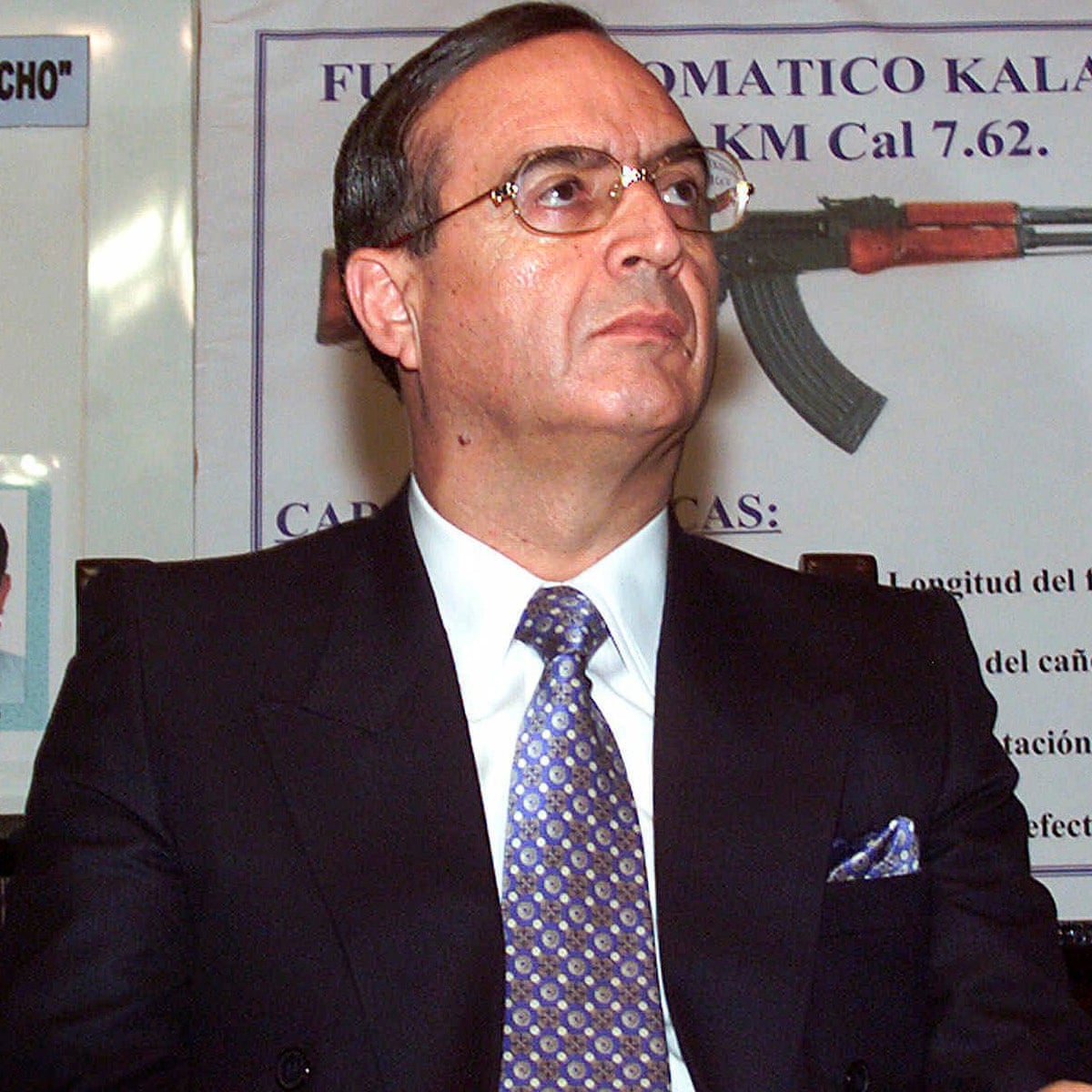
Vladimiro Montesinos
 Peru
Perupolitician•arms trafficker•military personnel
Also known as: Vladimiro Lenin Montesinos Torres, Vladimiro Lenin Ilich Montesinos Torres
Birthday
May 20, 1945
Birth Sign
Taurus
Birthplace
Arequipa, Peru
Age
81 years old
About
Vladimiro Montesinos is a Peruvian former intelligence officer, lawyer, and the de facto head of Peru's National Intelligence Service (SIN) during Alberto Fujimori's presidency from 1990 to 2000. He is widely regarded as one of the most corrupt and ruthless figures in modern Peruvian history, orchestrating bribes, facilitating drug and arms trafficking, and overseeing severe human rights abuses. His downfall came in 2000 with the release of the "Vladi-videos," secretly filmed recordings that exposed his criminal network, leading to his flight, capture, and a series of convictions that have kept him imprisoned for over two decades.
Montesinos remains a central figure in Peru's collective memory, a symbol of authoritarian excess and institutional decay. As of 2026, he continues to serve multiple consolidated prison sentences, with recent convictions adding to his legacy of infamy. His name is synonymous with the dark underbelly of political power, and his story serves as a cautionary tale about the dangers of unchecked intelligence agencies and the corruption that can flourish in the shadows.
Early Life & Background
Born in Arequipa on May 20, 1945, Montesinos grew up in a family with leftist political leanings. His parents, sympathetic to communist ideals, named him Vladimiro Lenin Ilich, a direct reference to the Soviet leader. This ideological backdrop shaped his early worldview, though he would later pivot sharply to the right. As a student, he was unremarkable academically, but he developed a passion for reading and an intense obsession with acquiring sensitive information, traits that would define his intelligence career.
Montesinos pursued military training and later studied law, becoming a lawyer. In the 1970s, he developed early links with the United States. The U.S. Embassy in Lima formally nominated him for an International Visitors' Leader Grant, listing his qualifications and past positions. This early relationship with American intelligence structures proved foundational, giving him access and connections that would serve him later. His career trajectory took him from military service into law and eventually into the complex world of intelligence and politics, setting the stage for his rise under Fujimori.
Career Growth
Montesinos's career reached its peak when he was appointed head of Peru's National Intelligence Service (SIN) in 1990, under President Alberto Fujimori. He operated as the "man behind the curtain," wielding immense power and maintaining deep ties with the CIA, which provided substantial funding for anti-terrorism efforts. His tenure was marked by severe human rights abuses, including the 1992 Pativilca massacre of farmers and the 1993 forced disappearance of three individuals whose bodies were burned in an oven.
The turning point came in September 2000 with the release of the "Vladi-videos," secretly filmed recordings showing Montesinos bribing politicians, opposition figures, and media owners. The scandal ignited national outrage, forced him to flee to Panama and later Venezuela, and contributed directly to Fujimori's resignation. Captured in Venezuela in June 2001, Montesinos was extradited to Peru and has since faced a series of trials. Over two decades, he accumulated numerous convictions for arms trafficking, corruption, embezzlement, and human rights abuses. In 2016, he received a 22-year sentence for the 1993 disappearances; in 2024, a 19-year sentence for the Pativilca massacre; and in March 2026, a 20-year sentence for the murder of a journalist. Even from prison, recordings emerged in 2021 suggesting he attempted to influence Peru's presidential election.
Public Image & Style
Montesinos's public image is overwhelmingly negative. He is widely regarded as one of the most corrupt and ruthless figures in modern Peruvian history, a shadowy puppeteer who operated through intermediaries and hidden cameras. Media portrayals consistently describe him as "the man behind the curtain" and "the sketchiest and most powerful man in Peru." His signature style was operational secrecy: he used hidden cameras to record his own bribes, maintained plausible deniability, and cultivated an aura of untouchability. He has no fandom in any conventional sense; interest in him is confined to true-crime and political-history circles, where he is studied as a cautionary example of unchecked intelligence power and systemic corruption.
Fame & Fandom (iFAMOUS Rankings)
Vladimiro Montesinos possesses no organized fanbase, nor does he have a documented fandom name; his legacy is defined by judicial prosecutions and public outrage rather than admirers or cultural rituals. While the world once watched him as the shadowy architect of Peru's authoritarian regime, the audience for his story remains strictly historical and adversarial, with no recorded instances of fan campaigns, birthday tributes, or charitable drives supporting his image. His notoriety persists not through affection but through the enduring gravity of his criminal record and the sheer scale of his influence on modern Peruvian history. In the current landscape of global recognition, he holds a specific standing among those associated with high-profile legal scandals and political intrigue. According to the iFANN Global Fame Rankings, Vladimiro Montesinos is currently the 19th most famous person from Peru, a position that has held steady since the previous measurement cycle. Furthermore, within the niche of true crime narratives, he is ranked as the 48th most famous person in True Crime, reflecting the lasting impact of the Vladi-videos scandal. These placements are derived from comprehensive tracking of media coverage, search activity, and consumption signals across the globe, ensuring that even figures of infamy are accurately cataloged within the broader spectrum of public attention.
Interesting Facts and Legends
Montesinos's full name, Vladimiro Lenin Ilich, directly references Vladimir Lenin, signaling his parents' communist sympathies. He reportedly created the "Vladi-videos" himself as a form of insurance and blackmail material, a strategy that ultimately backfired spectacularly when released to the public. Declassified documents reveal that the U.S. Embassy in Lima nominated him for an International Visitors' Leader Grant in the 1970s, exposing his long-standing ties to American intelligence. Under his supervision, Peru's drug trade became highly centralized, with Montesinos acting as the political broker who facilitated trafficking in exchange for payments. He was also convicted for orchestrating the illegal shipment of 10,000 AK-47 rifles to Colombian FARC guerrillas in 2000. Even from prison, he attempted to influence the 2021 presidential election, with recordings suggesting he proposed bribes to secure victory for Keiko Fujimori. A widely retold chapter of his legend involves the Pativilca massacre of August 1992, where he orchestrated the killing of 16 farmers, an event that recently resulted in a new prison sentence in early 2024. Another defining moment occurred in March 2026, when he was sentenced to 20 years for the murder of journalist José Carlos Fernández Salazar, cementing his reputation as a figure whose life ended in perpetual legal reckoning rather than redemption.
Family & Personal Life
Montesinos married Trinidad Becerra, and the couple had children together. Their marriage's timeline is not well-documented, and it is unclear whether they remained married through his imprisonment. He has at least one daughter, Silvana Montesinos, who has occasionally appeared in Peruvian media. Details about his family life are limited, reflecting his secretive nature. His parents, whose names are not widely publicized, held communist ideals and shaped his early worldview. The family's political leanings were so pronounced that they named their son after Vladimir Lenin, a fact that stands in ironic contrast to his later role as a right-wing authoritarian enforcer.
Relationships & Dating History
Public information about Montesinos's romantic relationships is extremely limited, consistent with his secretive personal life. He married Trinidad Becerra, and the couple had children together. The marriage's timeline is not well-documented, and it is unclear whether they remained married through his imprisonment. Given his incarceration since 2001 and the lack of public reporting on his personal life, his current relationship status cannot be confirmed. He is presumed to be either married or separated from Trinidad Becerra, but no credible source confirms his current status. As of 2026, he remains imprisoned, and any personal relationships are largely unknown to the public.
- MarriedTrinidad BecerraCurrentMarried with children; timeline unclear.
Salary, Net Worth In 2026
$20 Million
iFANN Editorial Team estimate
Montesinos's net worth is a complex figure, rooted in illicit wealth amassed during his time in power. While incarcerated since 2001, he historically controlled substantial funds derived from multiple sources: CIA funding for anti-terrorism operations that he diverted for personal use, bribes from drug traffickers for protection and facilitation of the drug trade, payments from arms traffickers including the infamous 2000 shipment of 10,000 AK-47 rifles to Colombian guerrillas, and systematic bribery of politicians, judges, and media owners documented in the Vladi-videos. Peruvian prosecutors alleged he had hidden millions in foreign bank accounts, though exact amounts remain unknown. As of 2026, any remaining assets are subject to government seizure or forfeiture orders. Estimates from his trial era ranged into the tens of millions, but no credible current figure exists. Per iFANN's editorial analysis, his net worth is estimated at $20 Million. This figure represents the illicit wealth he controlled, not his current liquid assets, which are likely negligible. His financial legacy is one of corruption and ill-gotten gains, now largely inaccessible to him.
Awards & Accolades
Known For
Head of Peru's National Intelligence Service
1990-2000 · De facto chief
Vladi-videos scandal
2000 · Subject
Keywords
Sources
Quick Facts
- Profession
- politician, arms trafficker, military personnel
- Born
- May 20, 1945
- Birthplace
- Arequipa, Peru
- Gender
- Male
- Birth Sign
- Taurus
- Nationality
- Peruvian
- Status
- Imprisoned
Personal Details
- Full Name
- Vladimiro Lenin Ilich Montesinos Torres
- Spouse
- Trinidad Becerra
- Children
- Silvana Montesinos
- Education
- Military training; studied law
Frequently Asked Questions
Where is Vladimiro Montesinos now?
How many years in prison did Vladimiro Montesinos get?
What did Vladimiro Montesinos do?
Who is Vladimiro Montesinos?
What were the Vladi-videos?
Similar People

Join the community
fans discussing